Henríquez-Henríquez Marcela Patricia, Billeke Pablo, Henríquez Hugo, Zamorano Francisco Javier, Rothhammer Francisco, Aboitiz Francisco
Department of Clinical Laboratories, Pontificia Universidad Católica de Chile , Santiago , Chile ; Cognitive Neurosciences Laboratory, Department of Psychiatry, Pontificia Universidad Católica de Chile , Santiago , Chile.
Cognitive Neurosciences Laboratory, Department of Psychiatry, Pontificia Universidad Católica de Chile , Santiago , Chile ; Centro de Investigación en Complejidad Social (CICS), Facultad de Gobierno, Universidad del Desarrollo , Santiago , Chile.
Front Psychiatry. 2015 Jan 12;5:197. doi: 10.3389/fpsyt.2014.00197. eCollection 2014.
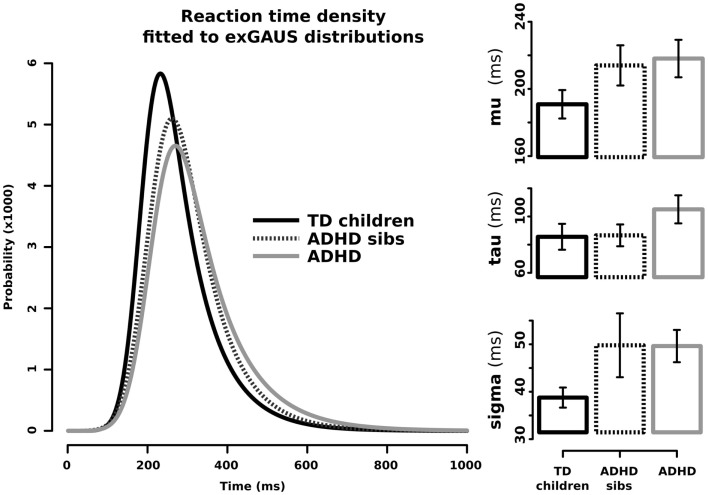
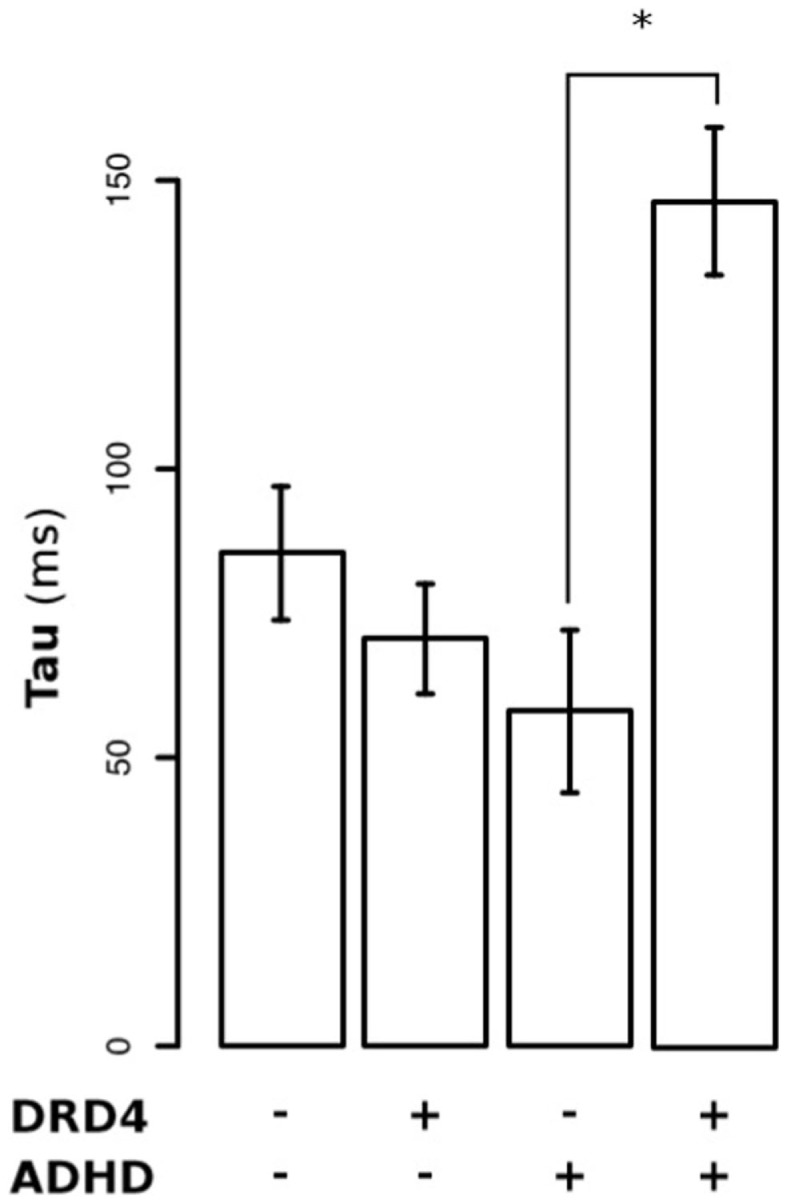
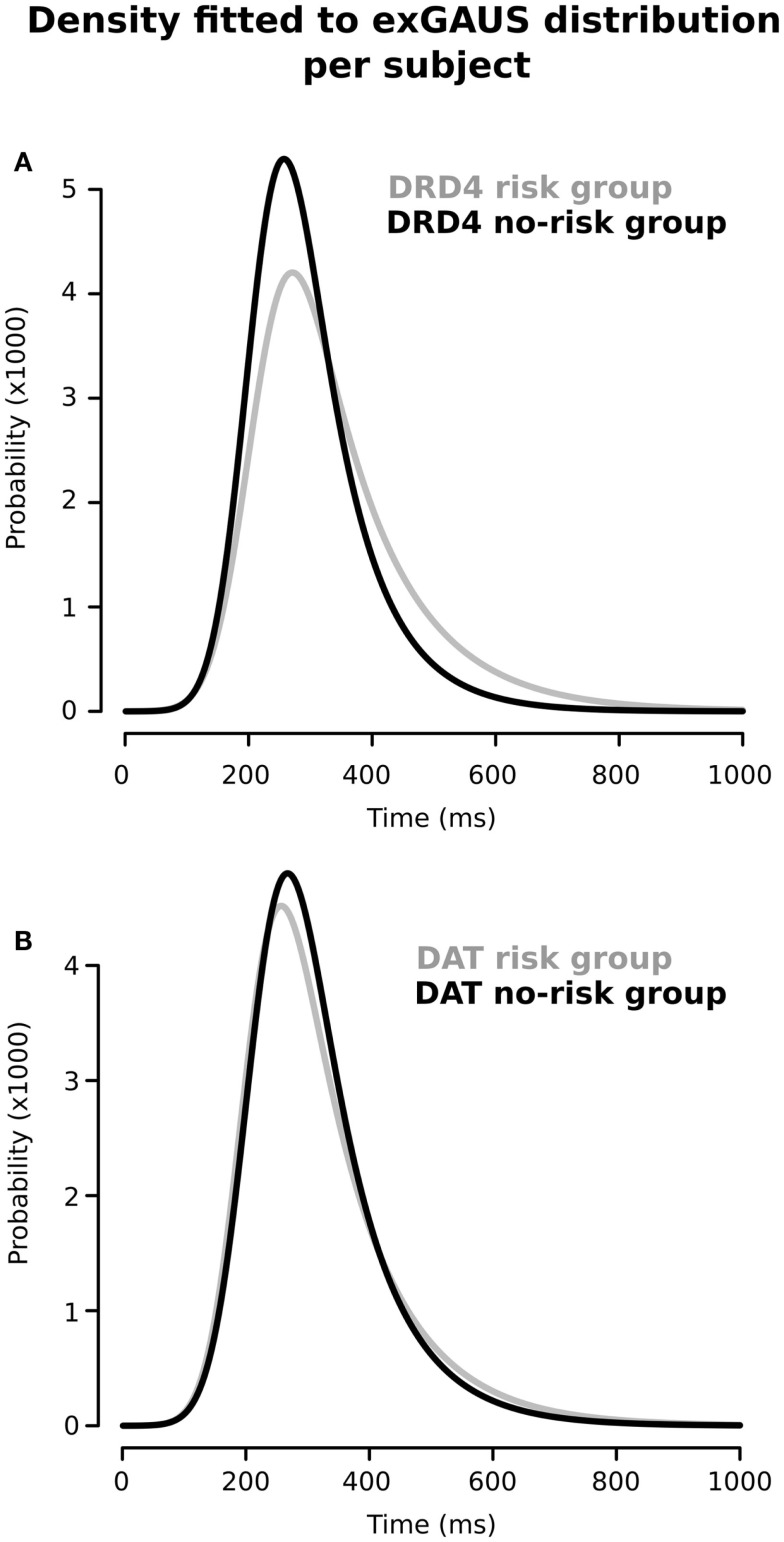
Intra-individual variability of response times (RTisv) is considered as potential endophenotype for attentional deficit/hyperactivity disorder (ADHD). Traditional methods for estimating RTisv lose information regarding response times (RTs) distribution along the task, with eventual effects on statistical power. Ex-Gaussian analysis captures the dynamic nature of RTisv, estimating normal and exponential components for RT distribution, with specific phenomenological correlates. Here, we applied ex-Gaussian analysis to explore whether intra-individual variability of RTs agrees with criteria proposed by Gottesman and Gould for endophenotypes. Specifically, we evaluated if normal and/or exponential components of RTs may (a) present the stair-like distribution expected for endophenotypes (ADHD > siblings > typically developing children (TD) without familiar history of ADHD) and (b) represent a phenotypic correlate for previously described genetic risk variants. This is a pilot study including 55 subjects (20 ADHD-discordant sibling-pairs and 15 TD children), all aged between 8 and 13 years. Participants resolved a visual Go/Nogo with 10% Nogo probability. Ex-Gaussian distributions were fitted to individual RT data and compared among the three samples. In order to test whether intra-individual variability may represent a correlate for previously described genetic risk variants, VNTRs at DRD4 and SLC6A3 were identified in all sibling-pairs following standard protocols. Groups were compared adjusting independent general linear models for the exponential and normal components from the ex-Gaussian analysis. Identified trends were confirmed by the non-parametric Jonckheere-Terpstra test. Stair-like distributions were observed for μ (p = 0.036) and σ (p = 0.009). An additional "DRD4-genotype" × "clinical status" interaction was present for τ (p = 0.014) reflecting a possible severity factor. Thus, normal and exponential RTisv components are suitable as ADHD endophenotypes.
反应时间的个体内变异性(RTisv)被认为是注意力缺陷多动障碍(ADHD)的潜在内表型。传统的估计RTisv的方法会丢失沿任务过程中反应时间(RTs)分布的信息,最终影响统计功效。前高斯分析捕捉了RTisv的动态特性,估计了RT分布的正态和指数成分,并具有特定的现象学相关性。在此,我们应用前高斯分析来探究RTs的个体内变异性是否符合戈特斯曼和古尔德提出的内表型标准。具体而言,我们评估了RTs的正态和/或指数成分是否(a)呈现内表型预期的阶梯状分布(ADHD患者>兄弟姐妹>无ADHD家族史的正常发育儿童(TD)),以及(b)代表先前描述的遗传风险变异的表型相关性。这是一项试点研究,包括55名受试者(20对ADHD不一致的兄弟姐妹对和15名TD儿童),年龄均在8至13岁之间。参与者解决了一个视觉Go/Nogo任务,其中Nogo概率为10%。将前高斯分布拟合到个体RT数据,并在三个样本之间进行比较。为了测试个体内变异性是否可能代表先前描述的遗传风险变异的相关性,按照标准方案在所有兄弟姐妹对中鉴定了DRD4和SLC6A3的可变数目串联重复序列(VNTRs)。通过调整前高斯分析中指数和正态成分的独立一般线性模型对组进行比较。通过非参数Jonckheere-Terpstra检验确认了所确定的趋势。观察到μ(p = 0.036)和σ(p = 0.009)呈阶梯状分布。对于τ存在额外的“DRD4基因型”ד临床状态”交互作用(p = 0.014),反映了一个可能的严重程度因素。因此,正态和指数RTisv成分适合作为ADHD的内表型。