Mang Géraldine M, Pradervand Sylvain, Du Ngoc-Hien, Arpat Alaaddin Bulak, Preitner Frédéric, Wigger Leonore, Gatfield David, Franken Paul
Center for Integrative Genomics, University of Lausanne, Lausanne, Switzerland.
Genomic Technologies Facility, Center for Integrative Genomics, University of Lausanne, Lausanne, Switzerland; Vital-IT, SIB-Swiss Institute of Bioinformatics, Lausanne, Switzerland.
PLoS One. 2015 Jan 28;10(1):e0116760. doi: 10.1371/journal.pone.0116760. eCollection 2015.
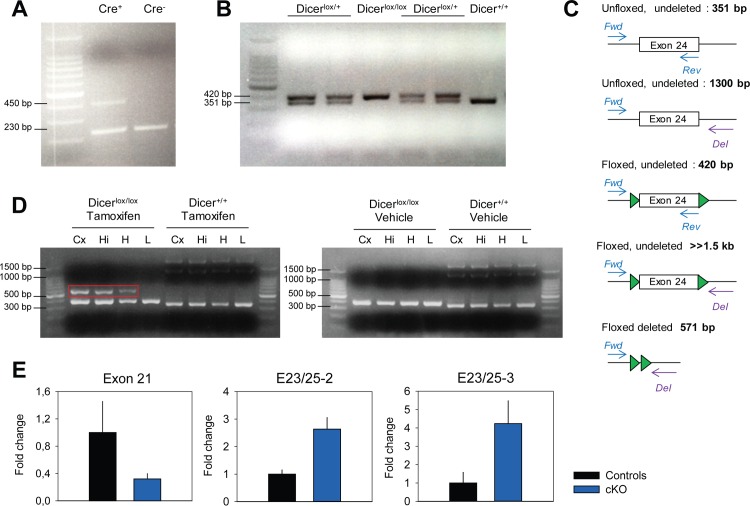
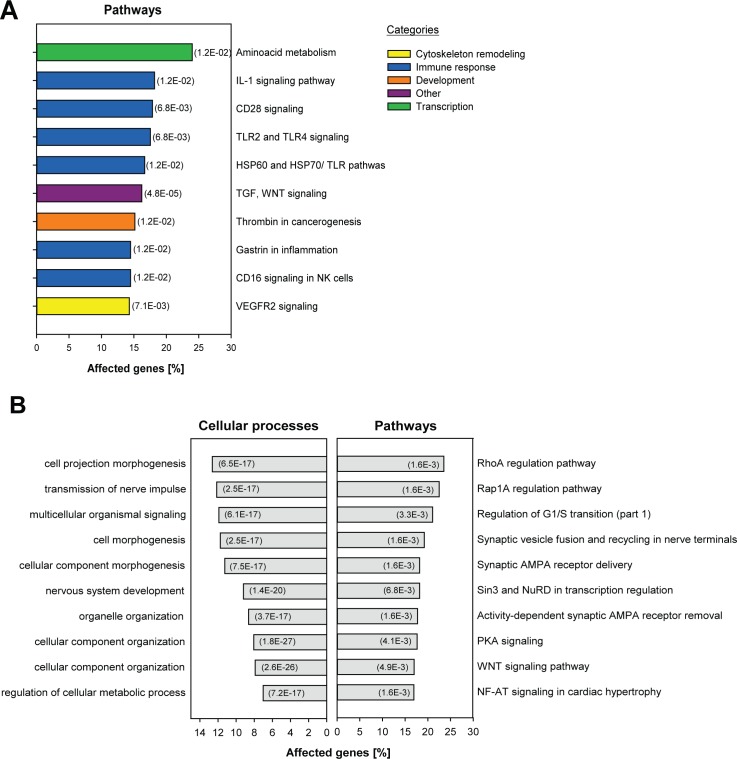
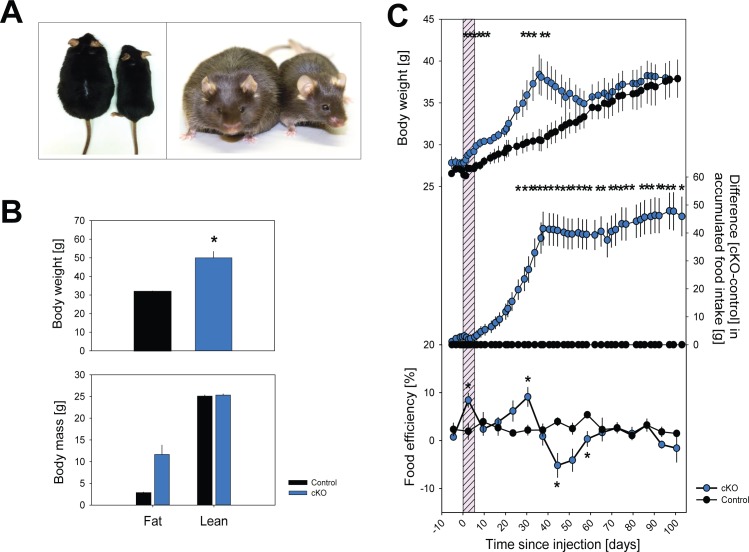
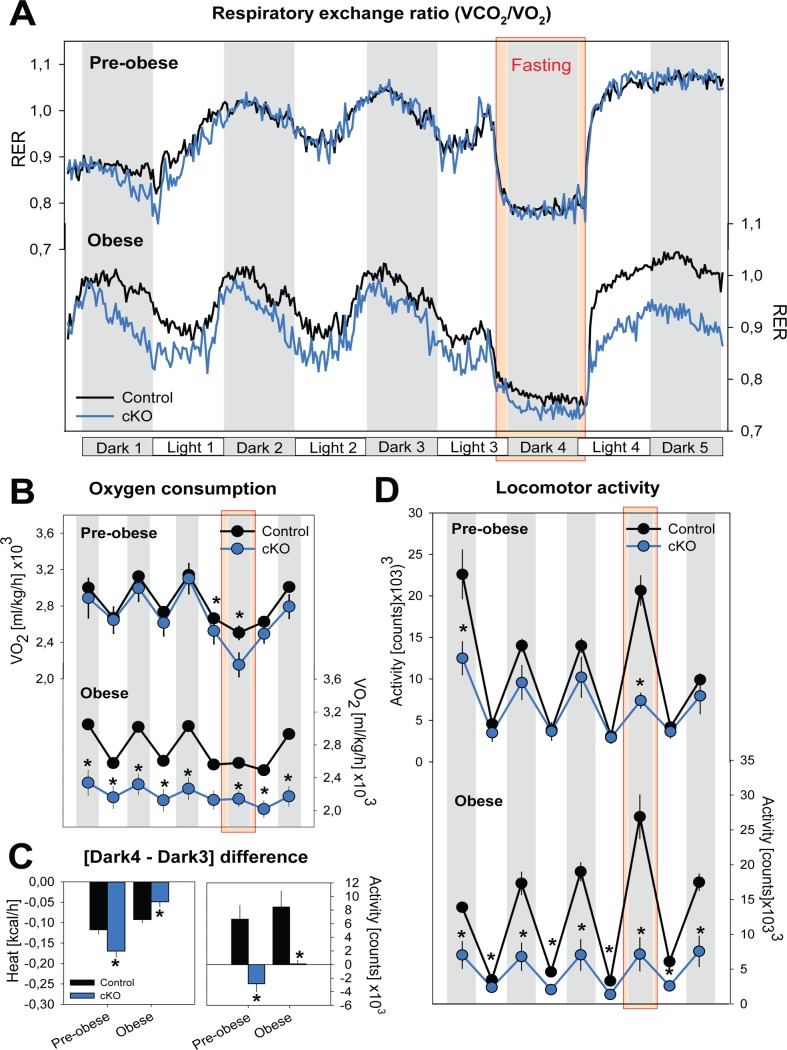
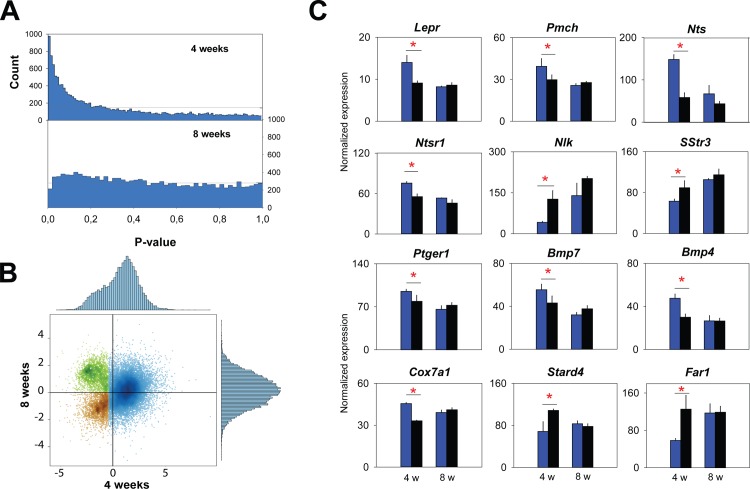
MicroRNAs (miRNAs) are small, non-coding RNA molecules that regulate gene expression post-transcriptionally. MiRNAs are implicated in various biological processes associated with obesity, including adipocyte differentiation and lipid metabolism. We used a neuronal-specific inhibition of miRNA maturation in adult mice to study the consequences of miRNA loss on obesity development. Camk2a-CreERT2 (Cre+) and floxed Dicer (Dicerlox/lox) mice were crossed to generate tamoxifen-inducible conditional Dicer knockouts (cKO). Vehicle- and/or tamoxifen-injected Cre+;Dicerlox/lox and Cre+;Dicer+/+ served as controls. Four cohorts were used to a) measure body composition, b) follow food intake and body weight dynamics, c) evaluate basal metabolism and effects of food deprivation, and d) assess the brain transcriptome consequences of miRNA loss. cKO mice developed severe obesity and gained 18 g extra weight over the 5 weeks following tamoxifen injection, mainly due to increased fat mass. This phenotype was highly reproducible and observed in all 38 cKO mice recorded and in none of the controls, excluding possible effects of tamoxifen or the non-induced transgene. Development of obesity was concomitant with hyperphagia, increased food efficiency, and decreased activity. Surprisingly, after reaching maximum body weight, obese cKO mice spontaneously started losing weight as rapidly as it was gained. Weight loss was accompanied by lowered O2-consumption and respiratory-exchange ratio. Brain transcriptome analyses in obese mice identified several obesity-related pathways (e.g. leptin, somatostatin, and nemo-like kinase signaling), as well as genes involved in feeding and appetite (e.g. Pmch, Neurotensin) and in metabolism (e.g. Bmp4, Bmp7, Ptger1, Cox7a1). A gene cluster with anti-correlated expression in the cerebral cortex of post-obese compared to obese mice was enriched for synaptic plasticity pathways. While other studies have identified a role for miRNAs in obesity, we here present a unique model that allows for the study of processes involved in reversing obesity. Moreover, our study identified the cortex as a brain area important for body weight homeostasis.
微小RNA(miRNA)是一类小的非编码RNA分子,可在转录后水平调节基因表达。miRNA与肥胖相关的各种生物学过程有关,包括脂肪细胞分化和脂质代谢。我们利用成年小鼠中miRNA成熟的神经元特异性抑制来研究miRNA缺失对肥胖发展的影响。将Camk2a-CreERT2(Cre+)和floxed Dicer(Dicerlox/lox)小鼠杂交,以产生他莫昔芬诱导的条件性Dicer基因敲除小鼠(cKO)。注射溶剂和/或他莫昔芬的Cre+;Dicerlox/lox和Cre+;Dicer+/+小鼠作为对照。使用四个队列来:a)测量身体组成,b)跟踪食物摄入量和体重动态,c)评估基础代谢和食物剥夺的影响,以及d)评估miRNA缺失对脑转录组的影响。cKO小鼠在注射他莫昔芬后的5周内出现严重肥胖,体重额外增加18克,主要是由于脂肪量增加。这种表型具有高度可重复性,在记录的所有38只cKO小鼠中均观察到,而在对照组中均未观察到,排除了他莫昔芬或未诱导转基因的可能影响。肥胖的发展伴随着食欲亢进、食物效率提高和活动减少。令人惊讶的是,在达到最大体重后,肥胖的cKO小鼠开始自发地快速减重,减重速度与增重速度相同。体重减轻伴随着氧气消耗量和呼吸交换率的降低。对肥胖小鼠的脑转录组分析确定了几个与肥胖相关的途径(例如瘦素、生长抑素和类Nemo样激酶信号传导),以及参与进食和食欲(例如Pmch、神经降压素)和代谢(例如Bmp4、Bmp7、Ptger1、Cox7a1)的基因。与肥胖小鼠相比,肥胖后小鼠大脑皮层中表达呈反相关的一个基因簇富含突触可塑性途径。虽然其他研究已经确定了miRNA在肥胖中的作用,但我们在此提出了一个独特的模型,可用于研究肥胖逆转过程中涉及的过程。此外,我们的研究确定大脑皮层是对体重稳态至关重要的脑区。