Laboratory of Molecular Neurobiology, Sheng Yushou Center of Cell Biology and Immunology, Department of Genetics and Developmental Biology, School of Life Sciences and Biotechnology, Shanghai Jiao Tong University, Shanghai, China.
Sheng Yushou Center of Cell Biology and Immunology, Department of Genetics and Developmental Biology, School of Life Sciences and Biotechnology, Shanghai Jiao Tong University, Shanghai, China.
Mol Metab. 2022 Jul;61:101507. doi: 10.1016/j.molmet.2022.101507. Epub 2022 Apr 29.
Obesity, a growing threat to the modern society, represents an imbalance of metabolic queues that normally signal to the arcuate hypothalamic nucleus, a critical brain region sensing and regulating energy homeostasis. This is achieved by various neurons many of which developmentally originate from the proopiomelanocortin (POMC)-expressing lineage. Within the mature neurons originating from this lineage, we aimed to identify non-coding genes in control of metabolic function in the adulthood.
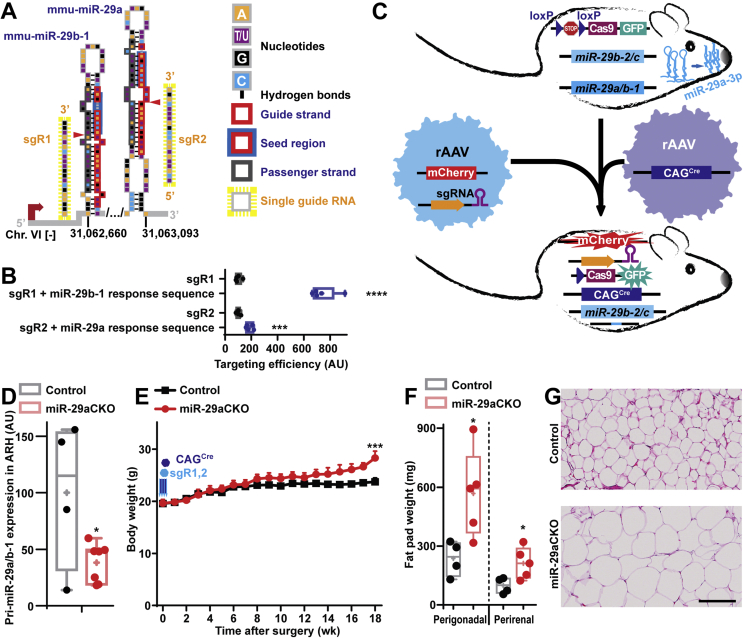
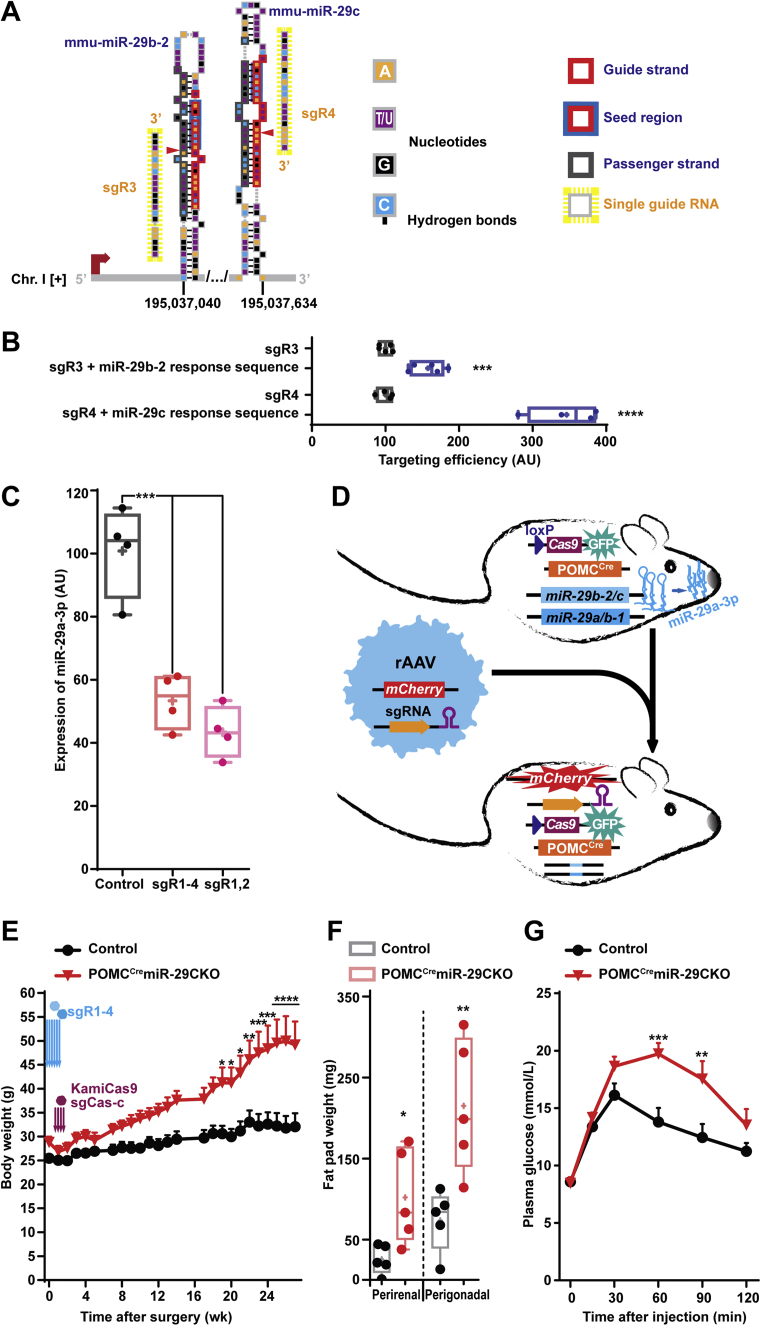
In this work, we used microRNA mimic delivery and POMC-dependent CRISPR-Cas9 knock-out strategies in young or aged mice. Importantly, we also used CRISPR guides directing suicide cleavage of Cas9 to limit the off-target effects.
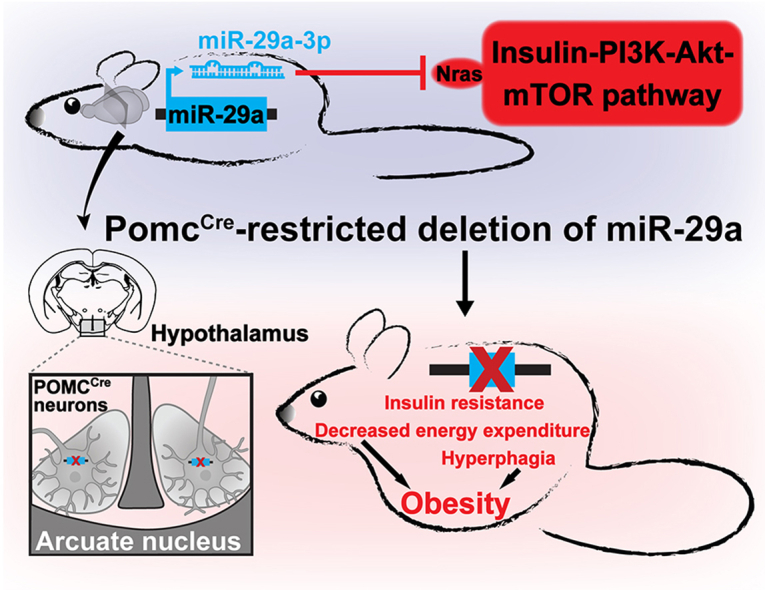
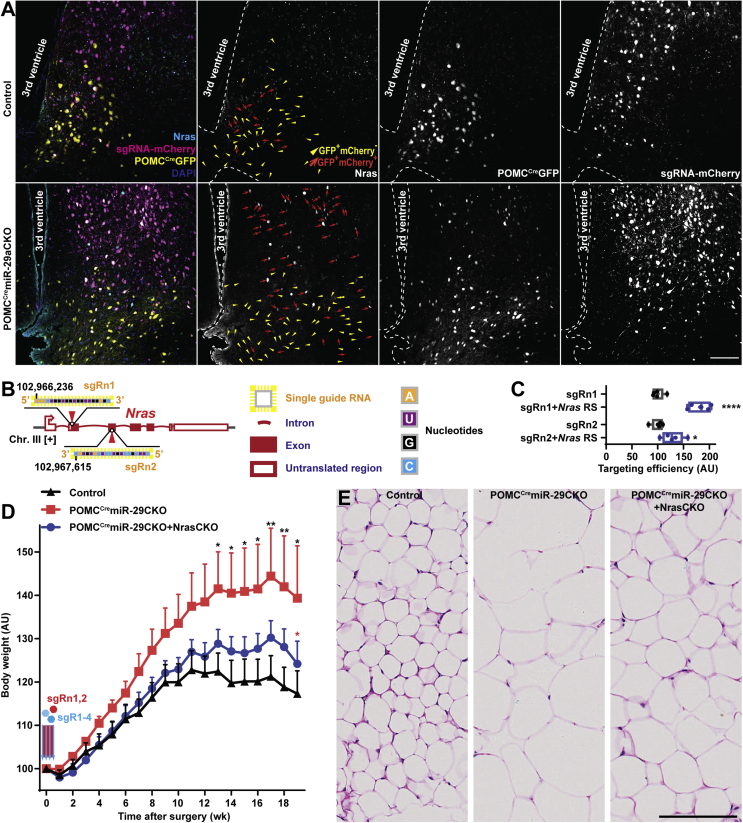
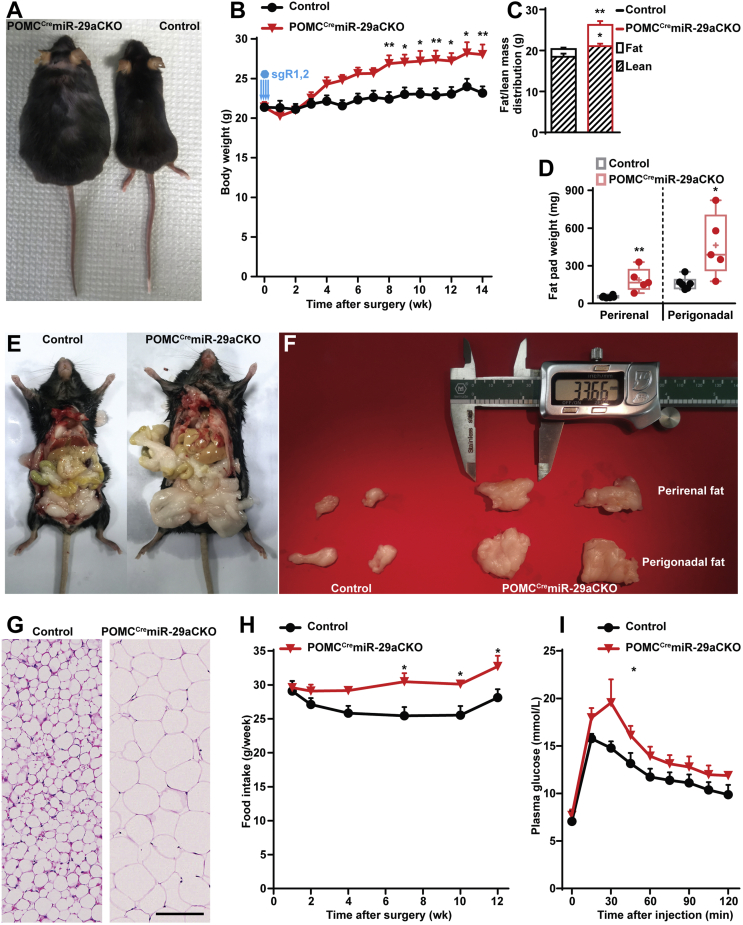
Here we found that mature neurons originating from the POMC lineage employ miR-29a to protect against insulin resistance obesity, hyperphagia, decreased energy expenditure and obesity. Moreover, we validated the miR-29 family as a prominent regulator of the PI3K-Akt-mTOR pathway. Within the latter, we identified a direct target of miR-29a-3p, Nras, which was up-regulated in those and only those mature POMCCas9 neurons that were effectively transduced by anti-miR-29 CRISPR-equipped construct. Moreover, POMC-dependent co-deletion of Nras in mature neurons attenuated miR-29 depletion-induced obesity.
Thus, the first to our knowledge case of in situ Cre-dependent CRISPR-Cas9-mediated knock-out of microRNAs in a specific hypothalamic neuronal population helped us to decipher a critical metabolic circuit in adult mice. This work significantly extends our understanding about the involvement of neuronal microRNAs in homeostatic regulation.
肥胖是现代社会日益严重的威胁,代表着代谢信号失衡,这些信号通常会传递到弓状下丘脑核,这是一个感知和调节能量平衡的关键脑区。这是通过许多神经元来实现的,其中许多神经元是由前阿黑皮素原(POMC)表达谱系发育而来的。在源自该谱系的成熟神经元中,我们旨在确定控制成年代谢功能的非编码基因。
在这项工作中,我们在年轻或年老的小鼠中使用了 microRNA 模拟物递送和 POMC 依赖性 CRISPR-Cas9 敲除策略。重要的是,我们还使用了靶向 Cas9 自杀性切割的 CRISPR 向导,以限制脱靶效应。
在这里,我们发现源自 POMC 谱系的成熟神经元利用 miR-29a 来预防胰岛素抵抗性肥胖、过度摄食、能量消耗减少和肥胖。此外,我们验证了 miR-29 家族是 PI3K-Akt-mTOR 通路的重要调节因子。在后者中,我们确定了 miR-29a-3p 的一个直接靶标,Nras,其在那些且仅在那些被抗 miR-29 CRISPR 装备构建体有效转导的成熟 POMCCas9 神经元中上调。此外,在成熟神经元中 POMC 依赖性共同敲除 Nras 可减弱 miR-29 耗竭诱导的肥胖。
因此,我们首次在特定下丘脑神经元群体中实现了 Cre 依赖性 CRISPR-Cas9 介导的 microRNA 原位敲除,这有助于我们阐明成年小鼠中的关键代谢回路。这项工作极大地扩展了我们对神经元 microRNAs 在稳态调节中的参与的理解。