Thiaville Patrick C, Iwata-Reuyl Dirk, de Crécy-Lagard Valérie
a Genetics and Genomics Graduate Program ; University of Florida ; Gainesville , FL USA.
RNA Biol. 2014;11(12):1529-39. doi: 10.4161/15476286.2014.992277.
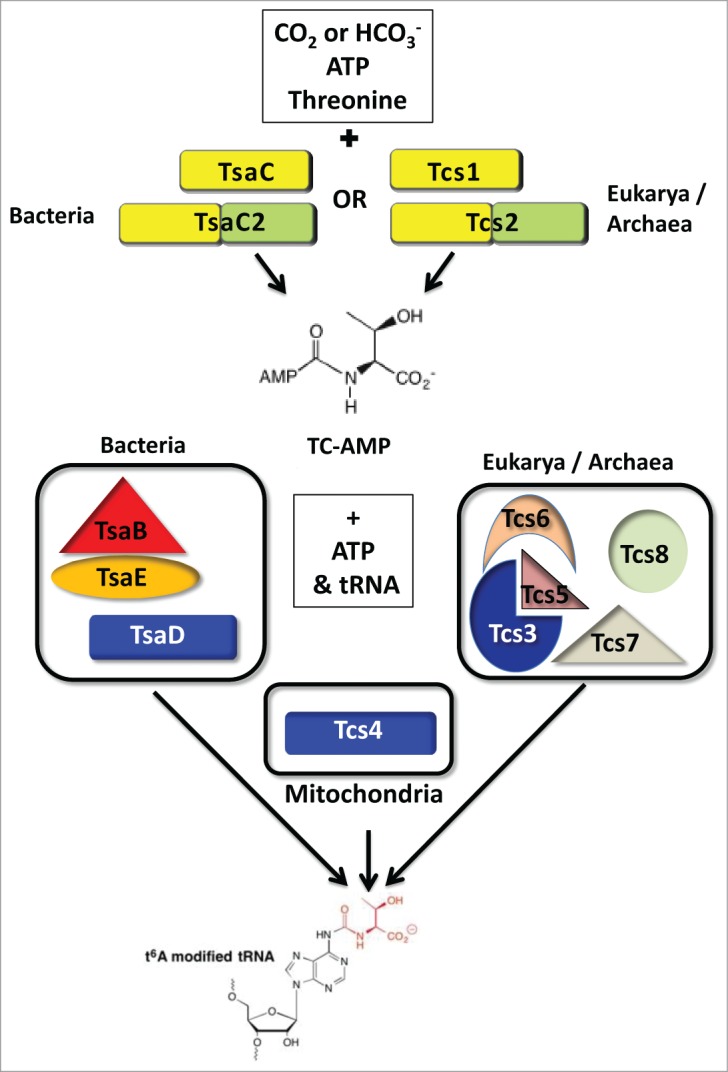
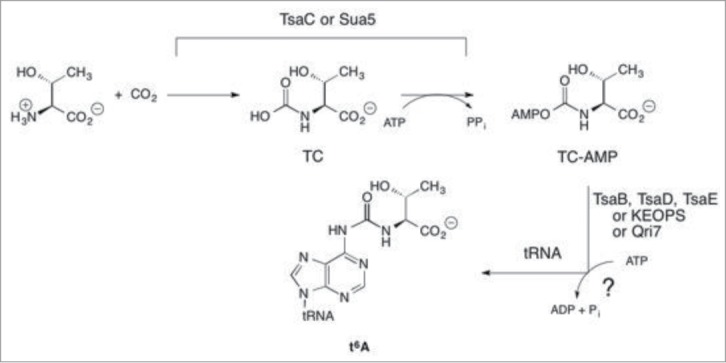
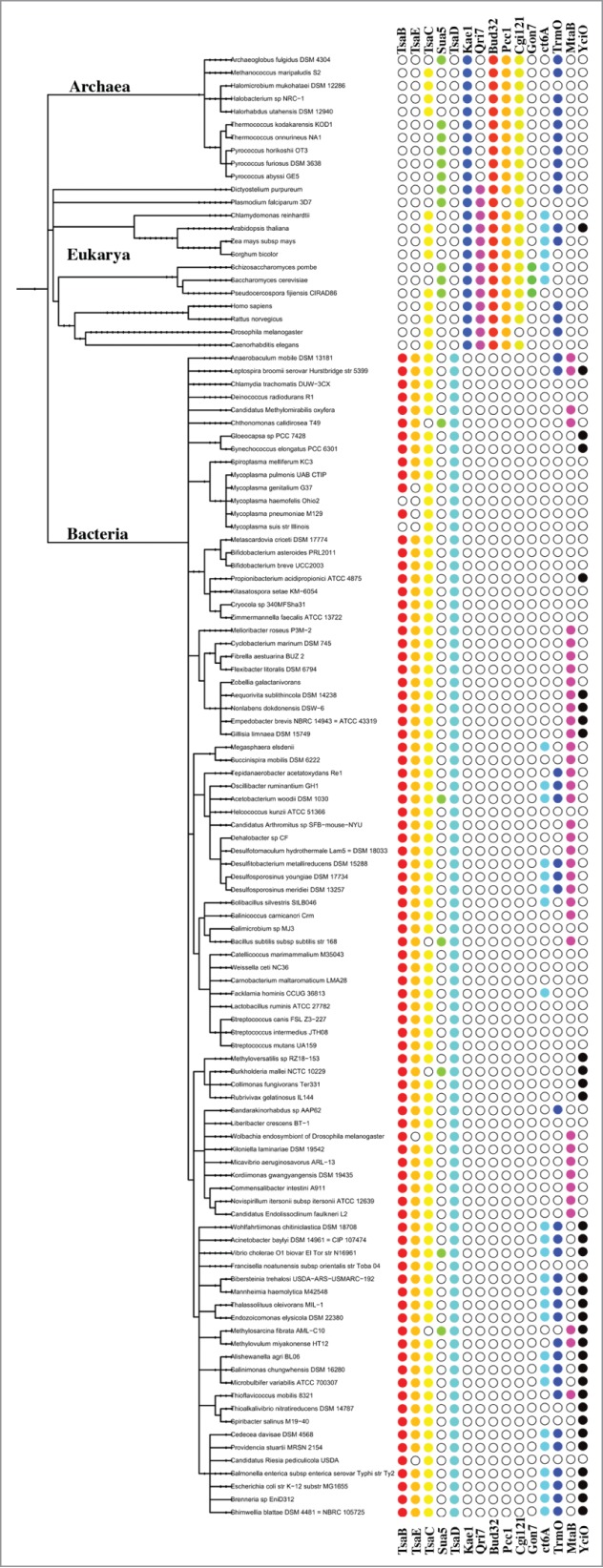
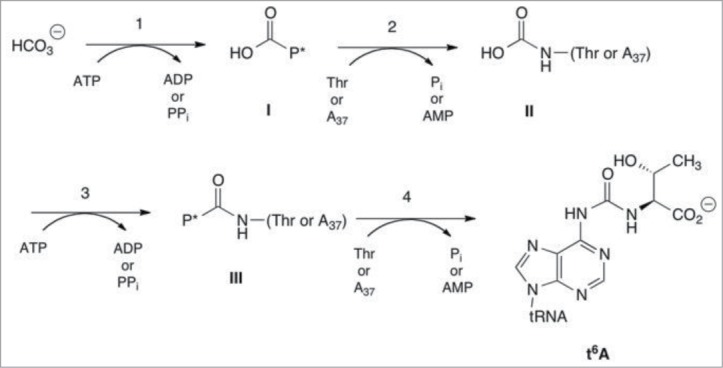
The tRNA modification field has a rich literature covering biochemical analysis going back more than 40 years, but many of the corresponding genes were only identified in the last decade. In recent years, comparative genomic-driven analysis has allowed for the identification of the genes and subsequent characterization of the enzymes responsible for N6-threonylcarbamoyladenosine (t(6)A). This universal modification, located in the anticodon stem-loop at position 37 adjacent to the anticodon of tRNAs, is found in nearly all tRNAs that decode ANN codons. The t(6)A biosynthesis enzymes and synthesis pathways have now been identified, revealing both a core set of enzymes and kingdom-specific variations. This review focuses on the elucidation of the pathway, diversity of the synthesis genes, and proposes a new nomenclature for t(6)A synthesis enzymes.
tRNA修饰领域拥有丰富的文献,涵盖了40多年来的生化分析,但许多相应的基因直到最近十年才被鉴定出来。近年来,基于比较基因组学的分析使得负责N6-苏氨甲酰腺苷(t(6)A)的基因得以鉴定,并对相关酶进行了后续表征。这种普遍存在的修饰位于tRNA反密码子附近第37位的反密码子茎环中,几乎存在于所有解码ANN密码子的tRNA中。目前已经鉴定出了t(6)A生物合成酶和合成途径,揭示了一组核心酶以及不同生物界的特异性差异。本综述重点阐述了该途径、合成基因的多样性,并提出了t(6)A合成酶的新命名法。