Jheon Andrew H, Prochazkova Michaela, Sherman Michael, Manoli Devanand S, Shah Nirao M, Carbone Lawrence, Klein Ophir
Department of Orofacial Sciences and Program in Craniofacial and Mesenchymal Biology, University of California, San Francisco (UCSF), San Francisco, USA.
1] Department of Orofacial Sciences and Program in Craniofacial and Mesenchymal Biology, University of California, San Francisco (UCSF), San Francisco, USA [2] Department of Anthropology and Human Genetics, Faculty of Science, Charles University in Prague, Prague, Czech Republic.
Int J Oral Sci. 2015 Mar 23;7(1):23-6. doi: 10.1038/ijos.2014.75.
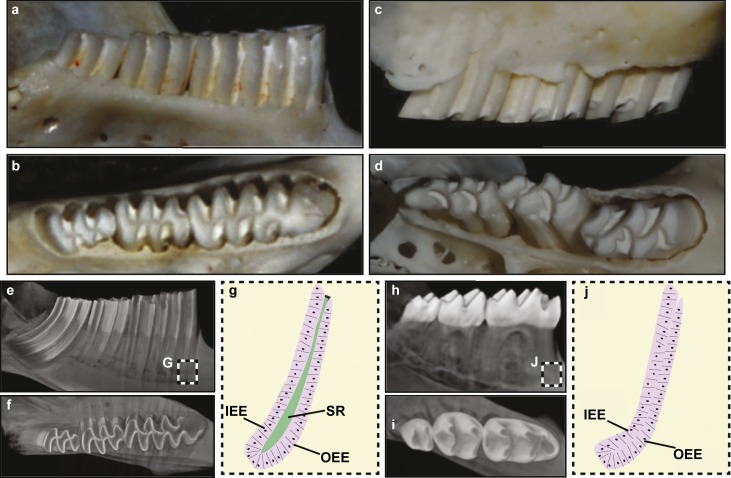
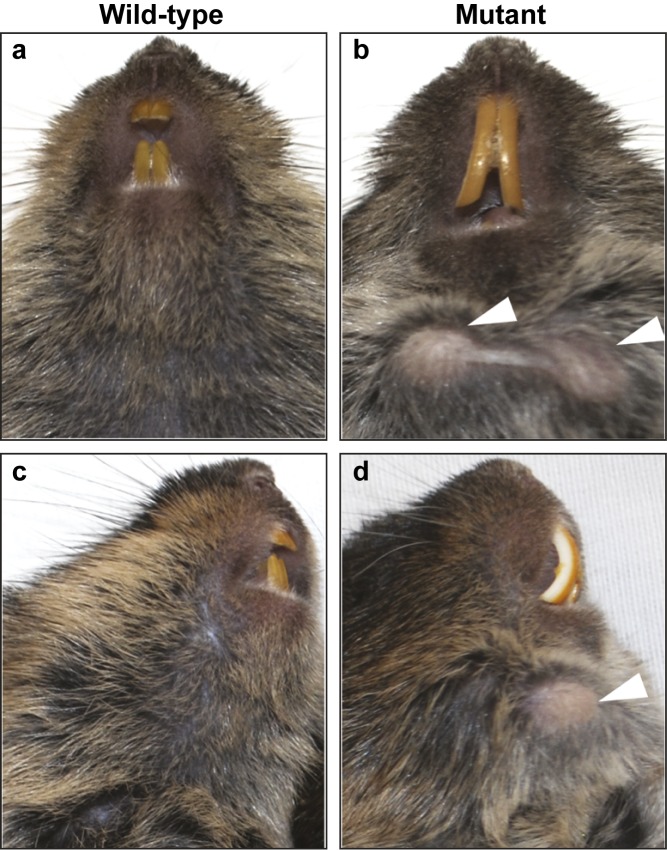
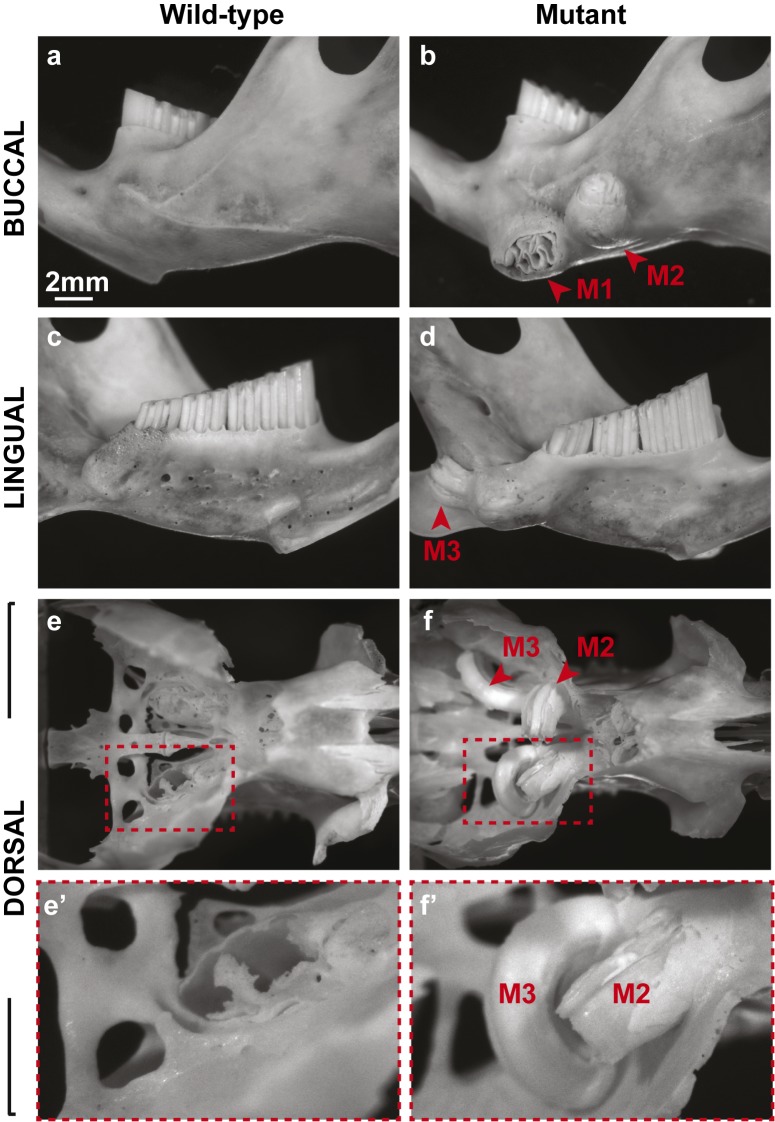
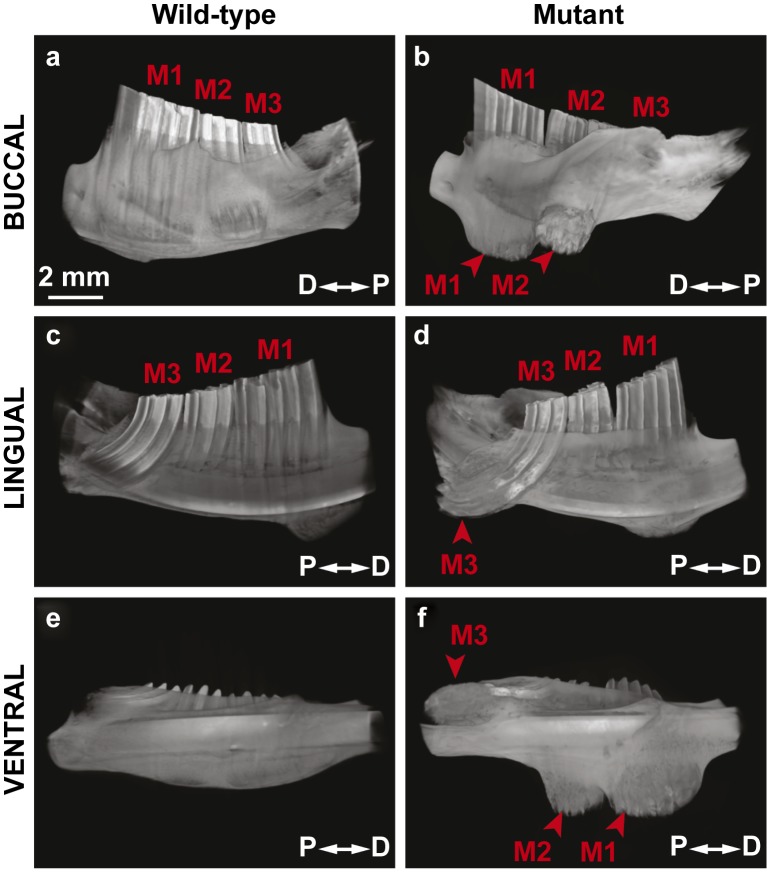
Continuously growing incisors are common to all rodents, which include the Microtus genus of voles. However, unlike many rodents, voles also possess continuously growing molars. Here, we report spontaneous molar defects in a population of Prairie voles (Microtus ochrogaster). We identified bilateral protuberances on the ventral surface of the mandible in several voles in our colony. In some cases, the protuberances broke through the cortical bone. The mandibular molars became exposed and infected, and the maxillary molars entered the cranial vault. Visualisation upon soft tissue removal and microcomputed tomography (microCT) analyses confirmed that the protuberances were caused by the overgrowth of the apical ends of the molar teeth. We speculate that the unrestricted growth of the molars was due to the misregulation of the molar dental stem cell niche. Further study of this molar phenotype may yield additional insight into stem cell regulation and the evolution and development of continuously growing teeth.
持续生长的门齿是所有啮齿动物的共同特征,其中包括田鼠属的田鼠。然而,与许多啮齿动物不同的是,田鼠还拥有持续生长的臼齿。在此,我们报告了一群草原田鼠(橙腹田鼠)中出现的自发性臼齿缺陷。我们在我们的饲养群体中的几只田鼠下颌腹面发现了双侧突起。在某些情况下,这些突起穿透了皮质骨。下颌臼齿暴露并受到感染,而上颌臼齿进入了颅腔。去除软组织后的可视化观察和微计算机断层扫描(microCT)分析证实,这些突起是由臼齿根尖过度生长引起的。我们推测臼齿的无限制生长是由于臼齿牙干细胞龛的调控失调所致。对这种臼齿表型的进一步研究可能会为干细胞调控以及持续生长牙齿的进化和发育提供更多见解。