Department of Imaging and Metabolism, H. Lee Moffitt Cancer Center and Research Institute, Tampa, FL 33612 USA.
Center for Cancer Research, National Cancer Institute, Bethesda, MD 20892 USA.
Cancer Metab. 2015 Jan 29;3(1):2. doi: 10.1186/s40170-014-0026-z. eCollection 2015.
Hypoxic niches in solid tumors harbor therapy-resistant cells. Hypoxia-activated prodrugs (HAPs) have been designed to overcome this resistance and, to date, have begun to show clinical efficacy. However, clinical HAPs activity could be improved. In this study, we sought to identify non-pharmacological methods to acutely exacerbate tumor hypoxia to increase TH-302 activity in pancreatic ductal adenocarcinoma (PDAC) tumor models.
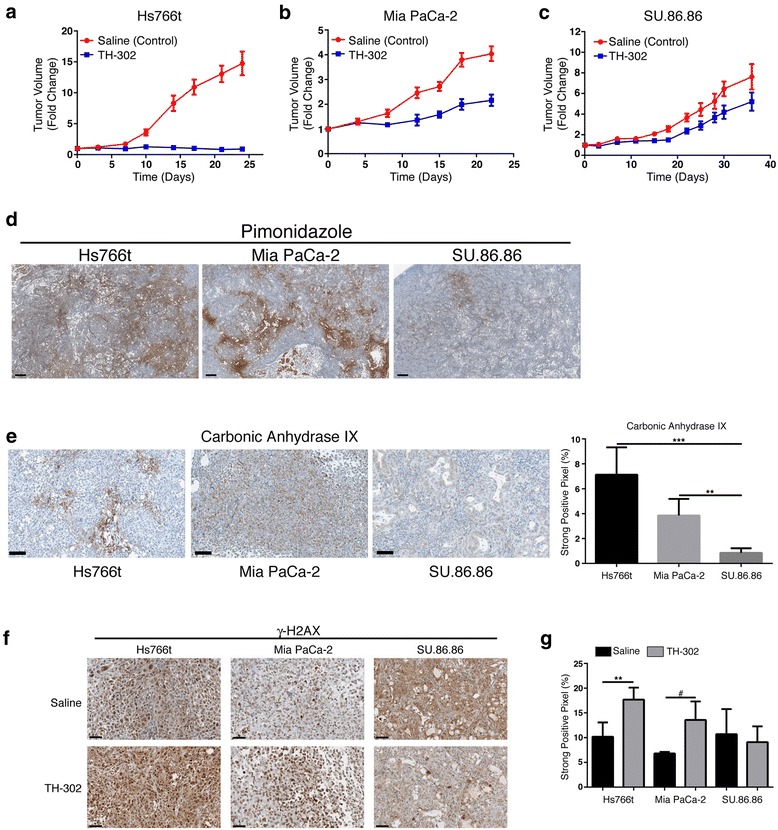
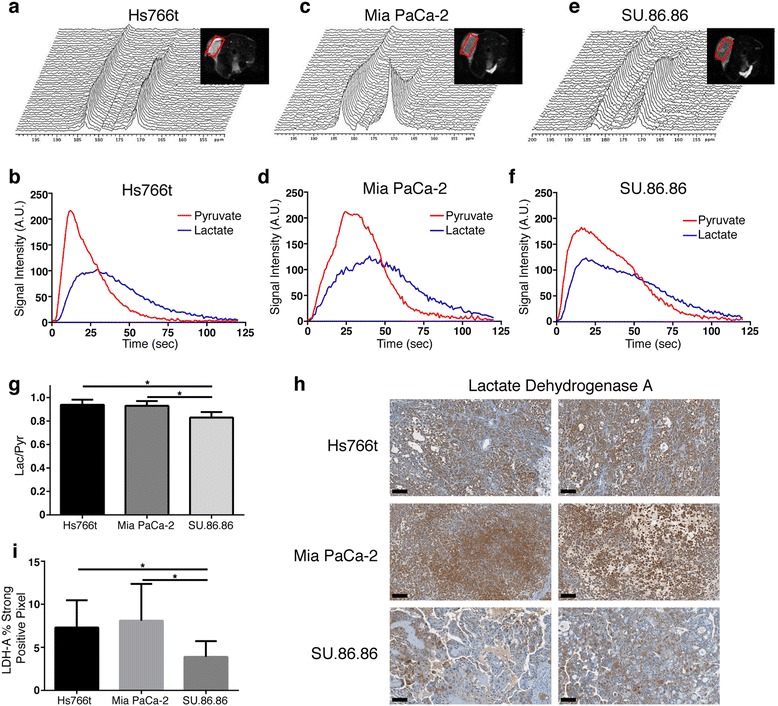
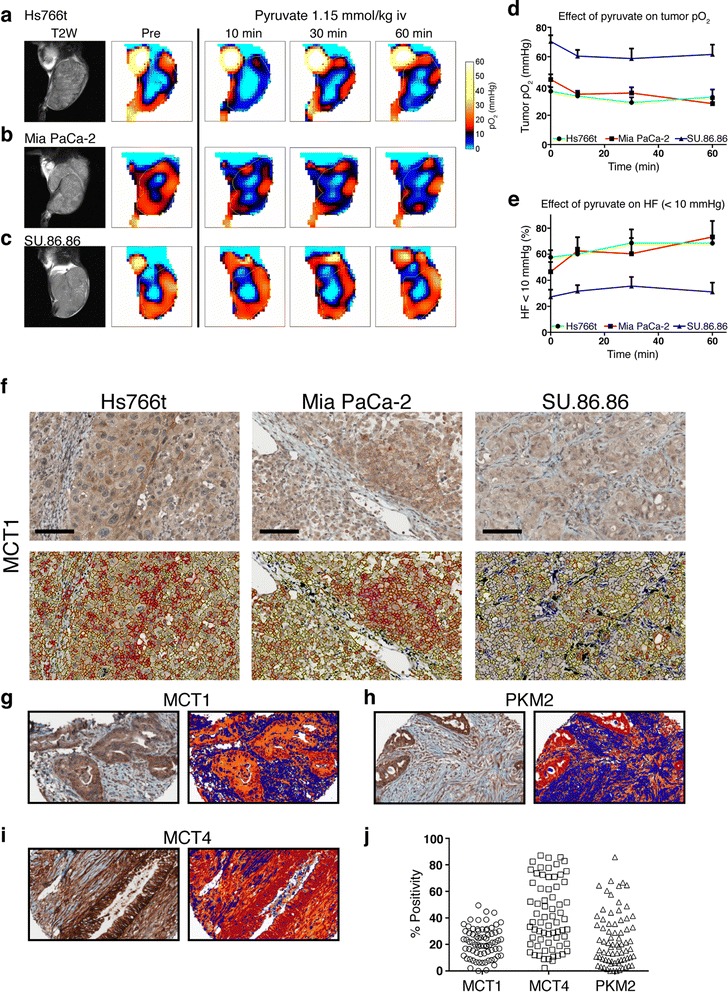
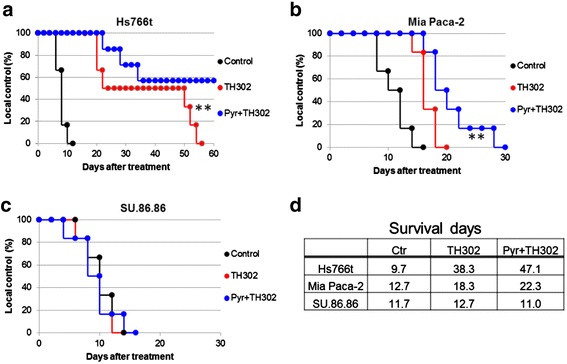
Three human PDAC cell lines with varying sensitivity to TH-302 (Hs766t > MiaPaCa-2 > SU.86.86) were used to establish PDAC xenograft models. PDAC cells were metabolically profiled in vitro and in vivo using the Seahorse XF system and hyperpolarized (13)C pyruvate MRI, respectively, in addition to quantitative immunohistochemistry. The effect of exogenous pyruvate on tumor oxygenation was determined using electroparamagnetic resonance (EPR) oxygen imaging. Hs766t and MiaPaCa-2 cells exhibited a glycolytic phenotype in comparison to TH-302 resistant line SU.86.86. Supporting this observation is a higher lactate/pyruvate ratio in Hs766t and MiaPaCa xenografts as observed during hyperpolarized pyruvate MRI studies in vivo. Coincidentally, response to exogenous pyruvate both in vitro (Seahorse oxygen consumption) and in vivo (EPR oxygen imaging) was greatest in Hs766t and MiaPaCa models, possibly due to a higher mitochondrial reserve capacity. Changes in oxygen consumption and in vivo hypoxic status to pyruvate were limited in the SU.86.86 model. Combination therapy of pyruvate plus TH-302 in vivo significantly decreased tumor growth and increased survival in the MiaPaCa model and improved survival in Hs766t tumors.
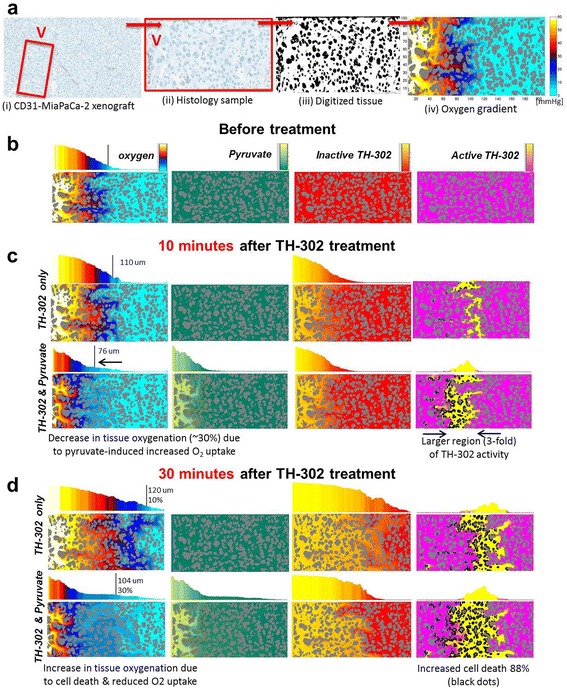
Using metabolic profiling, functional imaging, and computational modeling, we show improved TH-302 activity by transiently increasing tumor hypoxia metabolically with exogenous pyruvate. Additionally, this work identified a set of biomarkers that may be used clinically to predict which tumors will be most responsive to pyruvate + TH-302 combination therapy. The results of this study support the concept that acute increases in tumor hypoxia can be beneficial for improving the clinical efficacy of HAPs and can positively impact the future treatment of PDAC and other cancers.
实体瘤中的缺氧龛位中存在对治疗有抗性的细胞。缺氧激活前药(HAPs)的设计目的是克服这种抗性,迄今为止,它们已经开始显示出临床疗效。然而,临床 HAPs 的活性还可以进一步提高。在这项研究中,我们试图寻找非药理学方法来急性加剧肿瘤缺氧,以增加胰腺导管腺癌(PDAC)肿瘤模型中 TH-302 的活性。
使用三种对 TH-302 敏感性不同的人胰腺导管腺癌细胞系(Hs766t > MiaPaCa-2 > SU.86.86)建立 PDAC 异种移植模型。使用 Seahorse XF 系统和极化(13)C 丙酮酸 MRI 分别对 PDAC 细胞进行体外和体内代谢谱分析,此外还进行了定量免疫组织化学分析。使用电参数磁共振(EPR)氧成像来确定外源性丙酮酸对肿瘤氧合的影响。与 TH-302 耐药系 SU.86.86 相比,Hs766t 和 MiaPaCa-2 细胞表现出糖酵解表型。这一观察结果得到了支持,即在体内极化丙酮酸 MRI 研究中观察到 Hs766t 和 MiaPaCa 异种移植瘤中的乳酸/丙酮酸比值更高。巧合的是,在 Hs766t 和 MiaPaCa 模型中,外源性丙酮酸在体外( Seahorse 氧消耗)和体内( EPR 氧成像)的反应最大,这可能是由于线粒体储备能力更高。在 SU.86.86 模型中,氧消耗和体内缺氧状态对丙酮酸的变化有限。体内联合使用丙酮酸加 TH-302 治疗在 MiaPaCa 模型中显著降低了肿瘤生长并延长了生存期,并在 Hs766t 肿瘤中提高了生存期。
通过使用代谢谱分析、功能成像和计算模型,我们显示了通过用外源性丙酮酸代谢性地短暂增加肿瘤缺氧来提高 TH-302 的活性。此外,这项工作还确定了一组生物标志物,这些标志物可能在临床上用于预测哪些肿瘤对丙酮酸+TH-302 联合治疗反应最敏感。这项研究的结果支持这样一种概念,即急性增加肿瘤缺氧可以有益于提高 HAPs 的临床疗效,并对 PDAC 和其他癌症的未来治疗产生积极影响。