Integrated Mathematical Oncology, H. Lee Moffitt Cancer Center and Research Institute Tampa, FL, USA ; Department of Oncologic Sciences, College of Medicine, University of South Florida Tampa, FL, USA.
Front Oncol. 2013 May 10;3:111. doi: 10.3389/fonc.2013.00111. eCollection 2013.
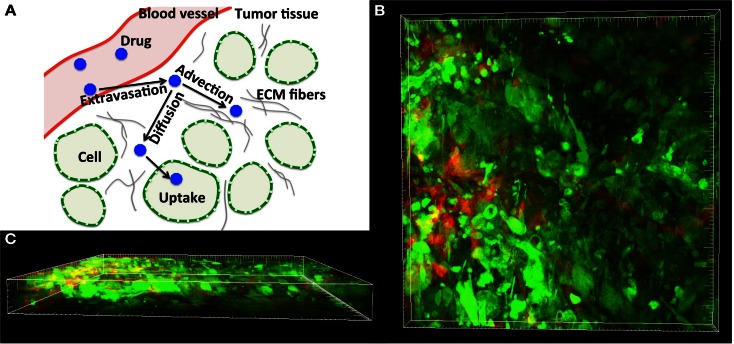
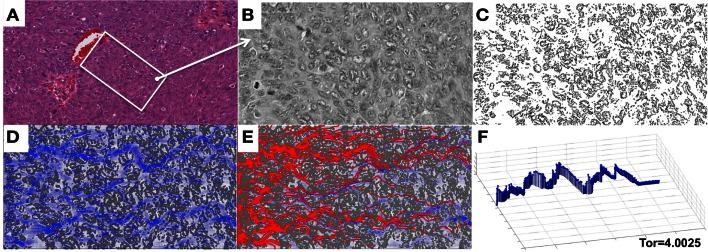
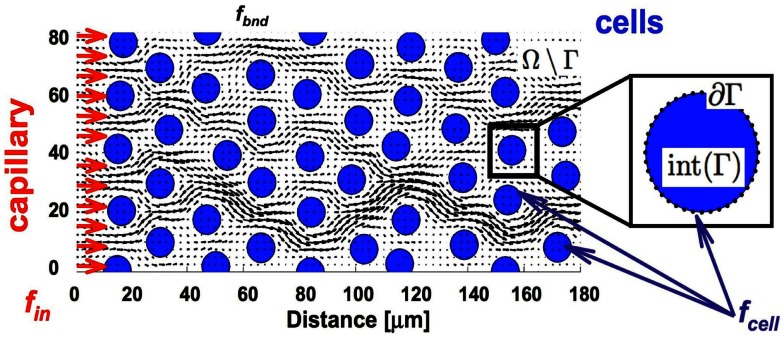
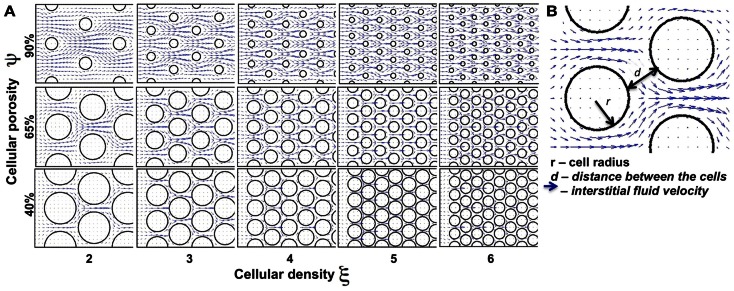
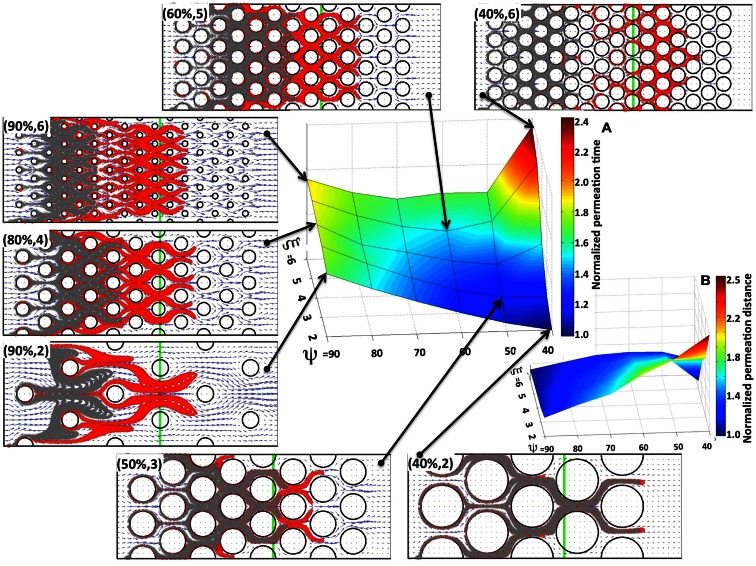
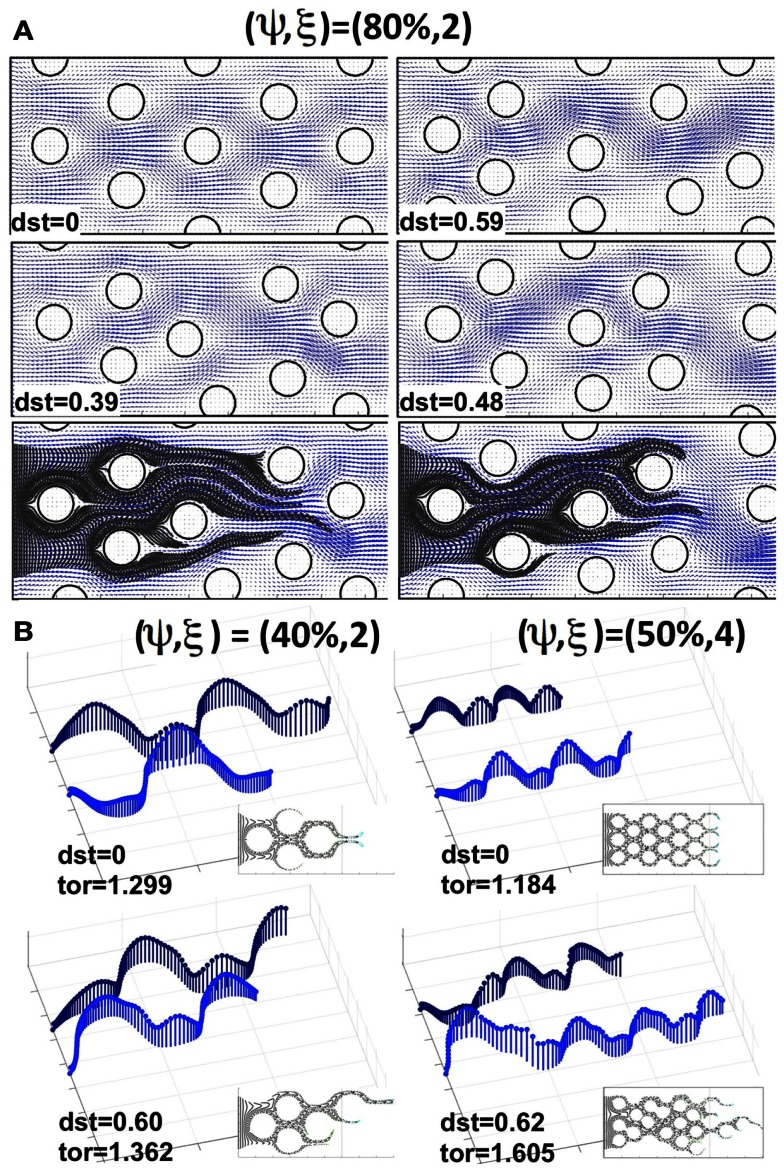
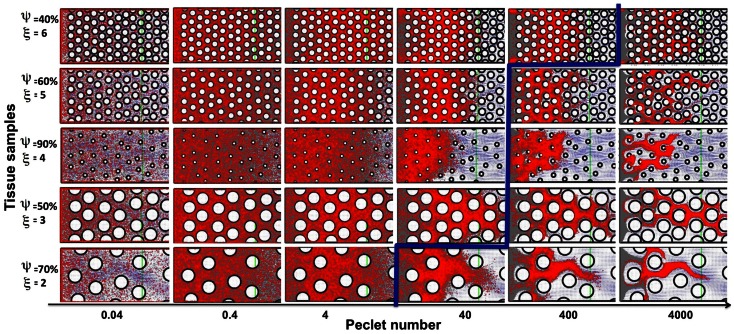
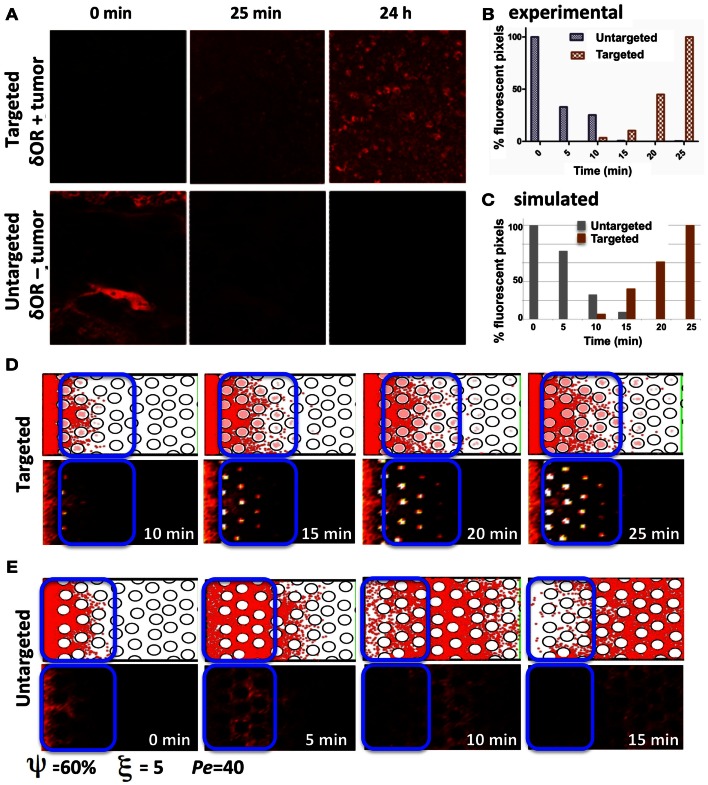
Despite the great progress that has been made in understanding cancer biology and the potential molecular targets for its treatment, the majority of drugs fail in the clinical trials. This may be attributed (at least in part) to the complexity of interstitial drug transport in the patient's body, which is hard to test experimentally. Similarly, recent advances in molecular imaging have led to the development of targeted biomarkers that can predict pharmacological responses to therapeutic interventions. However, both the drug and biomarker molecules need to access the tumor tissue and be taken up into individual cells in concentrations sufficient to exert the desired effect. To investigate the process of drug penetration at the mesoscopic level we developed a computational model of interstitial transport that incorporates the biophysical properties of the tumor tissue, including its architecture and interstitial fluid flow, as well as the properties of the agents. This model is based on the method of regularized Stokeslets to describe the fluid flow coupled with discrete diffusion-advection-reaction equations to model the dynamics of the drugs. Our results show that the tissue cellular porosity and density influence the depth of penetration in a non-linear way, with sparsely packed tissues being traveled through more slowly than the denser tissues. We demonstrate that irregularities in the cell spatial configurations result in the formation of interstitial corridors that are followed by agents leading to the emergence of tissue zones with less exposure to the drugs. We describe how the model can be integrated with in vivo experiments to test the extravasation and penetration of the targeted biomarkers through the tumor tissue. A better understanding of tissue- or compound-specific factors that limit the penetration through the tumors is important for non-invasive diagnoses, chemotherapy, the monitoring of treatment responses, and the detection of tumor recurrence.
尽管在理解癌症生物学和治疗的潜在分子靶点方面已经取得了巨大进展,但大多数药物在临床试验中都失败了。这可能至少部分归因于患者体内间质药物传输的复杂性,这种复杂性很难通过实验来测试。同样,分子成像的最新进展也导致了靶向生物标志物的开发,这些标志物可以预测对治疗干预的药理反应。然而,药物和生物标志物分子都需要进入肿瘤组织,并以足够的浓度被单个细胞摄取,以发挥预期的效果。为了研究药物在介观水平上的渗透过程,我们开发了一种间质传输的计算模型,该模型结合了肿瘤组织的生物物理特性,包括其结构和间质流体流动特性,以及药物的特性。该模型基于正则化 Stokeslets 方法来描述流体流动,同时结合离散的扩散-对流-反应方程来模拟药物的动力学。我们的结果表明,组织细胞的孔隙率和密度以非线性的方式影响渗透深度,细胞稀疏排列的组织比细胞密集排列的组织渗透得更慢。我们证明了细胞空间结构的不规则性会导致间质走廊的形成,药物会沿着这些走廊前进,从而形成药物暴露较少的组织区域。我们描述了如何将模型与体内实验相结合,以测试靶向生物标志物通过肿瘤组织的外渗和渗透。更好地了解限制化合物穿透肿瘤的组织或化合物特异性因素,对于非侵入性诊断、化疗、治疗反应监测和肿瘤复发检测都非常重要。