Gil Diana, Schrum Adam G
Department of Immunology, Mayo Clinic College of Medicine, Rochester, USA.
Adv Biosci Biotechnol. 2013 Apr;4(4a):73-84. doi: 10.4236/abb.2013.44A011.
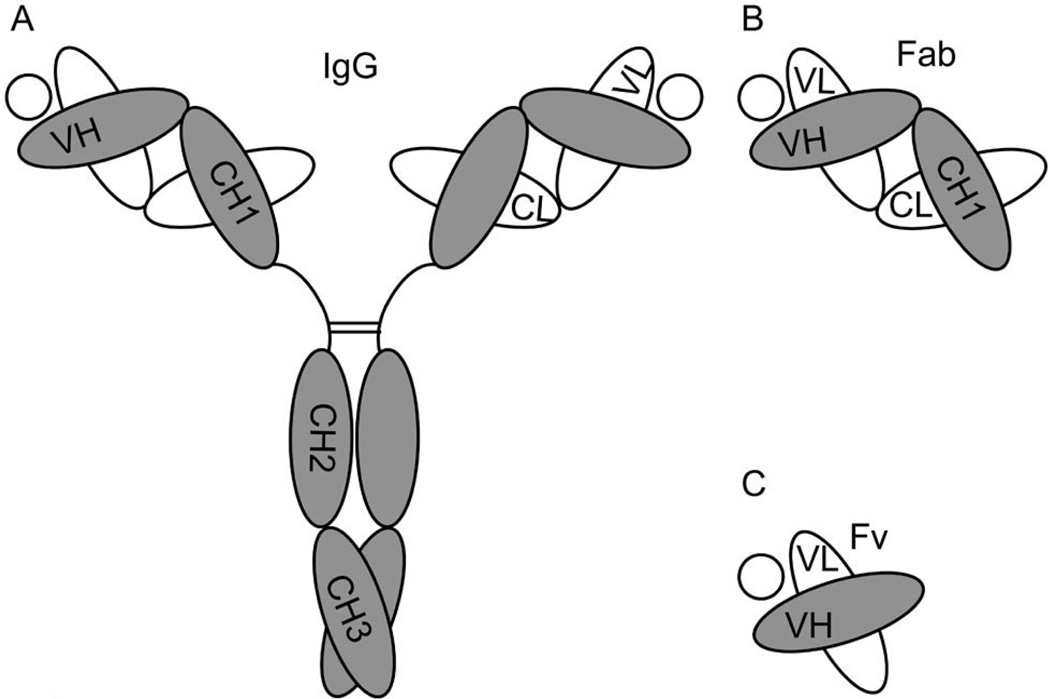
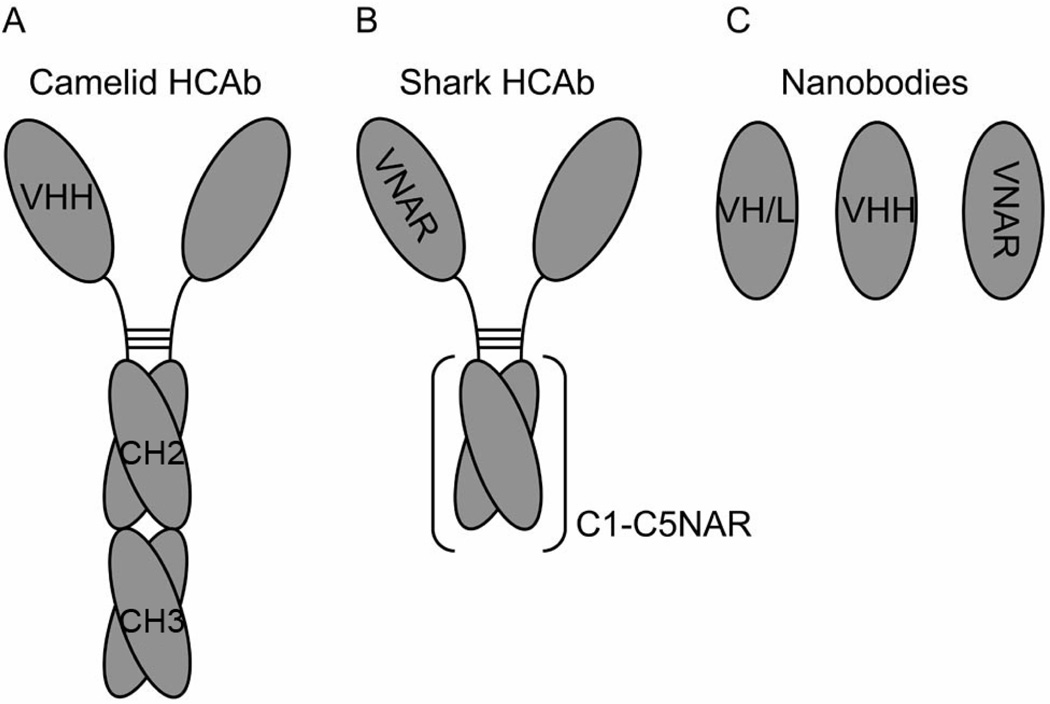
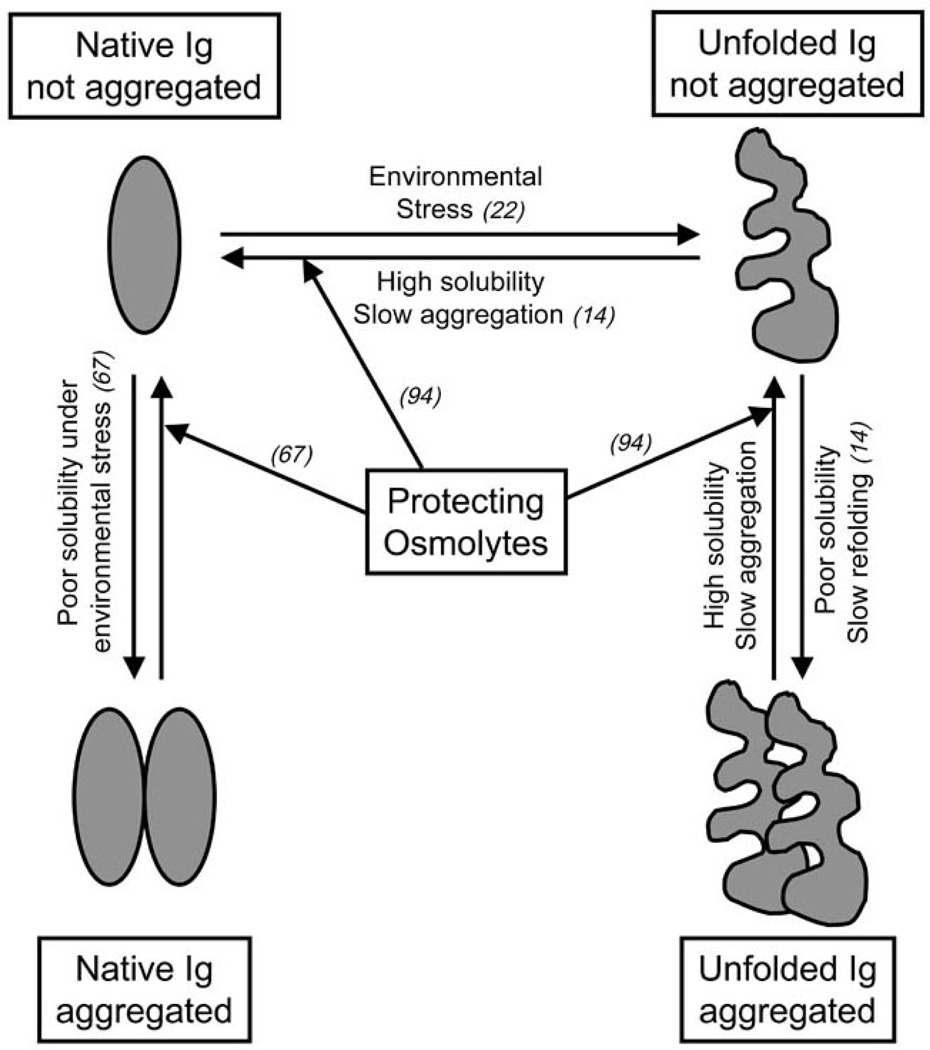
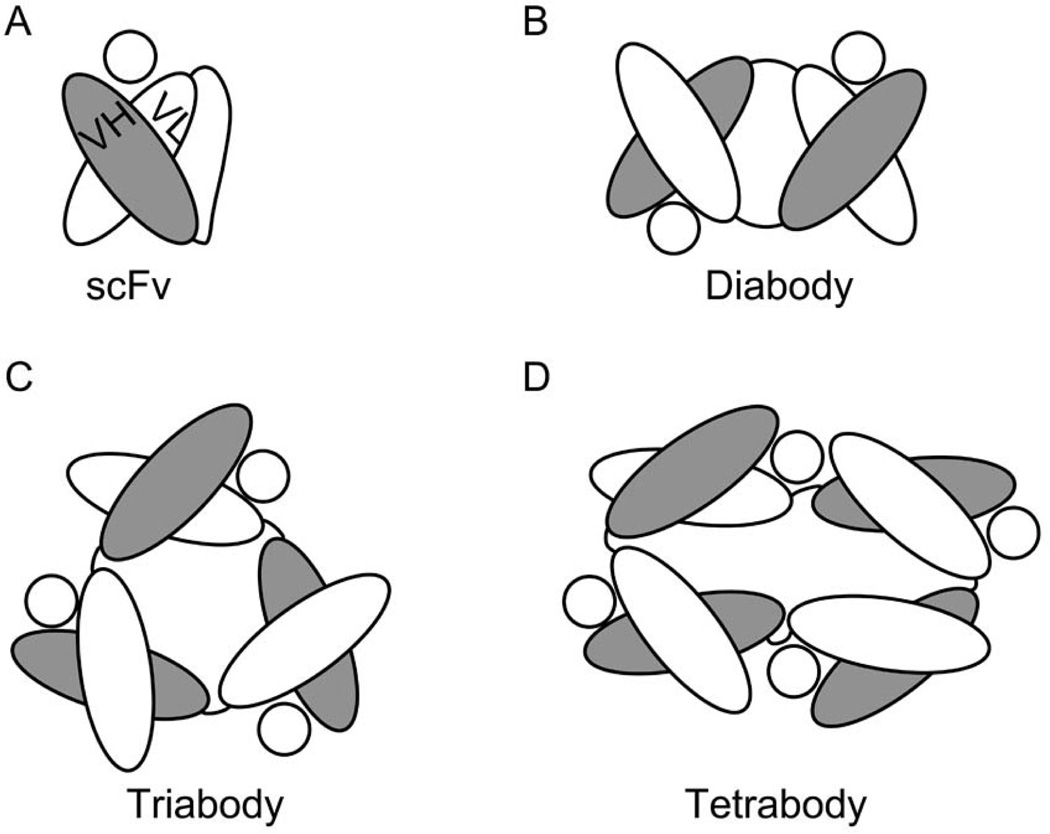
Monoclonal antibodies (mAbs) have proven to be useful for development of new therapeutic drugs and diagnostic techniques. To overcome the difficulties posed by their complex structure and folding, reduce undesired immunogenicity, and improve pharmacokinetic properties, a plethora of different Ab fragments have been developed. These include recombinant Fab and Fv segments that can display improved properties over those of the original mAbs upon which they are based. Antibody (Ab) fragments such as Fabs, scFvs, diabodies, and nanobodies, all contain the variable Ig domains responsible for binding to specific antigenic epitopes, allowing for specific targeting of pathological cells and/or molecules. These fragments can be easier to produce, purify and refold than a full Ab, and due to their smaller size they can be well absorbed and distributed into target tissues. However, the physicochemical and structural properties of the immunoglobulin (Ig) domain, upon which the folding and conformation of all these Ab fragments is based, can limit the stability of Ab-based drugs. The Ig domain is fairly sensitive to unfolding and aggregation when produced out of the structural context of an intact Ab molecule. When unfolded, Ab fragments may lose their specificity as well as establish non-native interactions leading to protein aggregation. Aggregated antibody fragments display altered pharmacokinetic and immunogenic properties that can augment their toxicity. Therefore, much effort has been placed in understanding the factors impacting the stability of Ig folding at two different levels: 1) intrinsically, by studying the effects of the amino acid sequence on Ig folding; 2) extrinsically, by determining the environmental conditions that may influence the stability of Ig folding. In this review we will describe the structure of the Ig domain, and the factors that impact its stability, to set the context for the different approaches currently used to achieve stable recombinant Ig domains when pursuing the development of Ab fragment-based biotechnologies.
单克隆抗体(mAb)已被证明对新型治疗药物和诊断技术的开发很有用。为了克服其复杂结构和折叠带来的困难、降低不必要的免疫原性并改善药代动力学特性,人们开发了大量不同的抗体片段。这些包括重组Fab和Fv片段,与它们所基于的原始单克隆抗体相比,它们可以表现出更好的特性。抗体(Ab)片段,如Fab、scFv、双体和纳米抗体,都包含负责与特定抗原表位结合的可变Ig结构域,从而能够特异性靶向病理细胞和/或分子。与完整抗体相比,这些片段更容易生产、纯化和重折叠,并且由于它们的尺寸较小,它们可以很好地被吸收并分布到靶组织中。然而,所有这些抗体片段的折叠和构象所基于的免疫球蛋白(Ig)结构域的物理化学和结构特性,可能会限制基于抗体的药物的稳定性。当在完整抗体分子的结构背景之外产生时,Ig结构域对去折叠和聚集相当敏感。去折叠时,抗体片段可能会失去其特异性,并建立非天然相互作用,导致蛋白质聚集。聚集的抗体片段表现出改变的药代动力学和免疫原性特性,这可能会增加它们的毒性。因此,人们在两个不同层面上付出了很多努力来了解影响Ig折叠稳定性的因素:1)内在层面,通过研究氨基酸序列对Ig折叠的影响;2)外在层面,通过确定可能影响Ig折叠稳定性的环境条件。在这篇综述中,我们将描述Ig结构域的结构以及影响其稳定性的因素,以便为目前在开发基于抗体片段的生物技术时用于实现稳定重组Ig结构域的不同方法奠定背景。