Laboratory of Environmental Toxicology, Department of Biological Sciences, National School of Public Health, Oswaldo Cruz Institute, Oswaldo Cruz Foundation, Rio de Janeiro, RJ, 21040-361, Brazil.
Laboratory of Malaria Research, Oswaldo Cruz Institute, Oswaldo Cruz Foundation, Rio de Janeiro, RJ, 21040-361, Brazil.
PLoS One. 2015 Jan 30;10(1):e0117842. doi: 10.1371/journal.pone.0117842. eCollection 2015.
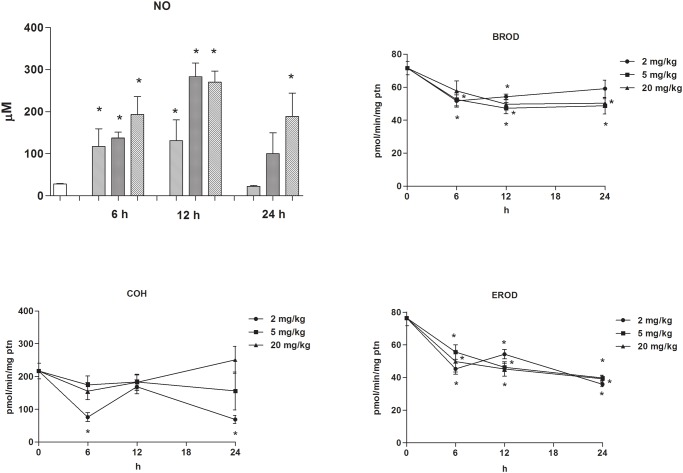
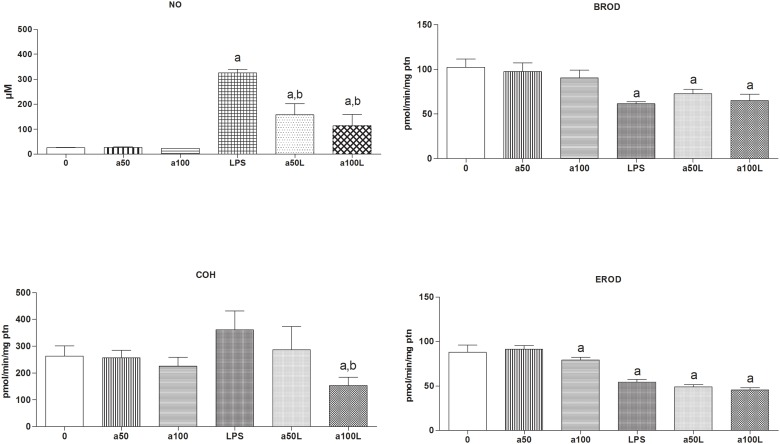
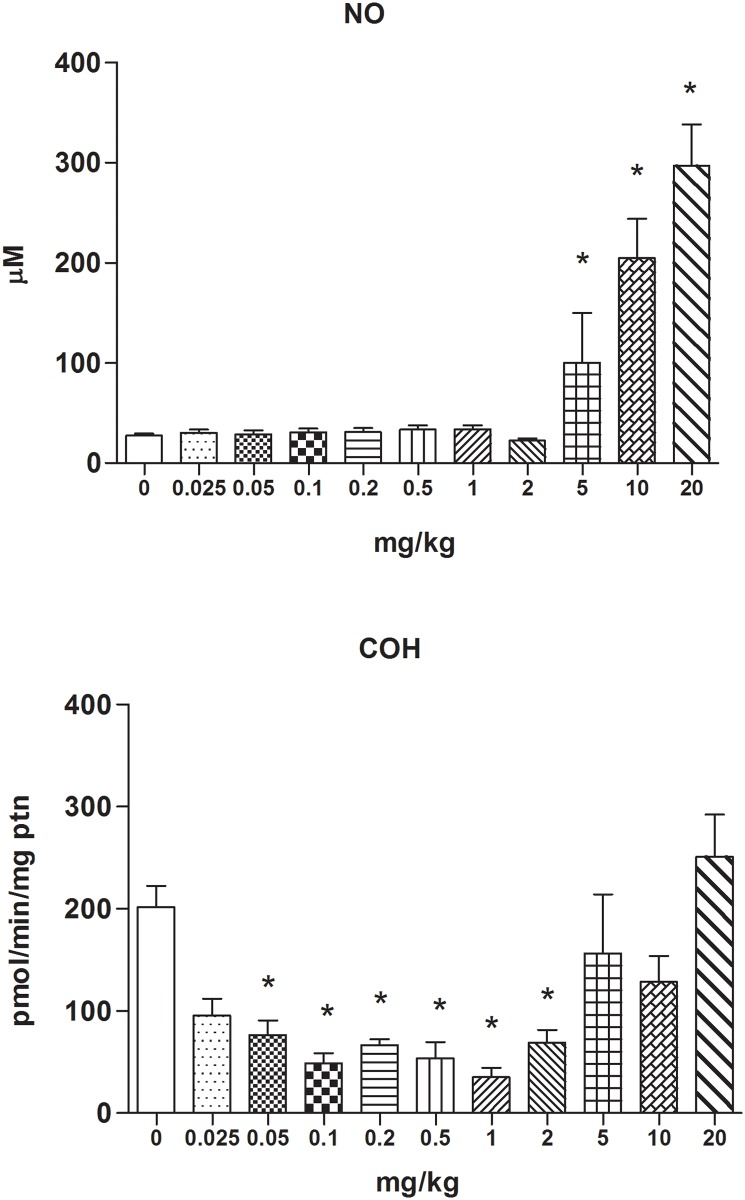
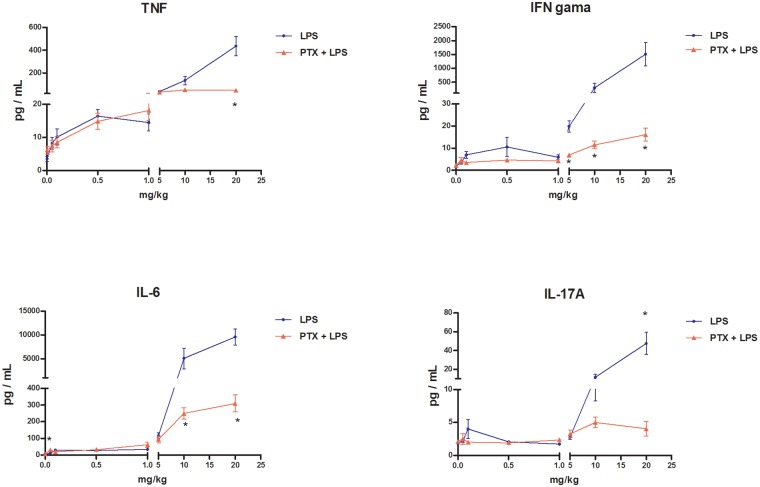
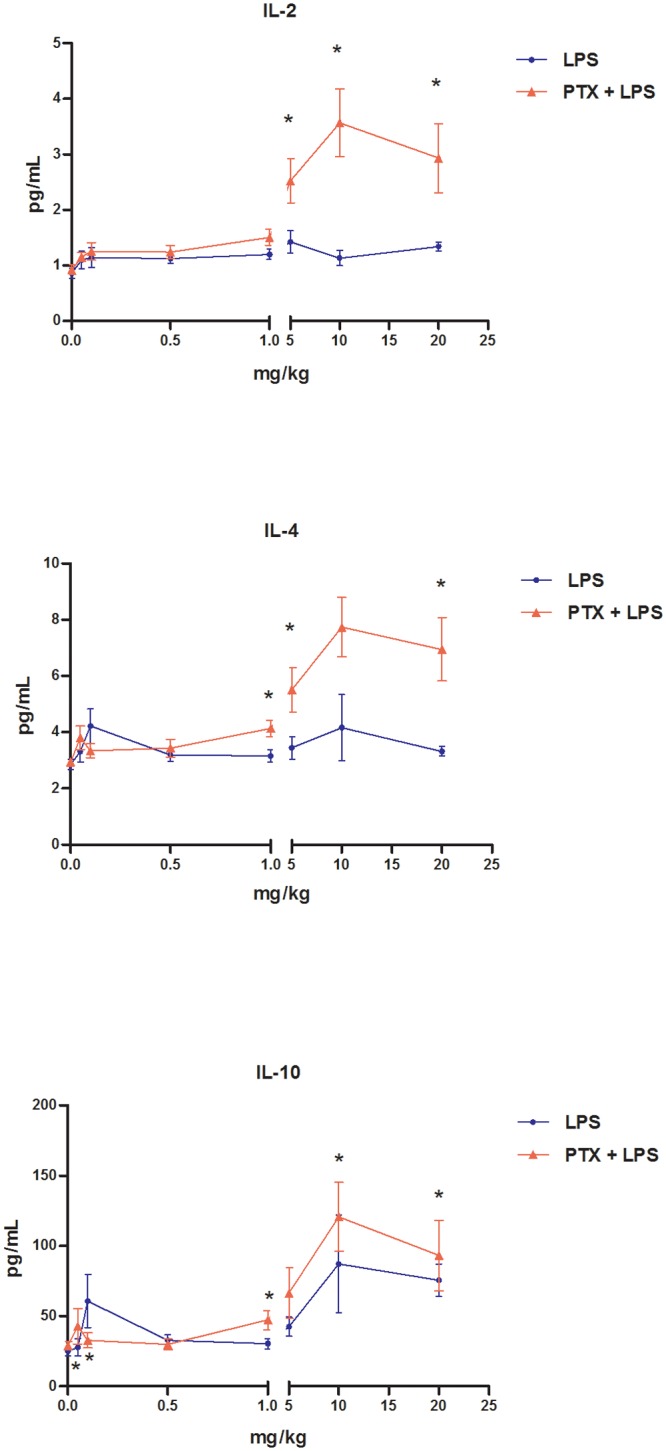
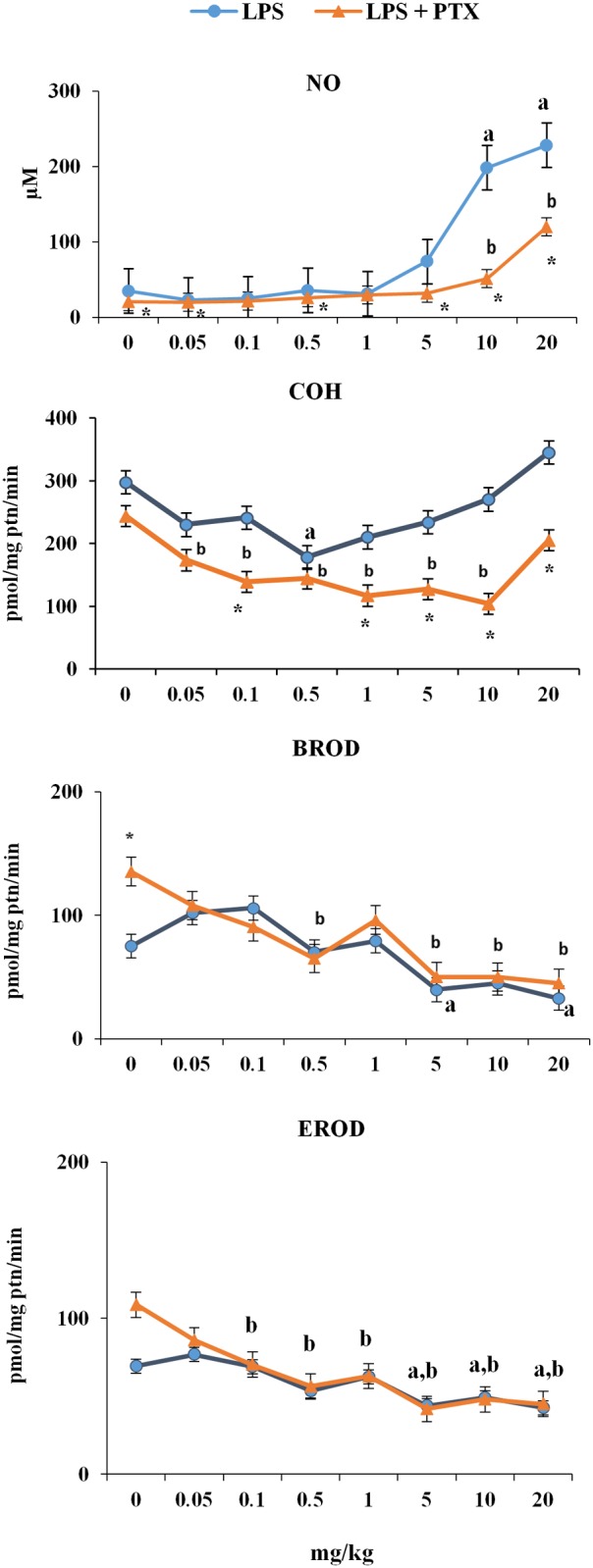
Mouse cytochrome P450 (CYP) 2A5 is induced by inflammatory conditions and infectious diseases that down-regulate the expression and activity of most other CYP isoforms. Enhanced oxidative stress and nuclear factor (erythroid 2-related factor) 2 (Nrf2) transcription factor activation have been hypothesised to mediate up-regulation of CYP2A5 expression in the murine liver. The unique and complex regulation of CYP2A5, however, is far from being thoroughly elucidated. Sepsis and high doses of bacterial lipopolysaccharide (LPS) elicit oxidative stress in the liver, but depression, not induction, of CYP2A5 has been observed in studies of mice treated with LPS. The foregoing facts prompted us to evaluate the response of CYP2A5 liver activity in female DBA-2 mice over a broad range of LPS doses (0, 0.025, 0.05, 0.1, 0.2, 0.5, 1, 2, 5, 10, and 20 mg/kg). Cytokine levels (interleukin [IL]-2, IL-4, IL-6, IL-10, IL-17A, interferon gamma, tumour necrosis factor alpha) and nitric oxide (NO) were measured in the blood serum. Activities of CYP1A (EROD) and CYP2B (BROD) in the liver were also determined for comparative purposes. LPS depressed CYP2A5 at low doses (0.025-2.0 mg/kg) but not at doses (>2 mg/kg) that increased pro-inflammatory cytokines and NO serum levels, and depressed CYP1A and CYP2B activities. Blockade of pro-inflammatory cytokines and the overproduction of NO induced by co-treatment with pentoxifylline and LPS and iNOS inhibition with aminoguanidine both extended down-regulation of CYP2A5 to the high dose range while not affecting LPS-induced depression of CYP1A and CYP2B. Overall, the results suggested that NO plays a role in the reversal of the low-dose LPS-induced depression of CYP2A5 observed when mice were challenged with higher doses of LPS.
小鼠细胞色素 P450(CYP)2A5 被炎症条件和感染性疾病诱导,这些条件和疾病下调了大多数其他 CYP 同工酶的表达和活性。据推测,增强的氧化应激和核因子(红系 2 相关因子)2(Nrf2)转录因子激活介导了 CYP2A5 在小鼠肝脏中的表达上调。然而,CYP2A5 的独特而复杂的调节远未被彻底阐明。败血症和高剂量细菌脂多糖(LPS)在肝脏中引发氧化应激,但在 LPS 处理的小鼠研究中观察到 CYP2A5 的抑制而不是诱导。上述事实促使我们在广泛的 LPS 剂量范围内(0、0.025、0.05、0.1、0.2、0.5、1、2、5、10 和 20 mg/kg)评估雌性 DBA-2 小鼠中 CYP2A5 肝脏活性的反应。测量了血清中的细胞因子水平(白细胞介素[IL]-2、IL-4、IL-6、IL-10、IL-17A、干扰素γ、肿瘤坏死因子α)和一氧化氮(NO)。还为比较目的测定了肝脏中 CYP1A(EROD)和 CYP2B(BROD)的活性。LPS 在低剂量(0.025-2.0 mg/kg)下抑制 CYP2A5,但在增加促炎细胞因子和 NO 血清水平的剂量(>2 mg/kg)下不抑制,同时抑制 CYP1A 和 CYP2B 活性。用己酮可可碱和 LPS 共同处理阻断促炎细胞因子和 NO 的过度产生,以及用氨基胍抑制 iNOS,都将 CYP2A5 的下调扩展到高剂量范围,而不影响 LPS 诱导的 CYP1A 和 CYP2B 的抑制。总体而言,结果表明,NO 在逆转高剂量 LPS 挑战时观察到的低剂量 LPS 诱导的 CYP2A5 抑制中发挥作用。