Jennings W Bryan, Berry Kristin H
Departamento de Vertebrados, Museu Nacional, Universidade Federal do Rio de Janeiro, Rio de Janeiro, RJ, 20940-040, Brazil.
U.S. Geological Survey, Western Ecological Research Center, Falcon Business Park, 21803 Cactus Avenue, Suite F, Riverside, California, 92518, United States of America.
PLoS One. 2015 Jan 30;10(1):e0116716. doi: 10.1371/journal.pone.0116716. eCollection 2015.
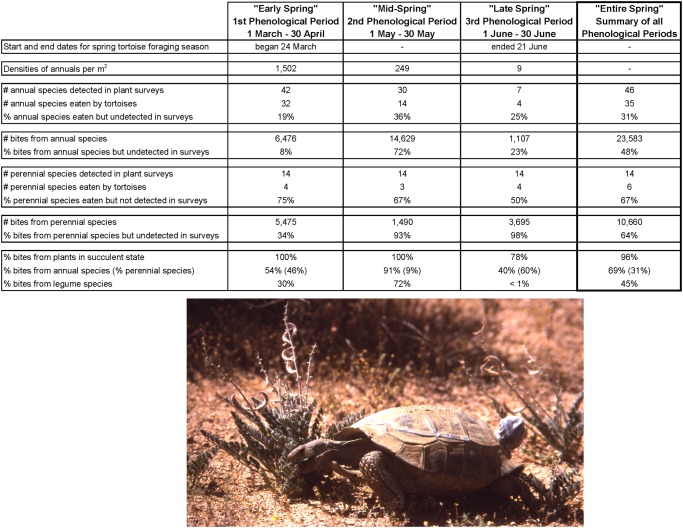
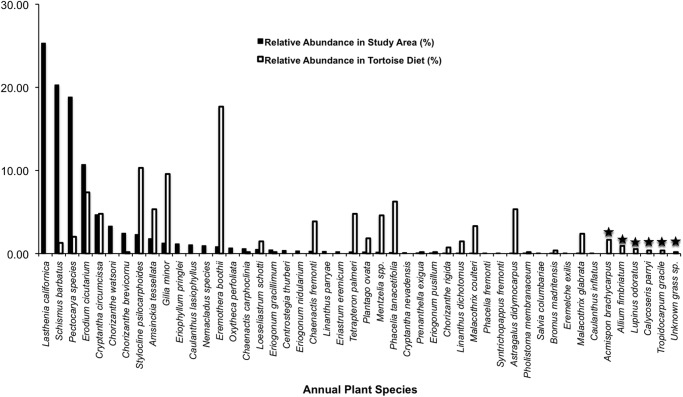
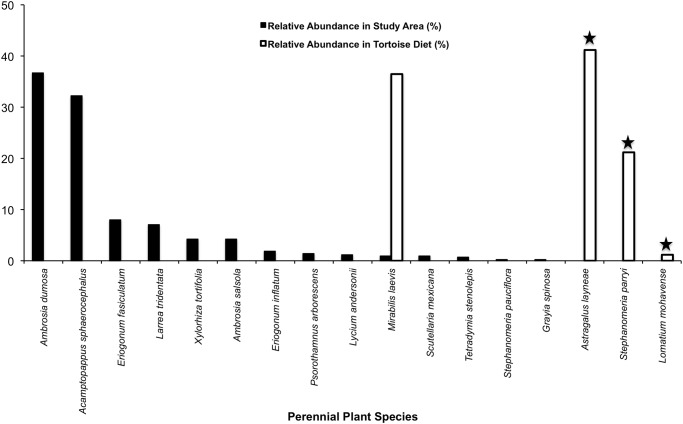
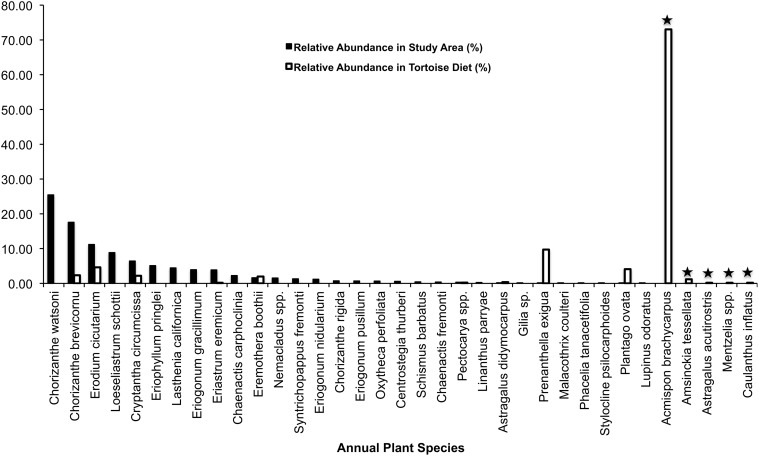
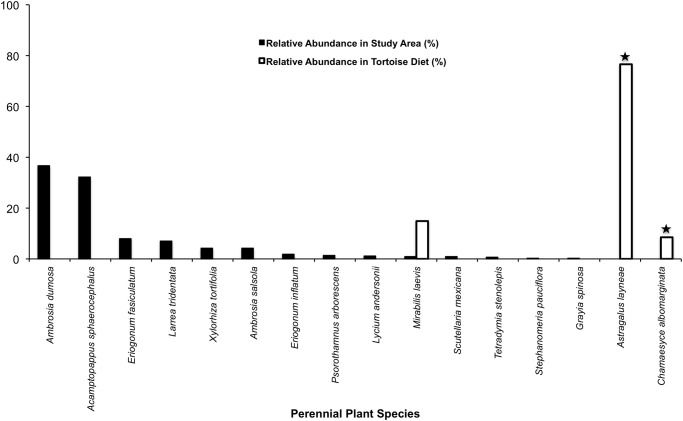
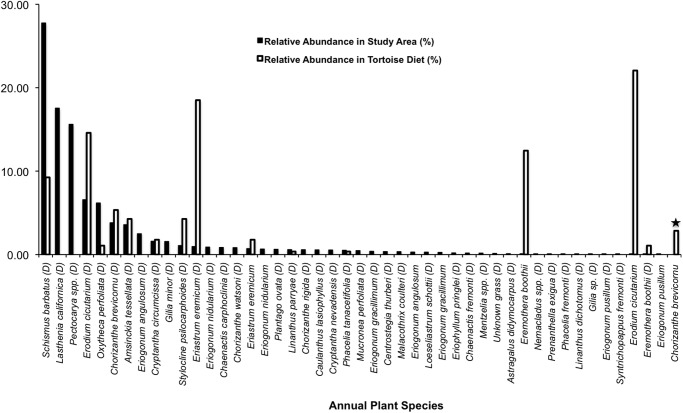
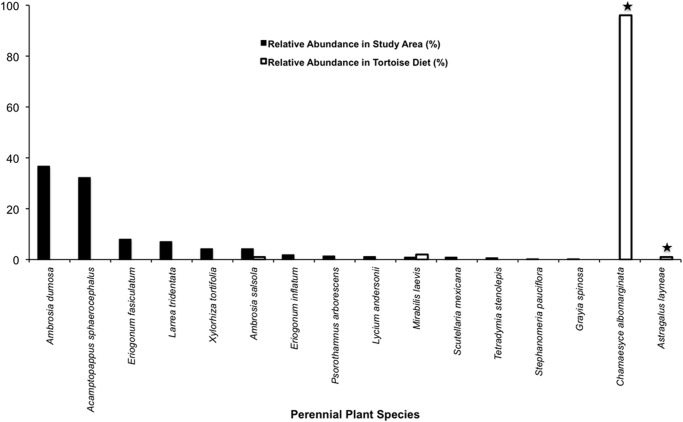
Previous studies of desert tortoise foraging ecology in the western Mojave Desert suggest that these animals are selective herbivores, which alter their diet according to the temporal availability of preferred food plants. These studies, however, did not estimate availability of potential food plants by taking into account the spatial and temporal variability in ephemeral plant abundance that occurs within the spring season. In this study, we observed 18 free-ranging adult tortoises take 35,388 bites during the spring foraging season. We also estimated the relative abundance of potential food plants by stratifying our sampling across different phenological periods of the 3-month long spring season and by different habitats and microhabitats. This methodology allowed us to conduct statistical tests comparing tortoise diet against plant abundance. Our results show that tortoises choose food plants non-randomly throughout the foraging season, a finding that corroborates the hypothesis that desert tortoises rely on key plants during different phenological periods of spring. Moreover, tortoises only consumed plants in a succulent state until the last few weeks of spring, at which time most annuals and herbaceous perennials had dried and most tortoises had ceased foraging. Many species of food plants--including several frequently eaten species--were not detected in our plant surveys, yet tortoises located these rare plants in their home ranges. Over 50% of bites consumed were in the group of undetected species. Interestingly, tortoises focused heavily on several leguminous species, which could be nutritious foods owing to their presumably high nitrogen contents. We suggest that herbaceous perennials, which were rare on our study area but represented ~30% of tortoise diet, may be important in sustaining tortoise populations during droughts when native annuals are absent. These findings highlight the vulnerability of desert tortoises to climate change if such changes alter the availability of their preferred food plants.
先前对莫哈韦沙漠西部沙漠陆龟觅食生态的研究表明,这些动物是选择性食草动物,会根据首选食物植物的时间可获得性来改变它们的饮食。然而,这些研究没有考虑到春季短暂植物丰度的时空变化,从而估算潜在食物植物的可获得性。在本研究中,我们观察了18只自由放养的成年陆龟在春季觅食季节咬食35388口。我们还通过在长达3个月的春季的不同物候期以及不同栖息地和微栖息地进行分层采样,估算了潜在食物植物的相对丰度。这种方法使我们能够进行统计测试,比较陆龟的饮食与植物丰度。我们的结果表明,在整个觅食季节,陆龟非随机地选择食物植物,这一发现证实了沙漠陆龟在春季不同物候期依赖关键植物的假设。此外,陆龟只食用处于多汁状态的植物,直到春季的最后几周,此时大多数一年生植物和多年生草本植物已经干枯,大多数陆龟也停止了觅食。在我们的植物调查中未检测到许多食物植物物种——包括几种经常被食用的物种——然而陆龟在它们的活动范围内找到了这些稀有植物。超过50%的咬食消耗来自未检测到的物种组。有趣的是,陆龟大量集中在几种豆科物种上,由于其可能较高的氮含量,这些物种可能是营养丰富的食物。我们认为,多年生草本植物在我们的研究区域很少见,但占陆龟饮食的约30%,在本土一年生植物缺乏的干旱期间,可能对维持陆龟种群很重要。这些发现凸显了如果气候变化改变了沙漠陆龟首选食物植物的可获得性,它们将面临的脆弱性。