Acta Neuropathol Commun. 2015 Jan 31;3:5. doi: 10.1186/s40478-014-0181-z.
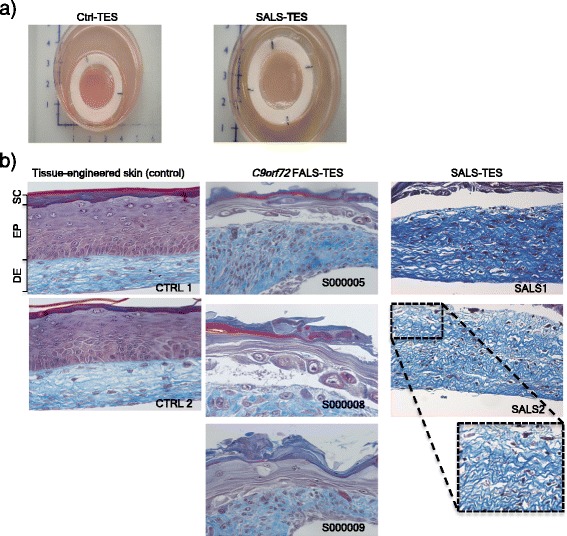
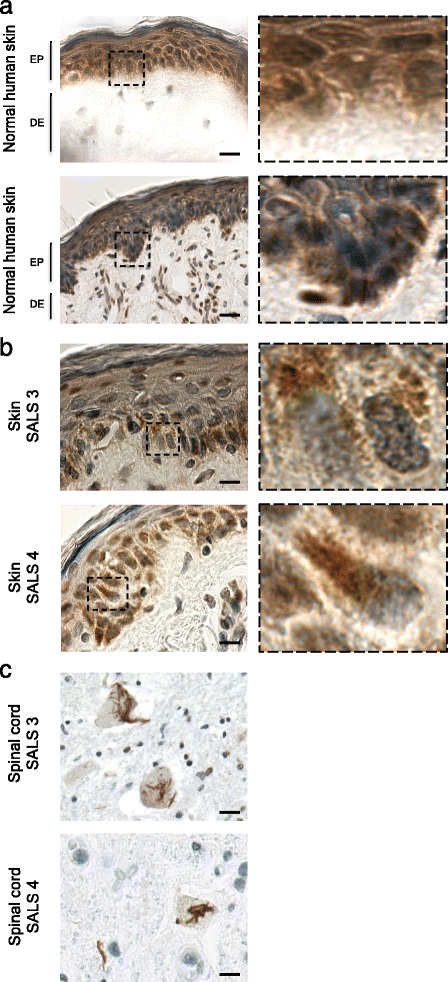
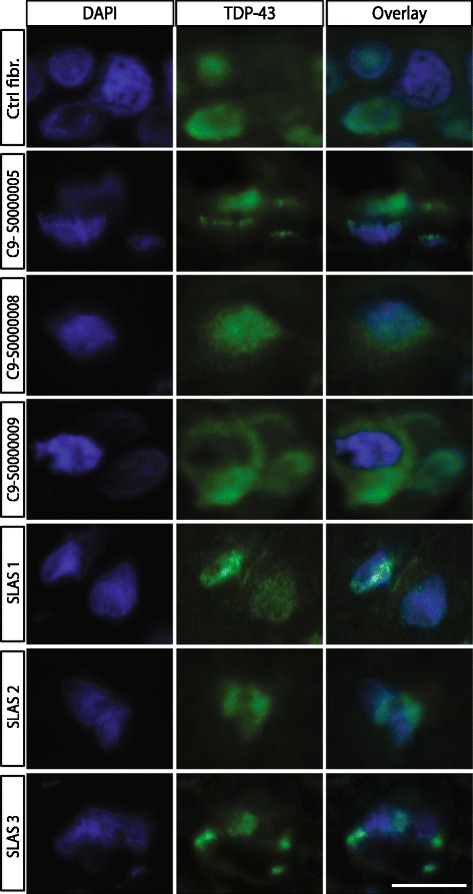
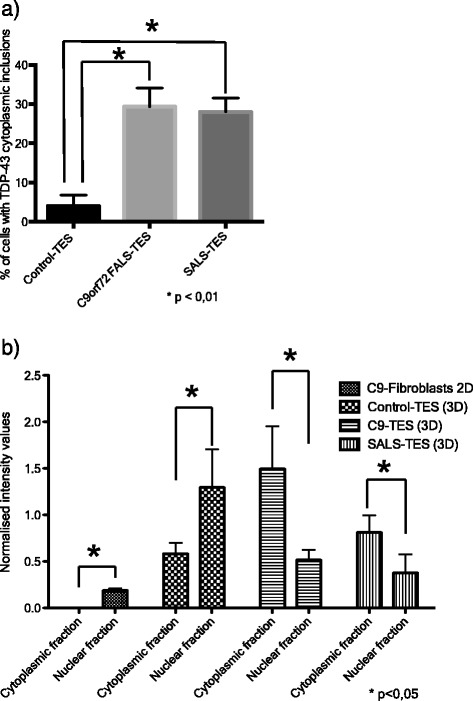
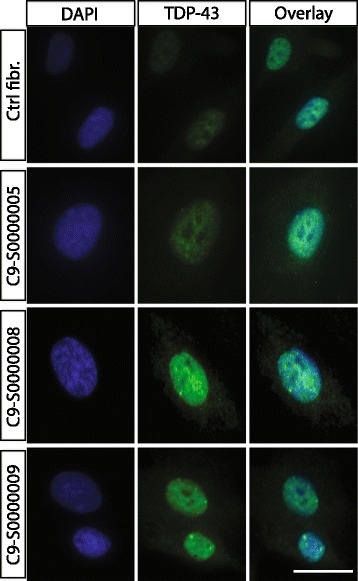
Amyotrophic lateral sclerosis (ALS) is an adult-onset disease characterized by the selective degeneration of motor neurons in the brain and spinal cord progressively leading to paralysis and death. Current diagnosis of ALS is based on clinical assessment of related symptoms. The clinical manifestations observed in ALS appear relatively late in the disease course after degeneration of a significant number of motor neurons. As a result, the identification and development of disease-modifying therapies is difficult. Therefore, novel strategies for early diagnosis of neurodegeneration, to monitor disease progression and to assess response to existing and future treatments are urgently needed. Factually, many neurological disorders, including ALS, are accompanied by skin changes that often precede the onset of neurological symptoms. Aiming to generate an innovative human-based model to facilitate the identification of predictive biomarkers associated with the disease, we developed a unique ALS tissue-engineered skin model (ALS-TES) derived from patient's own cells. The ALS-TES presents a number of striking features including altered epidermal differentiation, abnormal dermo-epidermal junction, delamination, keratinocyte infiltration, collagen disorganization and cytoplasmic TDP-43 inclusions. Remarkably, these abnormal skin defects, uniquely seen in the ALS-derived skins, were detected in pre-symtomatic C9orf72-linked ALS patients carrying the GGGGCC DNA repeat expansion. Consequently, our ALS skin model could represent a renewable source of human tissue, quickly and easily accessible to better understand the physiophatological mechanisms underlying this disease, to facilitate the identification of disease-specific biomarkers, and to develop innovative tools for early diagnosis and disease monitoring.
肌萎缩侧索硬化症(ALS)是一种成人发病的疾病,其特征是大脑和脊髓中的运动神经元进行性选择性退化,逐渐导致瘫痪和死亡。目前的 ALS 诊断基于对相关症状的临床评估。在 ALS 中观察到的临床表现出现在疾病过程中运动神经元大量退化之后,相对较晚。因此,很难确定和开发疾病修饰疗法。因此,迫切需要用于早期诊断神经退行性变,监测疾病进展以及评估现有和未来治疗方法的反应的新策略。实际上,许多神经疾病,包括 ALS,都伴有皮肤变化,这些变化常常在神经系统症状出现之前就出现了。为了生成有助于鉴定与疾病相关的预测性生物标志物的创新型基于人体的模型,我们从患者自身的细胞中开发了一种独特的肌萎缩侧索硬化症组织工程皮肤模型(ALS-TES)。ALS-TES 具有许多显著的特征,包括表皮分化改变、异常的真皮表皮连接、分层、角质形成细胞浸润、胶原组织紊乱和细胞质 TDP-43 包含物。值得注意的是,这些异常的皮肤缺陷仅在 ALS 衍生的皮肤中被检测到,在携带 GGGGCC DNA 重复扩展的 C9orf72 相关 ALS 患者中可检测到预症状的 C9orf72 相关 ALS 患者。因此,我们的 ALS 皮肤模型可以代表一种可再生的人体组织来源,可快速且方便地获取该组织,以更好地理解该疾病的生理病理学机制,促进疾病特异性生物标志物的鉴定,并开发用于早期诊断和疾病监测的创新工具。