Redondo Juliana, Hares Kelly, Wilkins Alastair, Scolding Neil, Kemp Kevin
Multiple Sclerosis and Stem Cell Group, School of Clinical Sciences, University of Bristol, Bristol, United Kingdom.
J Neurosci Res. 2015 Jun;93(6):882-92. doi: 10.1002/jnr.23556. Epub 2015 Jan 29.
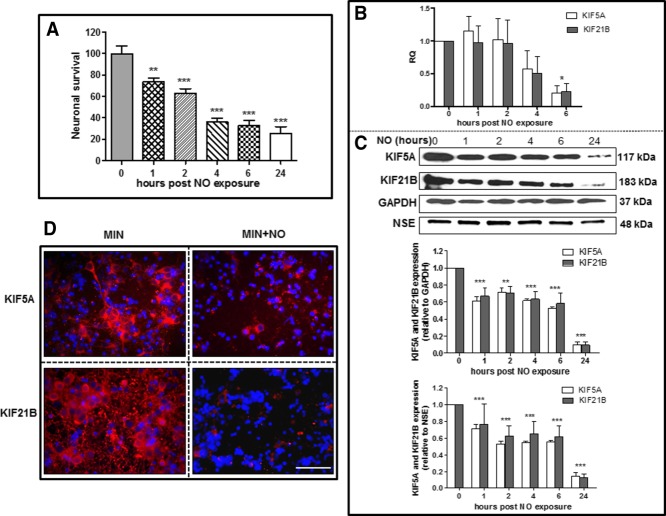
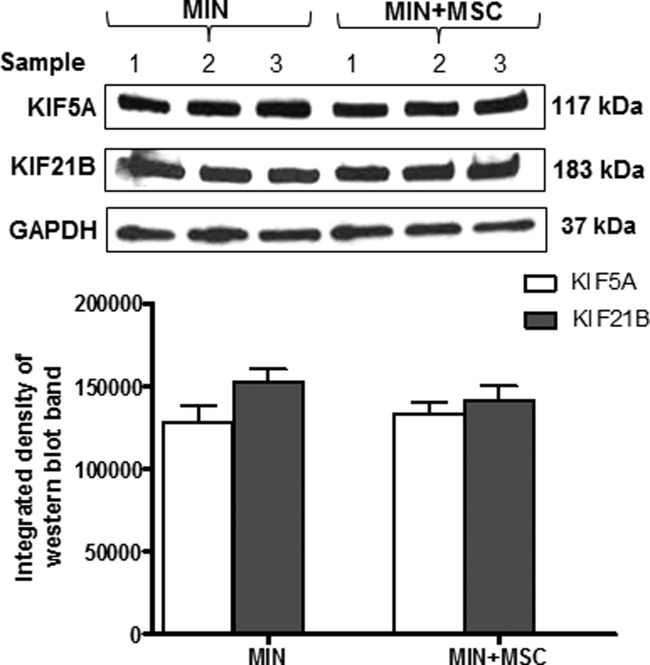
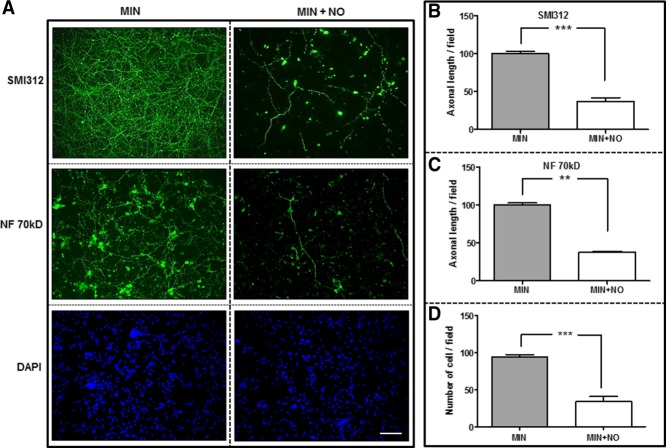
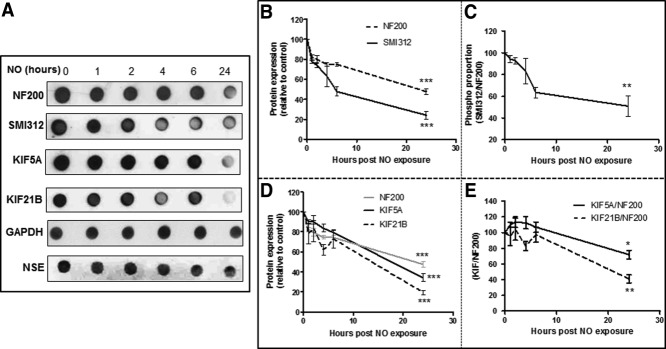
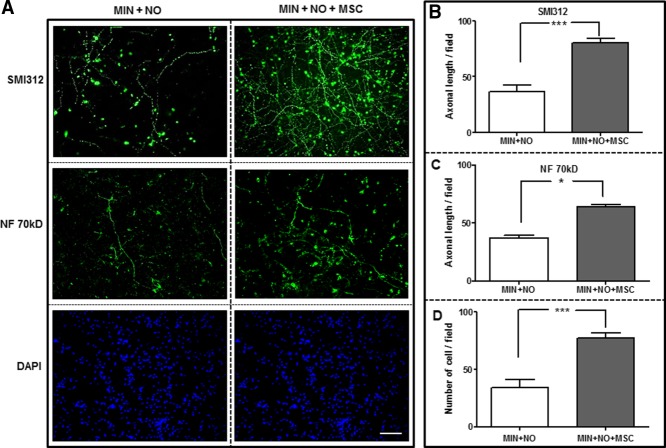
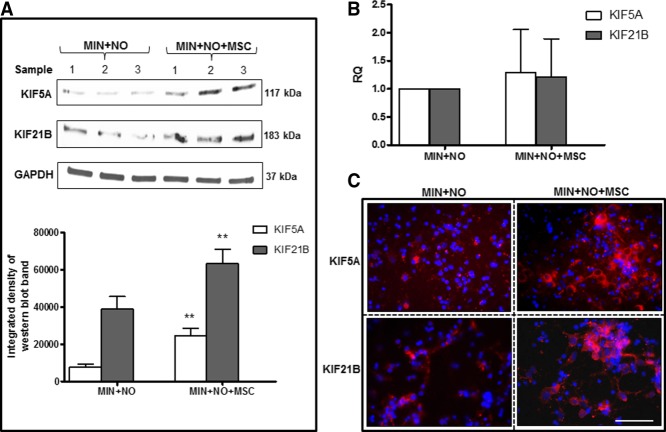
Axonal injury is often characterized by axonal transport defects and abnormal accumulation of intra-axonal components. Nitric oxide (NO) has a key role in mediating inflammatory axonopathy in many neurodegenerative diseases, but little is known about how nitrosative/oxidative stress affects axonal transport or whether reductions in kinesin superfamily protein (KIF) expression correlate with axon pathology. KIFs are molecular motors that have a key role in axonal and dendritic transport, and impairment of these mechanisms has been associated with a number of neurological disorders. This study shows that rat cortical neurons exposed to NO display both a time-dependent decrease in KIF gene/protein expression and neurofilament phosphorylation in addition to a reduction in axonal length and neuronal survival. Because mesenchymal stem cells (MSCs) represent a promising therapeutic candidate for neuronal/axonal repair, this study analyzes the capacity of MSCs to protect neurons and axonal transport mechanisms from NO damage. Results show that coculture of MSCs with NO-exposed neurons results in the preservation of KIF expression, axonal length, and neuronal survival. Altogether, these results suggest a potential mechanism involved in the disruption of axonal transport and abnormal accumulation of proteins in axons during nitrosative insult. We hypothesize that impaired axonal transport contributes, per se, to progression of injury and provide further evidence of the therapeutic potential of MSCs for neurodegenerative disorders.
轴突损伤通常表现为轴突运输缺陷和轴突内成分的异常积聚。一氧化氮(NO)在许多神经退行性疾病中介导炎症性轴突病中起关键作用,但关于亚硝化/氧化应激如何影响轴突运输,或者驱动蛋白超家族蛋白(KIF)表达的降低是否与轴突病理相关,目前知之甚少。KIF是分子马达,在轴突和树突运输中起关键作用,这些机制的损害与许多神经系统疾病有关。本研究表明,暴露于NO的大鼠皮质神经元除了轴突长度和神经元存活率降低外,还表现出KIF基因/蛋白表达随时间的下降以及神经丝磷酸化。由于间充质干细胞(MSC)是神经元/轴突修复的一种有前景的治疗候选者,本研究分析了MSC保护神经元和轴突运输机制免受NO损伤的能力。结果表明,MSC与暴露于NO的神经元共培养可导致KIF表达、轴突长度和神经元存活率的保留。总之,这些结果提示了亚硝化损伤期间轴突运输中断和轴突中蛋白质异常积聚所涉及的潜在机制。我们假设轴突运输受损本身会导致损伤进展,并为MSC治疗神经退行性疾病的潜力提供进一步证据。