Multiple Sclerosis and Stem Cell Group, Institute of Clinical Neurosciences, School of Clinical Sciences, University of Bristol, Bristol, United Kingdom.
PLoS One. 2011;6(10):e26098. doi: 10.1371/journal.pone.0026098. Epub 2011 Oct 7.
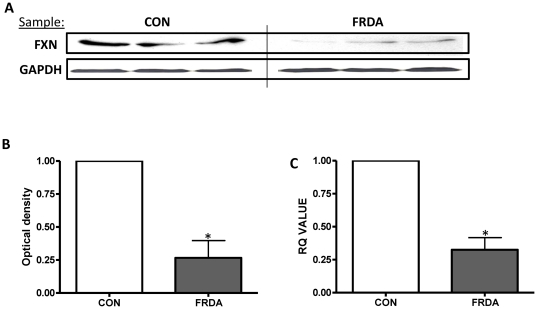
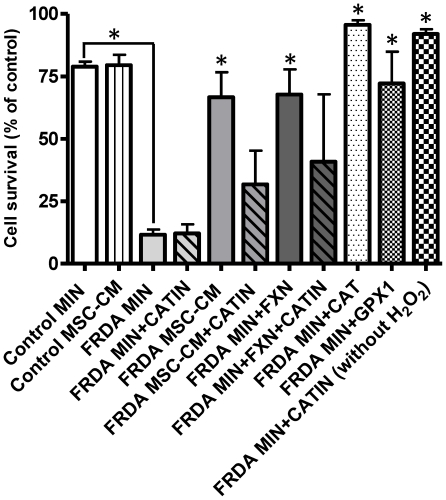
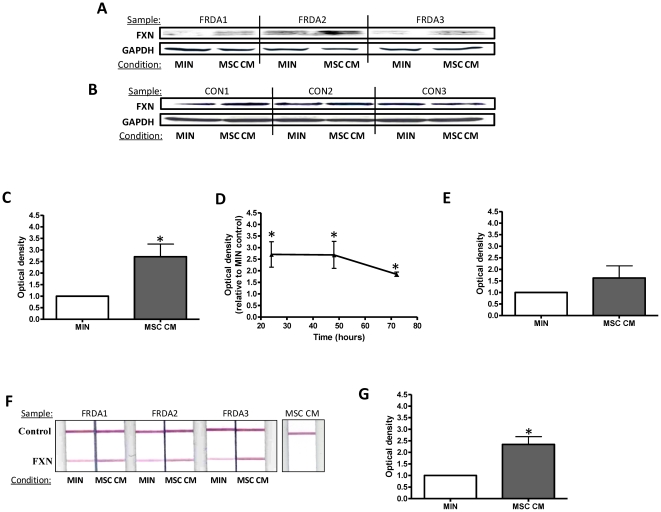
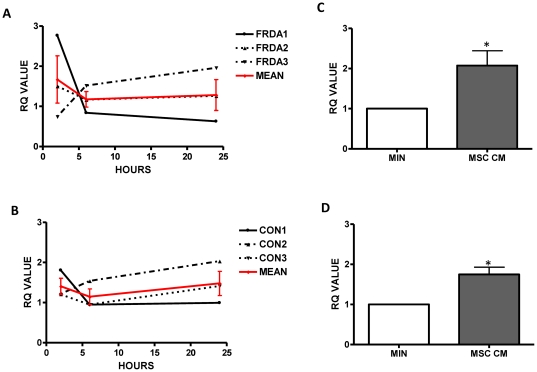
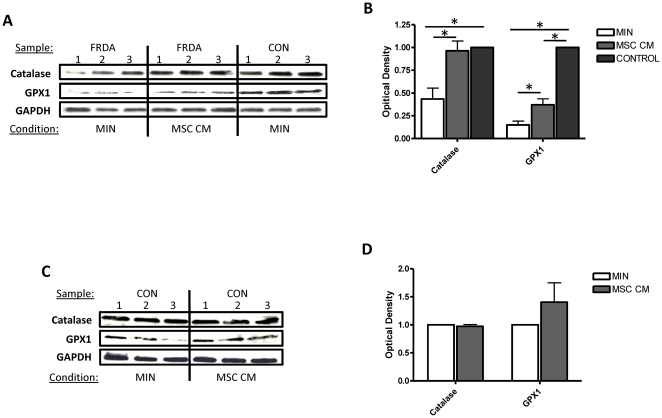
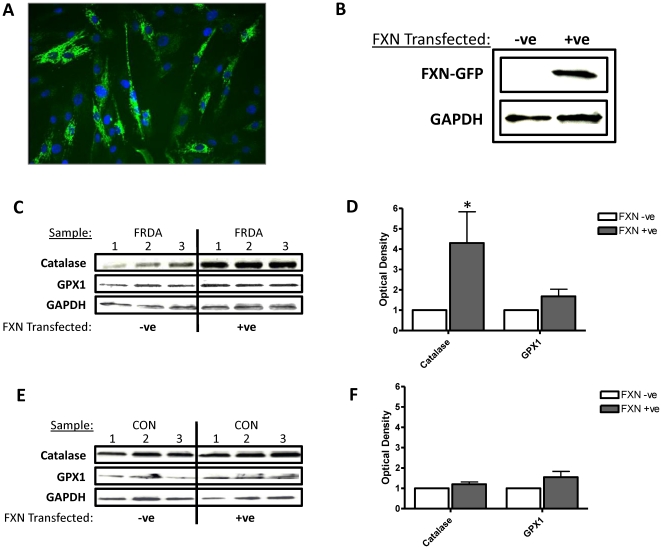
Dramatic advances in recent decades in understanding the genetics of Friedreich ataxia (FRDA)--a GAA triplet expansion causing greatly reduced expression of the mitochondrial protein frataxin--have thus far yielded no therapeutic dividend, since there remain no effective treatments that prevent or even slow the inevitable progressive disability in affected individuals. Clinical interventions that restore frataxin expression are attractive therapeutic approaches, as, in theory, it may be possible to re-establish normal function in frataxin deficient cells if frataxin levels are increased above a specific threshold. With this in mind several drugs and cytokines have been tested for their ability to increase frataxin levels. Cell transplantation strategies may provide an alternative approach to this therapeutic aim, and may also offer more widespread cellular protective roles in FRDA. Here we show a direct link between frataxin expression in fibroblasts derived from FRDA patients with both decreased expression of hydrogen peroxide scavenging enzymes and increased sensitivity to hydrogen peroxide-mediated toxicity. We demonstrate that normal human mesenchymal stem cells (MSCs) induce both an increase in frataxin gene and protein expression in FRDA fibroblasts via secretion of soluble factors. Finally, we show that exposure to factors produced by human MSCs increases resistance to hydrogen peroxide-mediated toxicity in FRDA fibroblasts through, at least in part, restoring the expression of the hydrogen peroxide scavenging enzymes catalase and glutathione peroxidase 1. These findings suggest, for the first time, that stem cells may increase frataxin levels in FRDA and transplantation of MSCs may offer an effective treatment for these patients.
近几十年来,人们在理解弗里德里希共济失调(FRDA)的遗传学方面取得了重大进展——一种 GAA 三核苷酸扩展导致线粒体蛋白 frataxin 的表达大大降低——但迄今为止尚未产生治疗效果,因为仍然没有有效的治疗方法可以预防甚至减缓受影响个体不可避免的进行性残疾。恢复 frataxin 表达的临床干预措施是有吸引力的治疗方法,因为从理论上讲,如果 frataxin 水平增加到特定阈值以上,就有可能使 frataxin 缺乏的细胞恢复正常功能。考虑到这一点,已经测试了几种药物和细胞因子来增加 frataxin 水平。细胞移植策略可能为实现这一治疗目标提供替代方法,并且在 FRDA 中也可能提供更广泛的细胞保护作用。在这里,我们显示了来自 FRDA 患者的成纤维细胞中 frataxin 表达与过氧化氢清除酶表达降低和对过氧化氢介导的毒性敏感性增加之间的直接联系。我们证明,正常的人间质干细胞(MSCs)通过分泌可溶性因子,诱导 FRDA 成纤维细胞中 frataxin 基因和蛋白表达的增加。最后,我们表明,暴露于人 MSCs 产生的因子可通过至少部分恢复过氧化氢清除酶过氧化氢酶和谷胱甘肽过氧化物酶 1 的表达,增加 FRDA 成纤维细胞对过氧化氢介导的毒性的抵抗力。这些发现首次表明,干细胞可能会增加 FRDA 中的 frataxin 水平,并且 MSC 的移植可能为这些患者提供有效的治疗方法。