Filius Anika, Thoreson Andrew R, Wang Yuexiang, Passe Sandra M, Zhao Chunfeng, An Kai-Nan, Amadio Peter C
Biomechanics Laboratory and the Tendon & Soft Tissue Biology Laboratory, Division of Orthopedic Research, Mayo Clinic, Rochester, Minnesota; Department of Plastic, Reconstructive and Hand Surgery, and the Department of Rehabilitation Medicine and Physical Therapy, Erasmus Medical Center, Rotterdam, The Netherlands.
J Orthop Res. 2015 Apr;33(4):483-7. doi: 10.1002/jor.22804. Epub 2015 Feb 17.
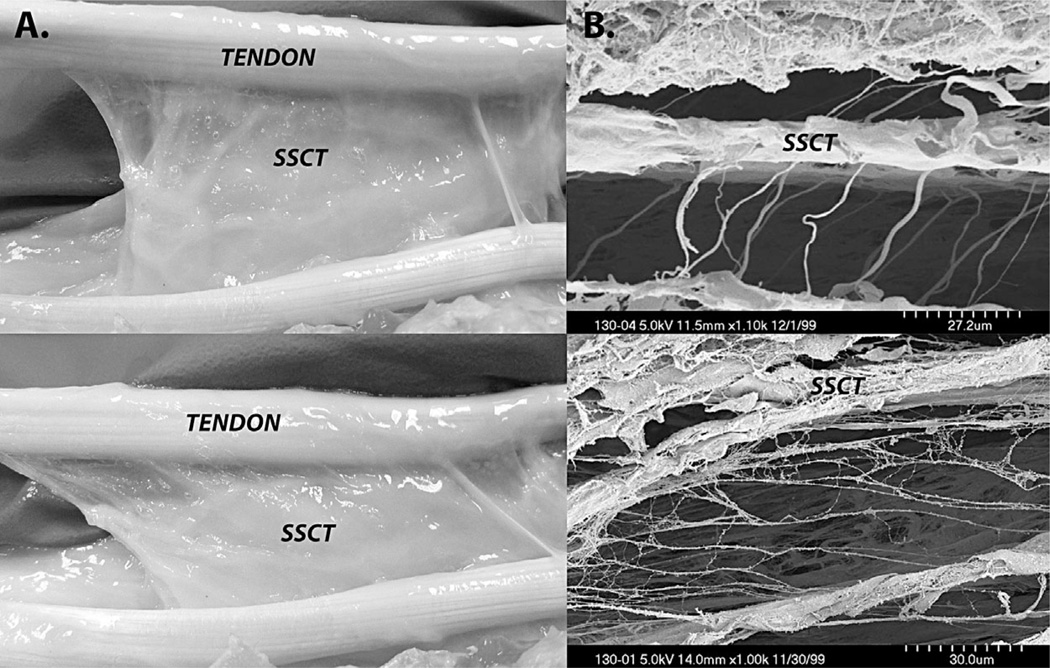
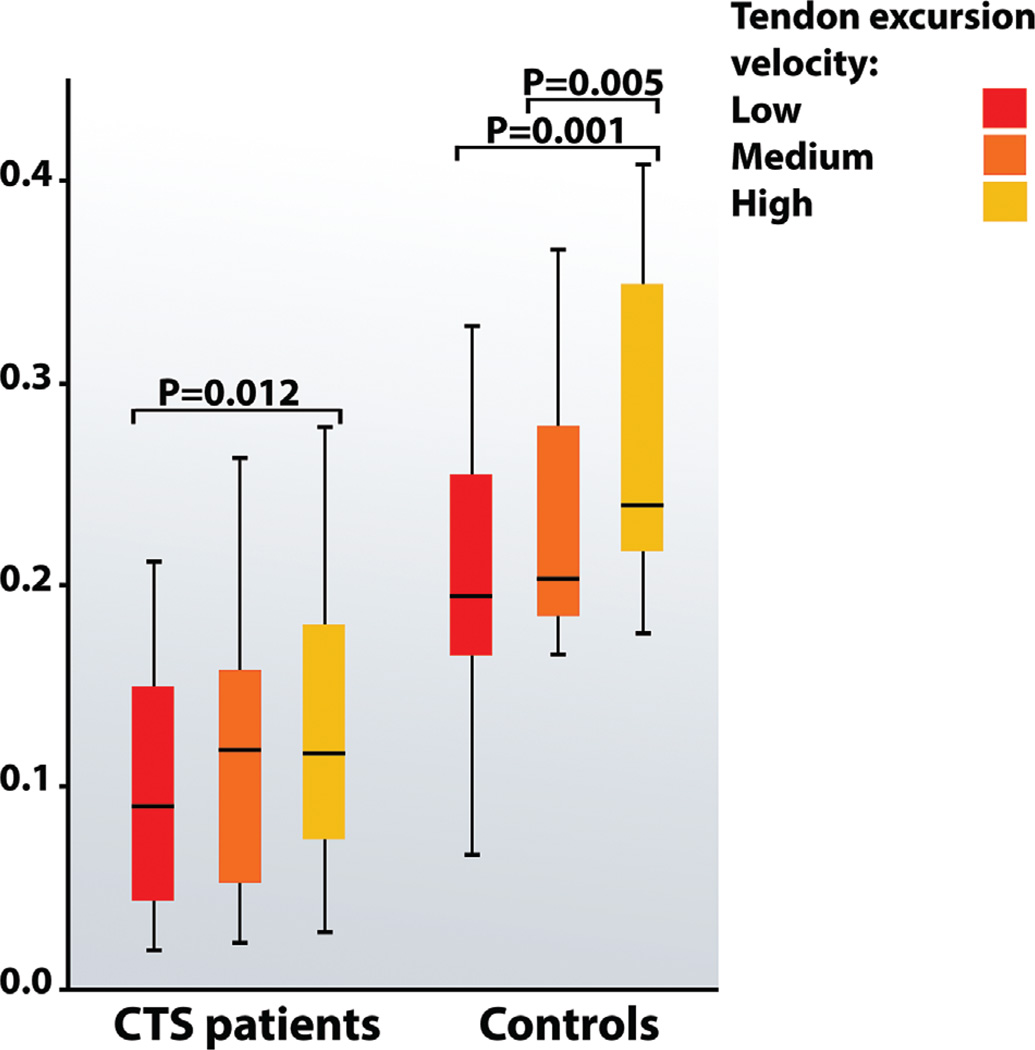
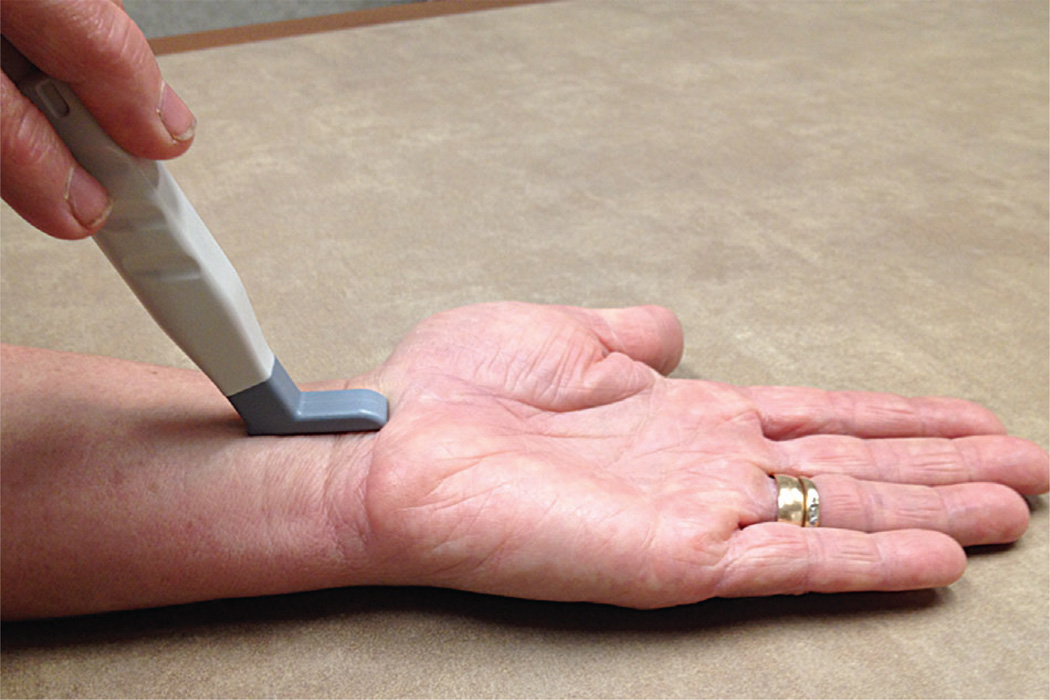
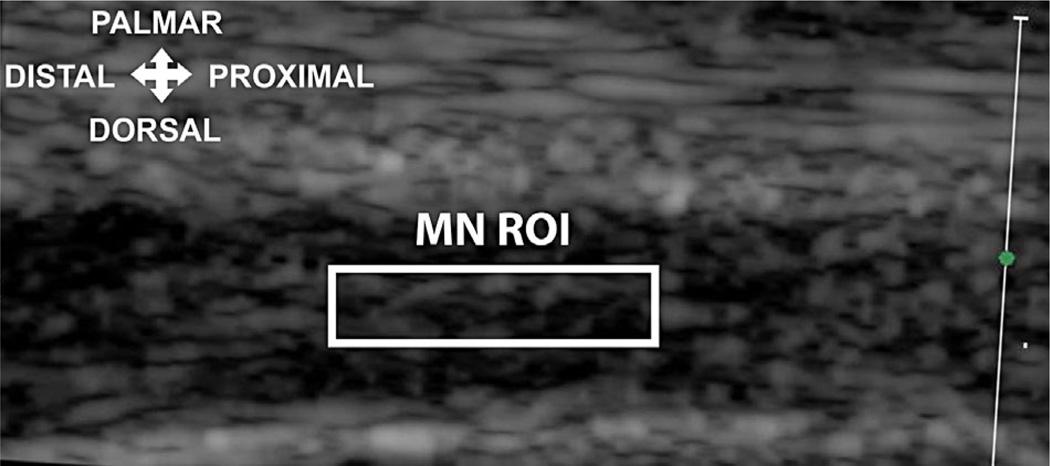
The subsynovial connective tissue (SSCT) is a viscoelastic structure connecting the median nerve (MN) and the flexor tendons in the carpal tunnel. Increased strain rates increases stiffness in viscoelastic tissues, and thereby its capacity to transfer shear load. Therefore, tendon excursion velocity may impact the MN displacement. In carpal tunnel syndrome (CTS) the SSCT is fibrotic and may be ruptured, and this may affect MN motion. In this study, ultrasonography was performed on 14 wrists of healthy controls and 25 wrists of CTS patients during controlled finger motions performed at three different velocities. Longitudinal MN and tendon excursion were assessed using a custom speckle tracking algorithm and compared across the three different velocities. CTS patients exhibited significantly less MN motion than controls (p ≤ 0.002). While in general, MN displacement increased with increasing tendon excursion velocity (p ≤ 0.031). These findings are consistent with current knowledge of SSCT mechanics in CTS, in which in some patients the fibrotic SSCT appears to have ruptured from the tendon surface.
滑膜下结缔组织(SSCT)是一种连接正中神经(MN)和腕管内屈肌腱的粘弹性结构。应变率增加会使粘弹性组织变硬,从而增强其传递剪切力的能力。因此,肌腱移动速度可能会影响正中神经的位移。在腕管综合征(CTS)中,滑膜下结缔组织会发生纤维化,甚至可能破裂,这可能会影响正中神经的运动。在本研究中,对14名健康对照者的手腕和25名腕管综合征患者的手腕进行了超声检查,检查时以三种不同速度进行手指控制运动。使用定制的散斑跟踪算法评估正中神经和肌腱的纵向移动,并在三种不同速度下进行比较。腕管综合征患者的正中神经运动明显少于对照组(p≤0.002)。总体而言,正中神经位移随肌腱移动速度的增加而增加(p≤0.031)。这些发现与目前关于腕管综合征中滑膜下结缔组织力学的认识一致,即在一些患者中,纤维化的滑膜下结缔组织似乎已从肌腱表面破裂。