Matthijsse Suzette M, van Rosmalen Joost, Hontelez Jan A C, Bakker Roel, de Kok Inge M C M, van Ballegooijen Marjolein, de Vlas Sake J
Department of Public Health, Erasmus MC, University Medical Center Rotterdam, Rotterdam, the Netherlands.
Department of Biostatistics, Erasmus MC, University Medical Center Rotterdam, Rotterdam, the Netherlands.
PLoS One. 2015 Feb 2;10(2):e0116618. doi: 10.1371/journal.pone.0116618. eCollection 2015.
Knowledge of the natural history of human papillomavirus (HPV), in particular the role of immunity, is crucial in estimating the (cost-) effectiveness of HPV vaccination and cervical cancer screening strategies, because naturally acquired immunity after clearing an infection may already protect part of the risk population against new HPV infections.
We used STDSIM, an established stochastic microsimulation model, quantified to the Netherlands. We explored different assumptions regarding the natural history of HPV-16 and HPV-18, and estimated the transmission probabilities and durations of acquired immunity necessary to reproduce age-specific prevalence.
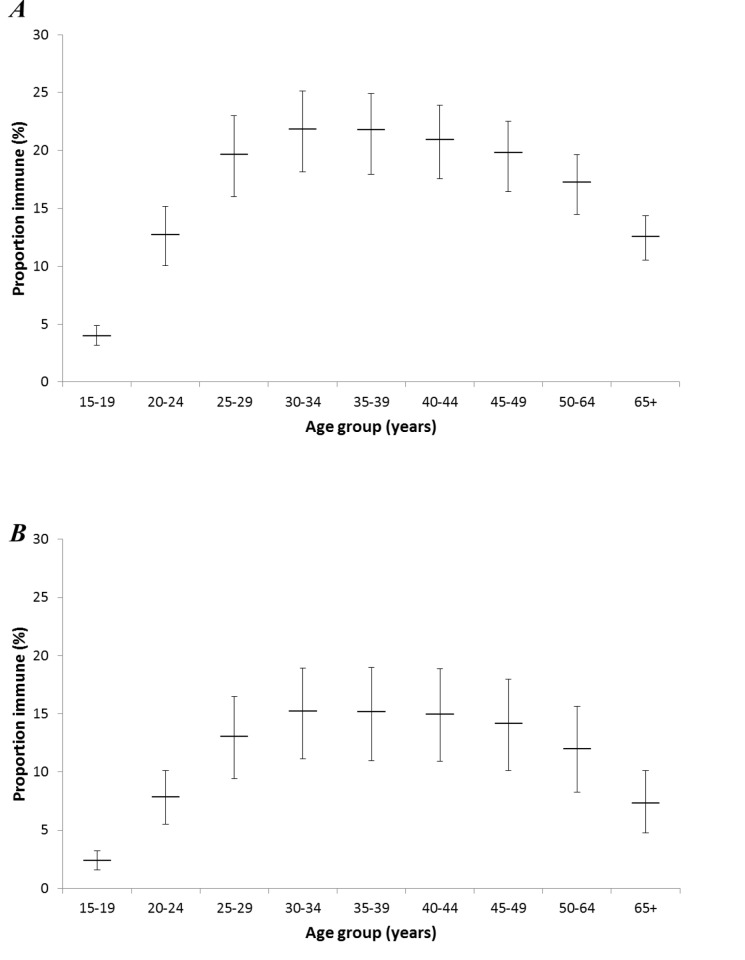
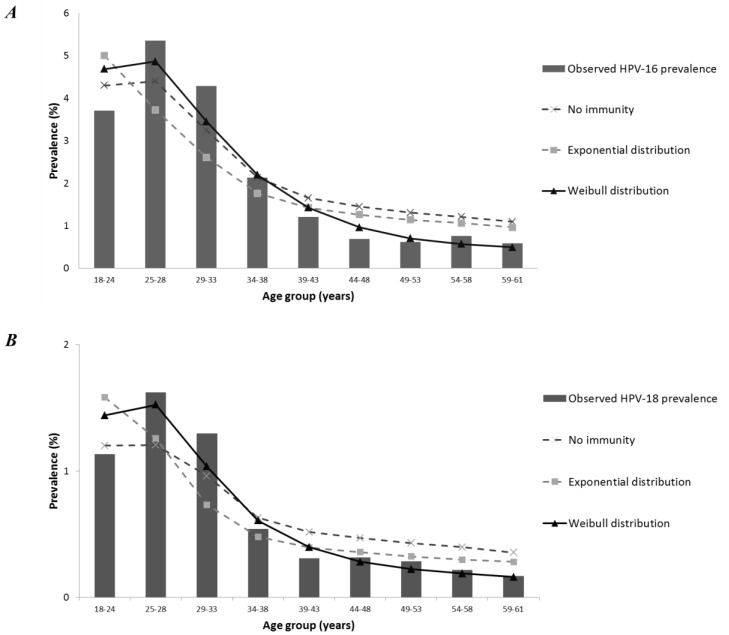
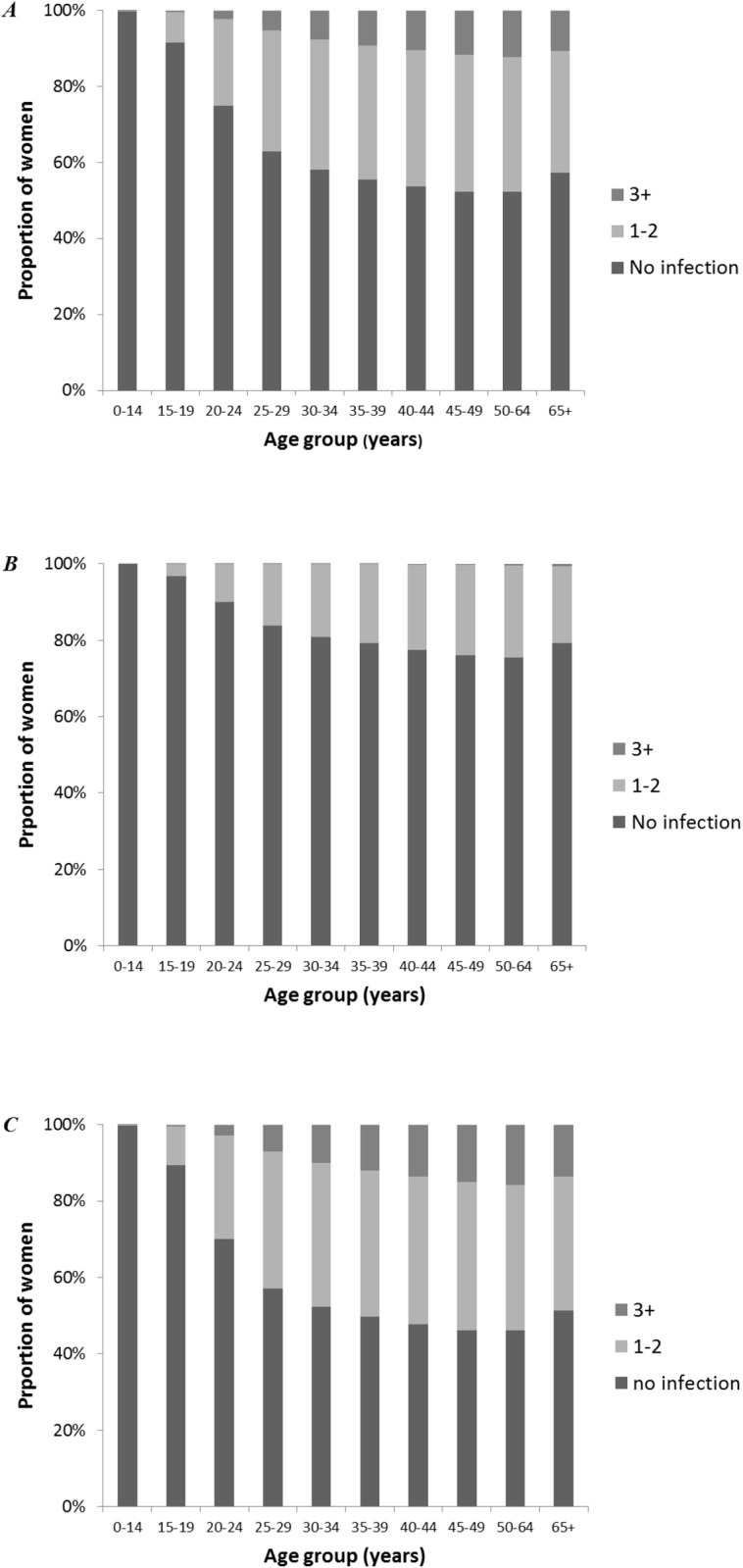
A model without acquired immunity cannot reproduce the age-specific patterns of HPV. Also, it is necessary to assume a high degree of individual variation in the duration of infection and acquired immunity. According to the model estimates, on average 20% of women are immune for HPV-16 and 15% for HPV-18. After an HPV-16 infection, 50% are immune for less than 1 year, whereas 20% exceed 30 years. For HPV-18, up to 12% of the individuals are immune for less than 1 year, and about 50% over 30 years. Almost half of all women will never acquire HPV-16 or HPV-18.
Acquired immunity likely plays a major role in HPV epidemiology, but its duration shows substantial variation. Combined with the lifetime risk, this explains to a large extent why many women will never develop cervical cancer.
了解人乳头瘤病毒(HPV)的自然史,尤其是免疫的作用,对于评估HPV疫苗接种和宫颈癌筛查策略的(成本 -)效益至关重要,因为清除感染后自然获得的免疫力可能已经可以保护部分风险人群免受新的HPV感染。
我们使用了已建立的随机微观模拟模型STDSIM,并根据荷兰的数据进行了量化。我们探讨了关于HPV - 16和HPV - 18自然史的不同假设,并估计了重现年龄特异性患病率所需的传播概率和获得性免疫的持续时间。
一个没有获得性免疫的模型无法重现HPV的年龄特异性模式。此外,有必要假设感染持续时间和获得性免疫存在高度个体差异。根据模型估计,平均20%的女性对HPV - 16免疫,15%的女性对HPV - 18免疫。HPV - 16感染后,50%的人免疫时间不到1年,而20%的人超过30年。对于HPV - 18,高达12%的个体免疫时间不到1年,约50%的人超过30年。几乎一半的女性永远不会感染HPV - 16或HPV - 18。
获得性免疫可能在HPV流行病学中起主要作用,但其持续时间存在很大差异。结合终生风险,这在很大程度上解释了为什么许多女性永远不会患宫颈癌。