Hu H, Haas S A, Chelly J, Van Esch H, Raynaud M, de Brouwer A P M, Weinert S, Froyen G, Frints S G M, Laumonnier F, Zemojtel T, Love M I, Richard H, Emde A-K, Bienek M, Jensen C, Hambrock M, Fischer U, Langnick C, Feldkamp M, Wissink-Lindhout W, Lebrun N, Castelnau L, Rucci J, Montjean R, Dorseuil O, Billuart P, Stuhlmann T, Shaw M, Corbett M A, Gardner A, Willis-Owen S, Tan C, Friend K L, Belet S, van Roozendaal K E P, Jimenez-Pocquet M, Moizard M-P, Ronce N, Sun R, O'Keeffe S, Chenna R, van Bömmel A, Göke J, Hackett A, Field M, Christie L, Boyle J, Haan E, Nelson J, Turner G, Baynam G, Gillessen-Kaesbach G, Müller U, Steinberger D, Budny B, Badura-Stronka M, Latos-Bieleńska A, Ousager L B, Wieacker P, Rodríguez Criado G, Bondeson M-L, Annerén G, Dufke A, Cohen M, Van Maldergem L, Vincent-Delorme C, Echenne B, Simon-Bouy B, Kleefstra T, Willemsen M, Fryns J-P, Devriendt K, Ullmann R, Vingron M, Wrogemann K, Wienker T F, Tzschach A, van Bokhoven H, Gecz J, Jentsch T J, Chen W, Ropers H-H, Kalscheuer V M
Department of Human Molecular Genetics, Max Planck Institute for Molecular Genetics, Berlin, Germany.
Department of Computational Molecular Biology, Max Planck Institute for Molecular Genetics, Berlin, Germany.
Mol Psychiatry. 2016 Jan;21(1):133-48. doi: 10.1038/mp.2014.193. Epub 2015 Feb 3.
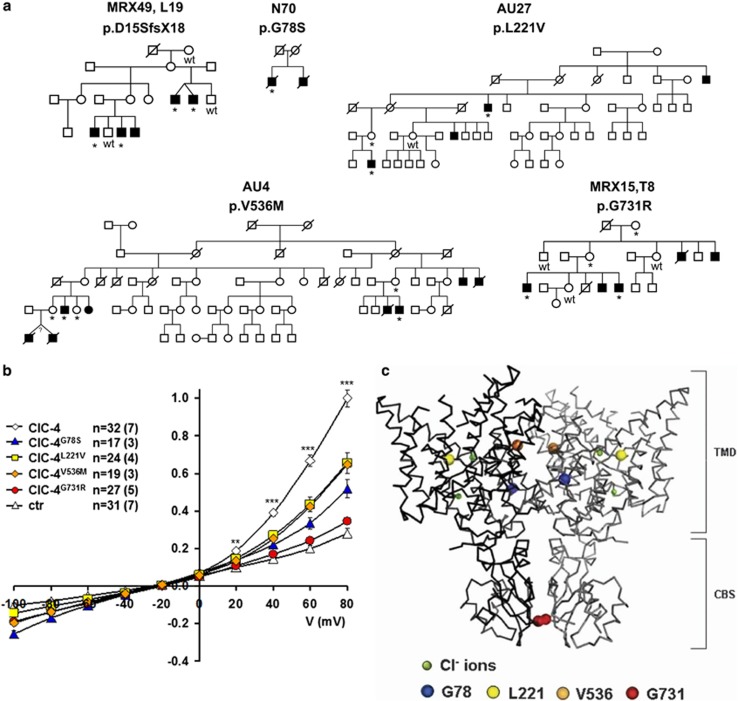
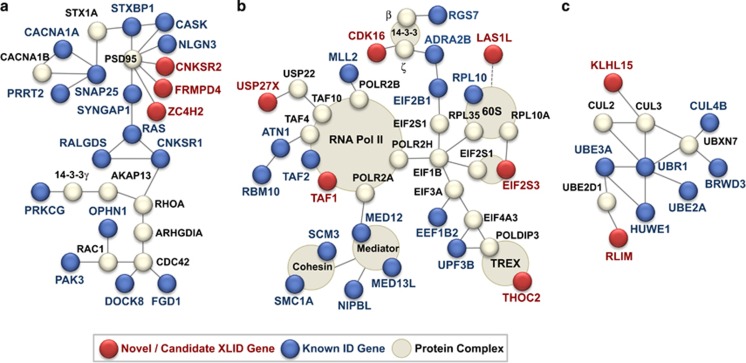
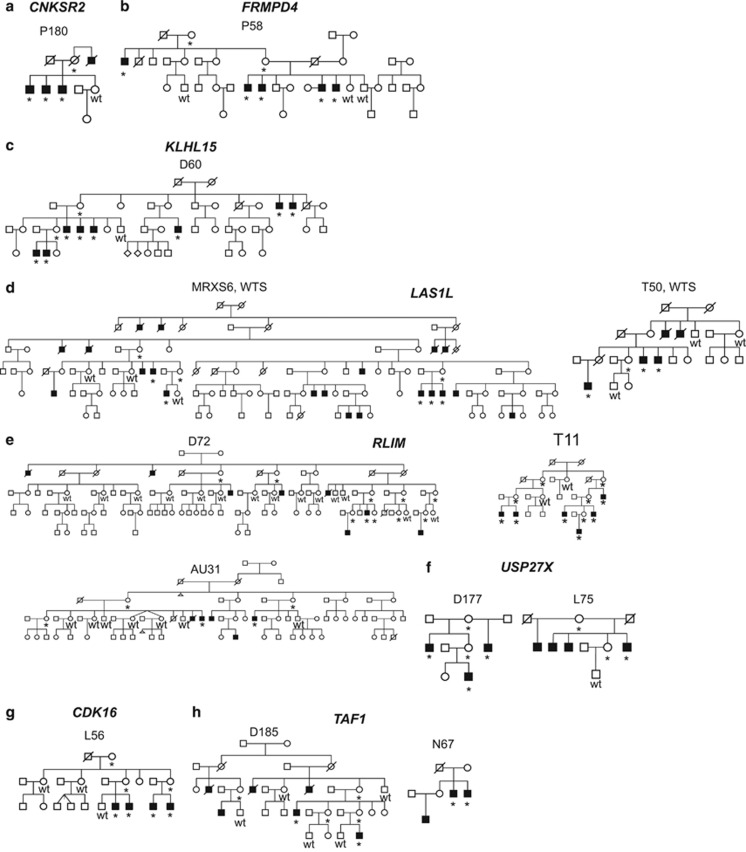
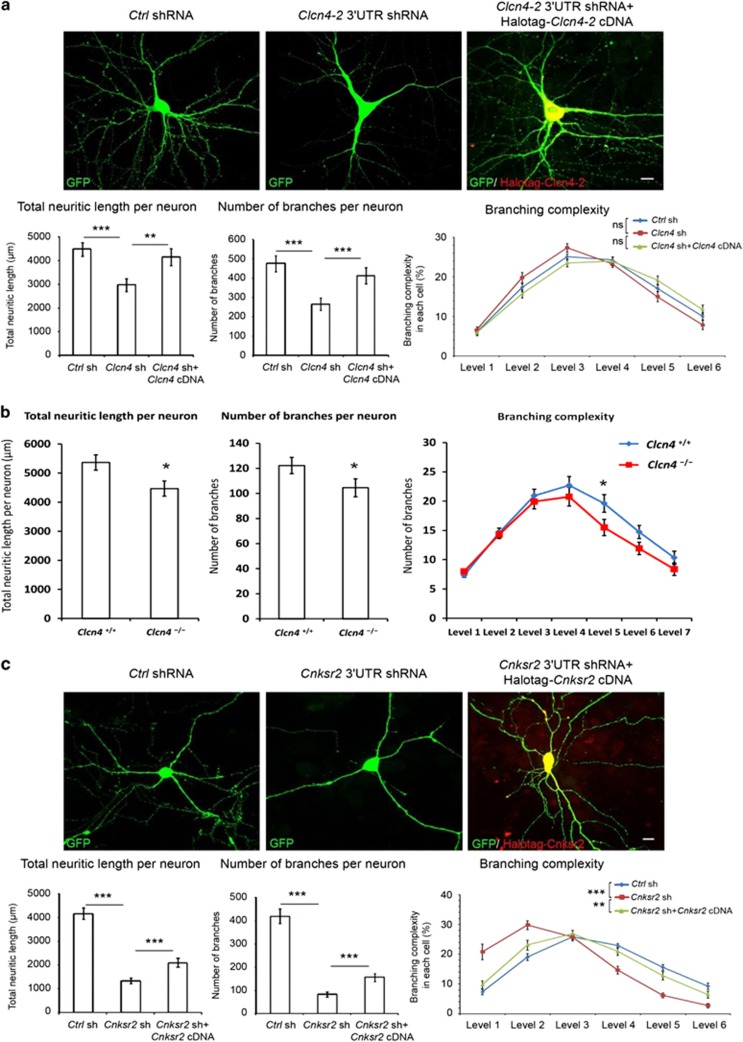
X-linked intellectual disability (XLID) is a clinically and genetically heterogeneous disorder. During the past two decades in excess of 100 X-chromosome ID genes have been identified. Yet, a large number of families mapping to the X-chromosome remained unresolved suggesting that more XLID genes or loci are yet to be identified. Here, we have investigated 405 unresolved families with XLID. We employed massively parallel sequencing of all X-chromosome exons in the index males. The majority of these males were previously tested negative for copy number variations and for mutations in a subset of known XLID genes by Sanger sequencing. In total, 745 X-chromosomal genes were screened. After stringent filtering, a total of 1297 non-recurrent exonic variants remained for prioritization. Co-segregation analysis of potential clinically relevant changes revealed that 80 families (20%) carried pathogenic variants in established XLID genes. In 19 families, we detected likely causative protein truncating and missense variants in 7 novel and validated XLID genes (CLCN4, CNKSR2, FRMPD4, KLHL15, LAS1L, RLIM and USP27X) and potentially deleterious variants in 2 novel candidate XLID genes (CDK16 and TAF1). We show that the CLCN4 and CNKSR2 variants impair protein functions as indicated by electrophysiological studies and altered differentiation of cultured primary neurons from Clcn4(-/-) mice or after mRNA knock-down. The newly identified and candidate XLID proteins belong to pathways and networks with established roles in cognitive function and intellectual disability in particular. We suggest that systematic sequencing of all X-chromosomal genes in a cohort of patients with genetic evidence for X-chromosome locus involvement may resolve up to 58% of Fragile X-negative cases.
X连锁智力障碍(XLID)是一种临床和遗传异质性疾病。在过去二十年中,已鉴定出超过100个X染色体智力障碍基因。然而,大量定位于X染色体的家系仍未得到解决,这表明还有更多的XLID基因或基因座有待鉴定。在此,我们研究了405个未解决的XLID家系。我们对先证者男性的所有X染色体外显子进行了大规模平行测序。这些男性中的大多数之前通过桑格测序检测拷贝数变异以及已知XLID基因子集中的突变均为阴性。总共筛选了745个X染色体基因。经过严格筛选,共有1297个非重复性外显子变异有待进一步分析。对潜在临床相关变化的共分离分析表明,80个家系(20%)在已确定的XLID基因中携带致病变异。在19个家系中,我们在7个新的且经过验证的XLID基因(CLCN4、CNKSR2、FRMPD4、KLHL15、LAS1L、RLIM和USP27X)中检测到可能致病的蛋白质截短和错义变异,并在2个新的候选XLID基因(CDK16和TAF1)中检测到潜在有害变异。我们的研究表明,电生理研究以及Clcn4(-/-)小鼠原代培养神经元分化改变或mRNA敲低后显示,CLCN4和CNKSR2变异损害了蛋白质功能。新鉴定的和候选的XLID蛋白尤其属于在认知功能和智力障碍中具有既定作用的途径和网络。我们认为,对有X染色体基因座受累遗传证据的患者群体中的所有X染色体基因进行系统测序,可能解决高达58%的脆性X阴性病例。