Koutsioumpa Marina, Poimenidi Evangelia, Pantazaka Evangelia, Theodoropoulou Christina, Skoura Angeliki, Megalooikonomou Vasileios, Kieffer Nelly, Courty Jose, Mizumoto Shuji, Sugahara Kazuyuki, Papadimitriou Evangelia
Laboratory of Molecular Pharmacology, Department of Pharmacy, University of Patras, GR, 26504, Patras, Greece.
Current address: Center for Systems Biomedicine, Division of Digestive Diseases, David Geffen School of Medicine, University of California Los Angeles, Los Angeles, CA, USA.
Mol Cancer. 2015 Feb 3;14(1):19. doi: 10.1186/s12943-015-0287-3.
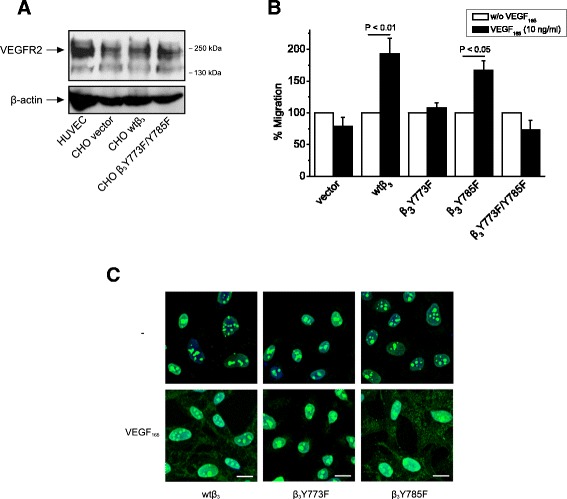
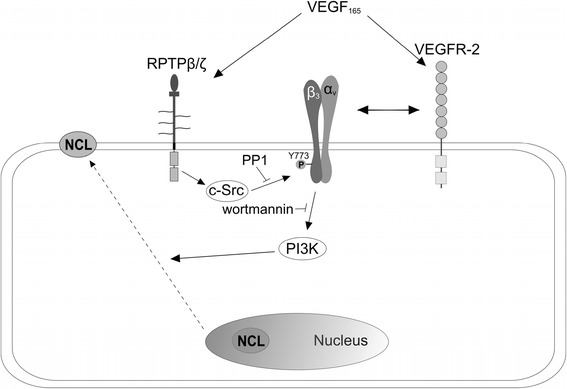
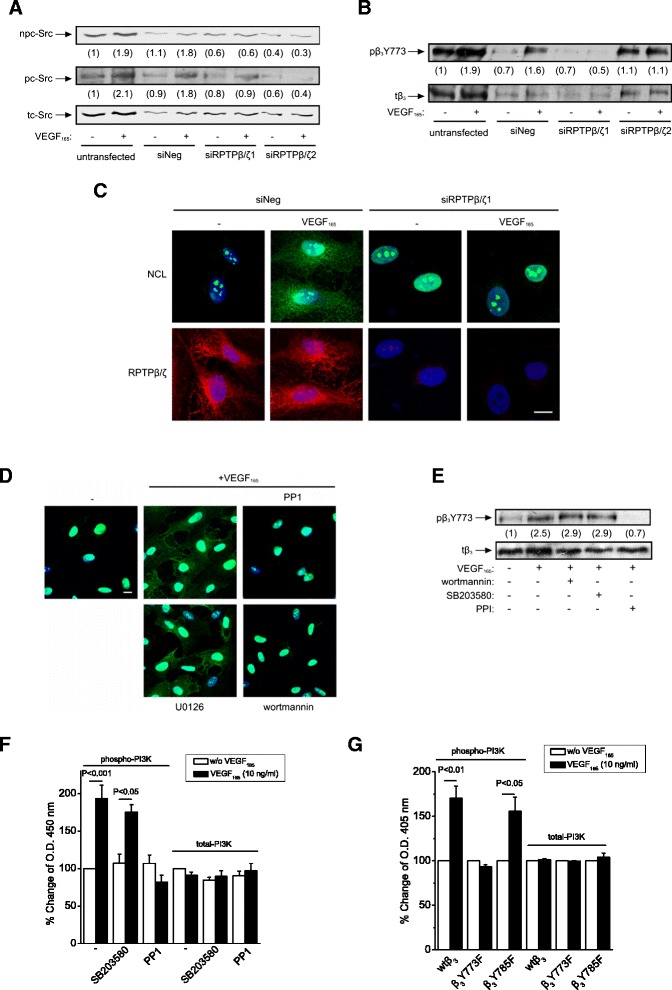
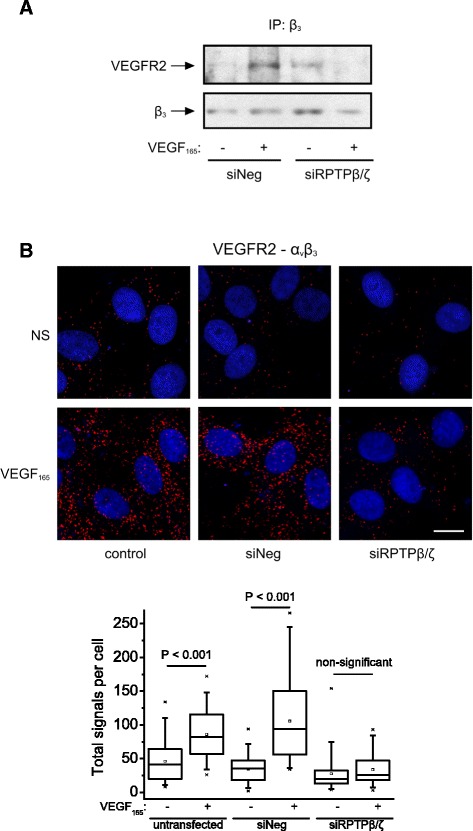
Receptor protein tyrosine phosphatase beta/zeta (RPTPβ/ζ) is a chondroitin sulphate (CS) transmembrane protein tyrosine phosphatase and is a receptor for pleiotrophin (PTN). RPTPβ/ζ interacts with ανβ₃ on the cell surface and upon binding of PTN leads to c-Src dephosphorylation at Tyr530, β₃ Tyr773 phosphorylation, cell surface nucleolin (NCL) localization and stimulation of cell migration. c-Src-mediated β₃ Tyr773 phosphorylation is also observed after vascular endothelial growth factor 165 (VEGF₁₆₅) stimulation of endothelial cells and is essential for VEGF receptor type 2 (VEGFR2) - ανβ₃ integrin association and subsequent signaling. In the present work, we studied whether RPTPβ/ζ mediates angiogenic actions of VEGF.
Human umbilical vein endothelial, human glioma U87MG and stably transfected Chinese hamster ovary cells expressing different β₃ subunits were used. Protein-protein interactions were studied by a combination of immunoprecipitation/Western blot, immunofluorescence and proximity ligation assays, properly quantified as needed. RPTPβ/ζ expression was down-regulated using small interference RNA technology. Migration assays were performed in 24-well microchemotaxis chambers, using uncoated polycarbonate membranes with 8 μm pores.
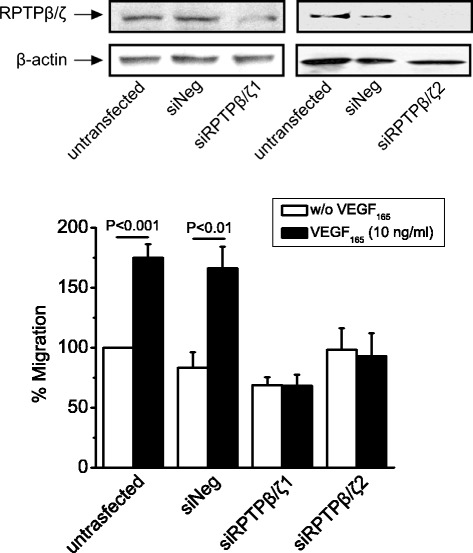
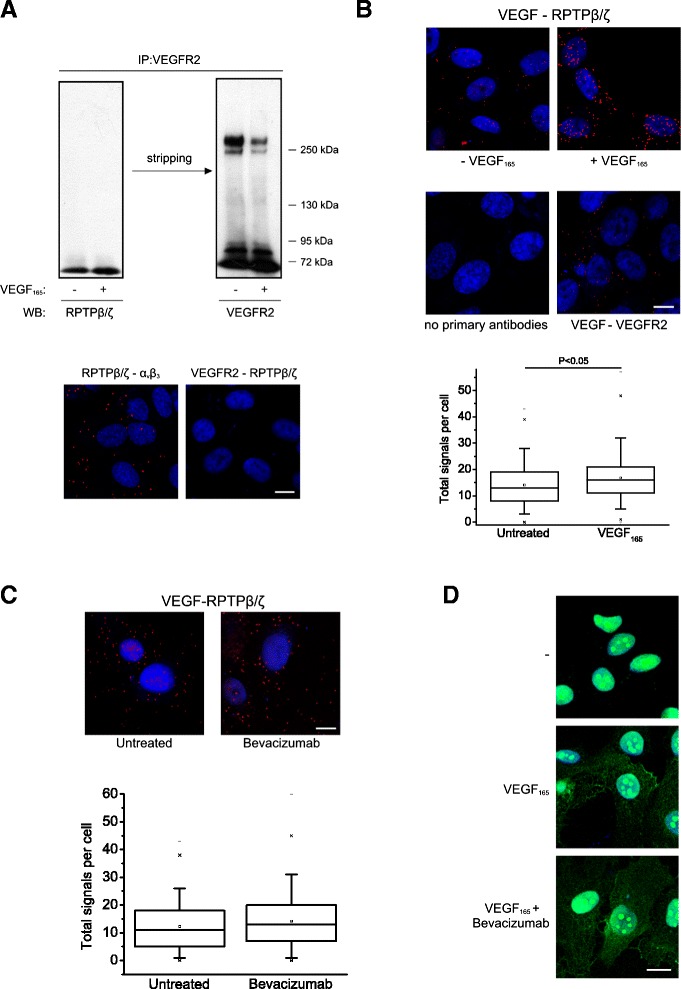
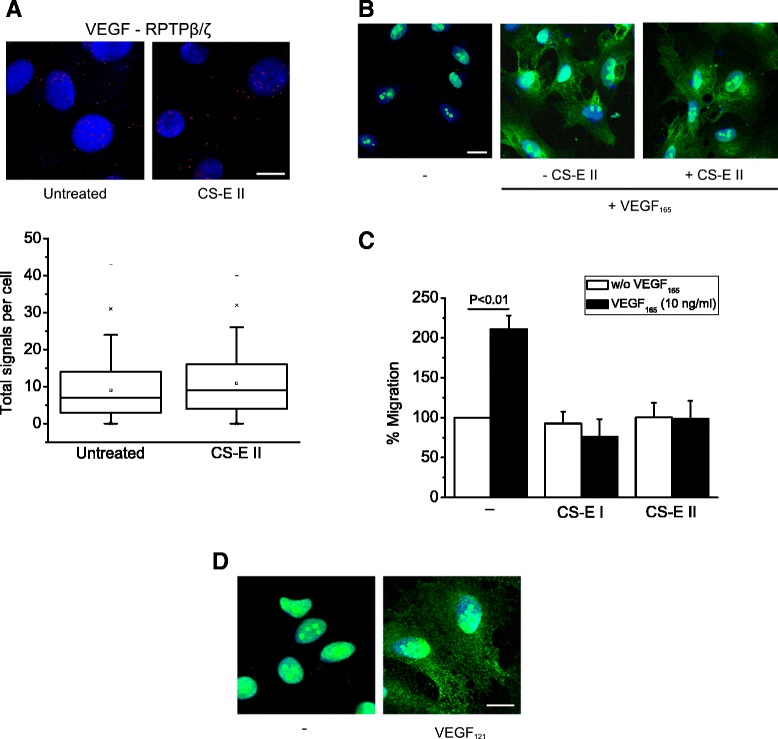
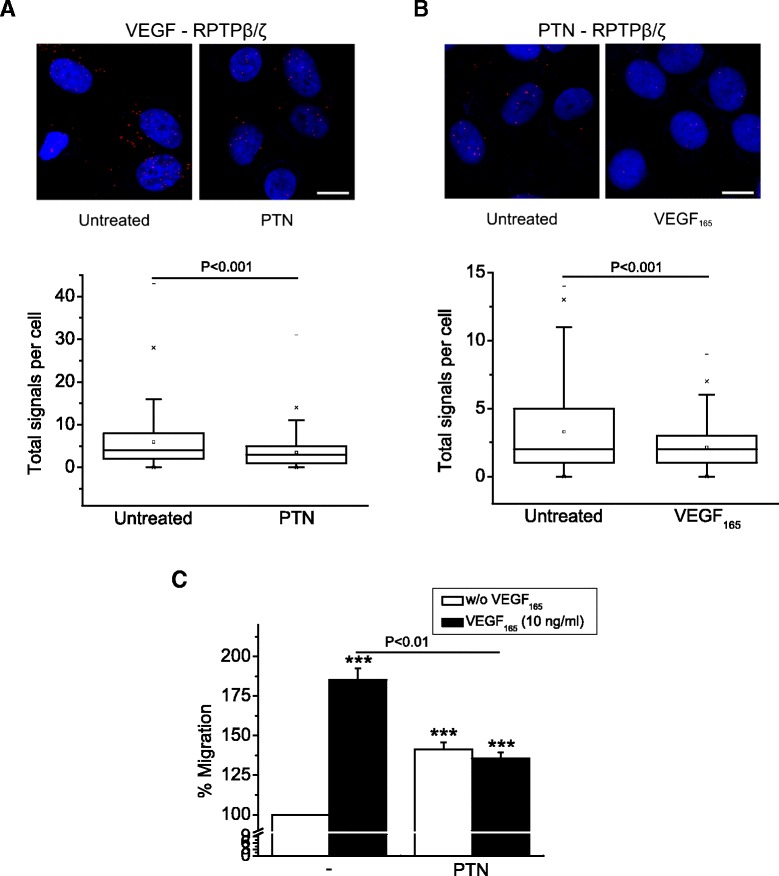
RPTPβ/ζ mediates VEGF₁₆₅-induced c-Src-dependent β₃ Tyr773 phosphorylation, which is required for VEGFR2-ανβ₃ interaction and the downstream activation of phosphatidylinositol 3-kinase (PI3K) and cell surface NCL localization. RPTPβ/ζ directly interacts with VEGF165, and this interaction is not affected by bevacizumab, while it is interrupted by both CS-E and PTN. Down-regulation of RPTPβ/ζ by siRNA or administration of exogenous CS-E abolishes VEGF₁₆₅-induced endothelial cell migration, while PTN inhibits the migratory effect of VEGF₁₆₅ to the levels of its own effect.
These data identify RPTPβ/ζ as a cell membrane binding partner for VEGF that regulates angiogenic functions of endothelial cells and suggest that it warrants further validation as a potential target for development of additive or alternative anti-VEGF therapies.
受体蛋白酪氨酸磷酸酶β/ζ(RPTPβ/ζ)是一种硫酸软骨素(CS)跨膜蛋白酪氨酸磷酸酶,也是多效生长因子(PTN)的受体。RPTPβ/ζ在细胞表面与ανβ₃相互作用,PTN结合后导致c-Src在Tyr530处去磷酸化、β₃ Tyr773磷酸化、细胞表面核仁素(NCL)定位以及细胞迁移的刺激。在血管内皮生长因子165(VEGF₁₆₅)刺激内皮细胞后也观察到c-Src介导的β₃ Tyr773磷酸化,这对于VEGF受体2型(VEGFR2)-ανβ₃整合素结合及随后的信号传导至关重要。在本研究中,我们探究了RPTPβ/ζ是否介导VEGF的血管生成作用。
使用人脐静脉内皮细胞、人胶质瘤U87MG细胞以及稳定转染表达不同β₃亚基的中国仓鼠卵巢细胞。通过免疫沉淀/蛋白质印迹、免疫荧光和邻近连接分析相结合的方法研究蛋白质-蛋白质相互作用,并根据需要进行适当定量。使用小干扰RNA技术下调RPTPβ/ζ的表达。迁移实验在24孔微趋化室中进行,使用带有8μm孔径的未包被聚碳酸酯膜。
RPTPβ/ζ介导VEGF₁₆₅诱导的c-Src依赖性β₃ Tyr773磷酸化,这是VEGFR2-ανβ₃相互作用以及磷脂酰肌醇3激酶(PI3K)下游激活和细胞表面NCL定位所必需的。RPTPβ/ζ直接与VEGF165相互作用,这种相互作用不受贝伐单抗影响,但可被CS-E和PTN阻断。通过小干扰RNA下调RPTPβ/ζ或给予外源性CS-E可消除VEGF₁₆₅诱导的内皮细胞迁移,而PTN将VEGF₁₆₅的迁移作用抑制至其自身作用水平。
这些数据确定RPTPβ/ζ为VEGF的细胞膜结合伴侣,其调节内皮细胞的血管生成功能,并表明它作为联合或替代抗VEGF治疗开发的潜在靶点值得进一步验证。