Ruban Angela, Biton Inbal E, Markovich Arik, Mirelman David
Department of Neurobiology, Weizmann Institute of Science, Rehovot 76100, Israel.
Department of Veterinary Resources, Weizmann Institute of Science, Rehovot 76100, Israel.
Int J Mol Sci. 2015 Feb 2;16(2):3226-36. doi: 10.3390/ijms16023226.
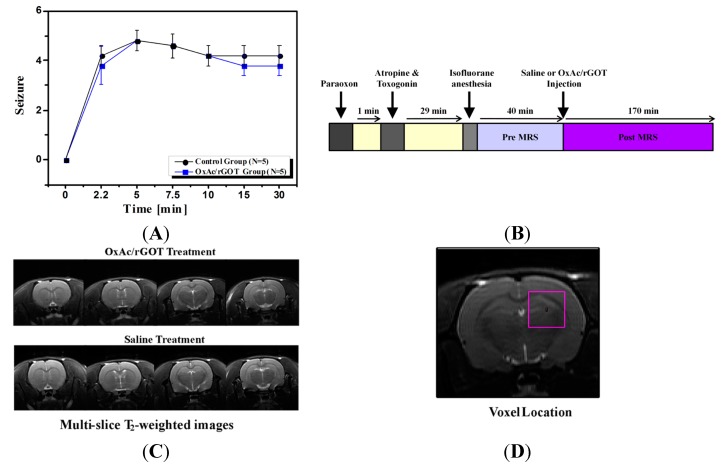
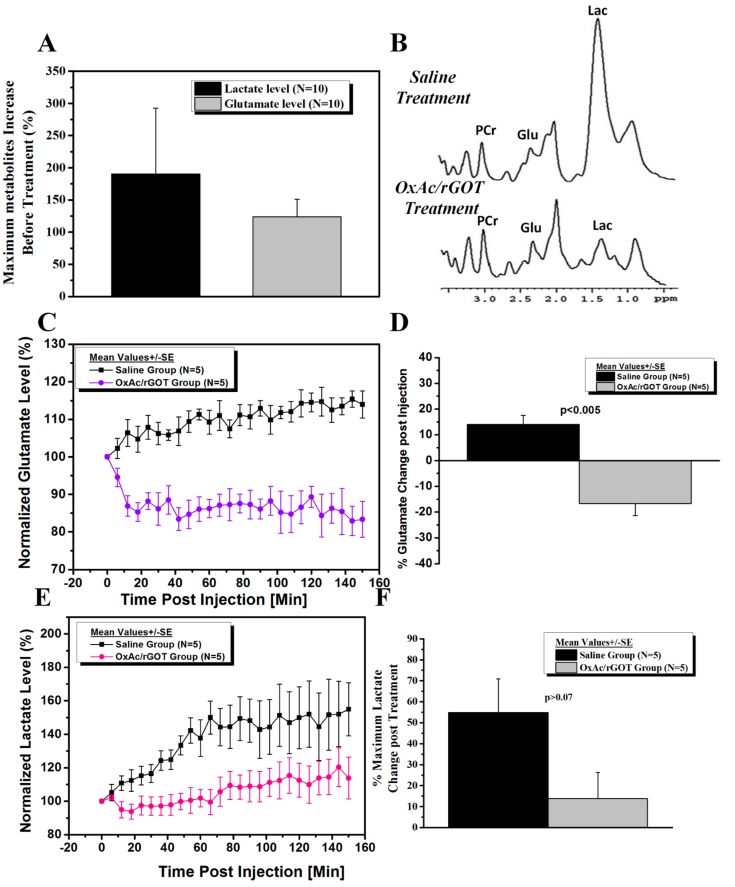
This study describes the use of in vivo magnetic resonance spectrocopy (MRS) to monitor brain glutamate and lactate levels in a paraoxon (PO) intoxication model. Our results show that the administration of recombinant glutamate-oxaloacetate transaminase (rGOT) in combination with oxaloacetate (OxAc) significantly reduces the brain-accumulated levels of glutamate. Previously we have shown that the treatment causes a rapid decrease of blood glutamate levels and creates a gradient between the brain and blood glutamate levels which leads to the efflux of excess brain glutamate into the blood stream thereby reducing its potential to cause neurological damage. The fact that this treatment significantly decreased the brain glutamate and lactate levels following PO intoxication suggests that it could become a new effective neuroprotective agent.
本研究描述了在对氧磷(PO)中毒模型中使用体内磁共振波谱(MRS)来监测脑内谷氨酸和乳酸水平。我们的结果表明,重组谷氨酸草酰乙酸转氨酶(rGOT)与草酰乙酸(OxAc)联合给药可显著降低脑内蓄积的谷氨酸水平。此前我们已表明,该治疗可使血液谷氨酸水平迅速降低,并在脑和血液谷氨酸水平之间形成梯度,从而导致过量的脑内谷氨酸外流进入血流,进而降低其造成神经损伤的可能性。PO中毒后这种治疗显著降低脑内谷氨酸和乳酸水平这一事实表明,它可能成为一种新的有效的神经保护剂。