Leitão Alexandre B, Sucena Élio
Instituto Gulbenkian de Ciência, Oeiras, Portugal.
Elife. 2015 Feb 4;4:e06166. doi: 10.7554/eLife.06166.
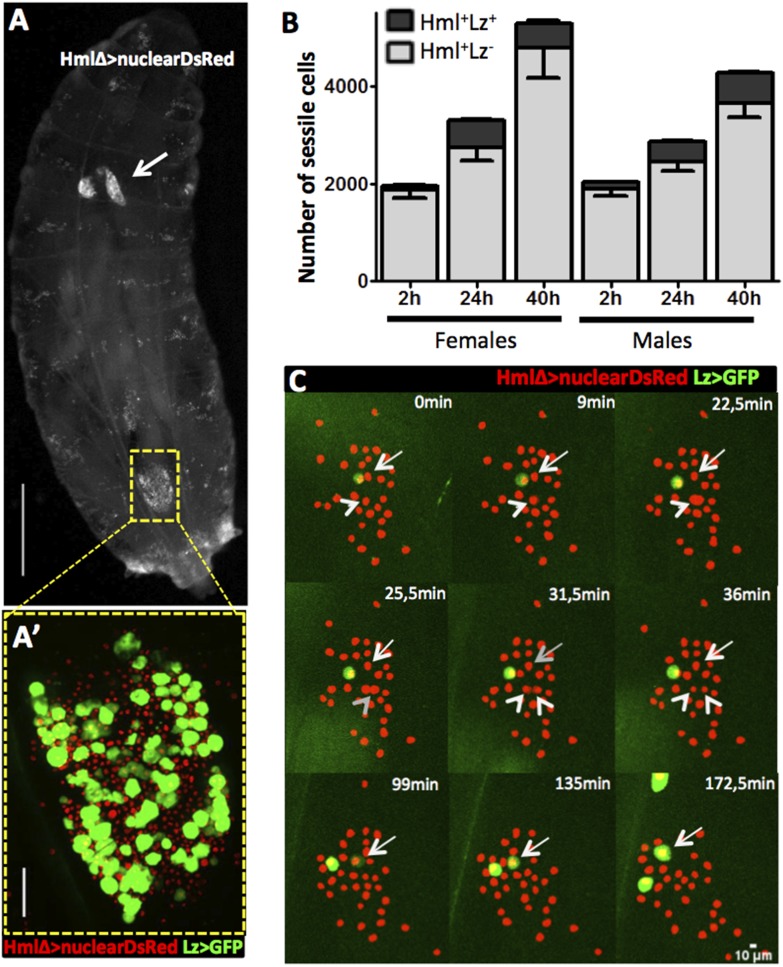
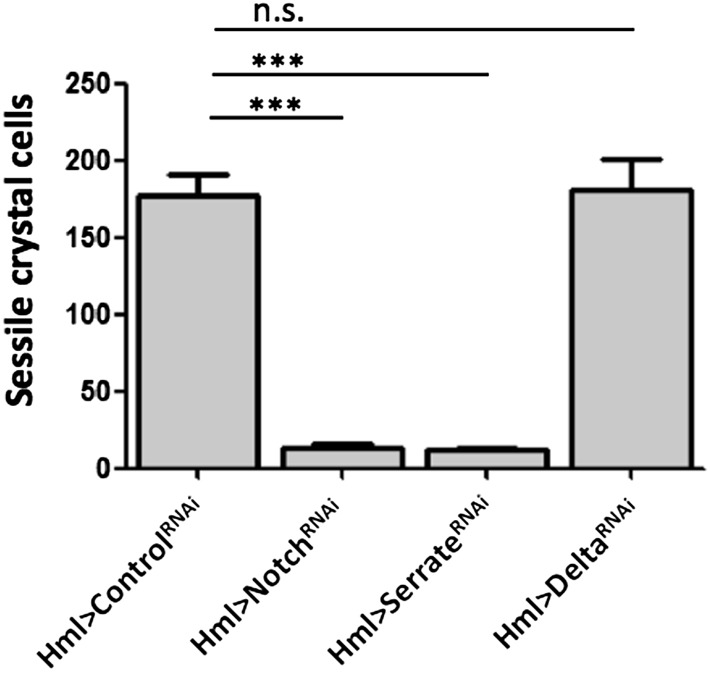
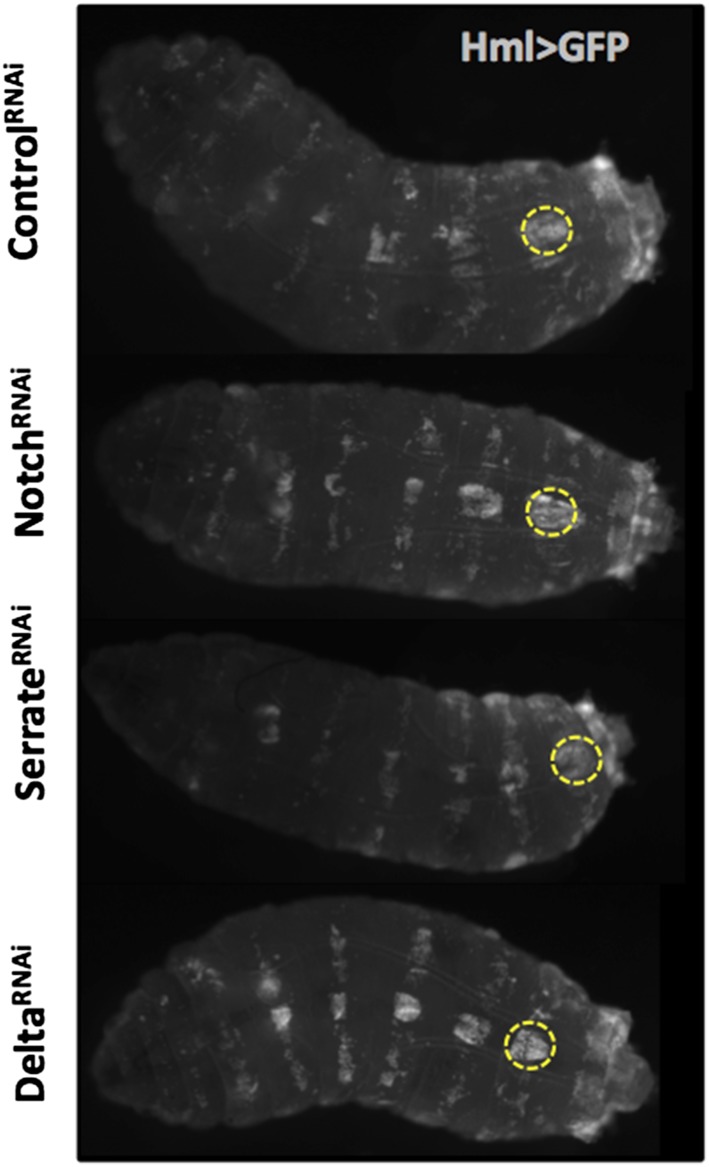
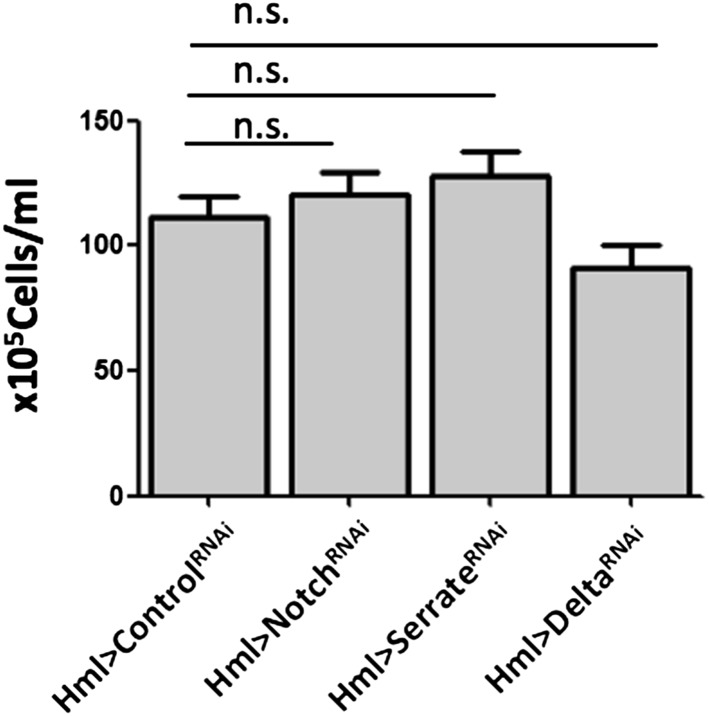
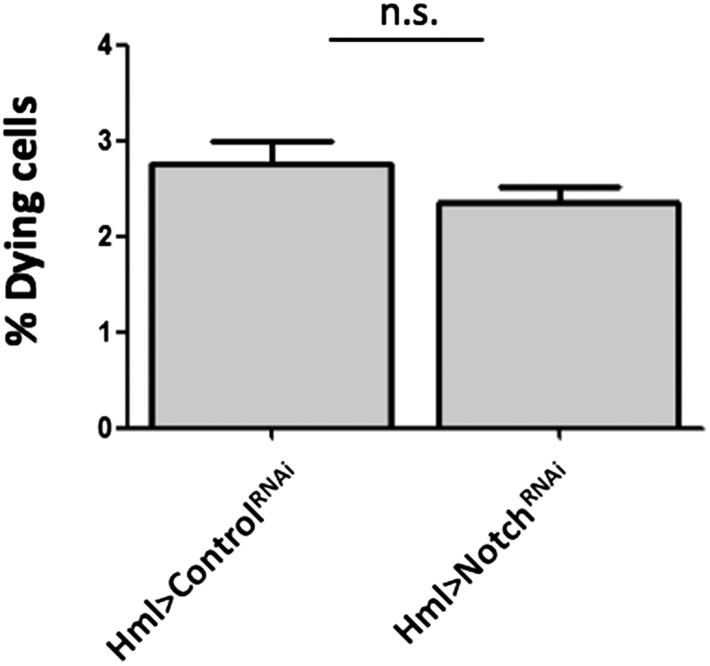
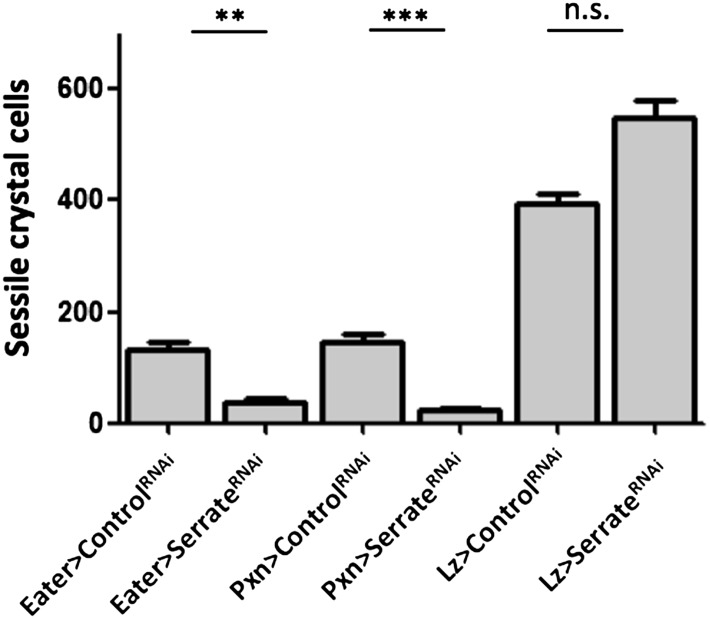
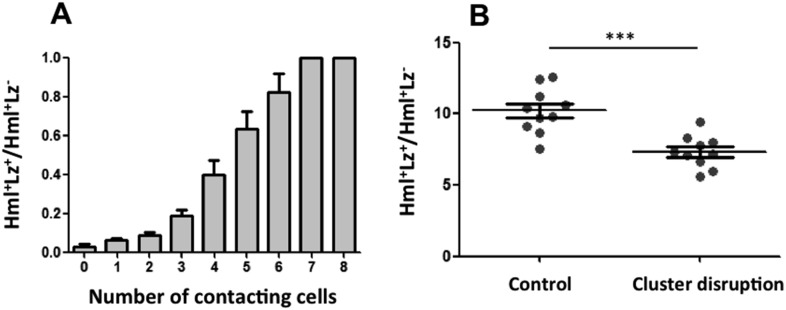
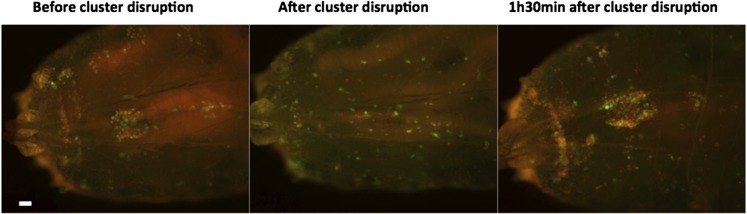
Virtually all species of coelomate animals contain blood cells that display a division of labor necessary for homeostasis. This functional partition depends upon the balance between proliferation and differentiation mostly accomplished in the hematopoietic organs. In Drosophila melanogaster, the lymph gland produces plasmatocytes and crystal cells that are not released until pupariation. Yet, throughout larval development, both hemocyte types increase in numbers. Mature plasmatocytes can proliferate but it is not known if crystal cell numbers increase by self-renewal or by de novo differentiation. We show that new crystal cells in third instar larvae originate through a Notch-dependent process of plasmatocyte transdifferentiation. This process occurs in the sessile clusters and is contingent upon the integrity of these structures. The existence of this hematopoietic tissue, relying on structure-dependent signaling events to promote blood homeostasis, creates a new paradigm for addressing outstanding questions in Drosophila hematopoiesis and establishing further parallels with vertebrate systems.
几乎所有真体腔动物物种都含有血细胞,这些血细胞表现出维持体内平衡所需的分工。这种功能划分取决于造血器官中增殖与分化之间的平衡,而这一平衡大多在造血器官中完成。在黑腹果蝇中,淋巴腺产生浆细胞和晶细胞,这些细胞直到化蛹时才释放。然而,在整个幼虫发育过程中,两种血细胞类型的数量都在增加。成熟的浆细胞可以增殖,但尚不清楚晶细胞数量的增加是通过自我更新还是从头分化实现的。我们发现,三龄幼虫中的新晶细胞起源于浆细胞经Notch依赖过程的转分化。这一过程发生在固定的细胞簇中,并且取决于这些结构的完整性。这种造血组织的存在,依赖于结构依赖性信号事件来促进血液平衡,为解决果蝇造血中悬而未决的问题以及与脊椎动物系统建立更多的相似性创造了一种新的范例。