Atyabi Nahid, Yasini Seyedeh Parastoo, Jalali Seyedeh Missagh, Shaygan Hamid
Department of Clinical Pathology, Faculty of Veterinary Medicine, University of Tehran, Tehran, Iran;
Faculty of Veterinary Medicine, Azad Islamic University, Garmsar branch, Garmsar, Iran.
Vet Res Forum. 2012 Spring;3(2):97-101.
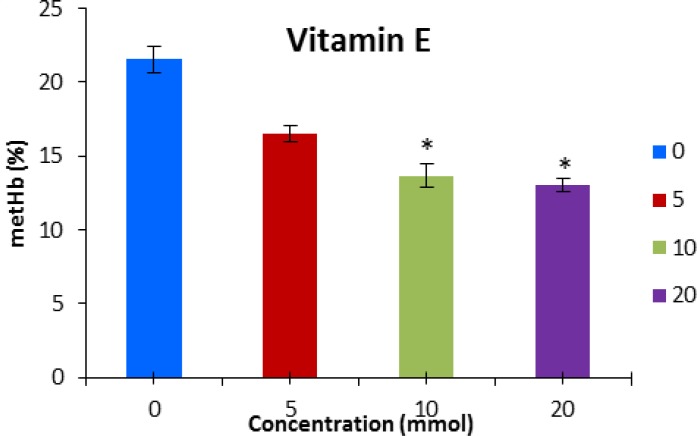
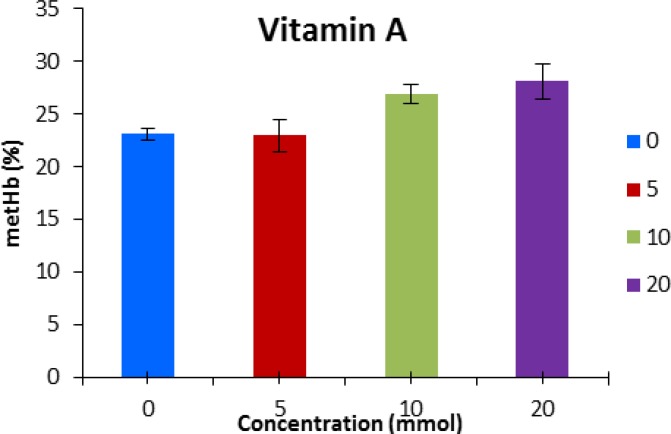
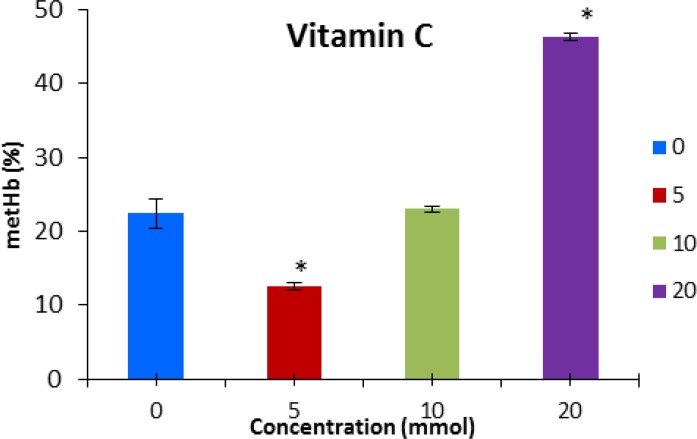
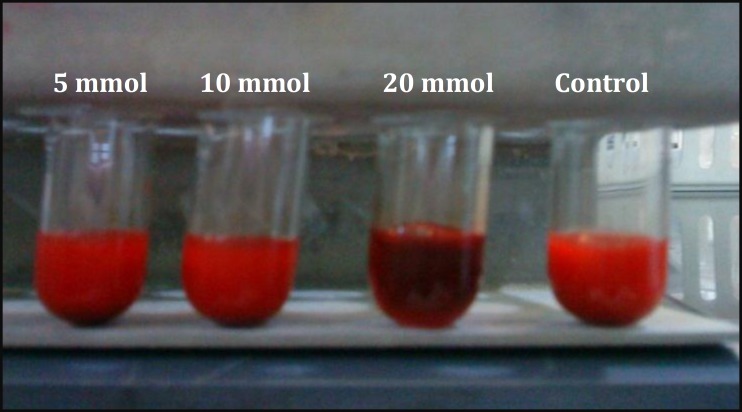
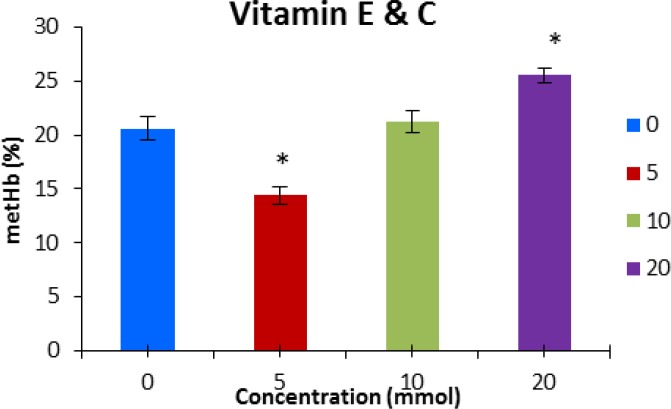
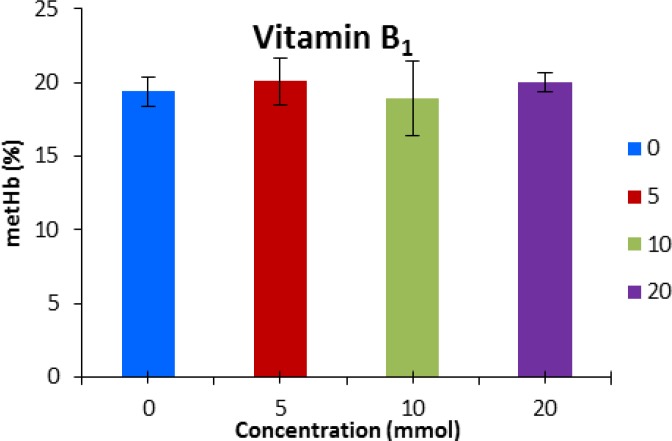
Nitrite intoxication occurs frequently in ruminants and equines. The most common treatment of this disorder is administration of 1% methylene blue, although the use of some antioxidant agents e.g. vitamins and complementary treatment may also be useful. The aim of this study was to evaluate the in vitro antioxidative effects of some vitamins on methemoglobinemia induced by sodium nitrite. For this purpose the blood sample of a healthy dairy cattle was pre-incubated with three different concentrations (5, 10, 20 mmol L(-1)) of each vitamin (E, C, B1, A and a combination of vitamin E and vitamin C) as antioxidant agent at 4 (°)C for 24 hours. A control group with normal saline instead of vitamin was applied. Then, all samples were treated with sodium nitrite (10 mmol L(-1)) as an oxidant agent for 10 minutes and the level of methemoglobin formation was measured spectrophoto-metrically. The results revealed that the level of methemoglobin decreased significantly (P < 0.05), when vitamin E (10 and 20 mmol L(-1)) and vitamin C (5 mmol L(-1)) was applied to the tests, separately. Vitamin C at the concentration of 20 mmol L(-1), was not effective, but it even increased methemoglobin formation significantly. Combination of vitamin E and C was significantly effective at concentration 5 mmol L(-1), but not at concentration 10 and 20 mmol L(-1). Vitamin A and vitamin B1 were not effective in any concentration. It was concluded that vitamins especially vitamin C and E can reduce oxidative effects which induced methemoglobin formation in vitro and could be used as an alternative medication.
亚硝酸盐中毒在反刍动物和马属动物中频繁发生。这种病症最常见的治疗方法是给予1%的亚甲蓝,不过使用一些抗氧化剂(如维生素)及辅助治疗可能也有帮助。本研究的目的是评估某些维生素对亚硝酸钠诱导的高铁血红蛋白血症的体外抗氧化作用。为此,将一头健康奶牛的血液样本与每种维生素(E、C、B1、A以及维生素E和维生素C的组合)的三种不同浓度(5、10、20 mmol L⁻¹)作为抗氧化剂在4℃下预孵育24小时。设置一个用生理盐水代替维生素的对照组。然后,所有样本用亚硝酸钠(10 mmol L⁻¹)作为氧化剂处理10分钟,并通过分光光度法测量高铁血红蛋白的形成水平。结果显示,当分别将维生素E(10和20 mmol L⁻¹)和维生素C(5 mmol L⁻¹)应用于试验时,高铁血红蛋白水平显著降低(P < 0.05)。浓度为20 mmol L⁻¹的维生素C无效,甚至还显著增加了高铁血红蛋白的形成。维生素E和C的组合在浓度为5 mmol L⁻¹时显著有效,但在浓度为10和20 mmol L⁻¹时无效。维生素A和维生素B1在任何浓度下均无效。得出的结论是,维生素尤其是维生素C和E可以降低体外诱导高铁血红蛋白形成的氧化作用,并且可以用作替代药物。