Dave Vivek, Paliwal Sarvesh, Yadav Sachdev, Sharma Swapnil
Department of Pharmacy, Banasthali University, Banasthali 304022, India.
ScientificWorldJournal. 2015;2015:432376. doi: 10.1155/2015/432376. Epub 2015 Jan 13.
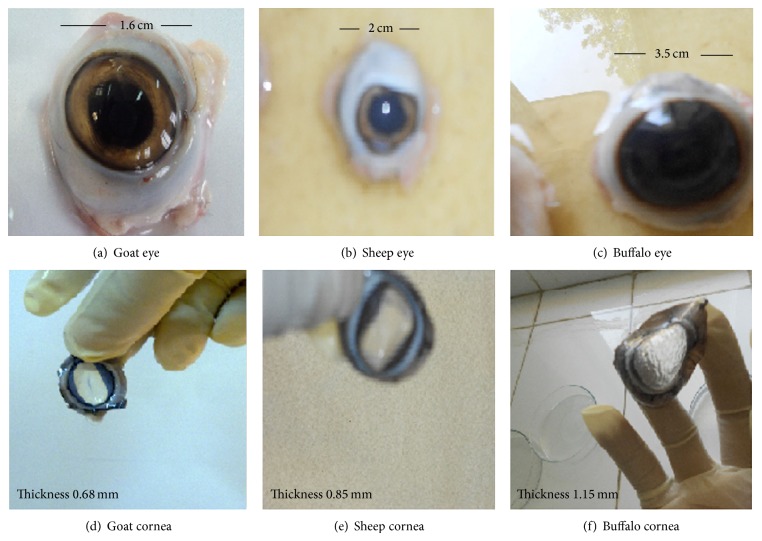
The current study involves the evaluation of factors that influence the transcorneal permeation of aqueous drops of aceclofenac ophthalmic formulation through freshly excised goat, sheep, and buffalo corneas. Aceclofenac formulation with different concentrations 0.1-0.5% (w/v) and with different pH and different preservatives, was taken into account. The amount of drug permeated from different formulations was estimated using an Franz diffusion cell. A linear increase in drug permeation was observed with increase in pH (5.5 to 7.4). The apparent permeability coefficient was found to be maximum 15.01 ± 0.45 on goat cornea and maximum transport of aceclofenac was observed at physiological pH of tears (i.e., 7). The results advocate that aceclofenac 0.5% (w/v) ophthalmic solution (pH 7.0) containing BAK (0.01%) provides maximum in vitro ocular permeability through goat, sheep, and buffalo corneas.
本研究涉及评估影响醋氯芬酸眼用制剂水性滴剂透过新鲜摘除的山羊、绵羊和水牛角膜的角膜渗透的因素。考虑了不同浓度(0.1 - 0.5% (w/v))、不同pH值和不同防腐剂的醋氯芬酸制剂。使用Franz扩散池估计不同制剂中药物的渗透量。随着pH值从5.5增加到7.4,观察到药物渗透呈线性增加。发现表观渗透系数在山羊角膜上最大为15.01 ± 0.45,并且在泪液的生理pH值(即7)下观察到醋氯芬酸的最大转运。结果表明,含有苯扎氯铵(0.01%)的0.5% (w/v)醋氯芬酸眼用溶液(pH 7.0)通过山羊、绵羊和水牛角膜提供最大的体外眼部渗透性。