Kaku Bunji, Katsuda Shoji, Taguchi Tomio
Division of Cardiovascular Medicine, Toyama Red Cross Hospital, 2-1-58 Ushijima-honmachi, Toyama, 930-0859, Japan.
J Med Case Rep. 2015 Feb 6;9:26. doi: 10.1186/1752-1947-9-26.
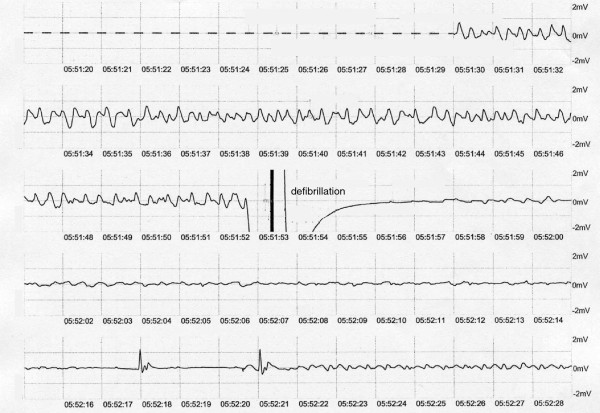
Cardiac arrhythmia is sometimes life-threatening, and automated external defibrillators are presently used in some countries. Coronary artery spasm is one of the primary causes of life-threatening arrhythmia. In general, chest symptoms are key indicators of possible coronary artery spasm; however, if chest symptoms are not present, clinicians may not suspect this disease. We encountered a patient who had recovered from ventricular fibrillation treated by using an automated external defibrillator, and silent coronary artery spasm was considered to be the cause of this life-threatening arrhythmia. In this case, I-123 metaiodobenzylguanidine scintigraphy was a useful screening tool for a silent coronary artery spasm.
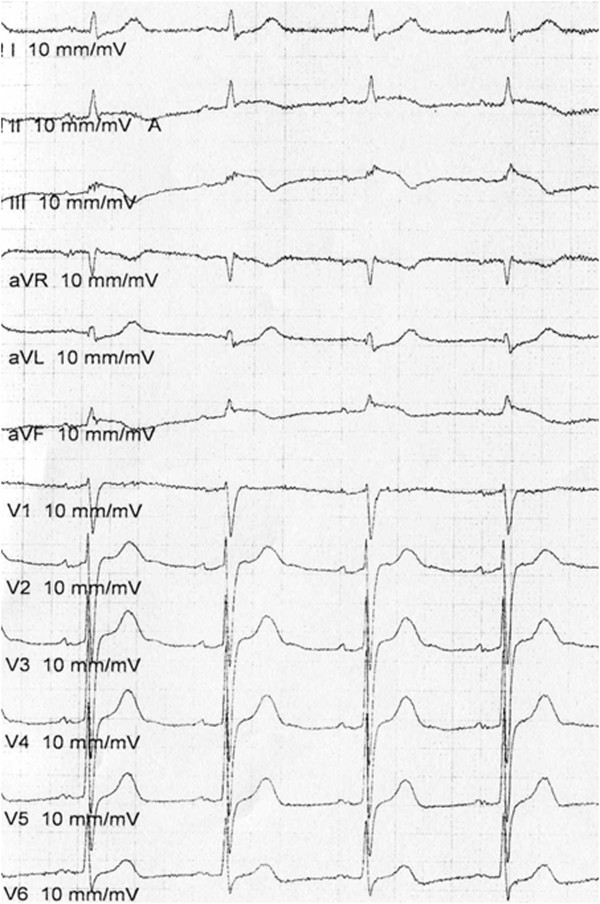
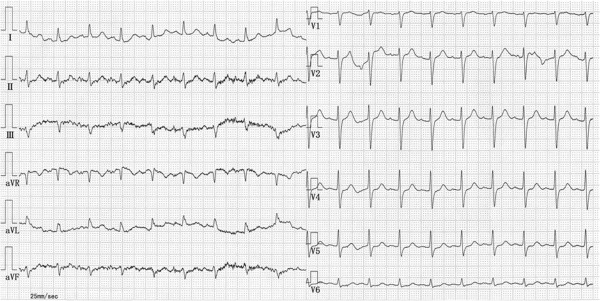
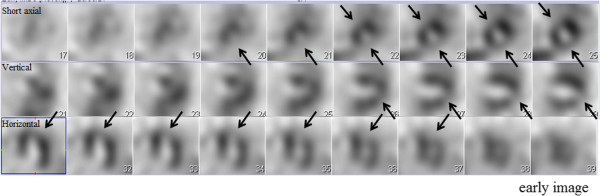
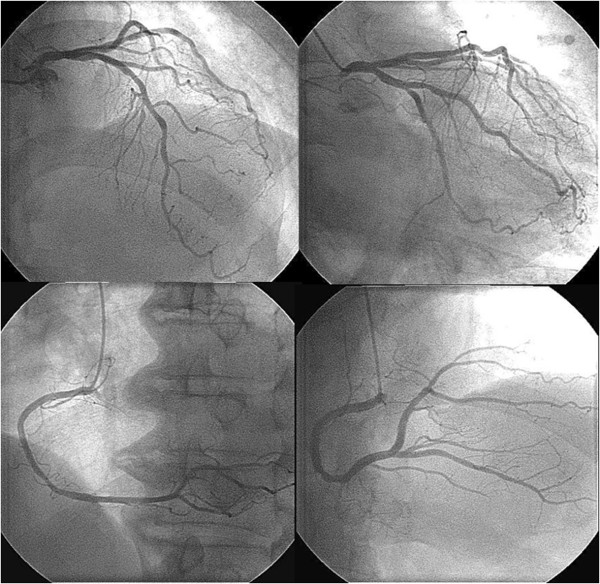
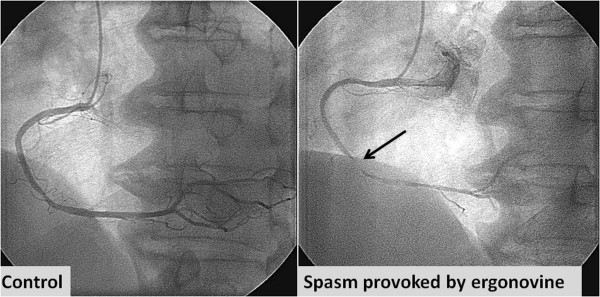
A 72-year-old Japanese man was transferred to our hospital after recovering from ventricular fibrillation treated by using an automated external defibrillator. He had never complained of chest symptoms previously. Decreased uptake of I-123 metaiodobenzylguanidine was observed in the inferolateral and anteroseptal walls of the left ventricle. A spasm provocation test of the coronary artery was performed, and silent coronary artery spasm was diagnosed as the underlying disease.
Non-invasive I-123 metaiodobenzylguanidine scintigraphy was a useful screening tool for silent coronary artery spasm as a possible cause of cardiopulmonary arrest in a patient with no chest symptoms.
心律失常有时会危及生命,目前一些国家使用自动体外除颤器。冠状动脉痉挛是危及生命的心律失常的主要原因之一。一般来说,胸部症状是可能发生冠状动脉痉挛的关键指标;然而,如果没有胸部症状,临床医生可能不会怀疑这种疾病。我们遇到一名患者,他通过使用自动体外除颤器从室颤中恢复过来,无声冠状动脉痉挛被认为是这种危及生命的心律失常的原因。在这种情况下,I-123间碘苄胍闪烁扫描是筛查无声冠状动脉痉挛的有用工具。
一名72岁的日本男性在使用自动体外除颤器治疗室颤后康复,被转送至我院。他之前从未抱怨过胸部症状。在左心室下外侧壁和前间隔壁观察到I-123间碘苄胍摄取减少。进行了冠状动脉痉挛激发试验,诊断潜在疾病为无声冠状动脉痉挛。
对于无胸部症状的患者,无创I-123间碘苄胍闪烁扫描是筛查可能导致心肺骤停的无声冠状动脉痉挛的有用工具。