Herrera Emilio A, Farías Jorge G, González-Candia Alejandro, Short Stefania E, Carrasco-Pozo Catalina, Castillo Rodrigo L
Programa de Fisiopatología, Instituto de Ciencias Biomédicas, Facultad de Medicina, Universidad de Chile, Santiago 8380453, Chile.
Departamento de Ingeniería Química, Facultad de Ingeniería y Ciencias, Universidad de la Frontera, Temuco 4811230, Chile.
Mar Drugs. 2015 Feb 4;13(2):838-60. doi: 10.3390/md13020838.
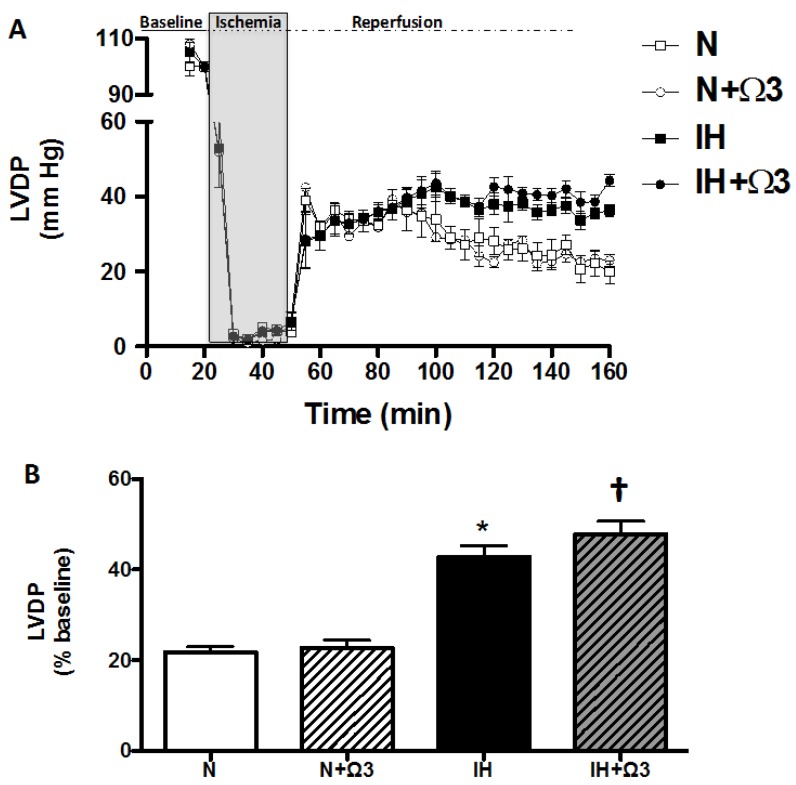
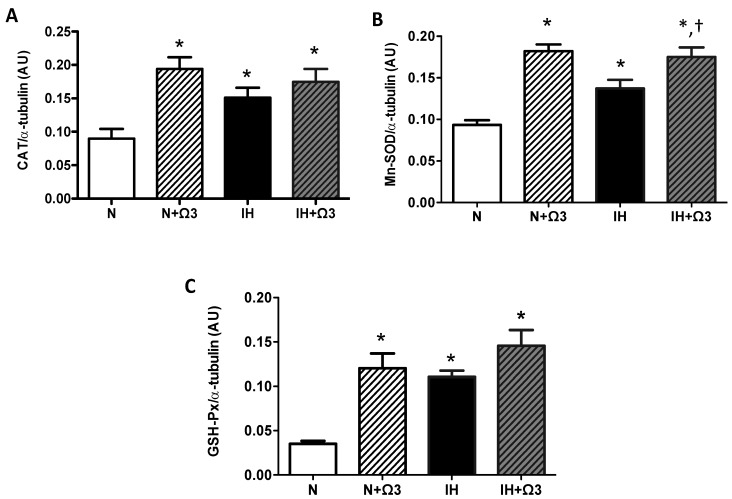
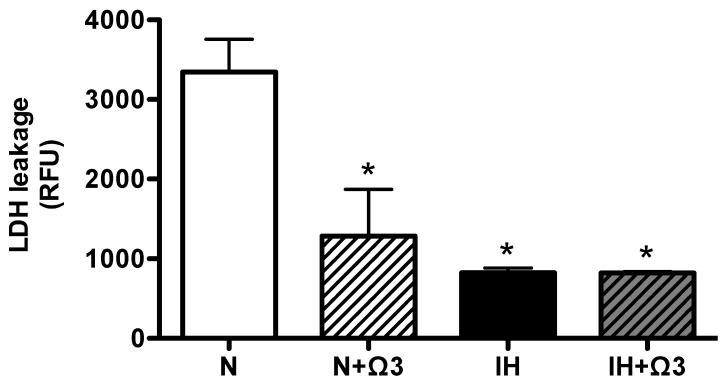
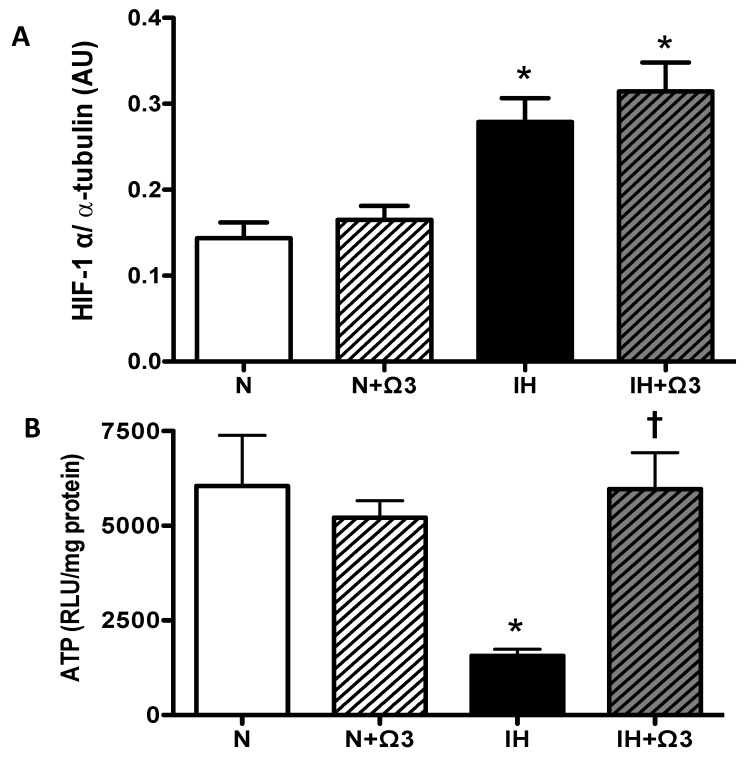
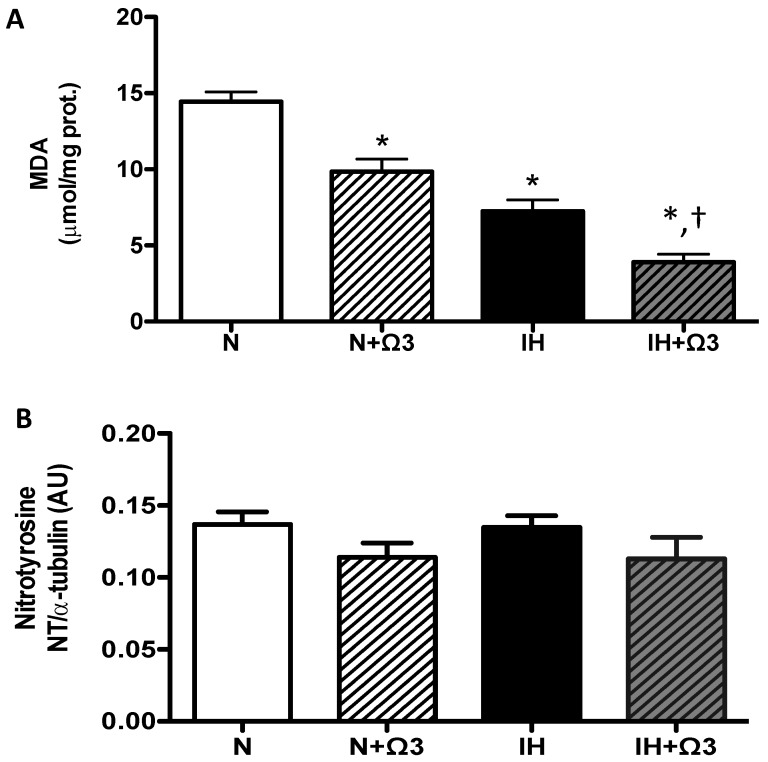
Intermittent hypobaric hypoxia (IH) is linked with oxidative stress, impairing cardiac function. However, early IH also activate cardio-protective mechanisms. Omega 3 fatty acids (Ω3) induce cardioprotection by reducing infarct size and reinforcing antioxidant defenses. The aim of this work was to determine the combined effects of IH and Ω3 on cardiac function; oxidative balance and inflammatory state. Twenty-eight rats were randomly divided into four groups: normobaric normoxia (N); N + Ω3 (0.3 g·kg-1·day-1); IH; and IH + Ω3. IH was induced by 4 intercalate periods of hypoxia (4 days)-normoxia (4 days) in a hypobaric chamber during 32 days. At the end of the exposure, hearts were mounted in a Langendorff system and subjected to 30 min of ischemia followed by 120 min of reperfusion. In addition, we determined HIF-1α and ATP levels, as well as oxidative stress by malondialdehyde and nitrotyrosine quantification. Further, the expression of the antioxidant enzymes superoxide dismutase, catalase, and glutathione peroxidase was determined. NF-kappaB and myeloperoxidase levels were assessed in the hearts. Relative to N hearts, IH improved left ventricular function (Left ventricular developed pressure: N; 21.8 ± 3.4 vs. IH; 42.8 ± 7.1 mmHg; p < 0.05); reduced oxidative stress (Malondialdehyde: N; 14.4 ± 1.8 vs. IH; 7.3 ± 2.1 μmol/mg prot.; p < 0.05); and increased antioxidant enzymes expression. Supplementation with Ω3 induces similar responses as IH group. Our findings suggest that both, IH and Ω3 in an independent manner, induce functional improvement by antioxidant and anti-inflammatory mechanisms, establishing cardio-protection.
间歇性低压缺氧(IH)与氧化应激有关,会损害心脏功能。然而,早期IH也会激活心脏保护机制。ω-3脂肪酸(Ω3)通过缩小梗死面积和增强抗氧化防御来诱导心脏保护作用。本研究的目的是确定IH和Ω3对心脏功能、氧化平衡和炎症状态的联合作用。将28只大鼠随机分为四组:常压常氧组(N);N + Ω3组(0.3 g·kg-1·天-1);IH组;以及IH + Ω3组。通过在低压舱中进行4个低氧(4天)-常氧(4天)的交替周期,持续32天来诱导IH。暴露结束时,将心脏安装在Langendorff系统中,进行30分钟的缺血,随后进行120分钟的再灌注。此外,我们测定了缺氧诱导因子-1α(HIF-1α)和三磷酸腺苷(ATP)水平,以及通过丙二醛和硝基酪氨酸定量来测定氧化应激。此外,还测定了抗氧化酶超氧化物歧化酶、过氧化氢酶和谷胱甘肽过氧化物酶的表达。评估了心脏中核因子κB(NF-κB)和髓过氧化物酶水平。与N组心脏相比,IH改善了左心室功能(左心室舒张末压:N组;21.8 ± 3.4 vs. IH组;42.8 ± 7.1 mmHg;p < 0.05);降低了氧化应激(丙二醛:N组;14.4 ± 1.8 vs. IH组;7.3 ± 2.1 μmol/mg蛋白;p < 0.05);并增加了抗氧化酶的表达。补充Ω3诱导出与IH组相似的反应。我们的研究结果表明,IH和Ω3均以独立的方式通过抗氧化和抗炎机制诱导功能改善,从而建立心脏保护作用。