Verhein Kirsten C, McCaw Zachary, Gladwell Wesley, Trivedi Shweta, Bushel Pierre R, Kleeberger Steven R
Laboratory of Respiratory Biology, National Institute of Environmental Health Sciences (NIEHS), National Institutes of Health (NIH), Department of Health and Human Resources (DHHS), Research Triangle Park, North Carolina, USA.
Environ Health Perspect. 2015 Aug;123(8):799-805. doi: 10.1289/ehp.1408852. Epub 2015 Feb 6.
Ozone is a highly toxic air pollutant and global health concern. Mechanisms of genetic susceptibility to ozone-induced lung inflammation are not completely understood. We hypothesized that Notch3 and Notch4 are important determinants of susceptibility to ozone-induced lung inflammation.
Wild-type (WT), Notch3 (Notch3-/-), and Notch4 (Notch4-/-) knockout mice were exposed to ozone (0.3 ppm) or filtered air for 6-72 hr.
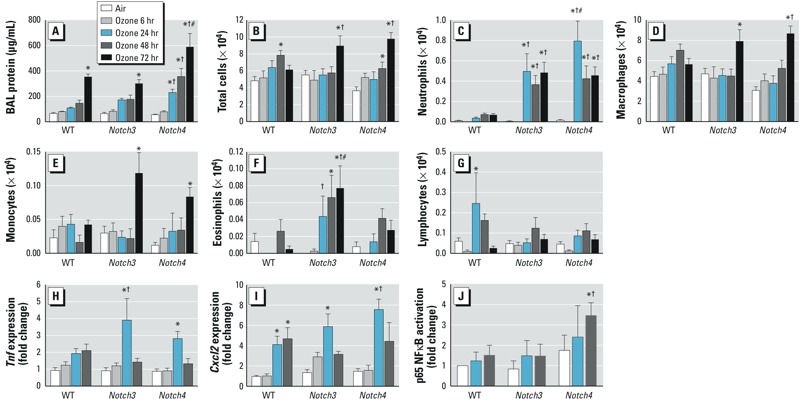
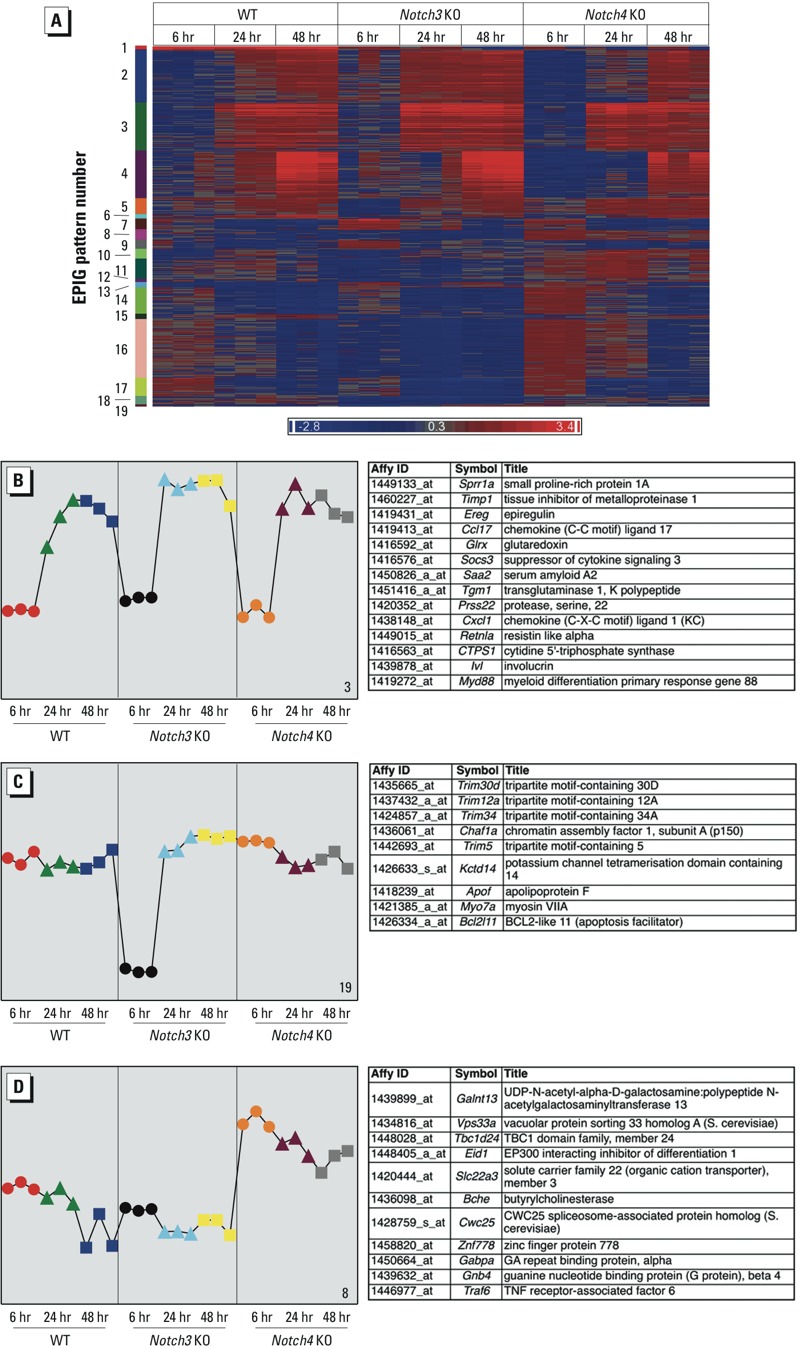
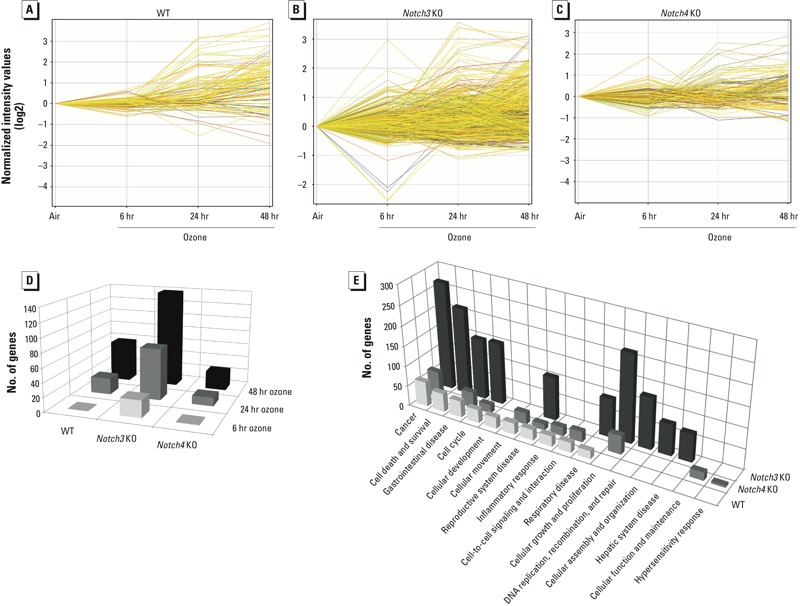
Relative to air-exposed controls, ozone increased bronchoalveolar lavage fluid (BALF) protein, a marker of lung permeability, in all genotypes, but significantly greater concentrations were found in Notch4-/- compared with WT and Notch3-/- mice. Significantly greater mean numbers of BALF neutrophils were found in Notch3-/- and Notch4-/- mice compared with WT mice after ozone exposure. Expression of whole lung Tnf was significantly increased after ozone in Notch3-/- and Notch4-/- mice, and was significantly greater in Notch3-/- compared with WT mice. Statistical analyses of the transcriptome identified differentially expressed gene networks between WT and knockout mice basally and after ozone, and included Trim30, a member of the inflammasome pathway, and Traf6, an inflammatory signaling member.
These novel findings are consistent with Notch3 and Notch4 as susceptibility genes for ozone-induced lung injury, and suggest that Notch receptors protect against innate immune inflammation.
臭氧是一种剧毒空气污染物,引发全球对健康问题的关注。臭氧诱发肺部炎症的遗传易感性机制尚未完全明确。我们推测Notch3和Notch4是臭氧诱发肺部炎症易感性的重要决定因素。
将野生型(WT)、Notch3基因敲除(Notch3-/-)和Notch4基因敲除(Notch4-/-)小鼠暴露于臭氧(0.3 ppm)或过滤空气中6至72小时。
与暴露于空气的对照组相比,臭氧使所有基因型小鼠的支气管肺泡灌洗液(BALF)蛋白(一种肺通透性标志物)增加,但与WT和Notch3-/-小鼠相比,Notch4-/-小鼠中的浓度显著更高。臭氧暴露后,与WT小鼠相比,Notch3-/-和Notch4-/-小鼠BALF中性粒细胞的平均数量显著更多。臭氧暴露后,Notch3-/-和Notch4-/-小鼠全肺Tnf的表达显著增加,且与WT小鼠相比,Notch3-/-小鼠中的表达显著更高。转录组的统计分析确定了WT小鼠与基因敲除小鼠在基础状态和臭氧暴露后的差异表达基因网络,包括炎症小体途径成员Trim30和炎症信号成员Traf6。
这些新发现与Notch3和Notch4作为臭氧诱发肺损伤的易感基因一致,并表明Notch受体可预防先天性免疫炎症。