O'Connor Brian P, Danhorn Thomas, De Arras Lesly, Flatley Brenna R, Marcus Roland A, Farias-Hesson Eveline, Leach Sonia M, Alper Scott
Department of Pediatrics, National Jewish Health, Denver, Colorado, United States of America; Integrated Center for Genes, Environment and Health, National Jewish Health, Denver, Colorado, United States of America; Department of Biomedical Research, National Jewish Health, Denver, Colorado, United States of America; Department of Immunology and Microbiology, University of Colorado, Aurora, Colorado, United States of America.
Integrated Center for Genes, Environment and Health, National Jewish Health, Denver, Colorado, United States of America.
PLoS Genet. 2015 Feb 6;11(2):e1004932. doi: 10.1371/journal.pgen.1004932. eCollection 2015 Feb.
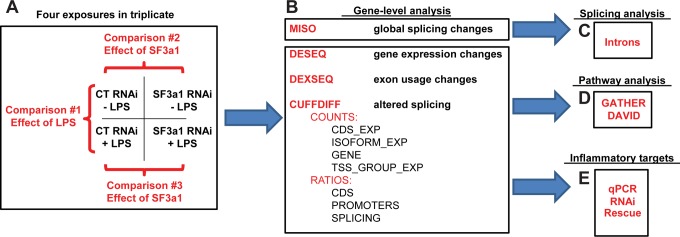
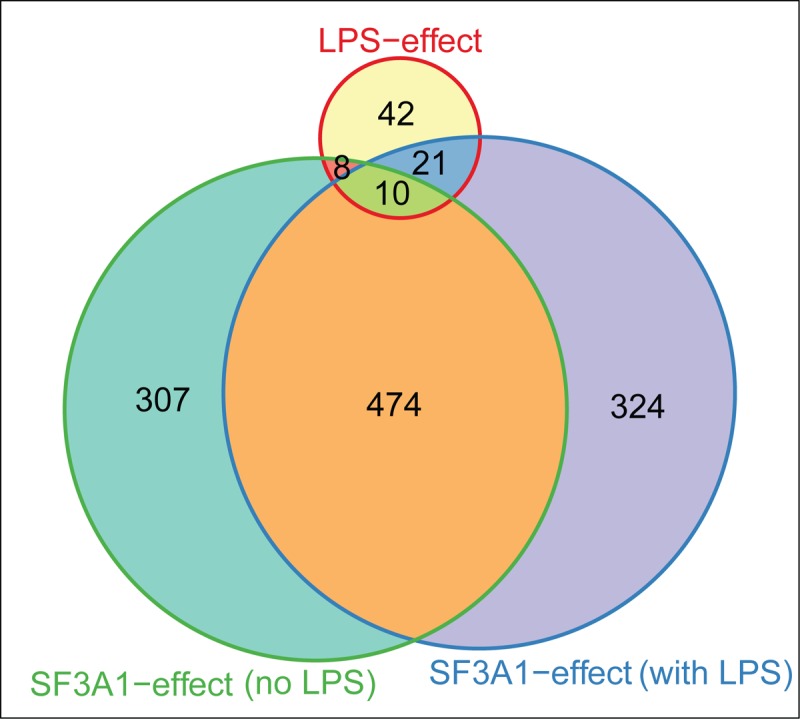
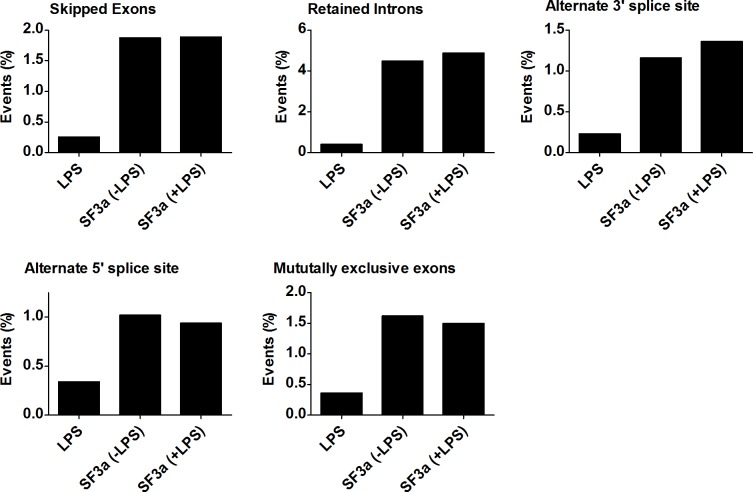
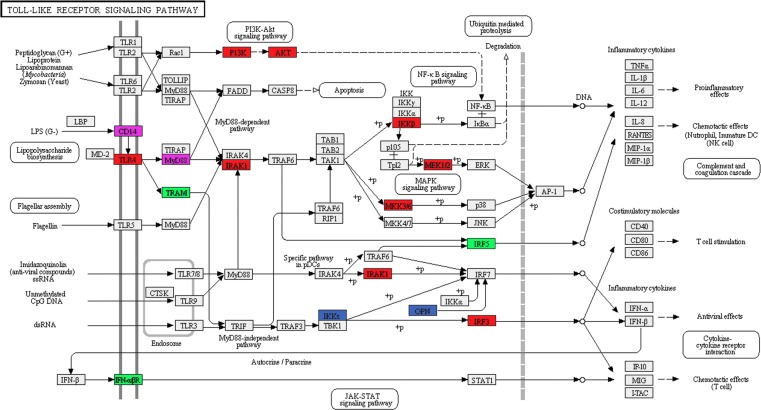
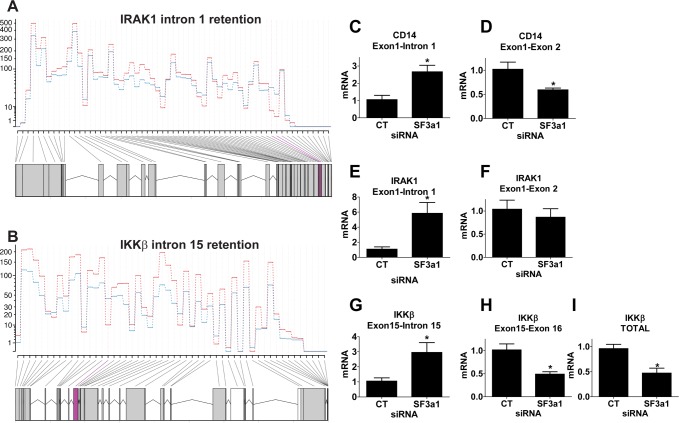
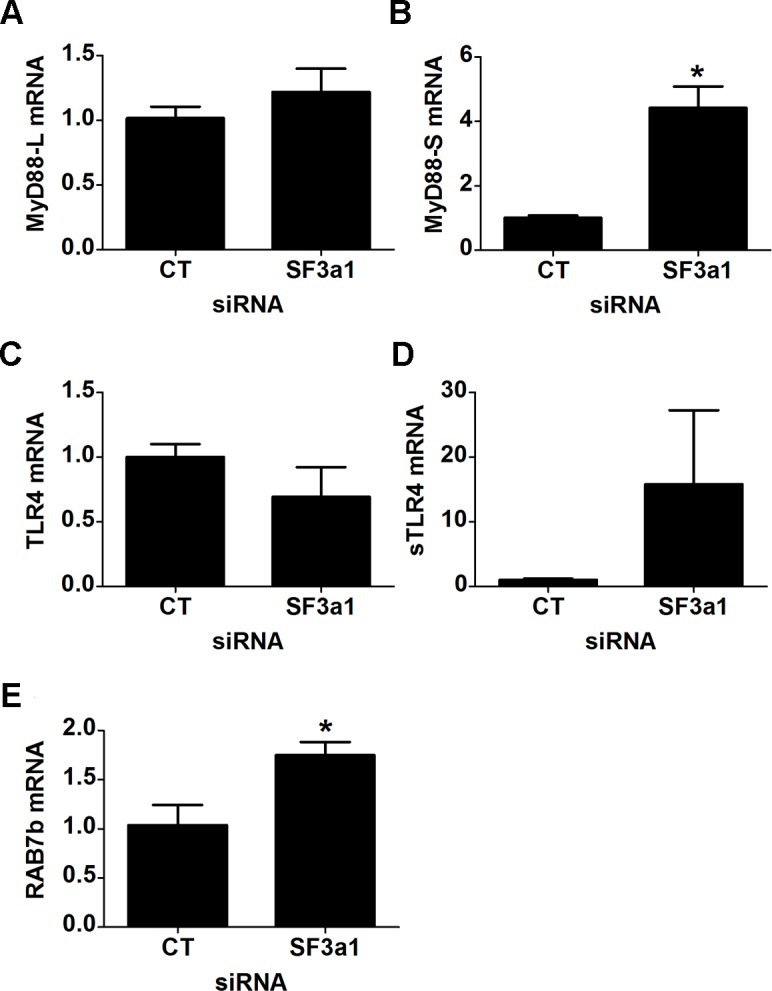
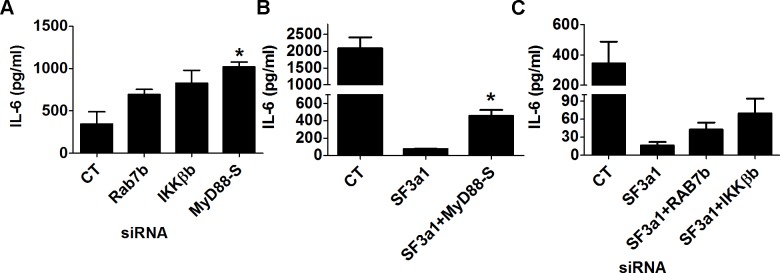
The innate immune response plays a key role in fighting infection by activating inflammation and stimulating the adaptive immune response. However, chronic activation of innate immunity can contribute to the pathogenesis of many diseases with an inflammatory component. Thus, various negatively acting factors turn off innate immunity subsequent to its activation to ensure that inflammation is self-limiting and to prevent inflammatory disease. These negatively acting pathways include the production of inhibitory acting alternate proteins encoded by alternative mRNA splice forms of genes in Toll-like receptor (TLR) signaling pathways. We previously found that the SF3a mRNA splicing complex was required for a robust innate immune response; SF3a acts to promote inflammation in part by inhibiting the production of a negatively acting splice form of the TLR signaling adaptor MyD88. Here we inhibit SF3a1 using RNAi and subsequently perform an RNAseq study to identify the full complement of genes and splicing events regulated by SF3a in murine macrophages. Surprisingly, in macrophages, SF3a has significant preference for mRNA splicing events within innate immune signaling pathways compared with other biological pathways, thereby affecting the splicing of specific genes in the TLR signaling pathway to modulate the innate immune response.
先天免疫反应通过激活炎症和刺激适应性免疫反应在对抗感染中发挥关键作用。然而,先天免疫的慢性激活可导致许多具有炎症成分的疾病的发病机制。因此,各种负性作用因子在先天免疫激活后关闭先天免疫,以确保炎症是自我限制的,并预防炎症性疾病。这些负性作用途径包括由Toll样受体(TLR)信号通路中基因的可变mRNA剪接形式编码的抑制性替代蛋白的产生。我们之前发现,SF3a mRNA剪接复合体是强大的先天免疫反应所必需的;SF3a部分通过抑制TLR信号转导衔接蛋白MyD88的负性作用剪接形式的产生来促进炎症。在这里,我们使用RNA干扰抑制SF3a1,随后进行RNA测序研究,以确定SF3a在小鼠巨噬细胞中调控的基因和剪接事件的完整互补序列。令人惊讶的是,在巨噬细胞中,与其他生物学途径相比,SF3a对先天免疫信号通路中的mRNA剪接事件具有显著偏好,从而影响TLR信号通路中特定基因的剪接,以调节先天免疫反应。