Drug Discovery Laboratory, Wakunaga Pharmaceutical Co., Ltd, 1624, Koda-cho, Akitakata-shi, Hiroshima, 739-1195, Japan.
Central Research Institute, Wakunaga Pharmaceutical Co., Ltd, 1624, Koda-cho, Akitakata-shi, Hiroshima, 739-1195, Japan.
Sci Rep. 2024 Nov 28;14(1):29627. doi: 10.1038/s41598-024-81304-2.
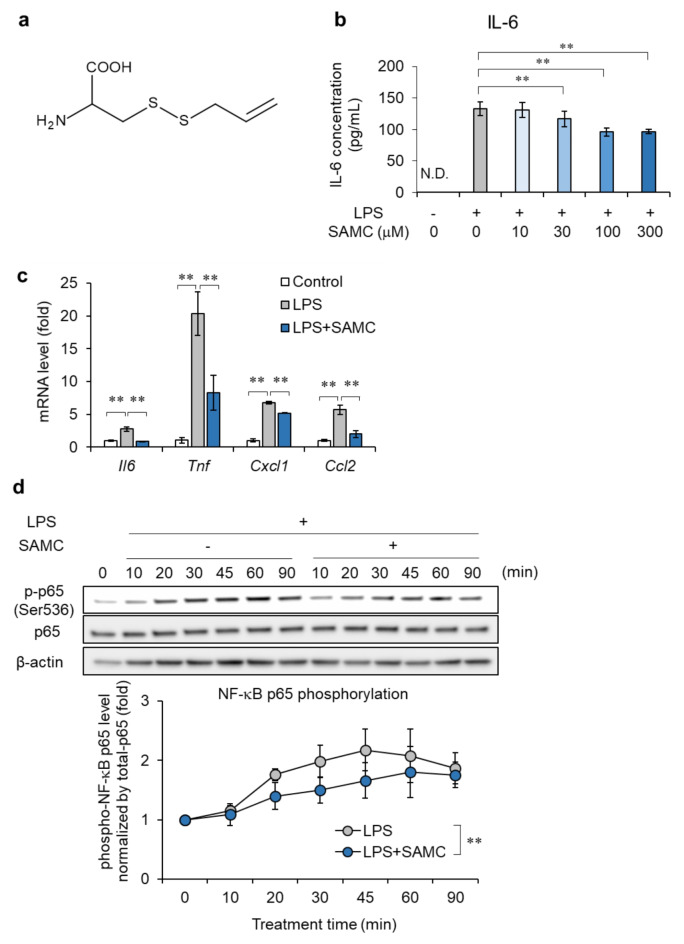
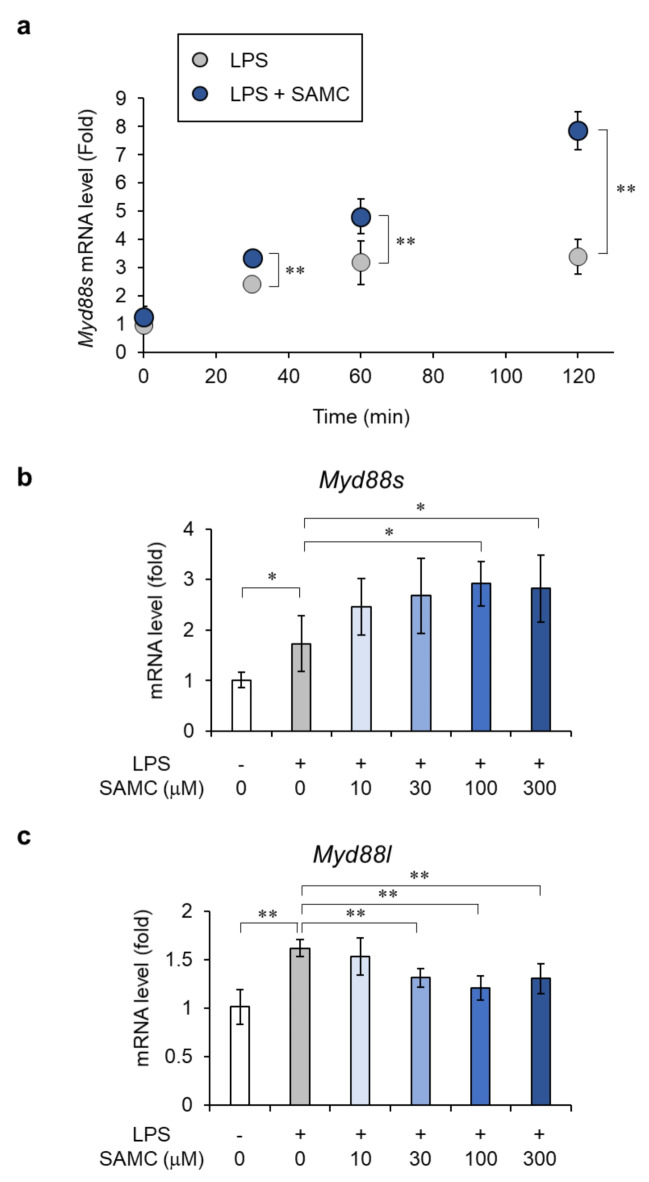
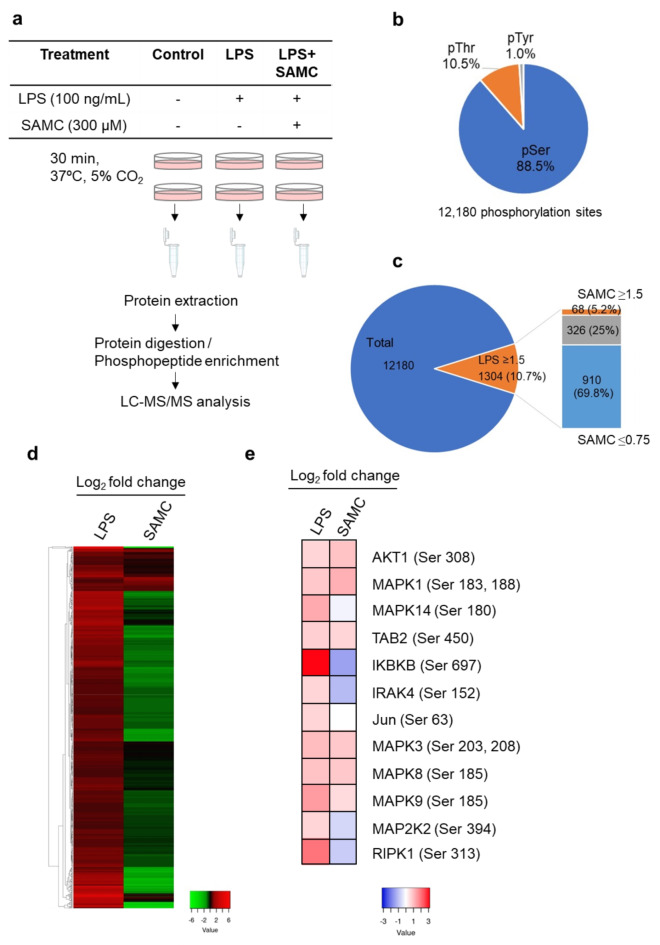
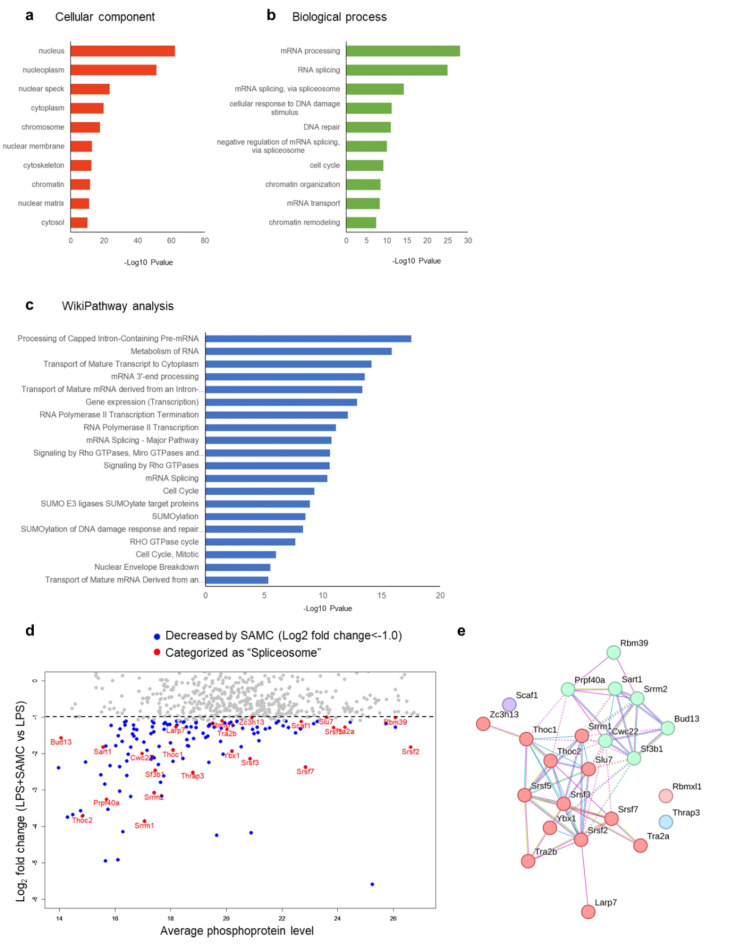
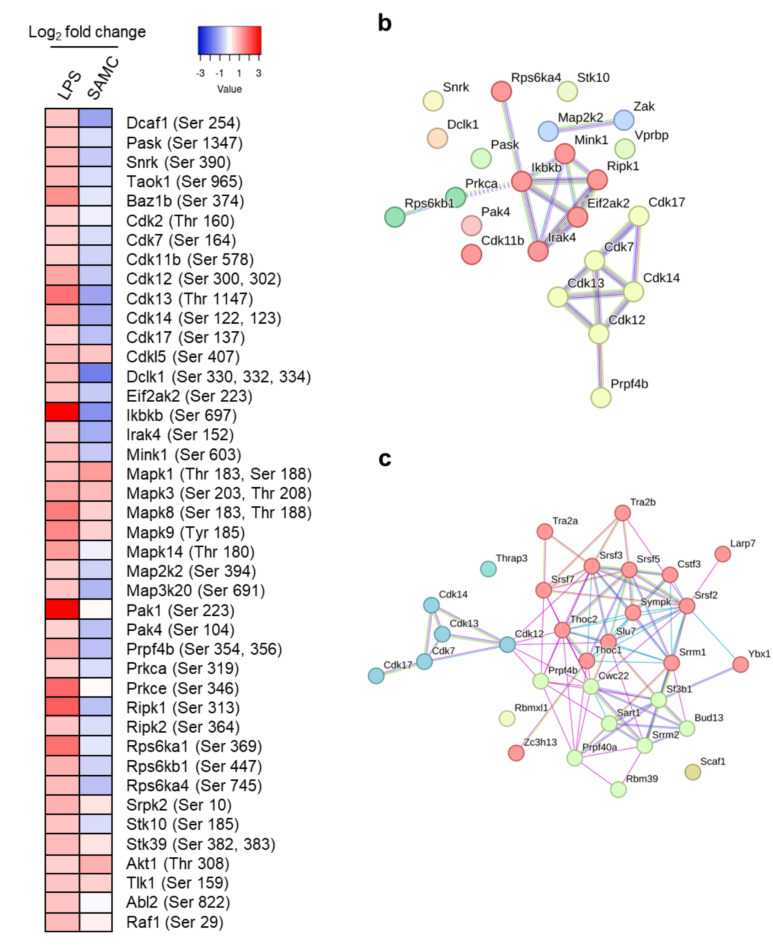
Mastitis is an inflammatory disease affecting mammary tissues caused by bacterial infection that negatively affects milk quality and quantity. S-Allylmercaptocysteine (SAMC), a sulfur compound in aged garlic extract (AGE), suppresses lipopolysaccharide (LPS)-induced inflammation in mouse models and cell cultures. However, the mechanisms underlying this anti-inflammatory effect remain unclear. In this study, we demonstrated that oral administration of AGE suppressed the LPS-induced immune response in a mastitis mouse model and that SAMC inhibited LPS-induced interleukin-6 production and nuclear factor κB p65 subunit activation in HC11 mammary epithelial cells. Global phosphoproteomic analysis revealed that SAMC treatment downregulated 910 of the 1,304 phosphorylation sites upregulated by LPS stimulation in mammary cells, including those associated with toll-like receptor 4 (TLR4) signaling. Additionally, SAMC decreased the phosphorylation of 26 proteins involved in pre-mRNA splicing, particularly the U2 small nuclear ribonucleoprotein complex. Furthermore, we found that SAMC increased the production of the myeloid differentiation factor 88 short form (MyD88-S), an alternatively spliced form of MyD88 that negatively regulates TLR4 signaling. These findings suggest that SAMC inhibits TLR4-mediated inflammation via alternative pre-mRNA splicing, thus promoting MyD88-S production in mammary epithelial cells. Therefore, SAMC may alleviate various inflammatory diseases, such as mastitis, by modulating immune responses.
乳腺炎是一种由细菌感染引起的乳腺组织炎症性疾病,会导致牛奶质量和数量下降。大蒜 aged 提取物中的含硫化合物 S-烯丙基巯基半胱氨酸(SAMC)可抑制脂多糖(LPS)诱导的小鼠模型和细胞培养物中的炎症反应。然而,这种抗炎作用的机制尚不清楚。在本研究中,我们证明 aged 大蒜提取物的口服给药可抑制乳腺炎小鼠模型中的 LPS 诱导的免疫反应,并且 SAMC 可抑制 LPS 诱导的 HC11 乳腺上皮细胞中白细胞介素-6 的产生和核因子 κB p65 亚基的激活。全局磷酸化蛋白质组学分析表明,SAMC 处理可下调 LPS 刺激乳腺细胞中上调的 1304 个磷酸化位点中的 910 个,包括与 toll 样受体 4(TLR4)信号相关的磷酸化位点。此外,SAMC 降低了参与前体 mRNA 剪接的 26 种蛋白质的磷酸化水平,特别是 U2 小核核糖核蛋白复合物。此外,我们发现 SAMC 增加了髓样分化因子 88 短型(MyD88-S)的产生,MyD88-S 是一种负调控 TLR4 信号的 MyD88 的剪接变体。这些发现表明,SAMC 通过选择性剪接来抑制 TLR4 介导的炎症反应,从而促进乳腺上皮细胞中 MyD88-S 的产生。因此,SAMC 可能通过调节免疫反应来缓解各种炎症性疾病,如乳腺炎。