Mathes Clare M, Bohnenkamp Ryan A, Blonde Ginger D, Letourneau Chanel, Corteville Caroline, Bueter Marco, Lutz Thomas A, le Roux Carel W, Spector Alan C
Department of Psychology and Program in Neuroscience, Florida State University, Tallahassee, FL, USA.
Institute of Veterinary Physiology, Vetsuisse Faculty University of Zurich, Switzerland.
Physiol Behav. 2015 Apr 1;142:179-88. doi: 10.1016/j.physbeh.2015.02.004. Epub 2015 Feb 3.
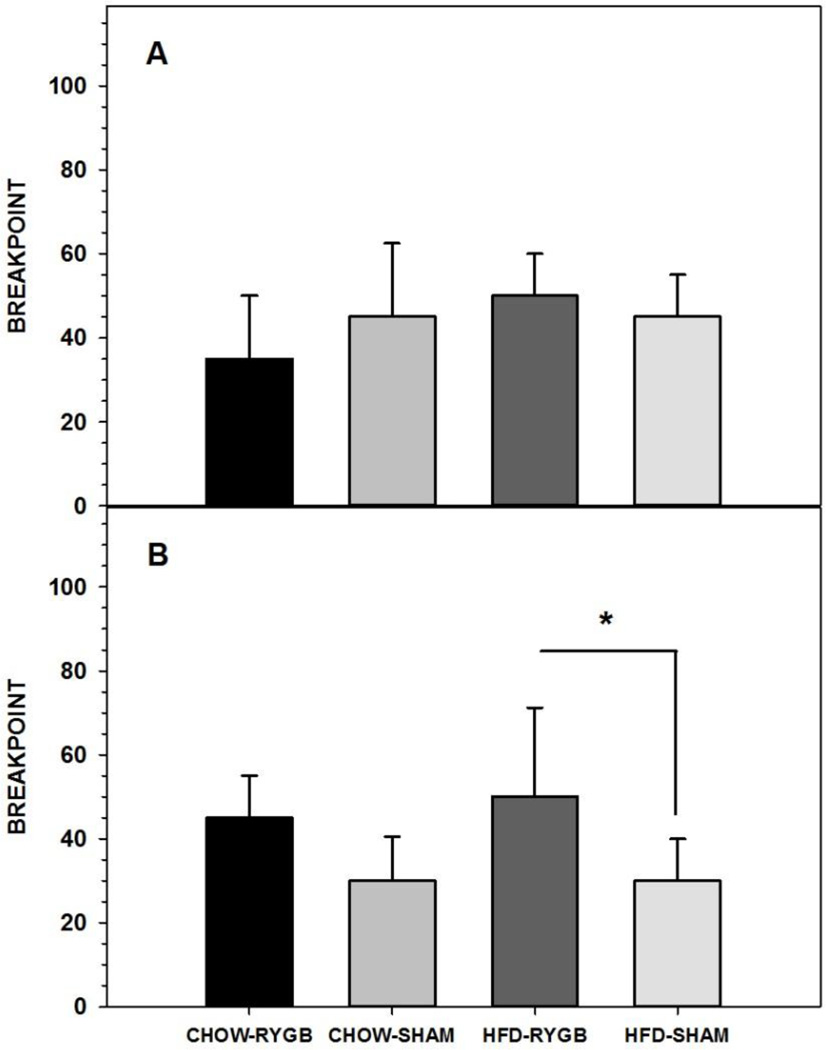
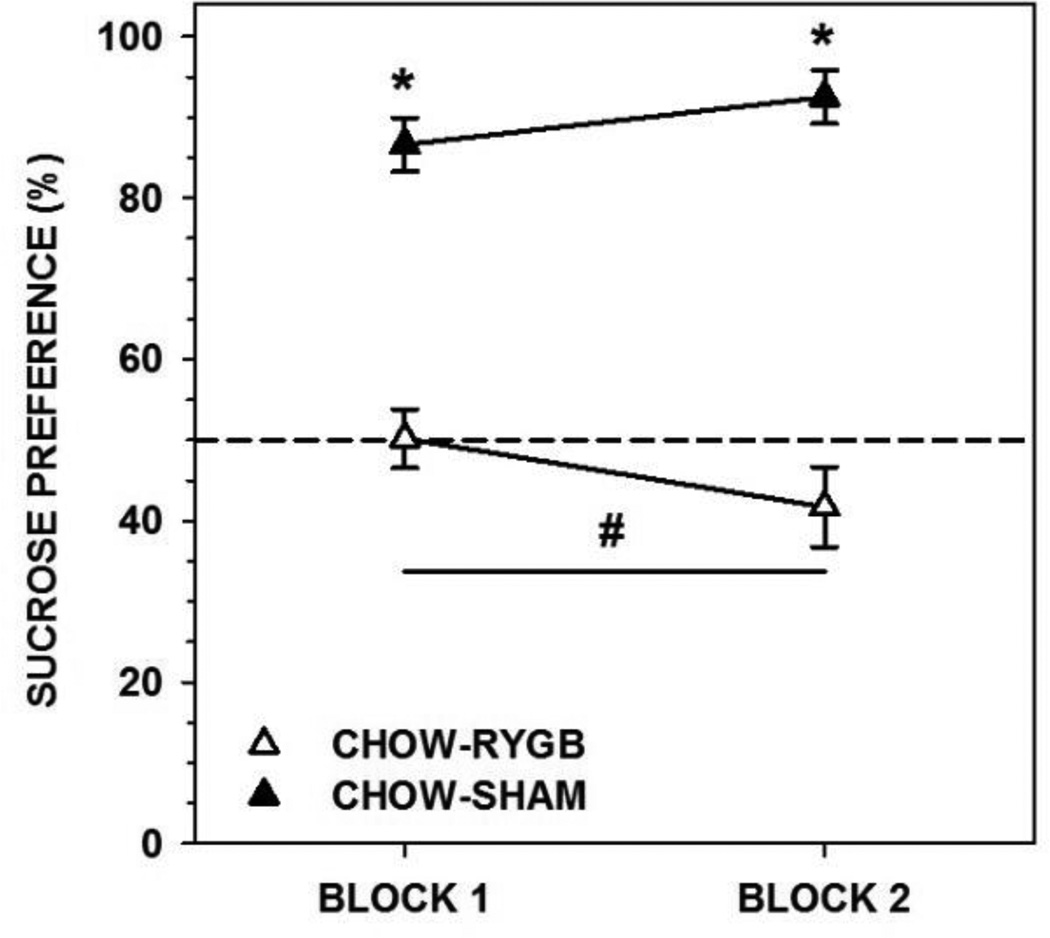
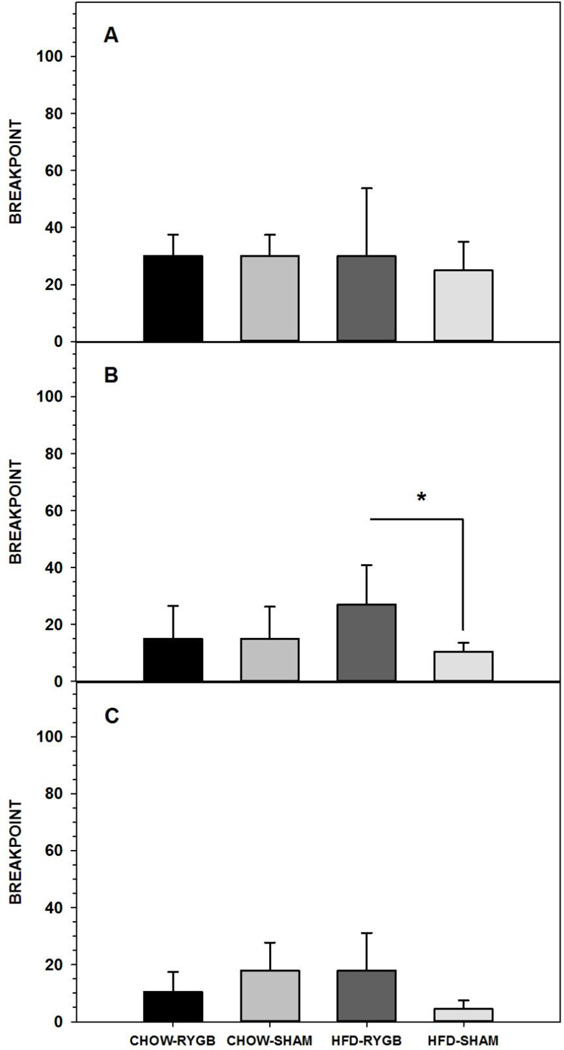
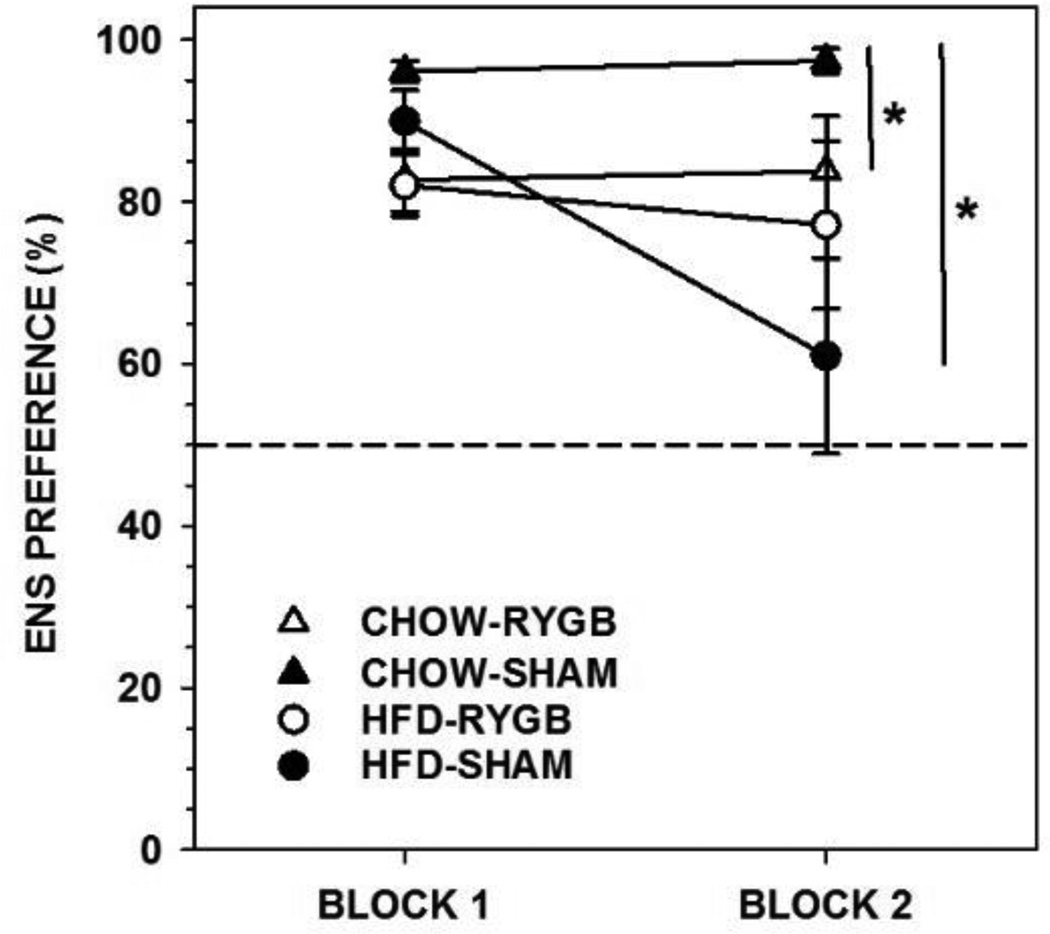
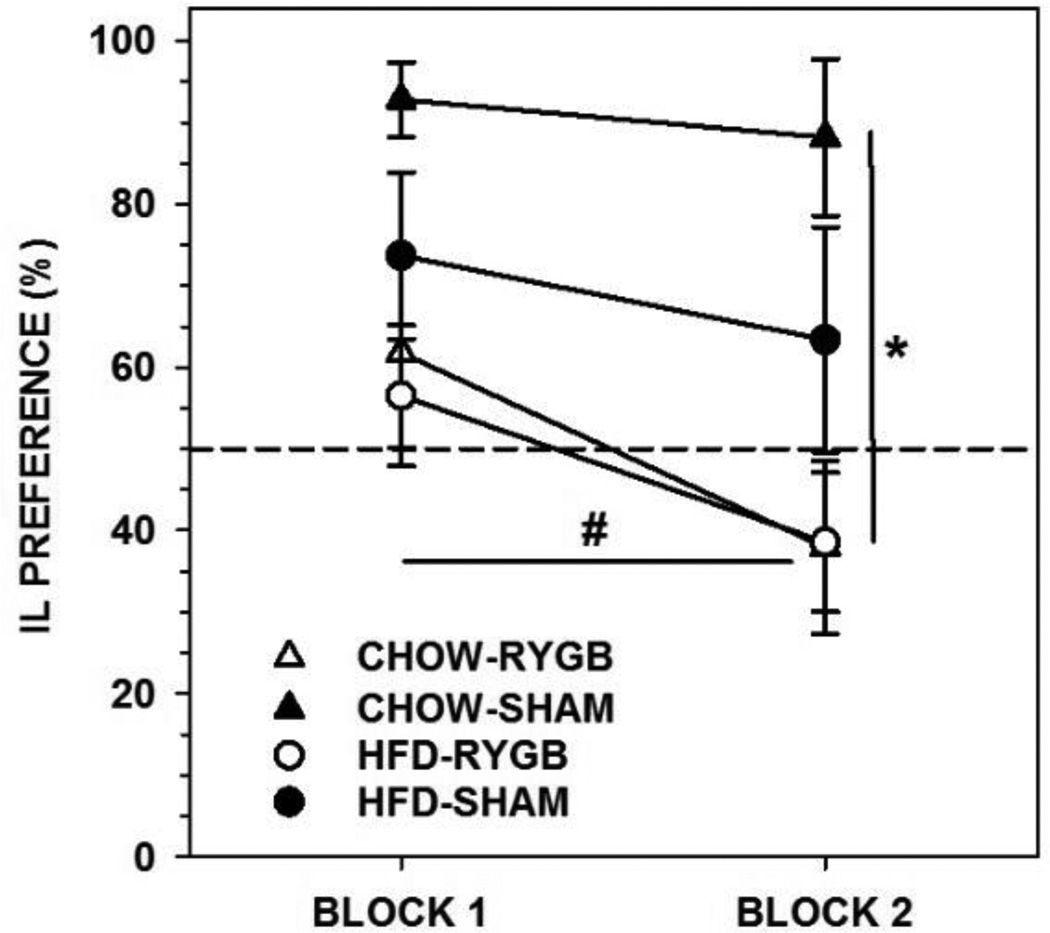
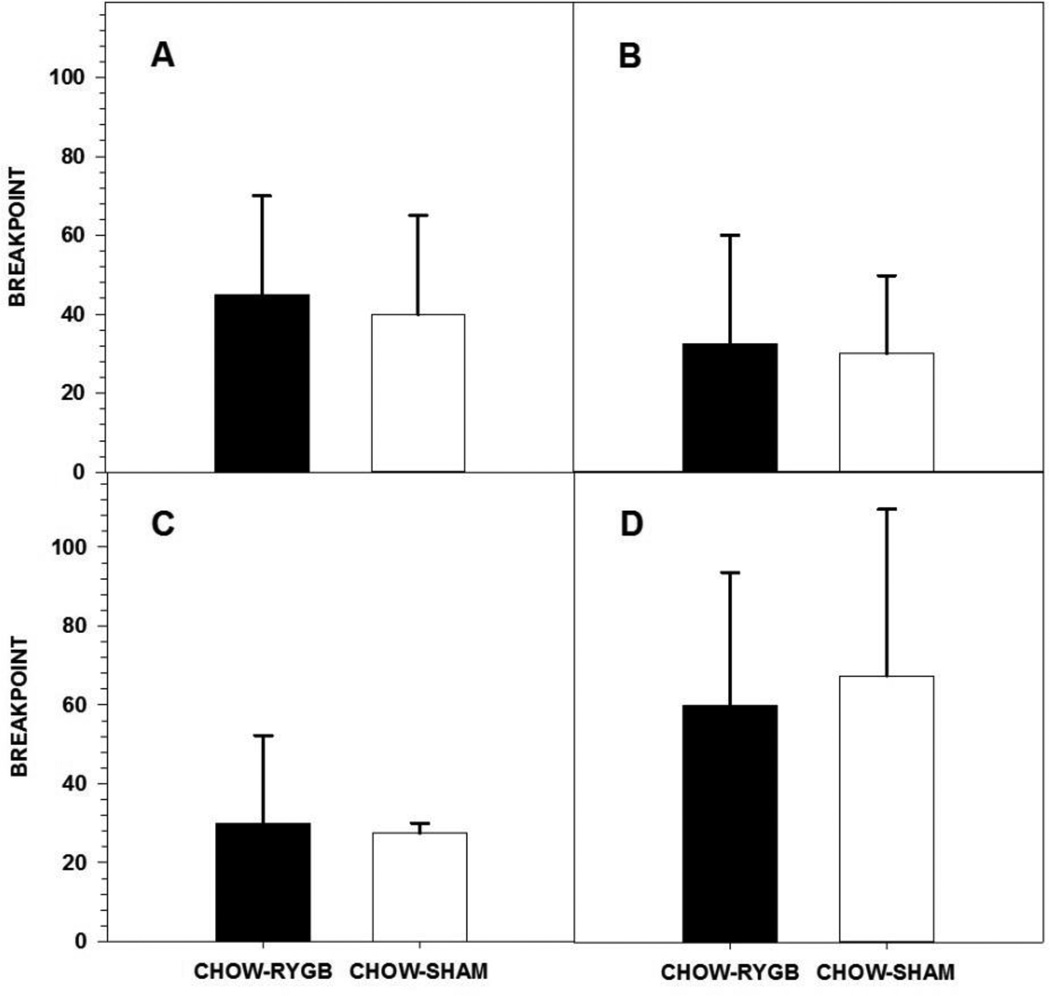
After Roux-en-Y gastric bypass (RYGB) surgery, patients report consuming fewer fatty and dessert-like foods, and rats display blunted sugar and fat preferences. Here we used a progressive ratio (PR) task in our rat model to explicitly test whether RYGB decreases the willingness of rats to work for very small amounts of preferred sugar- and/or fat-containing fluids. In each of two studies, two groups of rats - one maintained on a high-fat diet (HFD) and standard chow (CHOW) and one given CHOW alone - were trained while water-deprived to work for water or either Ensure or 1.0M sucrose on increasingly difficult operant schedules. When tested before surgery while nondeprived, HFD rats had lower PR breakpoints (number of operant responses in the last reinforced ratio) for sucrose, but not for Ensure, than CHOW rats. After surgery, at no time did rats given RYGB show lower breakpoints than SHAM rats for Ensure, sucrose, or when 5% Intralipid served postoperatively as the reinforcer. Nevertheless, RYGB rats showed blunted preferences for these caloric fluids versus water in 2-bottle preference tests. Importantly, although the Intralipid and sucrose preferences of RYGB rats decreased further over time, subsequent breakpoints for them were not significantly impacted. Collectively, these data suggest that the observed lower preferences for normally palatable fluids after RYGB in rats may reflect a learned adjustment to altered postingestive feedback rather than a dampening of the reinforcing taste characteristics of such stimuli as measured by the PR task in which postingestive stimulation is negligible.
在接受Roux-en-Y胃旁路术(RYGB)后,患者报告摄入的高脂肪和类似甜点的食物减少,并且大鼠对糖和脂肪的偏好也减弱。在此,我们在大鼠模型中使用了渐进比率(PR)任务,以明确测试RYGB是否会降低大鼠为获取极少量优选含糖和/或含脂肪液体而努力的意愿。在两项研究的每一项中,两组大鼠——一组维持高脂饮食(HFD)并给予标准食物(CHOW),另一组仅给予CHOW——在缺水状态下接受训练,以在难度不断增加的操作性实验程序中为获取水、安素或1.0M蔗糖而努力。在手术前非缺水状态下进行测试时,HFD大鼠对蔗糖的PR断点(最后强化比率中的操作性反应次数)低于CHOW大鼠,但对安素的PR断点则不然。手术后,接受RYGB的大鼠在任何时候,对于安素、蔗糖或术后给予5%脂肪乳作为强化物时,其断点都没有低于假手术(SHAM)大鼠。然而,在双瓶偏好测试中,RYGB大鼠对这些高热量液体相对于水的偏好减弱。重要的是,尽管RYGB大鼠对脂肪乳和蔗糖的偏好随时间进一步降低,但随后它们的断点并未受到显著影响。总体而言,这些数据表明,在大鼠中观察到的RYGB后对通常可口液体的较低偏好可能反映了对改变的摄食后反馈的学习性调整,而不是像通过PR任务所测量的那样,对这类刺激的强化味觉特性的抑制,在PR任务中摄食后刺激可以忽略不计。