Makino Naoki, Oyama Jun-ichi, Maeda Toyoki, Koyanagi Masamichi, Higuchi Yoshihiro, Tsuchida Keiko
Division of Molecular and Clinical Gerontology, Department of Molecular and Cellular Biology, Medical Institute of Bioregulation, Kyushu University, 4546 Tsurumihara, Beppu, 874-0838, Japan,
Mol Cell Biochem. 2015 May;403(1-2):1-11. doi: 10.1007/s11010-015-2327-0. Epub 2015 Feb 7.
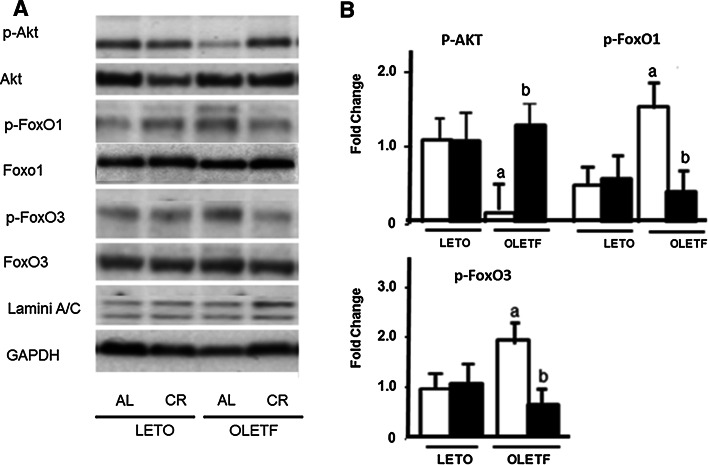
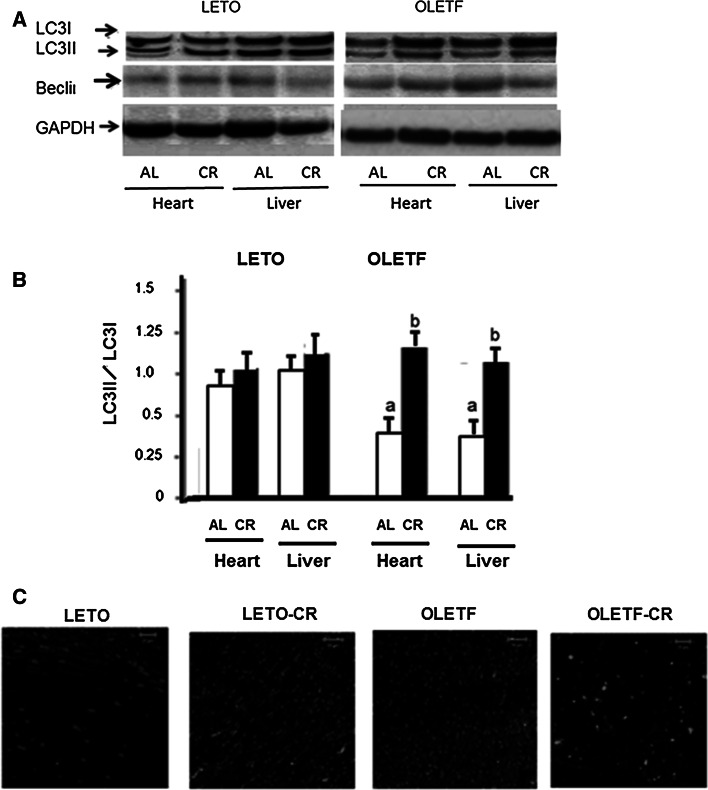
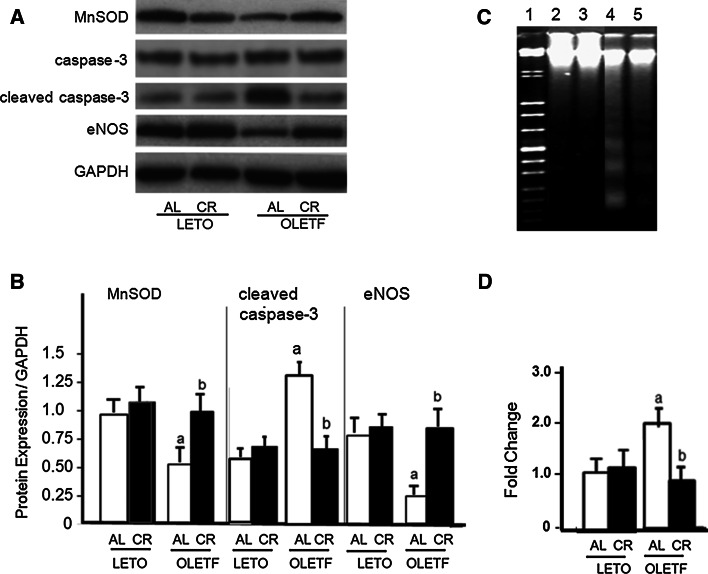
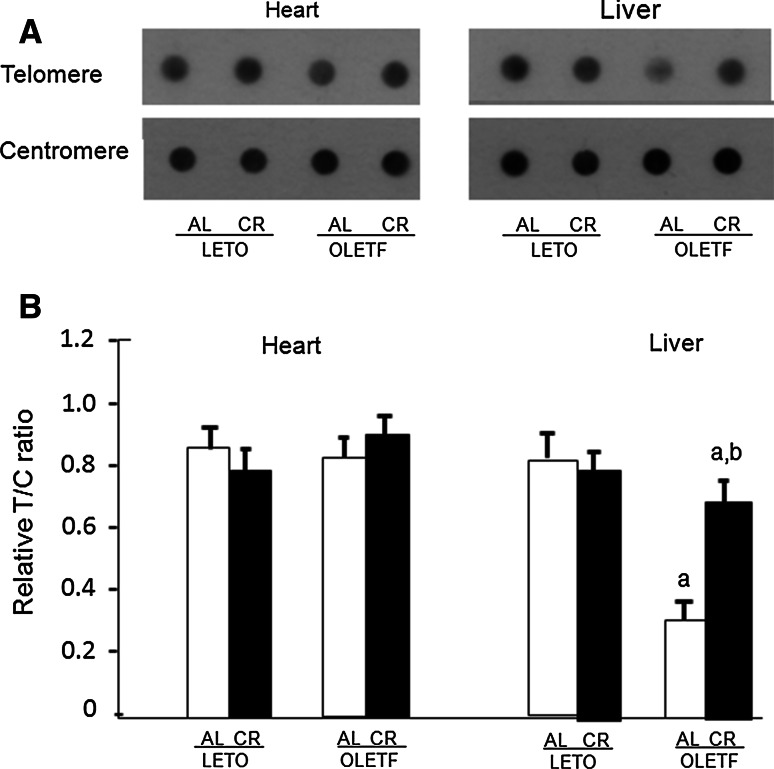
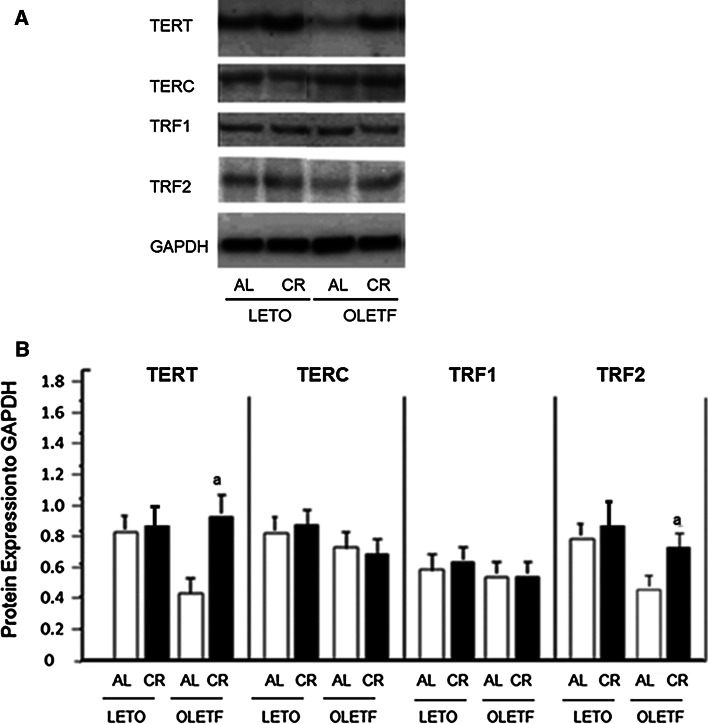
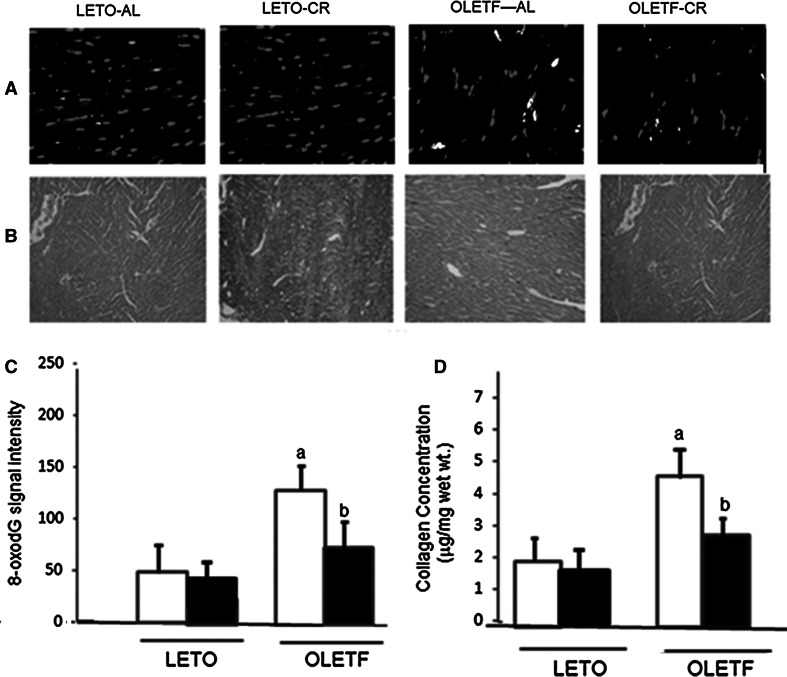
The aims of this study were to investigate the impact of caloric restriction (CR) on cardiac telomere biology in an animal model of diabetes and to examine the signal transduction involved in cell senescence as well as cardiac function. Male 8-week-old Otsuka Long-Evans Tokushima fatty (OLETF) diabetic rats were divided into two groups: a group fed ad libitum (OLETF-AL) and a group fed with CR (OLETF-CR: 30% energy reduction). Long-Evans Tokushima Otsuka (LETO) non-diabetic rats were used as controls. LETO rats were also divided into two groups: a CR (LETO-CR) group and a group fed AL (LETO-AL). At 40 weeks of age, the body weight was decreased by 9.7% and the insulin resistance was less in OLETF-CR rats. Telomerase activity in OLETF-CR rats was significantly increased, and telomerase reverse transcriptase was more highly expressed in those rats. However, the telomere length (TL) was not different between AL- and CR-treated rats of each strain. The protein expressions for FoxO1 and FoxO3 were increased in OLETF-AL rats, but the levels of phosphorylated (p)-Akt were decreased compared to those in OLETF-CR rats. Autophagic LC3II signals revealed significant increases in OLETF-CR rats. Echocardiography showed that OLETF-CR improved the left ventricular diastolic dysfunction without changes in the left ventricular dimension. This study revealed that CR increases cardiac telomerase activity without TL attrition, and significantly ameliorates diastolic dysfunction. These findings suggest that cardiac telomerase activity may play an important role in the maintenance of normal cardiac function.
本研究的目的是在糖尿病动物模型中研究热量限制(CR)对心脏端粒生物学的影响,并研究细胞衰老以及心脏功能中涉及的信号转导。8周龄雄性大冢长- Evans德岛肥胖(OLETF)糖尿病大鼠分为两组:一组自由进食(OLETF-AL),另一组进行热量限制(OLETF-CR:能量减少30%)。大冢长- Evans德岛(LETO)非糖尿病大鼠用作对照。LETO大鼠也分为两组:热量限制(LETO-CR)组和自由进食(LETO-AL)组。在40周龄时,OLETF-CR大鼠的体重下降了9.7%,胰岛素抵抗降低。OLETF-CR大鼠的端粒酶活性显著增加,并且端粒酶逆转录酶在这些大鼠中表达更高。然而,各品系中自由进食组和热量限制组大鼠的端粒长度(TL)没有差异。OLETF-AL大鼠中FoxO1和FoxO3的蛋白表达增加,但与OLETF-CR大鼠相比,磷酸化(p)-Akt水平降低。自噬性LC3II信号在OLETF-CR大鼠中显著增加。超声心动图显示,OLETF-CR改善了左心室舒张功能障碍,而左心室尺寸没有变化。本研究表明,热量限制增加心脏端粒酶活性而不导致端粒损耗,并显著改善舒张功能障碍。这些发现表明,心脏端粒酶活性可能在维持正常心脏功能中起重要作用。