Park Sin-Hye, Paek Ji Hun, Shin Daekeun, Lee Jae-Yong, Lim Soon Sung, Kang Young-Hee
Department of Food Science and Nutrition, Hallym University, Chuncheon, Kangwon-do 200-702, Republic of Korea.
Department of Biochemistry, School of Medicine, Hallym University, Chuncheon, Kangwon-do 200-702, Republic of Korea.
Int J Mol Med. 2015 Apr;35(4):957-65. doi: 10.3892/ijmm.2015.2101. Epub 2015 Feb 12.
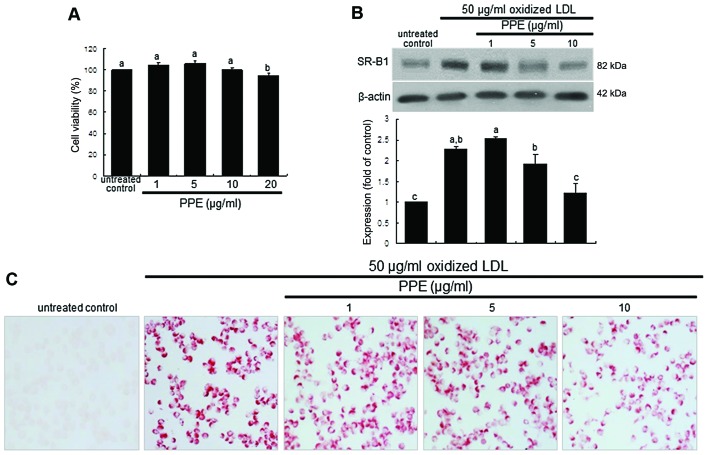
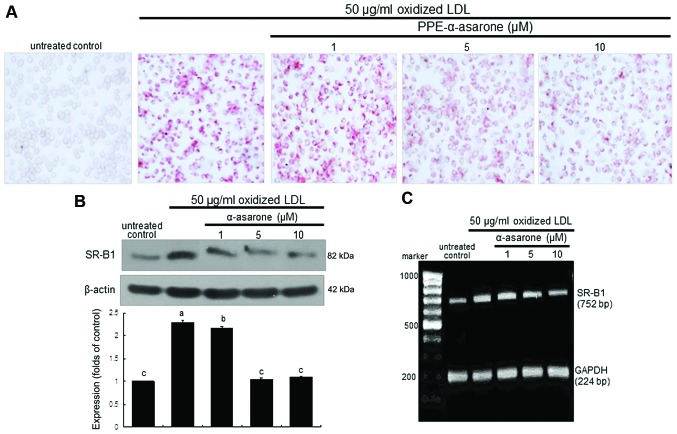
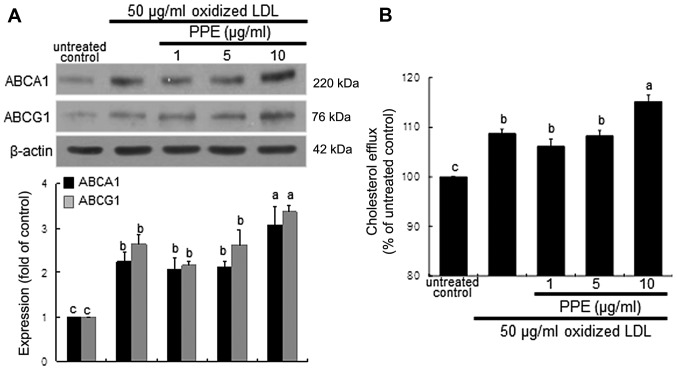
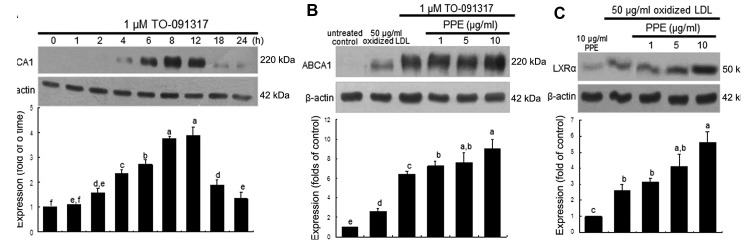
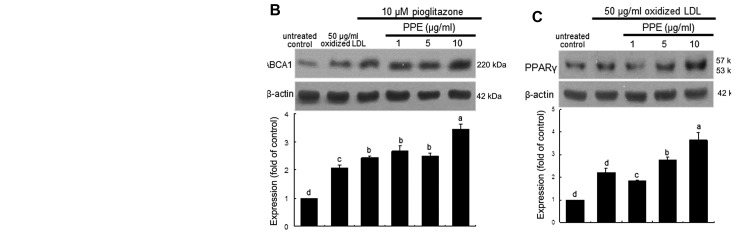
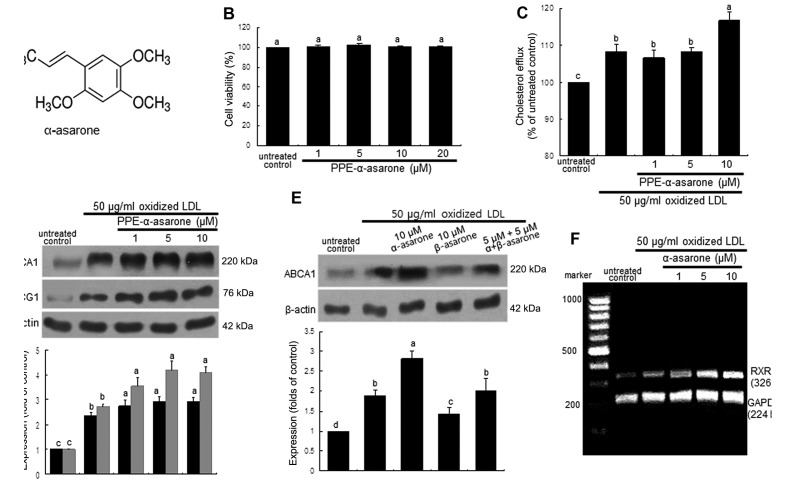
The cellular accumulation of cholesterol is critical in the development and progression of atherosclerosis. ATP-binding cassette (ABC) transporters play an essential role in mediating the efflux of excess cholesterol. In the current study, we investigated whether purple Perilla frutescens extracts (PPE) at a non-toxic concentration of 1-10 µg/ml stimulate the induction of the ABC transporters, ABCA1 and ABCG1, and cholesterol efflux from lipid-laden J774A.1 murine macrophages exposed to 50 ng/ml oxidized low-density lipoprotein (LDL). Purple perilla, an annual herb in the mint family and its constituents, have been reported to exhibit antioxidant and cytostatic activity, as well as to exert anti-allergic effects. Our results revealed that treatment with oxidized LDL for 24 h led to the accumulation of lipid droplets in the macrophages. PPE suppressed the oxidized LDL-induced foam cell formation by blocking the induction of scavenger receptor B1. However, PPE promoted the induction of the ABC transporters, ABCA1 and ABCG1, and subsequently accelerated cholesterol efflux from the lipid-loaded macrophages. The liver X receptor (LXR) agonist, TO-091317, and the peroxisome proliferator-activated receptor (PPAR) agonist, pioglitazone, increased ABCA1 expression and treatment with 10 µg/ml PPE further enhanced this effect. PPE did not induce LXRα and PPARγ expression per se, but enhanced their expression in the macrophages exposed to oxidized LDL. α-asarone was isolated from PPE and characterized as a major component enhancing the induction of ABCA1 and ABCG1 in macrophages exposed to oxidized LDL. α-asarone, but not β-asarone was effective in attenuating foam cell formation and enhancing cholesterol efflux, revealing an isomeric difference in their activity. The results from the present study demonstrate that PPE promotes cholesterol efflux from macrophages by activating the interaction of PPARγ-LXRα-ABC transporters.
胆固醇的细胞内蓄积在动脉粥样硬化的发生和发展过程中至关重要。ATP结合盒(ABC)转运蛋白在介导过量胆固醇的流出中发挥着重要作用。在本研究中,我们调查了浓度为1 - 10 µg/ml的无毒紫苏提取物(PPE)是否能刺激ABC转运蛋白ABCA1和ABCG1的诱导表达,以及能否促进来自暴露于50 ng/ml氧化低密度脂蛋白(LDL)的富含脂质的J774A.1小鼠巨噬细胞的胆固醇流出。紫苏是薄荷科一年生草本植物,其成分已被报道具有抗氧化、抑制细胞生长的活性,以及发挥抗过敏作用。我们的结果显示,用氧化LDL处理24小时会导致巨噬细胞中脂滴的蓄积。PPE通过阻断清道夫受体B1的诱导表达来抑制氧化LDL诱导的泡沫细胞形成。然而,PPE促进了ABC转运蛋白ABCA1和ABCG1的诱导表达,随后加速了脂质负载巨噬细胞的胆固醇流出。肝脏X受体(LXR)激动剂TO - 091317和过氧化物酶体增殖物激活受体(PPAR)激动剂吡格列酮可增加ABCA1的表达,用10 µg/ml PPE处理可进一步增强这种作用。PPE本身不会诱导LXRα和PPARγ的表达,但会增强它们在暴露于氧化LDL的巨噬细胞中的表达。α - 细辛脑从PPE中分离出来,并被鉴定为在暴露于氧化LDL的巨噬细胞中增强ABCA1和ABCG1诱导表达的主要成分。α - 细辛脑而非β - 细辛脑在减轻泡沫细胞形成和增强胆固醇流出方面有效,揭示了它们活性的异构体差异。本研究结果表明,PPE通过激活PPARγ - LXRα - ABC转运蛋白的相互作用促进巨噬细胞的胆固醇流出。