Oathes Desmond J, Hilt Lori M, Nitschke Jack B
Department of Psychiatry and Behavioral Sciences, Stanford University, Stanford, CA, United States of America.
Department of Psychology, Lawrence University, Appleton, WI, United States of America.
PLoS One. 2015 Feb 12;10(2):e0115820. doi: 10.1371/journal.pone.0115820. eCollection 2015.
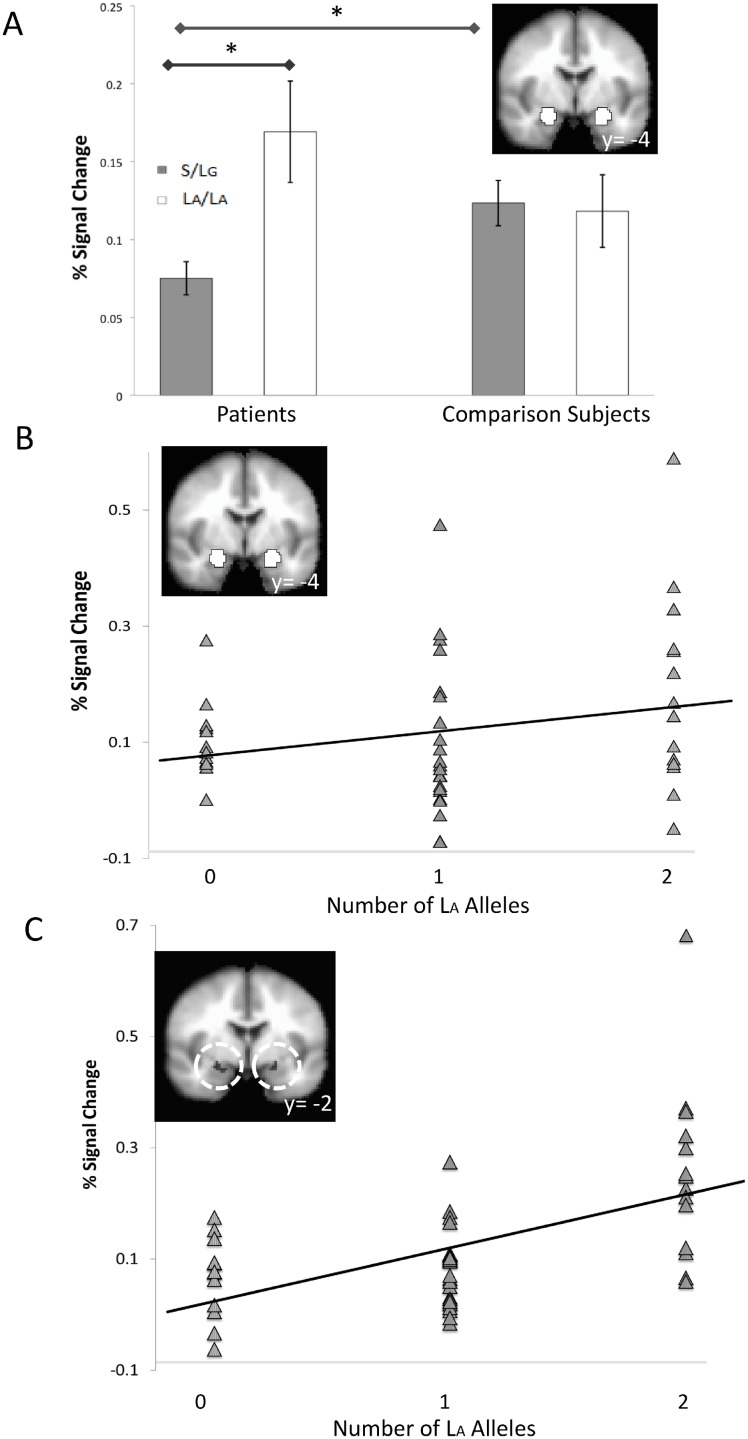
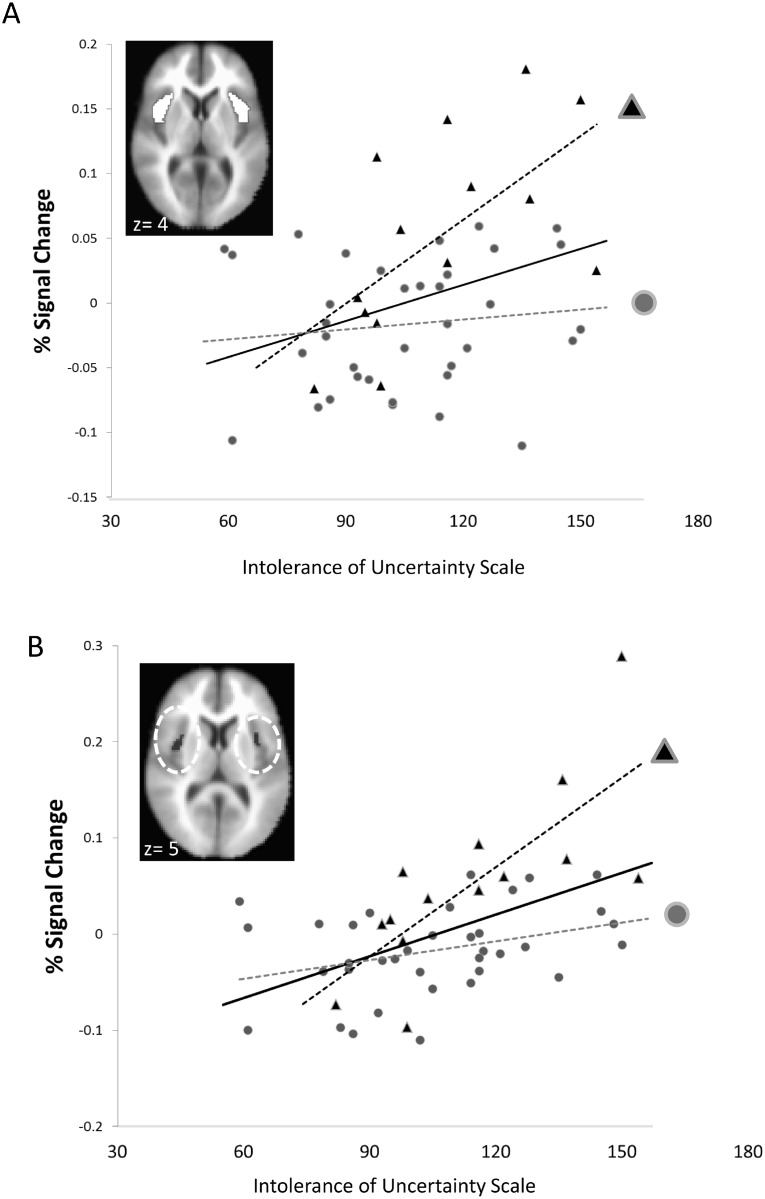
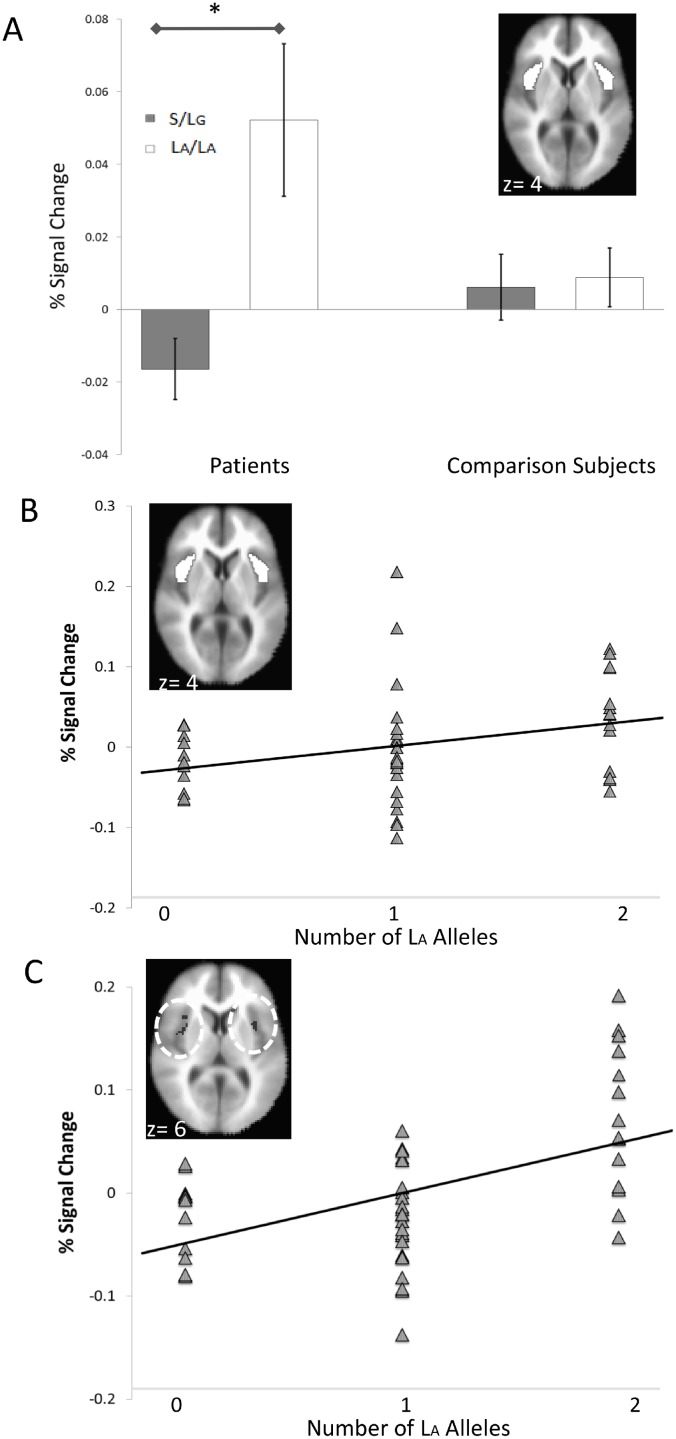
Serotonin transporter gene variants are known to interact with stressful life experiences to increase chances of developing affective symptoms, and these same variants have been shown to influence amygdala reactivity to affective stimuli in non-psychiatric populations. The impact of these gene variants on affective neurocircuitry in anxiety and mood disorders has been studied less extensively. Utilizing a triallelic assay (5-HTTLPR and rs25531) to assess genetic variation linked with altered serotonin signaling, this fMRI study investigated genetic influences on amygdala and anterior insula activity in 50 generalized anxiety disorder patients, 26 of whom also met DSM-IV criteria for social anxiety disorder and/or major depressive disorder, and 39 healthy comparison subjects. A Group x Genotype interaction was observed for both the amygdala and anterior insula in a paradigm designed to elicit responses in these brain areas during the anticipation of and response to aversive pictures. Patients who are S/L(G) carriers showed less activity than their L(A)/L(A) counterparts in both regions and less activity than S/L(G) healthy comparison subjects in the amygdala. Moreover, patients with greater insula responses reported higher levels of intolerance of uncertainty, an association that was particularly pronounced for patients with two LA alleles. A genotype effect was not established in healthy controls. These findings link the serotonin transporter gene to affective circuitry findings in anxiety and depression psychopathology and further suggest that its impact on patients may be different from effects typically observed in healthy populations.
已知血清素转运体基因变异会与压力性生活经历相互作用,增加出现情感症状的几率,并且这些相同的变异已被证明会影响非精神病人群杏仁核对情感刺激的反应性。这些基因变异对焦虑症和情绪障碍中情感神经回路的影响研究较少。本功能磁共振成像(fMRI)研究利用三基因座检测法(5-HTTLPR和rs25531)评估与血清素信号改变相关的基因变异,调查了50名广泛性焦虑症患者杏仁核和前岛叶活动的遗传影响,其中26名患者还符合社交焦虑症和/或重度抑郁症的DSM-IV标准,以及39名健康对照者。在一个旨在在预期和应对厌恶图片时引发这些脑区反应的范式中,观察到杏仁核和前岛叶均存在组×基因型相互作用。S/L(G)携带者患者在这两个区域的活动均低于其L(A)/L(A)对应者,在杏仁核中的活动也低于S/L(G)健康对照者。此外,前岛叶反应较强的患者报告的不确定性不耐受水平较高,这种关联在具有两个LA等位基因的患者中尤为明显。在健康对照者中未发现基因型效应。这些发现将血清素转运体基因与焦虑症和抑郁症心理病理学中的情感回路发现联系起来,并进一步表明其对患者的影响可能与在健康人群中通常观察到的效应不同。