Liu Xing, Zhou Liang, Pan Fuqiang, Gao Yang, Yuan Xi, Fan Dongli
Department of Plastic and Cosmetic Surgery, Xinqiao Hospital, Third Military Medical University, Chongqing, China 400037.
Department of Health Statistics, College of Preventive Medicine, Third Military Medical University, Chongqing, China 400038.
PLoS One. 2015 Feb 13;10(2):e0116071. doi: 10.1371/journal.pone.0116071. eCollection 2015.
A large number of clinical studies have reported that the different materials used in breast implants were a possible cause of the different incidence rates of capsular contracture observed in patients after implantation. However, this theory lacks comprehensive support from evidence-based medicine, and considerable controversy remains.
In this study, a cumulative systematic review examined breast augmentation that used implants with textured or smooth surfaces to analyze the effects of these two types of implants on the occurrence of postoperative capsular contracture.
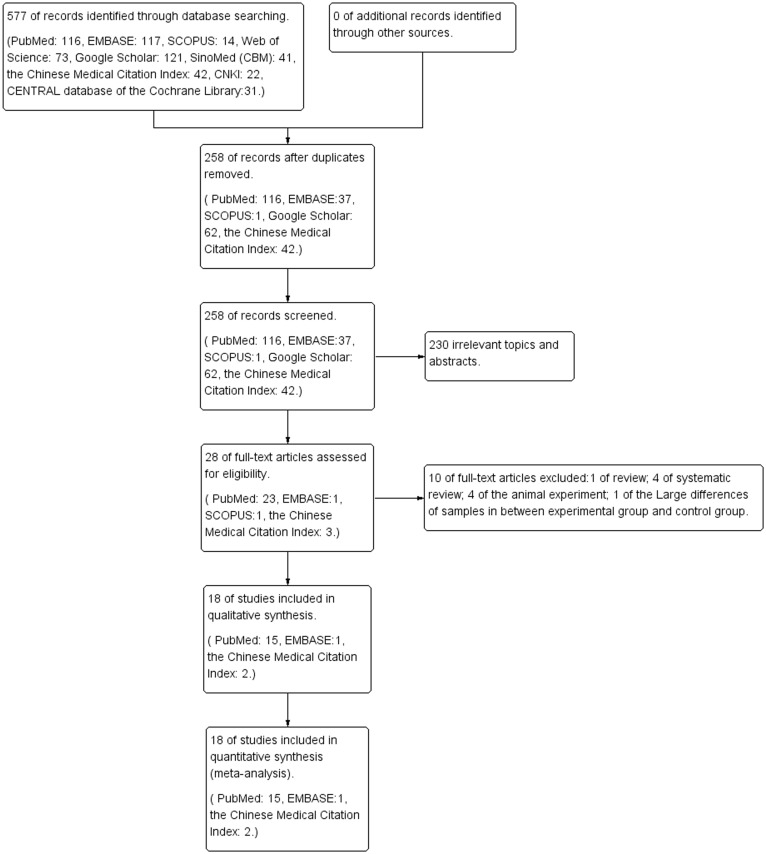
We conducted a comprehensive search of literature databases, including PubMed and EMBASE, for clinical reports on the incidence of capsular contracture after the implantation of breast prostheses. We performed a cumulative meta-analysis on the incidence of capsular contracture in order from small to large sample sizes and conducted subgroup analyses according to the prosthetic material used, the implant pocket placement, the incision type and the duration of follow-up. Relative risks (RR) and 95% confidence intervals (CI) were used as the final pooled statistics.
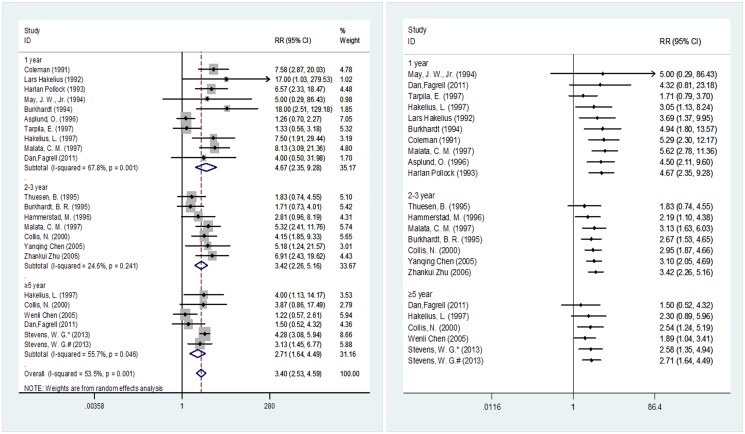
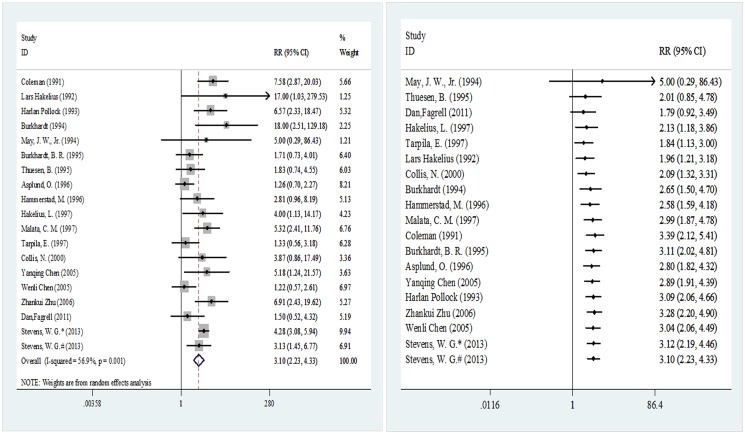
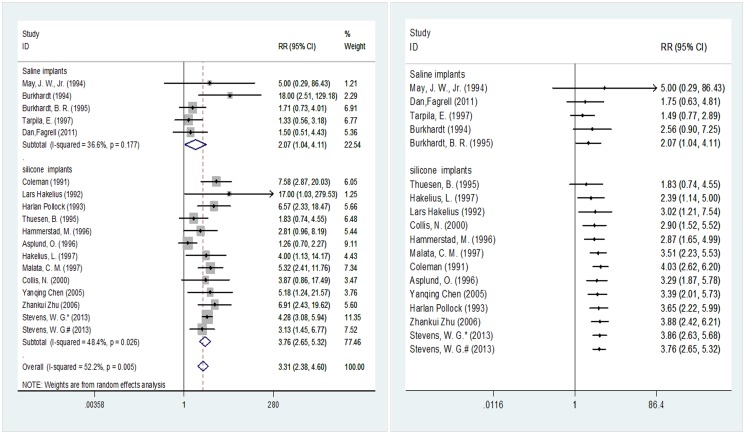
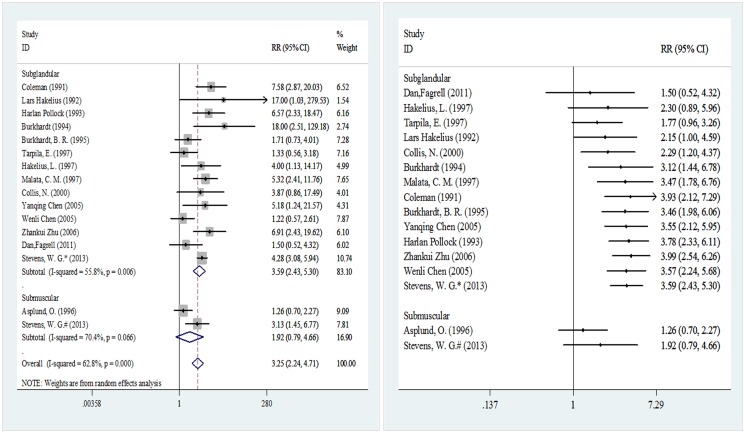
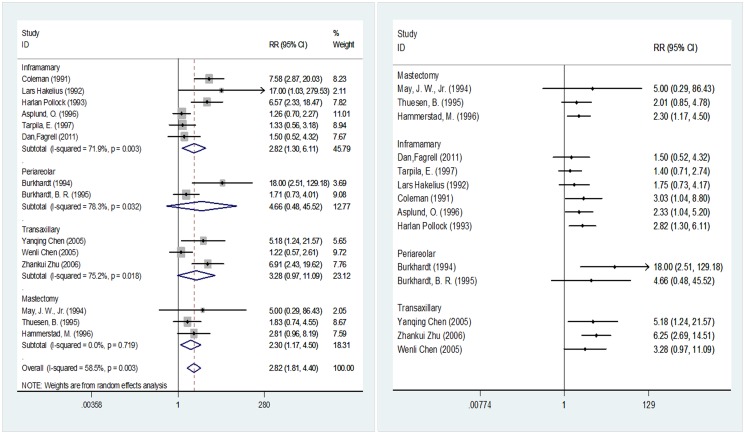
This meta-analysis included 16 randomized controlled trials (RCTs) and two retrospective studies. The cumulative comparison of textured and smooth breast implants showed statistical significance at 2.13 (95% CI, 1.18-3.86) when the fourth study was entered into the analysis. With the inclusion of more reports, the final results indicated that smooth breast implants were more likely to be associated with capsular contracture, with statistical significance at 3.10 (95% CI, 2.23-4.33). In the subgroup analyses, the subgroups based on implant materials included the silicone implant group and the saline implant group, with significant pooled statistical levels of 4.05 (95% CI, 1.97-8.31) and 3.12 (95% CI, 2.19-4.42), respectively. According to implant pocket placement, a subglandular group and a submuscular group were included in the analyses, and only the subglandular group had a statistically significant pooled result of 3.59 (95% CI, 2.43-5.30). Four subgroups were included in the analyses according to incision type: the inframammary incision group, the periareolar incision group, the transaxillary incision group and the mastectomy incision group. Among these groups, only the pooled results of the inframammary and mastectomy incision groups were statistically significant, at 2.82 (95% CI, 1.30-6.11) and 2.30 (95% CI, 1.17-4.50), respectively. Three follow-up duration subgroups were included in the analyses: the one-year group, the two- to three-year group and the ≥ five-year group. These subgroups had statistically significant results of 4.67 (95% CI, 2.35-9.28), 3.42 (95% CI, 2.26-5.16) and 2.71 (95% CI, 1.64-4.49), respectively.
In mammaplasty, the use of textured implants reduces the incidence of postoperative capsular contracture. Differences in implant pocket placement and incision type are also likely to affect the incidence of capsular contracture; however, this conclusion awaits further study.
大量临床研究报告称,乳房植入物所使用的不同材料可能是植入后患者包膜挛缩发生率不同的原因。然而,这一理论缺乏循证医学的全面支持,且仍存在相当大的争议。
在本研究中,一项累积系统评价对使用表面有纹理或光滑的植入物进行隆胸手术的情况进行了分析,以探讨这两种类型的植入物对术后包膜挛缩发生情况的影响。
我们对包括PubMed和EMBASE在内的文献数据库进行了全面检索,以查找有关乳房假体植入后包膜挛缩发生率的临床报告。我们按样本量从小到大的顺序对包膜挛缩发生率进行了累积荟萃分析,并根据所使用的假体材料、植入腔隙位置、切口类型和随访时间进行了亚组分析。相对风险(RR)和95%置信区间(CI)用作最终的合并统计量。
该荟萃分析纳入了16项随机对照试验(RCT)和两项回顾性研究。当第四项研究纳入分析时,有纹理和光滑乳房植入物的累积比较显示统计学显著性为2.13(95%CI,1.18 - 3.86)。随着纳入更多报告,最终结果表明光滑乳房植入物更易与包膜挛缩相关,统计学显著性为3.10(95%CI,2.23 - 4.33)。在亚组分析中,基于植入材料的亚组包括硅胶植入物组和盐水植入物组,合并统计水平分别显著为4.05(95%CI,1.97 - 8.31)和3.12(95%CI,2.19 - 4.42)。根据植入腔隙位置,分析中包括了乳腺下组和胸肌下组,只有乳腺下组有统计学显著的合并结果,为3.59(95%CI,2.43 - 5.30)。根据切口类型分析纳入了四个亚组:乳房下皱襞切口组、乳晕周围切口组、腋窝入路切口组和乳房切除切口组。在这些组中,只有乳房下皱襞和乳房切除切口组的合并结果有统计学显著性,分别为2.82(95%CI,1.30 - 6.11)和2.30(95%CI,1.17 - 4.50)。分析中纳入了三个随访时间亚组:一年组、两到三年组和≥五年组。这些亚组的统计学显著结果分别为4.67(95%CI,2.35 - 9.28)、3.42(95%CI,2.26 - 5.16)和2.71(95%CI,1.64 - 4.49)。
在乳房整形术中,使用有纹理的植入物可降低术后包膜挛缩的发生率。植入腔隙位置和切口类型的差异也可能影响包膜挛缩的发生率;然而,这一结论有待进一步研究。