Park Se Jin, Lee Jee Youn, Kim Sang Jeong, Choi Se-Young, Yune Tae Young, Ryu Jong Hoon
Department of Life and Nanopharmaceutical Science, Kyung Hee University, Seoul 130-701, Korea.
Age-Related and Brain Diseases Research Center, School of Medicine, Kyung Hee University, Seoul 130-701, Korea.
Sci Rep. 2015 Feb 17;5:8502. doi: 10.1038/srep08502.
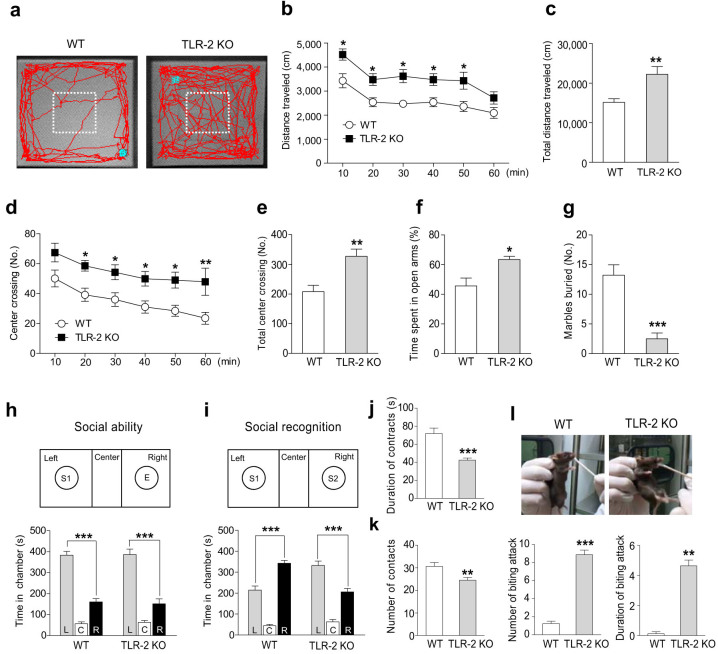
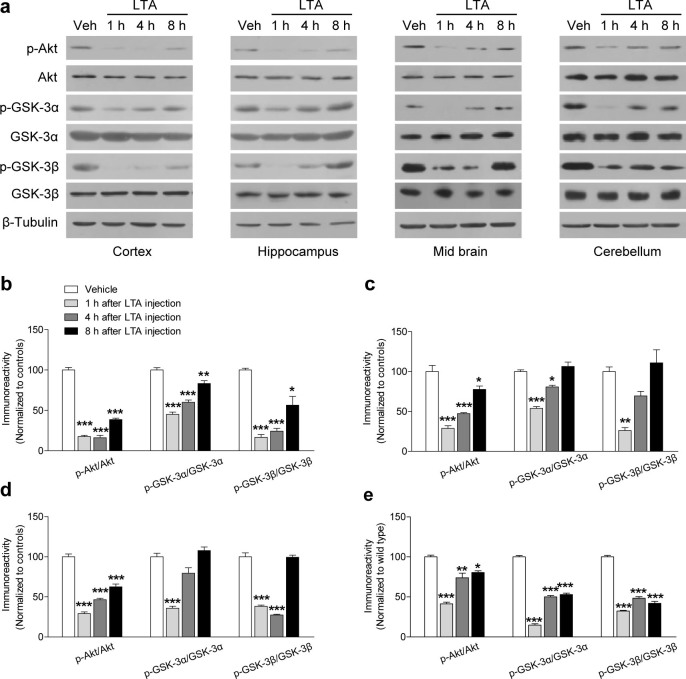
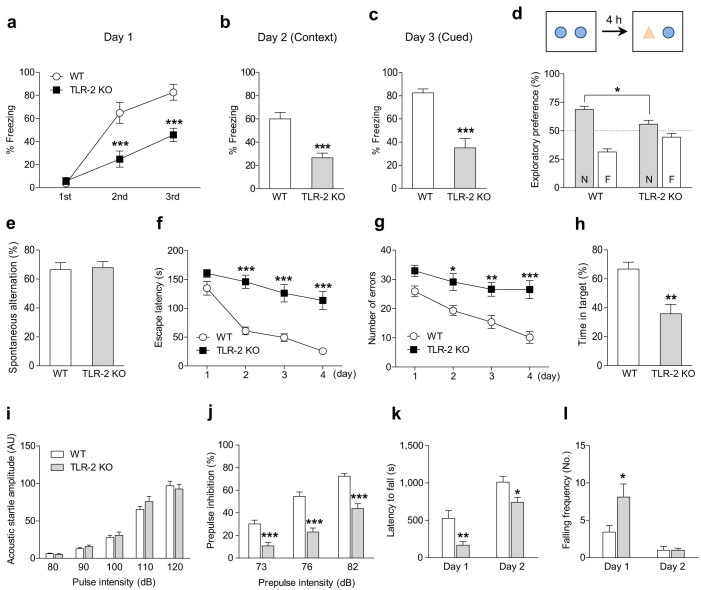
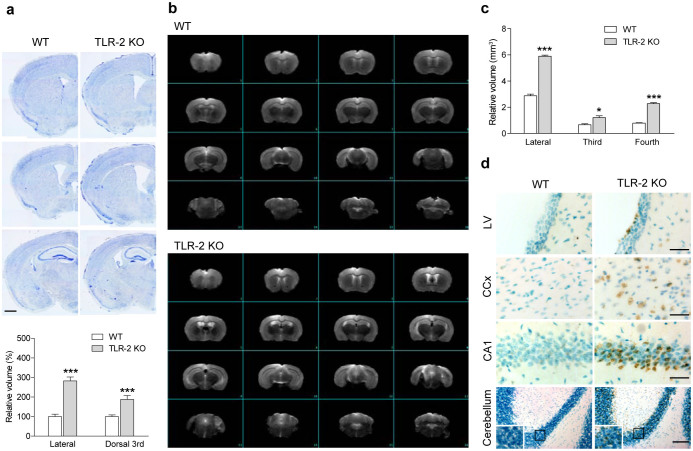
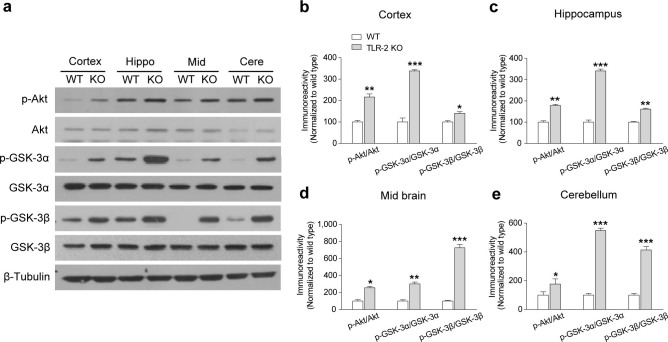
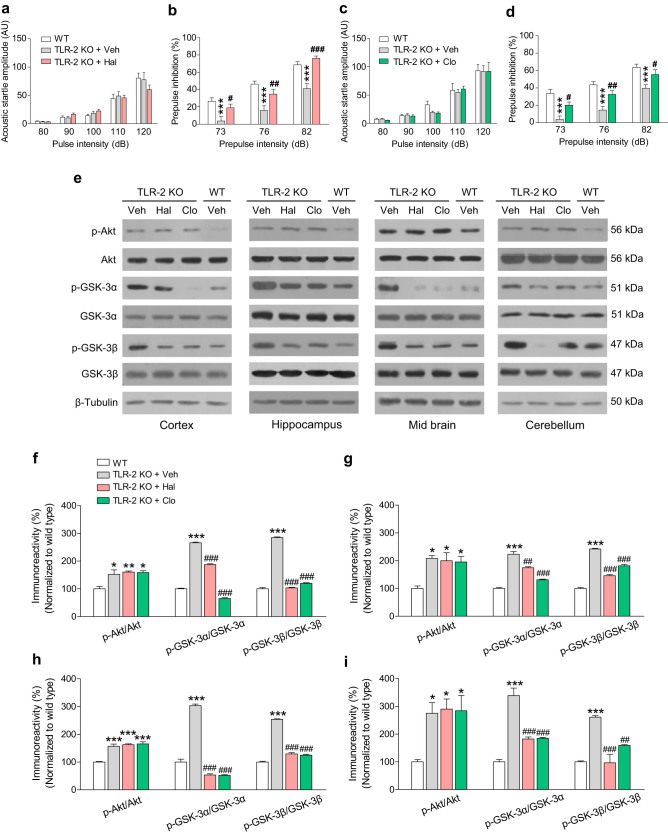
Dysregulation of the immune system contributes to the pathogenesis of neuropsychiatric disorders including schizophrenia. Here, we demonstrated that toll-like receptor (TLR)-2, a family of pattern-recognition receptors, is involved in the pathogenesis of schizophrenia-like symptoms. Psychotic symptoms such as hyperlocomotion, anxiolytic-like behaviors, prepulse inhibition deficits, social withdrawal, and cognitive impairments were observed in TLR-2 knock-out (KO) mice. Ventricle enlargement, a hallmark of schizophrenia, was also observed in TLR-2 KO mouse brains. Levels of p-Akt and p-GSK-3α/β were markedly higher in the brain of TLR-2 KO than wild-type (WT) mice. Antipsychotic drugs such as haloperidol or clozapine reversed behavioral and biochemical alterations in TLR-2 KO mice. Furthermore, p-Akt and p-GSK-3α/β were decreased by treatment with a TLR-2 ligand, lipoteichoic acid, in WT mice. Thus, our data suggest that the dysregulation of the innate immune system by a TLR-2 deficiency may contribute to the development and/or pathophysiology of schizophrenia-like behaviors via Akt-GSK-3α/β signaling.
免疫系统失调会导致包括精神分裂症在内的神经精神疾病的发病机制。在此,我们证明了Toll样受体(TLR)-2,一种模式识别受体家族,参与了精神分裂症样症状的发病机制。在TLR-2基因敲除(KO)小鼠中观察到了诸如运动亢进、抗焦虑样行为、前脉冲抑制缺陷、社交退缩和认知障碍等精神病症状。在TLR-2 KO小鼠大脑中也观察到了脑室扩大,这是精神分裂症的一个标志。TLR-2 KO小鼠大脑中p-Akt和p-GSK-3α/β的水平明显高于野生型(WT)小鼠。氟哌啶醇或氯氮平之类的抗精神病药物可逆转TLR-2 KO小鼠的行为和生化改变。此外,用TLR-2配体脂磷壁酸处理WT小鼠后,p-Akt和p-GSK-3α/β水平降低。因此,我们的数据表明,TLR-2缺乏导致的先天免疫系统失调可能通过Akt-GSK-3α/β信号通路促成精神分裂症样行为的发展和/或病理生理学。