Institute of Hydrobiology, Chinese Academy of Sciences Wuhan, Hubei, 430072, China ; The Key Laboratory of Aquatic Biodiversity and Conservation of Chinese Academy of Sciences Wuhan, Hubei, 430072, China ; University of Chinese Academy of Sciences Beijing, 100039, China.
Institute of Hydrobiology, Chinese Academy of Sciences Wuhan, Hubei, 430072, China ; The Key Laboratory of Aquatic Biodiversity and Conservation of Chinese Academy of Sciences Wuhan, Hubei, 430072, China.
Ecol Evol. 2015 Feb;5(3):567-77. doi: 10.1002/ece3.1386. Epub 2015 Jan 7.
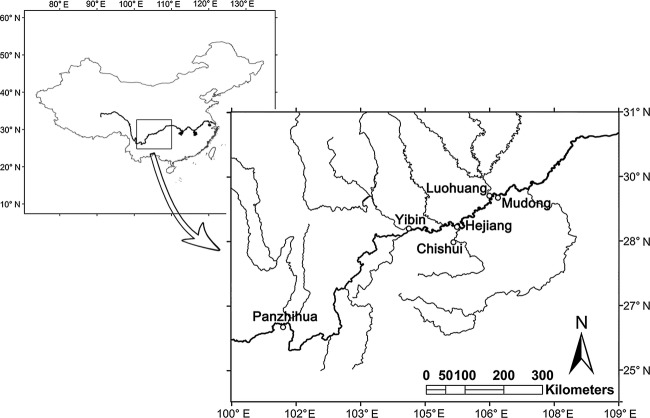
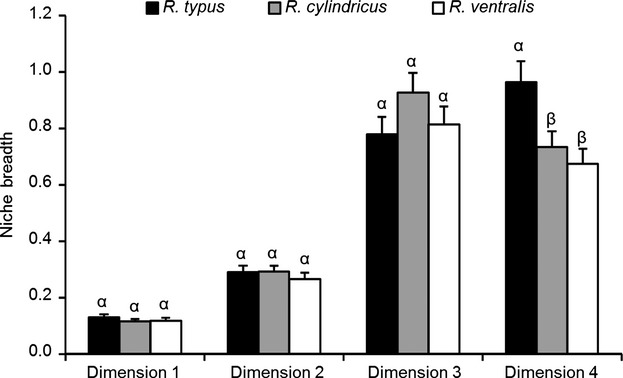
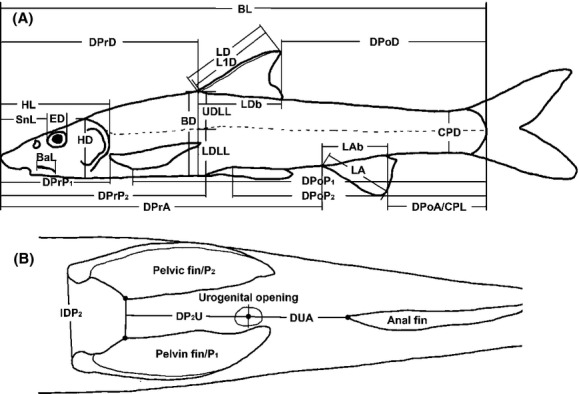
In the past decades, it has been debated whether ecological niche should be conserved among closely related species (phylogenetic niche conservatism, PNC) or largely divergent (traditional ecological niche theory and ecological speciation) and whether niche specialist and generalist might remain in equilibrium or niche generalist could not appear. In this study, we employed morphological traits to describe ecological niche and test whether different niche dimensions exhibit disparate evolutionary patterns. We conducted our analysis on three Rhinogobio fish species (R. typus,R. cylindricus, and R. ventralis) from the upper Yangtze River, China. Among the 32 measured morphological traits except body length, PCA extracted the first four principal components with their loading scores >1.000. To find the PNC among species, Mantel tests were conducted with the Euclidean distances calculated from the four principal components (representing different niche dimensions) against the pairwise distances calculated from mitochondrial cytochrome b sequence variations. The results showed that the second and the third niche dimension, both related to swimming ability and behavior, exhibited phylogenetic conservatism. Further comparison on niche breadth among these three species revealed that the fourth dimension of R. typus showed the greatest width, indicating that this dimension exhibited niche generalism. In conclusion, our results suggested that different niche dimensions could show different evolutionary dynamic patterns: they may exhibit PNC or not, and some dimensions may evolve generalism.
在过去的几十年里,人们一直在争论生态位是应该在亲缘关系密切的物种之间保守(系统发育生态位保守性,PNC)还是在很大程度上发散(传统生态位理论和生态物种形成),以及生态位特化种和广化种是否可能保持平衡,或者广化种是否不可能出现。在这项研究中,我们采用形态特征来描述生态位,并测试不同的生态位维度是否表现出不同的进化模式。我们在中国长江上游的三种 Rhinogobio 鱼类(R. typus、R. cylindricus 和 R. ventralis)上进行了分析。在除体长之外的 32 个测量形态特征中,PCA 提取了前四个主成分,其加载得分>1.000。为了在物种间寻找 PNC,我们用从四个主成分(代表不同的生态位维度)计算得到的欧几里得距离与从线粒体细胞色素 b 序列变异计算得到的成对距离进行了 Mantel 检验。结果表明,与游泳能力和行为有关的第二和第三个生态位维度表现出系统发育保守性。进一步比较这三个物种的生态位宽度发现,R. typus 的第四个维度表现出最大的宽度,表明这个维度表现出生态位广化。总之,我们的结果表明,不同的生态位维度可能表现出不同的进化动态模式:它们可能表现出 PNC 或不表现出 PNC,并且某些维度可能进化为广化。