Adhikari Ram Kumar, Sherchand Jeevan Bahadur, Mishra Shiva Raj, Ranabhat Kamal, Pokharel Amrit, Devkota Pramila, Mishra Durga, Ghimire Yadu Chandra, Gelal Khageshwor, Paudel Rajan, Wagle Rajendra Raj
Department of Community Medicine and Public Health, Institute of Medicine, Tribhuvan University, Kathmandu, Nepal.
Manmohan Memorial Institute of Health Sciences, Lalitpur, Nepal ; Nepal Development Society, Chitwan, Nepal.
J Trop Med. 2015;2015:260359. doi: 10.1155/2015/260359. Epub 2015 Jan 28.
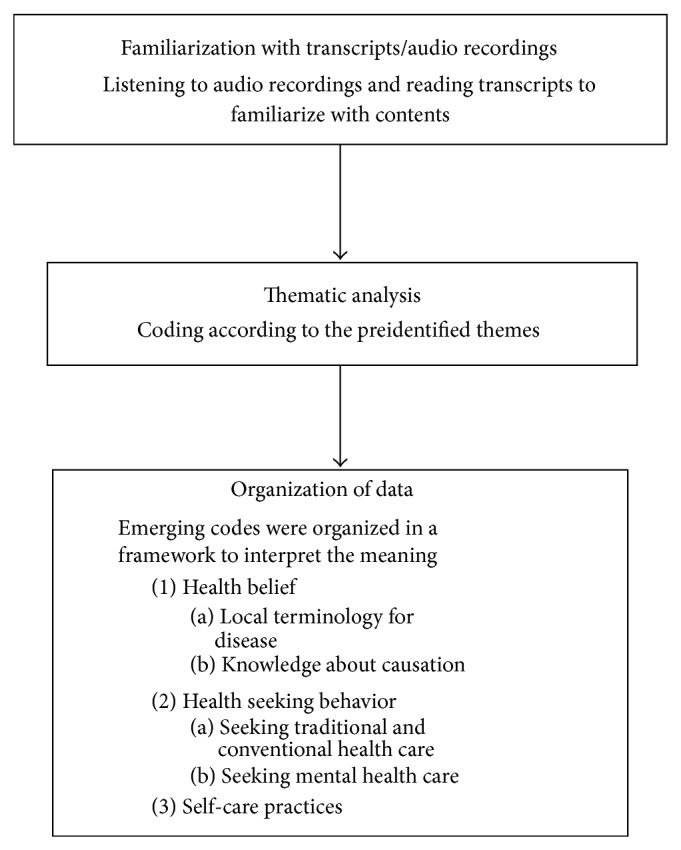
Background. Lymphatic filariasis is endemic in Nepal. This study aimed to investigate health-seeking behaviors and self-care practices of people with filarial Lymphoedema in Nepal. Methods. A cross-sectional study was conducted using qualitative methods in three endemic districts. Twenty-three patients with current Lymphoedema were recruited in the study. Results. Hydrocele was found to be a well-known condition and a major health problem in the studied communities. People with Lymphoedema primarily sought health care from traditional healers, whereas sometimes home-based care was their first treatment. Later Ayurvedic and allopathic hospital-based care were sought. Respondents reported various psychological problems such as difficulty in engaging in sexual intercourse, anxiety, worry and stress, depression, low self-esteem, feeling weak, fear of being abandoned, and fear of transmitting disease to the children. Standard foot care practices except washing were largely absent. Conclusions. Lymphoedema in the limbs and hydrocele were found to be major health problems. The traditional health care providers were the first contact of care for the majority of respondents. Only a few patients had been practicing standard foot care practices.
背景。淋巴丝虫病在尼泊尔呈地方性流行。本研究旨在调查尼泊尔丝虫性淋巴水肿患者的就医行为和自我护理习惯。方法。在三个流行地区采用定性方法进行了一项横断面研究。本研究招募了23例目前患有淋巴水肿的患者。结果。鞘膜积液在研究社区中是一种广为人知的疾病且是一个主要的健康问题。淋巴水肿患者主要向传统治疗师寻求医疗护理,而有时居家护理是他们的首选治疗方式。后来他们寻求阿育吠陀医学和基于西医医院的护理。受访者报告了各种心理问题,如性交困难、焦虑、担忧和压力、抑郁、自卑、感觉虚弱、害怕被遗弃以及害怕将疾病传染给孩子。除了清洗外,基本没有标准的足部护理习惯。结论。肢体淋巴水肿和鞘膜积液被发现是主要的健康问题。传统医疗服务提供者是大多数受访者的首次护理接触对象。只有少数患者一直在践行标准的足部护理习惯。