Yu Lingli, Reynaud Florie, Falk Julien, Spencer Ambre, Ding Yin-Di, Baumlé Véronique, Lu Ruisheng, Castellani Valérie, Yuan Chonggang, Rudkin Brian B
Differentiation and Cell Cycle Group, Laboratoire de Biologie Moléculaire de la Cellule, UMR 5239, Centre National de la Recherche Scientifique, Ecole normale Supérieure de Lyon, University of Lyon 1 Claude Bernard, University of Lyon Lyon, France ; Laboratory of Molecular and Cellular Neurophysiology, East China Normal University Shanghai, China ; Joint Laboratory of Neuropathogenesis, Key Laboratory of Brain Functional Genomics, Chinese Ministry of Education, East China Normal University, Centre National de la Recherche Scientifique, Ecole Normale Supérieure de Lyon Shanghai, China.
Centre de Génétique et Physiologie Moléculaire et Cellulaire, UMR Centre National de la Recherche Scientifique 5534, University of Lyon 1 Claude Bernard, University of Lyon Villeurbanne, France.
Front Mol Neurosci. 2015 Feb 2;8:2. doi: 10.3389/fnmol.2015.00002. eCollection 2015.
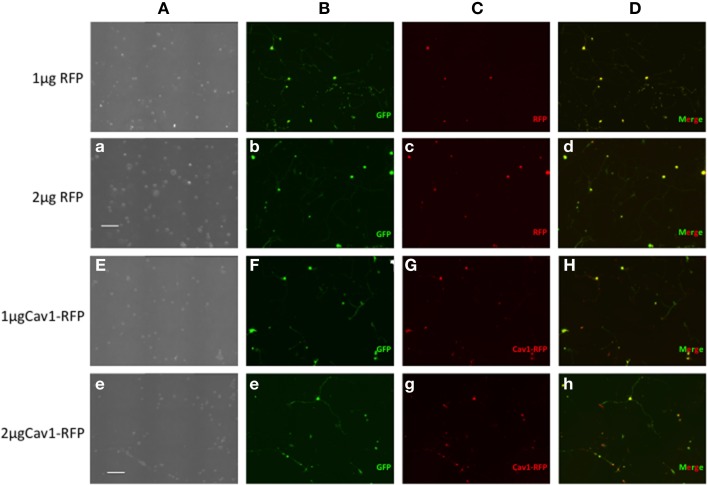
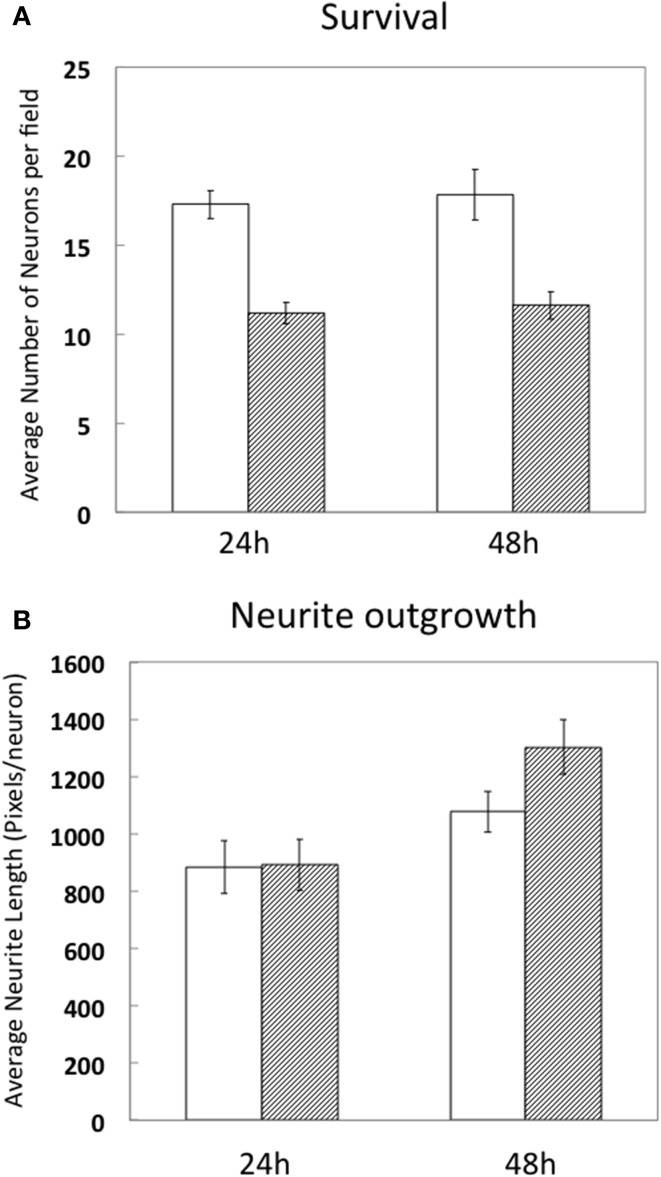
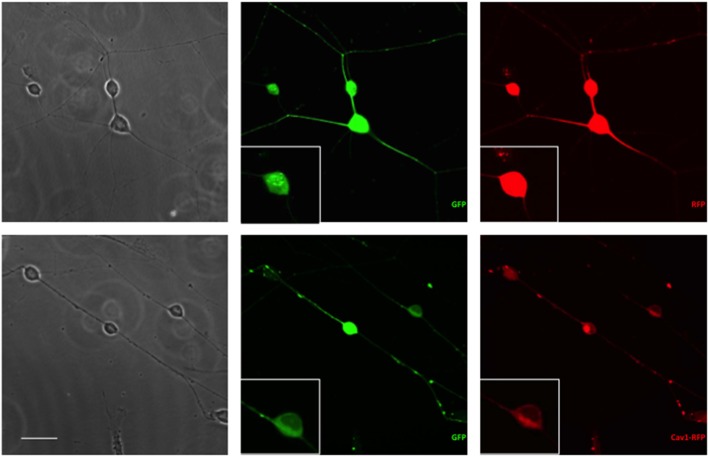
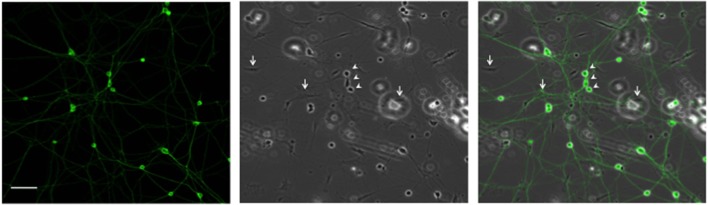
The development of gene transfection technologies has greatly advanced our understanding of life sciences. While use of viral vectors has clear efficacy, it requires specific expertise and biological containment conditions. Electroporation has become an effective and commonly used method for introducing DNA into neurons and in intact brain tissue. The present study describes the use of the Neon® electroporation system to transfect genes into dorsal root ganglia neurons isolated from embryonic mouse Day 13.5-16. This cell type has been particularly recalcitrant and refractory to physical or chemical methods for introduction of DNA. By optimizing the culture condition and parameters including voltage and duration for this specific electroporation system, high efficiency (60-80%) and low toxicity (>60% survival) were achieved with robust differentiation in response to Nerve growth factor (NGF). Moreover, 3-50 times fewer cells are needed (6 × 10(4)) compared with other traditional electroporation methods. This approach underlines the efficacy of this type of electroporation, particularly when only limited amount of cells can be obtained, and is expected to greatly facilitate the study of gene function in dorsal root ganglia neuron cultures.
基因转染技术的发展极大地推动了我们对生命科学的理解。虽然使用病毒载体具有明显的效果,但它需要特定的专业知识和生物安全防护条件。电穿孔已成为将DNA导入神经元和完整脑组织的一种有效且常用的方法。本研究描述了使用Neon®电穿孔系统将基因转染到从胚胎小鼠第13.5 - 16天分离的背根神经节神经元中。这种细胞类型对物理或化学DNA导入方法特别顽固且难治。通过优化针对该特定电穿孔系统的培养条件和参数,包括电压和持续时间,实现了高效率(60 - 80%)和低毒性(>60%存活率),并且在神经生长因子(NGF)作用下有强大的分化能力。此外,与其他传统电穿孔方法相比,所需细胞数量少3 - 50倍(6×10⁴)。这种方法突出了此类电穿孔的有效性,特别是在只能获得有限数量细胞的情况下,有望极大地促进背根神经节神经元培养中基因功能的研究。