van Wassenhove Virginie, Grzeczkowski Lukasz
CEA, DSV/I2BM, NeuroSpin; INSERM, Cognitive Neuroimaging Unit, U992; Université Paris-Sud Gif-sur-Yvette, France.
CEA, DSV/I2BM, NeuroSpin; INSERM, Cognitive Neuroimaging Unit, U992; Université Paris-Sud Gif-sur-Yvette, France ; Laboratory of Psychophysics, Brain Mind Institute, École Polytechnique Fédérale de Lausanne Lausanne, Switzerland.
Front Neurosci. 2015 Feb 6;9:11. doi: 10.3389/fnins.2015.00011. eCollection 2015.
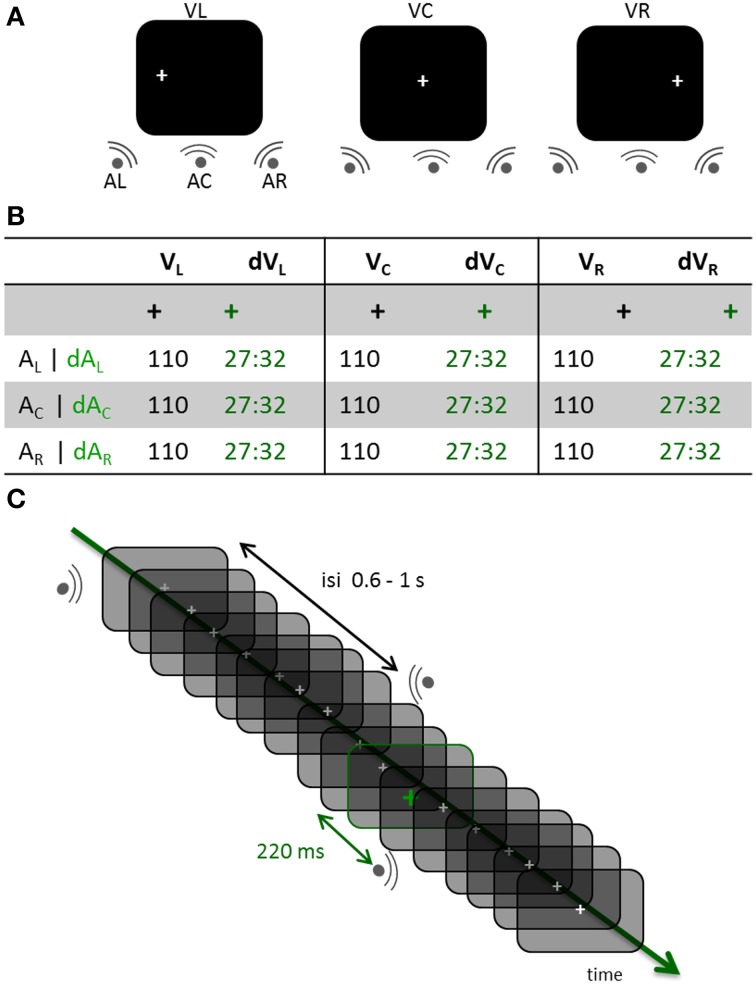
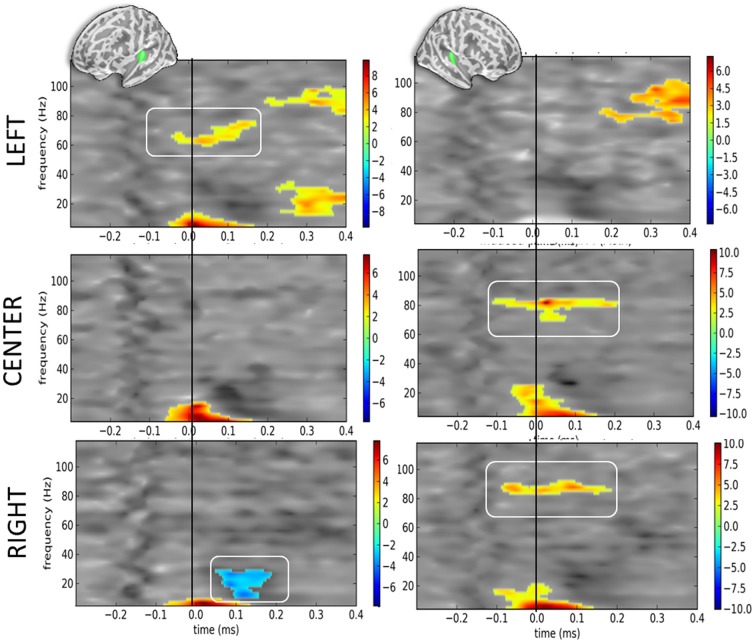
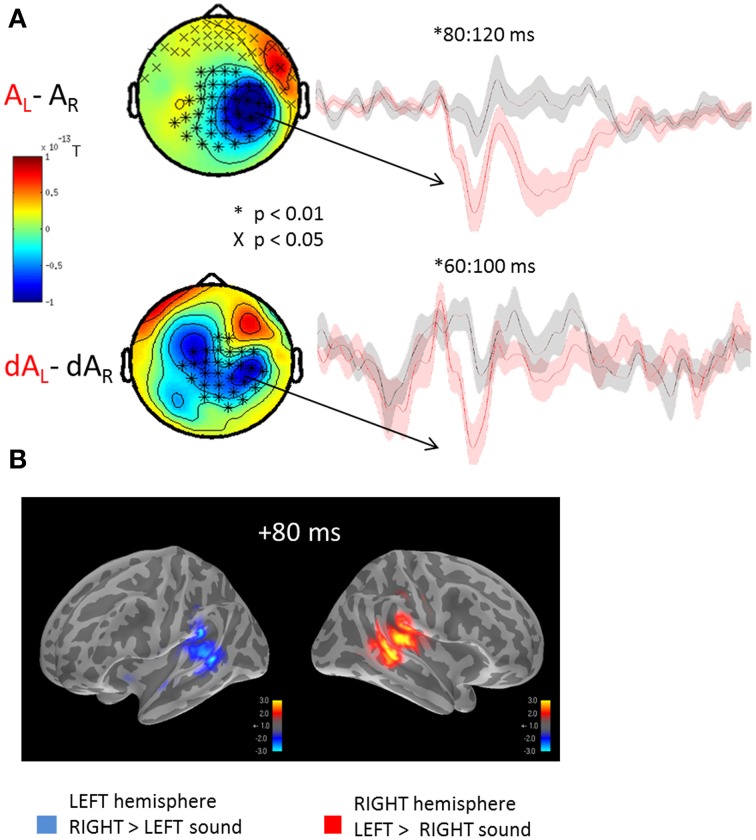
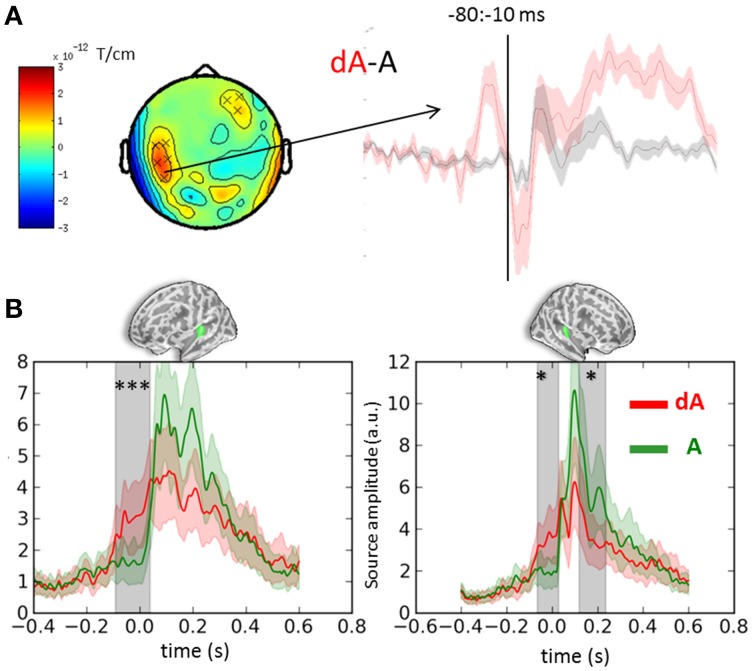
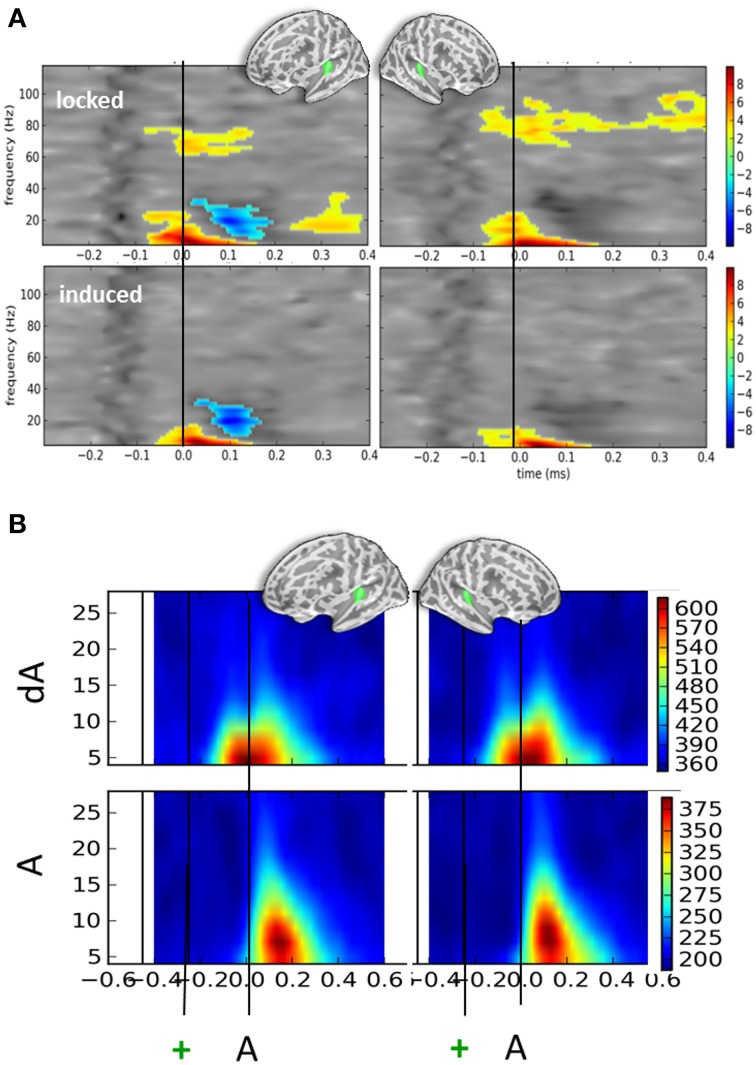
Active sensing has important consequences on multisensory processing (Schroeder et al., 2010). Here, we asked whether in the absence of saccades, the position of the eyes and the timing of transient color changes of visual stimuli could selectively affect the excitability of auditory cortex by predicting the "where" and the "when" of a sound, respectively. Human participants were recorded with magnetoencephalography (MEG) while maintaining the position of their eyes on the left, right, or center of the screen. Participants counted color changes of the fixation cross while neglecting sounds which could be presented to the left, right, or both ears. First, clear alpha power increases were observed in auditory cortices, consistent with participants' attention directed to visual inputs. Second, color changes elicited robust modulations of auditory cortex responses ("when" prediction) seen as ramping activity, early alpha phase-locked responses, and enhanced high-gamma band responses in the contralateral side of sound presentation. Third, no modulations of auditory evoked or oscillatory activity were found to be specific to eye position. Altogether, our results suggest that visual transience can automatically elicit a prediction of "when" a sound will occur by changing the excitability of auditory cortices irrespective of the attended modality, eye position or spatial congruency of auditory and visual events. To the contrary, auditory cortical responses were not significantly affected by eye position suggesting that "where" predictions may require active sensing or saccadic reset to modulate auditory cortex responses, notably in the absence of spatial orientation to sounds.
主动感知对多感官处理具有重要影响(施罗德等人,2010年)。在此,我们探讨了在没有扫视的情况下,眼睛的位置以及视觉刺激瞬态颜色变化的时间是否能分别通过预测声音的“位置”和“时间”来选择性地影响听觉皮层的兴奋性。在人类参与者保持眼睛位于屏幕左侧、右侧或中央位置时,用脑磁图(MEG)进行记录。参与者在忽略可能呈现给左耳、右耳或双耳的声音的同时,对注视十字的颜色变化进行计数。首先,在听觉皮层中观察到明显的α波功率增加,这与参与者将注意力指向视觉输入一致。其次,颜色变化引发了听觉皮层反应的强烈调制(“时间”预测),表现为斜坡状活动、早期α波锁相反应以及在声音呈现对侧增强的高γ波段反应。第三,未发现听觉诱发或振荡活动的调制对眼睛位置具有特异性。总之,我们的结果表明,视觉瞬变可以通过改变听觉皮层的兴奋性,自动引发对声音“何时”出现的预测,而与所关注的模态、眼睛位置或听觉和视觉事件的空间一致性无关。相反,听觉皮层反应并未受到眼睛位置的显著影响,这表明“位置”预测可能需要主动感知或扫视重置来调节听觉皮层反应,特别是在缺乏对声音的空间定向时。