Berhan Yifru, Berhan Asres
Hawassa University, P.O. Box 1560, Hawassa, Ethiopia.
AIDS Res Treat. 2015;2015:580961. doi: 10.1155/2015/580961. Epub 2015 Jan 29.
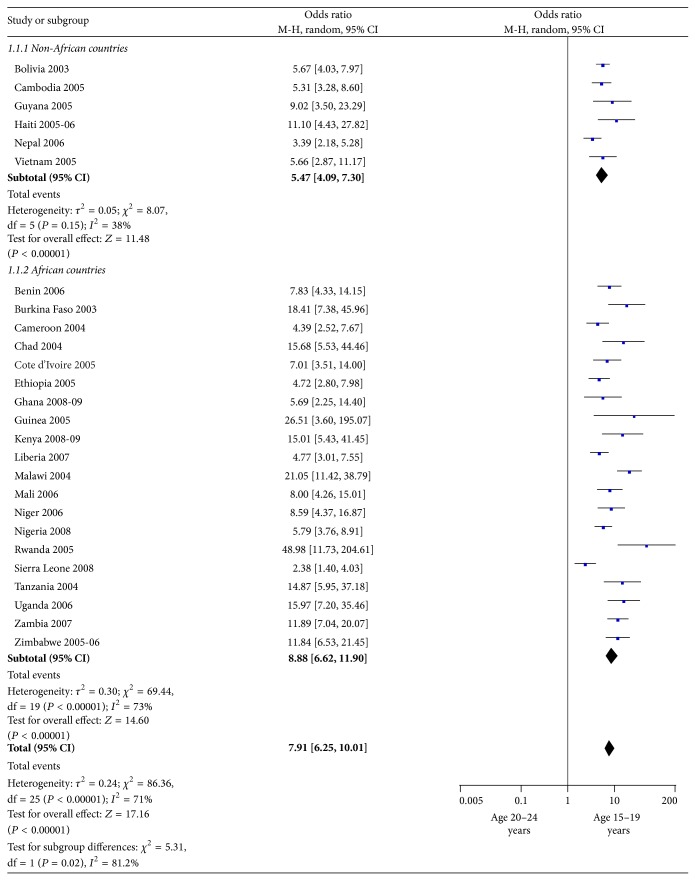
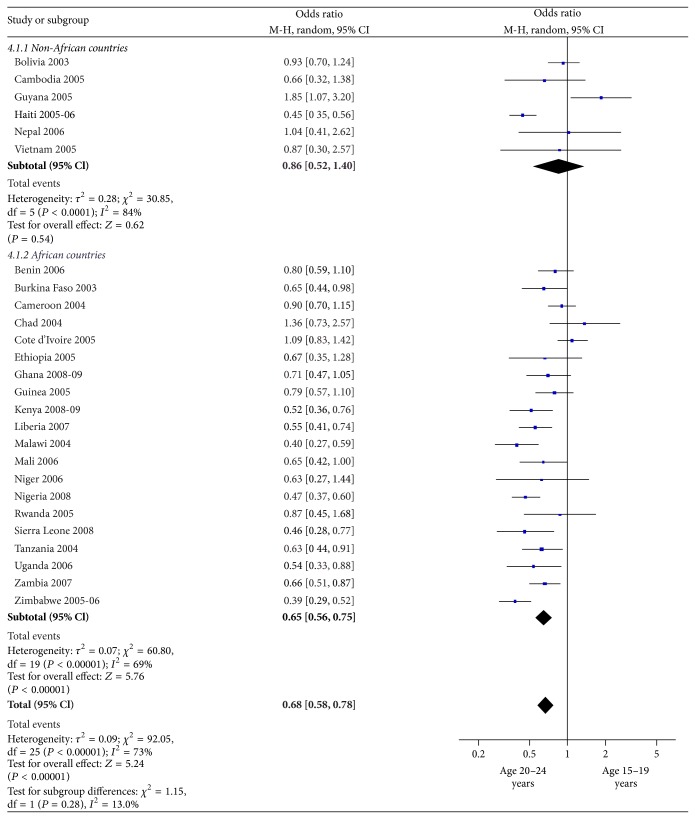
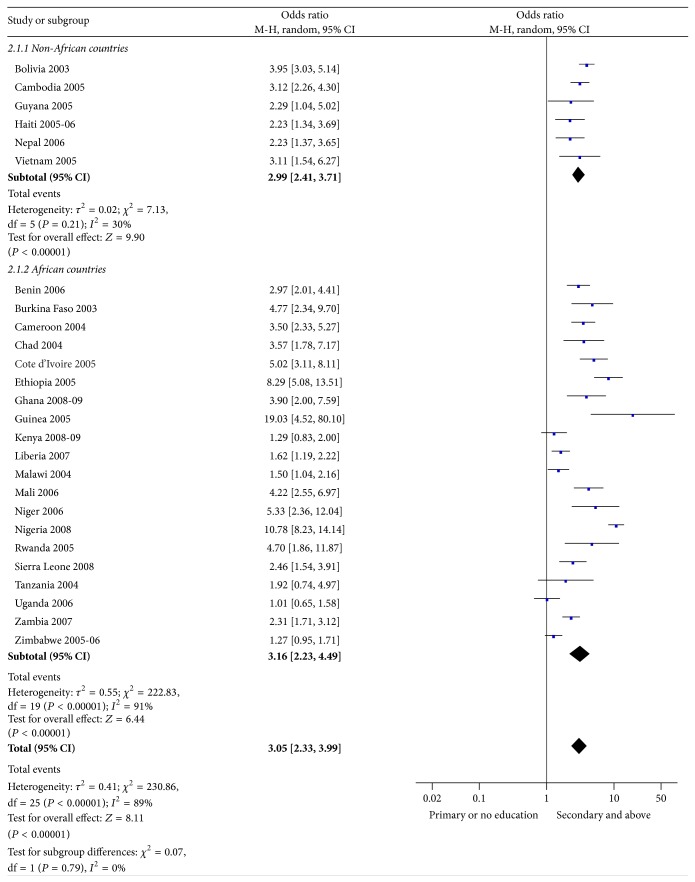
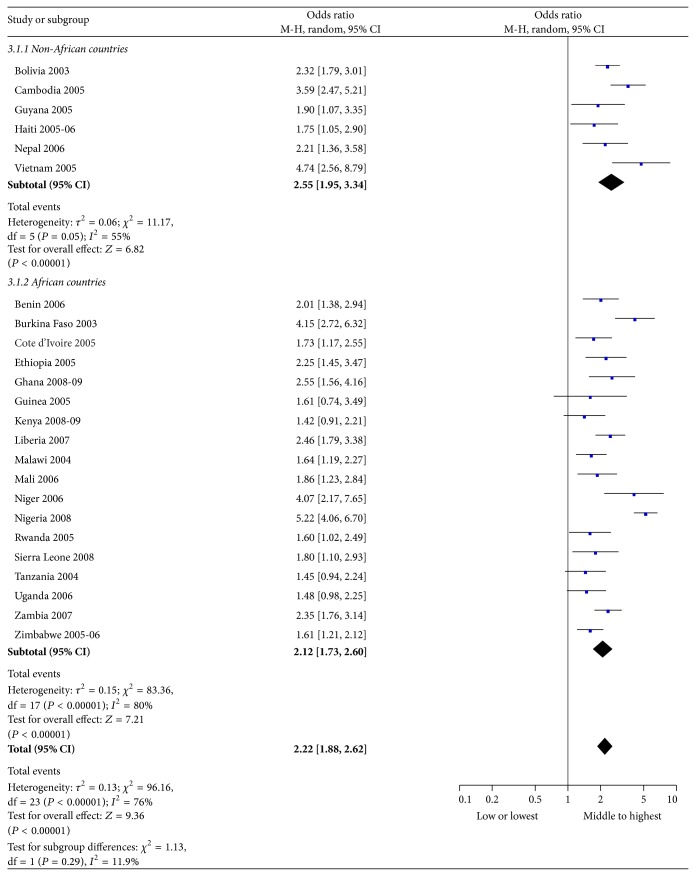
The purpose of this meta-analysis was to assess the association between risky sexual behaviour and level of education and economic status in male youth. Previous tests of the association of risky sexual behaviour with levels of education and economic status have yielded inconsistent results. Using data from 26 countries, from both within and outside Africa, we performed a meta-analysis with a specific focus on male youths' risky sexual behaviour. We applied a random effects analytic model and calculated a pooled odds ratio. Out of 19,148 males aged 15-24 years who reported having sexual intercourse in the 12 months preceding the survey, 75% engaged in higher-risk sex. The proportion of higher-risk sex among male youth aged 15-19 years was nearly 90% in 21 of the 26 countries. The pooled odds ratio showed a statistically significant association of higher-risk sex with male youth younger than 20 years, living in urban centers, well educated, and of a high economic status. The overall proportion of condom use during youths' most recent higher-risk sexual encounter was 40% and 51% among 15-19-year-olds and 20-24-year-olds, respectively. Our findings suggest that male youth's socioeconomic status is directly related to the likelihood that they practice higher-risk sex. The relationship between income and sexual behaviour should be explored further.
这项荟萃分析的目的是评估男性青年中危险性行为与教育水平和经济状况之间的关联。此前关于危险性行为与教育水平和经济状况之间关联的测试结果并不一致。我们利用来自非洲内外26个国家的数据,针对男性青年的危险性行为进行了一项荟萃分析。我们应用了随机效应分析模型并计算了合并优势比。在调查前12个月内报告有过性行为的19148名15至24岁男性中,75%的人有较高风险的性行为。在26个国家中的21个国家,15至19岁男性青年中高风险性行为的比例接近90%。合并优势比显示,高风险性行为与年龄小于20岁、居住在城市中心、受过良好教育且经济状况良好的男性青年之间存在统计学上的显著关联。在青年最近一次高风险性接触中,15至19岁和20至24岁人群中使用避孕套的总体比例分别为40%和51%。我们的研究结果表明,男性青年的社会经济地位与他们进行高风险性行为的可能性直接相关。收入与性行为之间的关系应进一步探讨。