Bouet Guenaelle, Bouleftour Wafa, Juignet Laura, Linossier Marie-Thérèse, Thomas Mireille, Vanden-Bossche Arnaud, Aubin Jane E, Vico Laurence, Marchat David, Malaval Luc
INSERM U1059, Laboratoire de Biologie du Tissu Osseux, SFR IFRESIS, Université de Lyon and Université Jean Monnet, St-Etienne, France.
Dept. of Molecular Genetics, University of Toronto, Toronto, Ontario, Canada.
PLoS One. 2015 Feb 24;10(2):e0117402. doi: 10.1371/journal.pone.0117402. eCollection 2015.
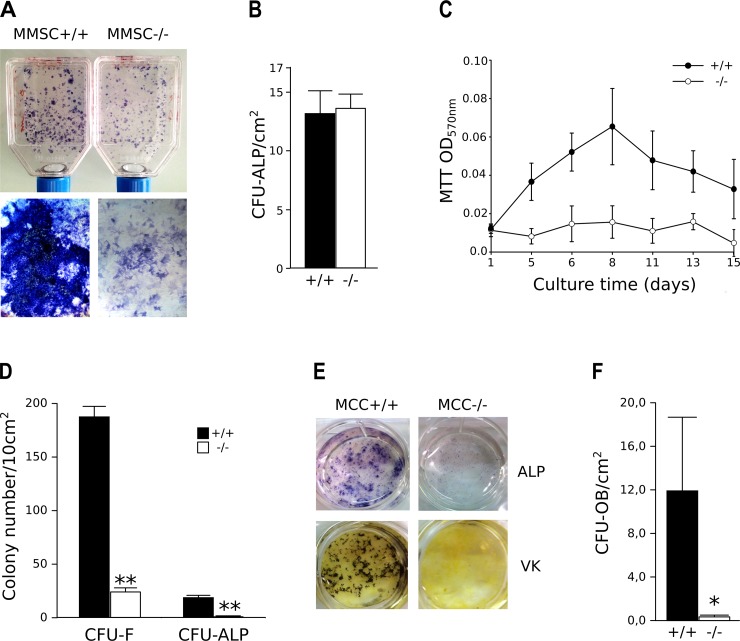
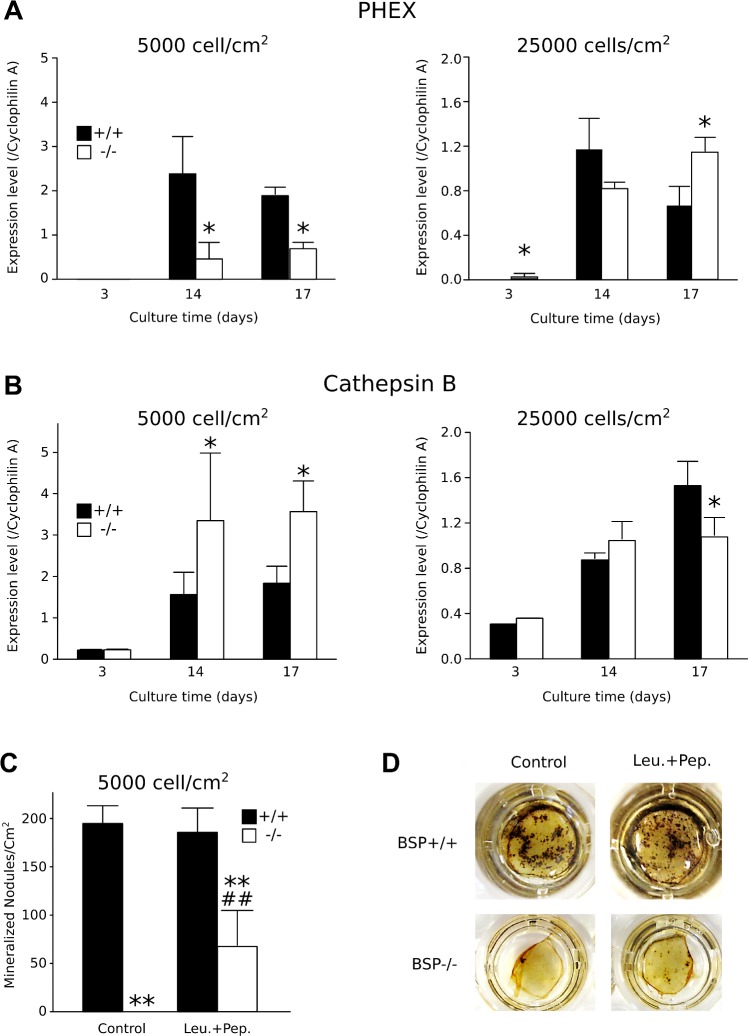
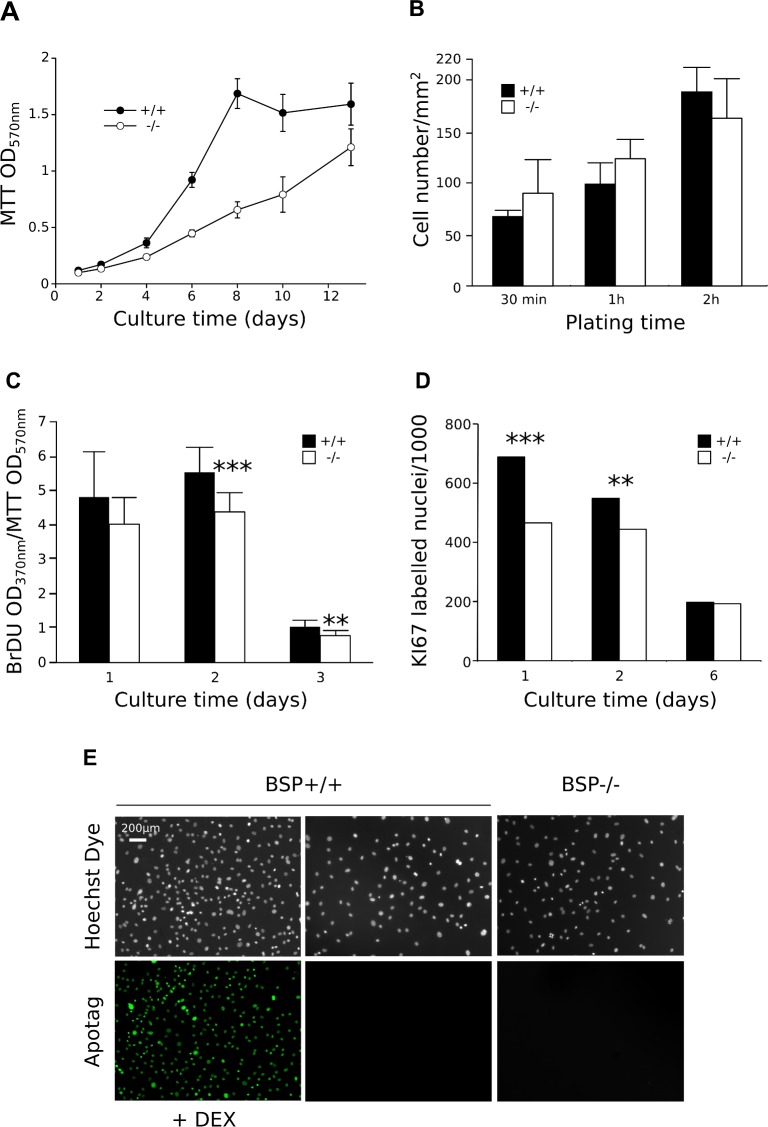
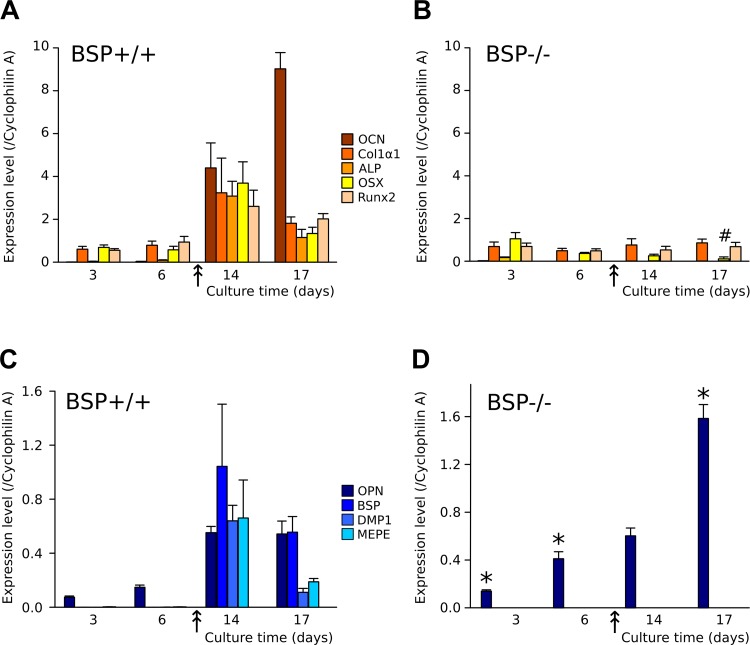
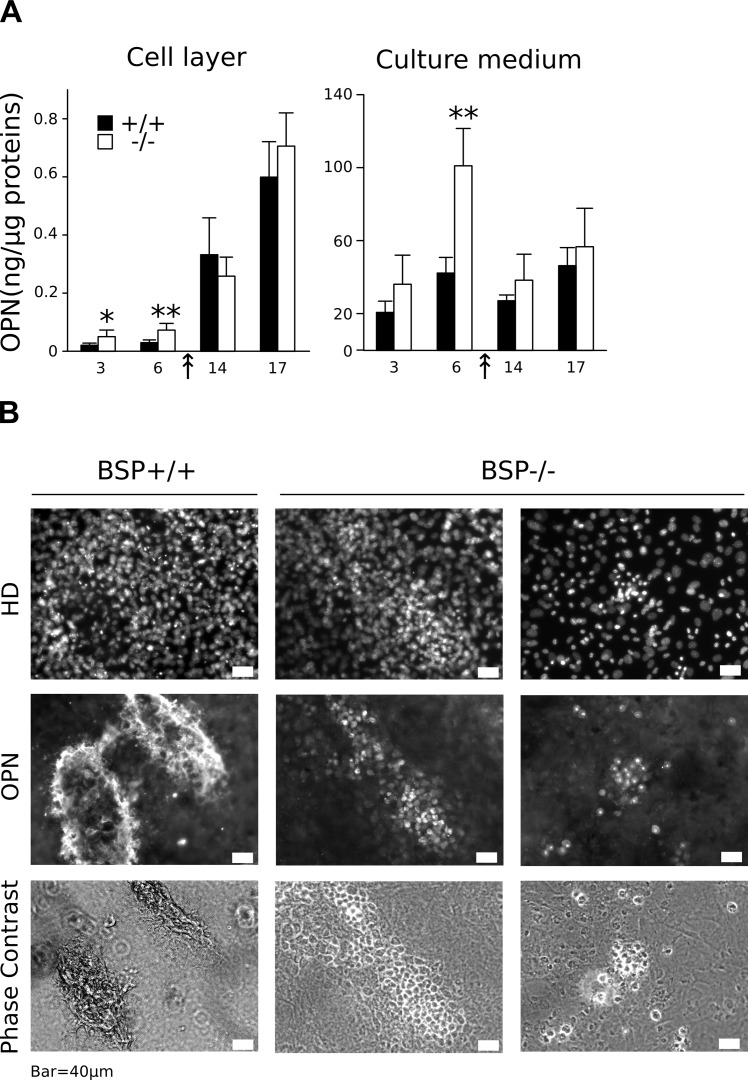
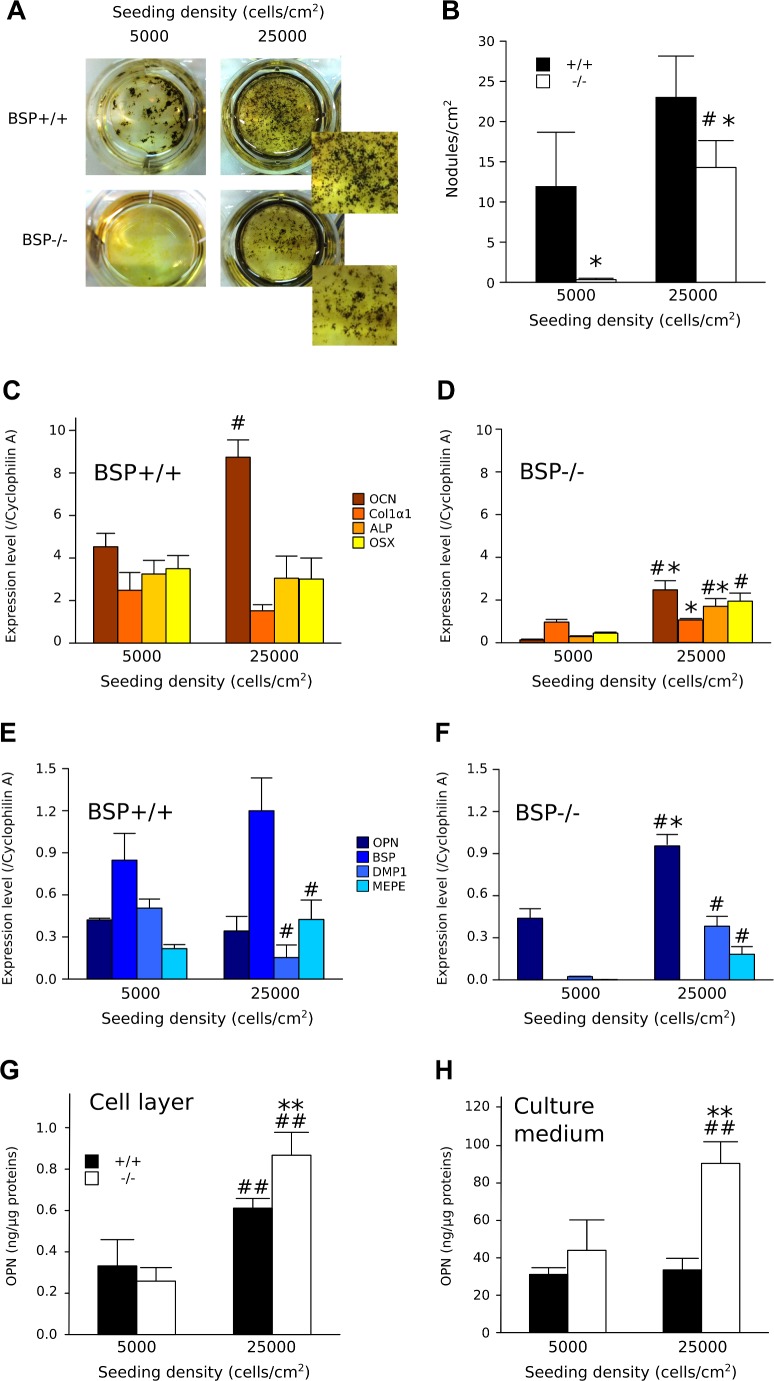
Bone sialoprotein (BSP) belongs to the "small integrin-binding ligand N-linked glycoprotein" (SIBLING) family, whose members interact with bone cells and bone mineral. BSP is strongly expressed in bone and we previously showed that BSP knockout (BSP-/-) mice have a higher bone mass than wild type (BSP+/+) littermates, with lower bone remodelling. Because baseline bone formation activity is constitutively lower in BSP-/- mice, we studied the impact of the absence of BSP on in vitro osteogenesis in mouse calvaria cell (MCC) cultures. MCC BSP-/- cultures exhibit fewer fibroblast (CFU-F), preosteoblast (CFU-ALP) and osteoblast colonies (bone nodules) than wild type, indicative of a lower number of osteoprogenitors. No mineralized colonies were observed in BSP-/- cultures, along with little/no expression of either osteogenic markers or SIBLING proteins MEPE or DMP1. Osteopontin (OPN) is the only SIBLING expressed in standard density BSP-/- culture, at higher levels than in wild type in early culture times. At higher plating density, the effects of the absence of BSP were partly rescued, with resumed expression of osteoblast markers and cognate SIBLING proteins, and mineralization of the mutant cultures. OPN expression and amount are further increased in high density BSP-/- cultures, while PHEX and CatB expression are differentiatlly regulated in a manner that may favor mineralization. Altogether, we found that BSP regulates mouse calvaria osteoblast cell clonogenicity, differentiation and activity in vitro in a cell density dependent manner, consistent with the effective skeletogenesis but the low levels of bone formation observed in vivo. The BSP knockout bone microenvironment may alter the proliferation/cell fate of early osteoprogenitors.
骨唾液酸蛋白(BSP)属于“小整合素结合配体N-连接糖蛋白”(SIBLING)家族,其成员与骨细胞和骨矿物质相互作用。BSP在骨中强烈表达,我们之前表明BSP基因敲除(BSP-/-)小鼠的骨量高于野生型(BSP+/+)同窝小鼠,骨重塑较低。由于BSP-/-小鼠的基线骨形成活性本就较低,我们研究了BSP缺失对小鼠颅骨细胞(MCC)培养物中体外成骨的影响。与野生型相比,MCC BSP-/-培养物中的成纤维细胞(CFU-F)、前成骨细胞(CFU-ALP)和成骨细胞集落(骨结节)较少,表明骨祖细胞数量较少。在BSP-/-培养物中未观察到矿化集落,同时成骨标志物或SIBLING蛋白MEPE或DMP1几乎没有/没有表达。骨桥蛋白(OPN)是在标准密度BSP-/-培养物中表达的唯一SIBLING,在早期培养阶段其表达水平高于野生型。在更高的接种密度下,BSP缺失的影响部分得到挽救,成骨细胞标志物和相关SIBLING蛋白恢复表达,突变培养物矿化。在高密度BSP-/-培养物中,OPN的表达和量进一步增加,而PHEX和组织蛋白酶B的表达以可能有利于矿化的方式受到不同调节。总之,我们发现BSP以细胞密度依赖性方式调节小鼠颅骨成骨细胞的克隆形成、分化和体外活性,这与体内观察到的有效骨生成但低水平骨形成一致。BSP基因敲除的骨微环境可能会改变早期骨祖细胞的增殖/细胞命运。