Bouleftour Wafa, Boudiffa Maya, Wade-Gueye Ndeye Marième, Bouët Guénaëlle, Cardelli Marco, Laroche Norbert, Vanden-Bossche Arnaud, Thomas Mireille, Bonnelye Edith, Aubin Jane E, Vico Laurence, Lafage-Proust Marie Hélène, Malaval Luc
Laboratoire de Biologie du Tissu Osseux and Institut National de la Santé et de la Recherche Médicale - U1059, Université de Lyon - Université Jean Monnet, Saint-Etienne, France.
Dept. of Molecular Genetics, University of Toronto, Toronto, Ontario, Canada.
PLoS One. 2014 May 9;9(5):e95144. doi: 10.1371/journal.pone.0095144. eCollection 2014.
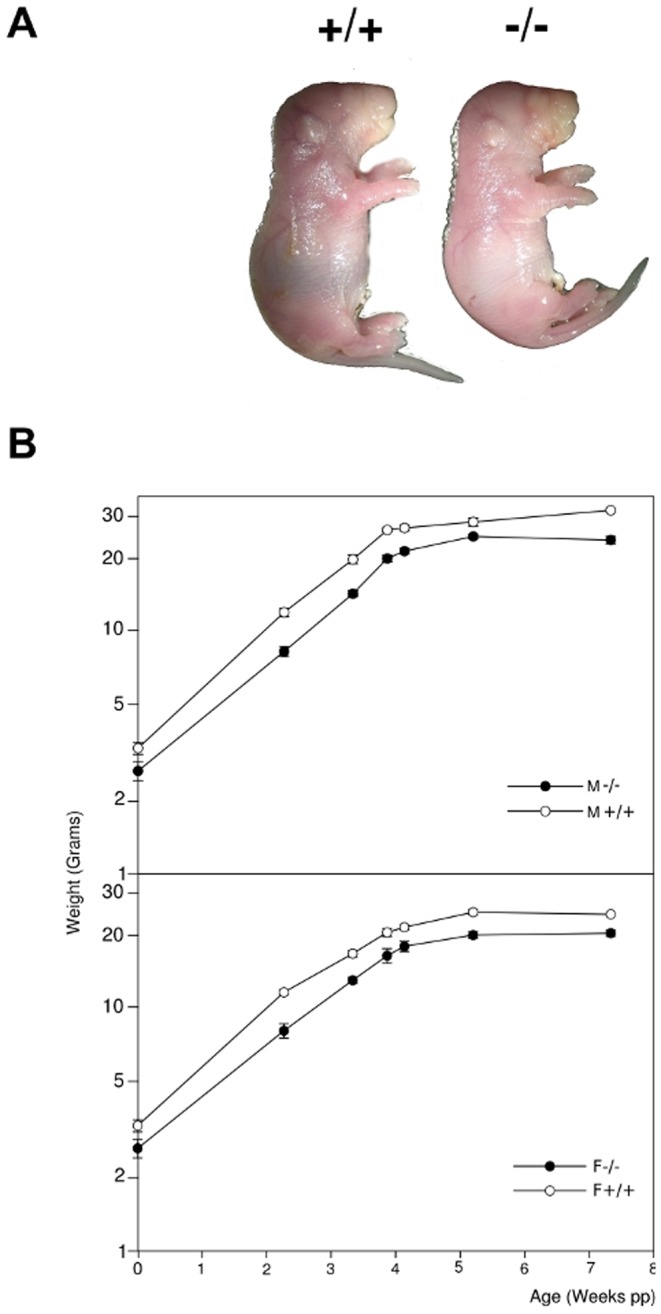
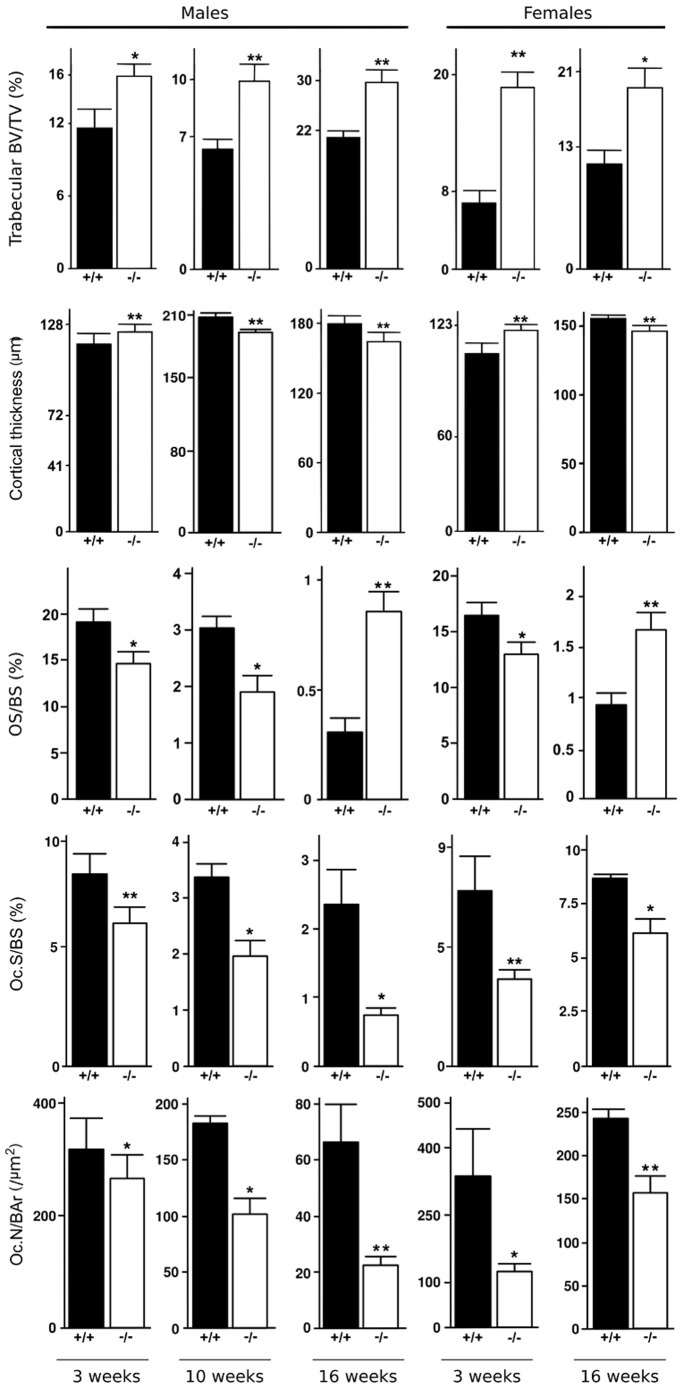
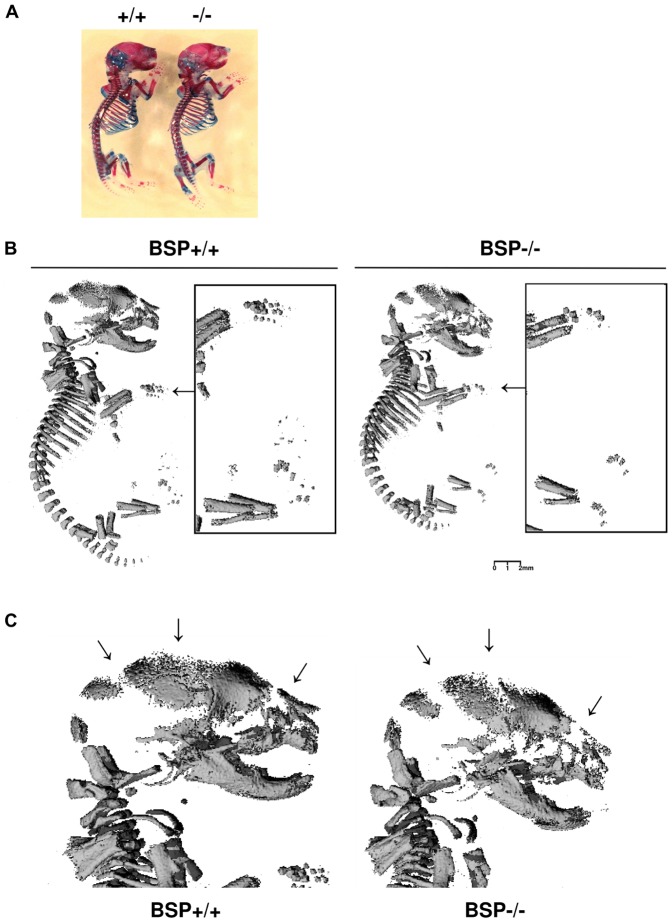
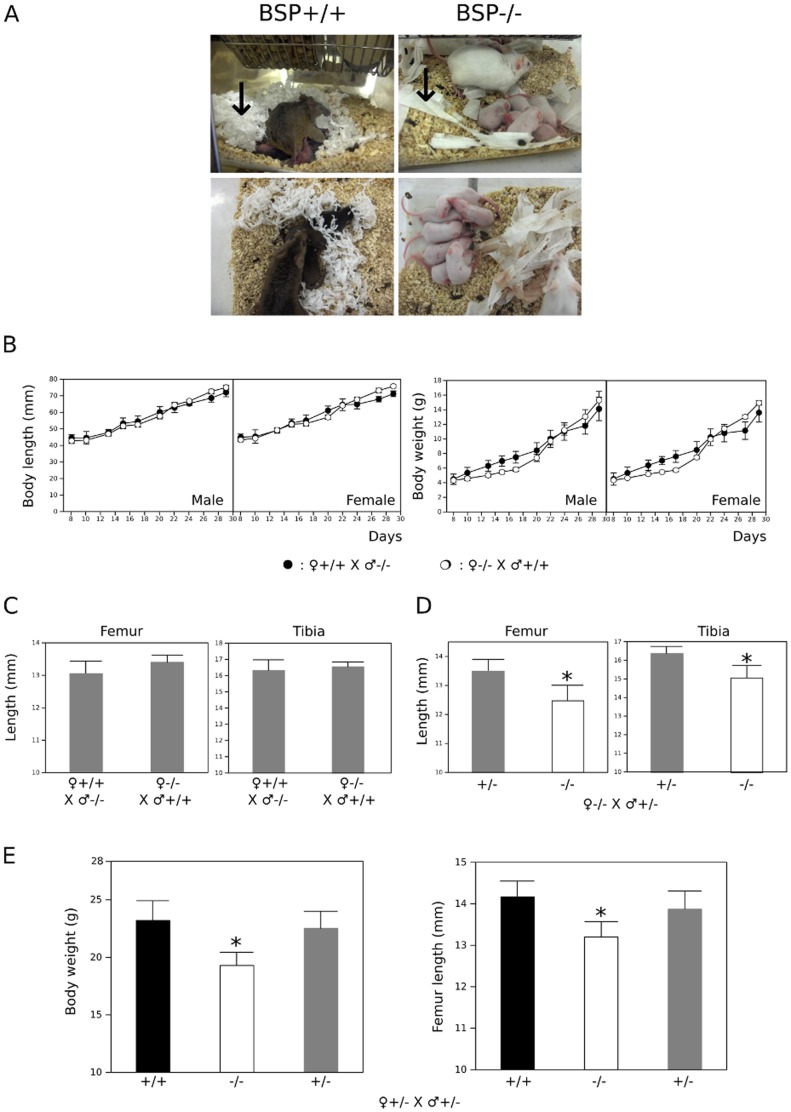
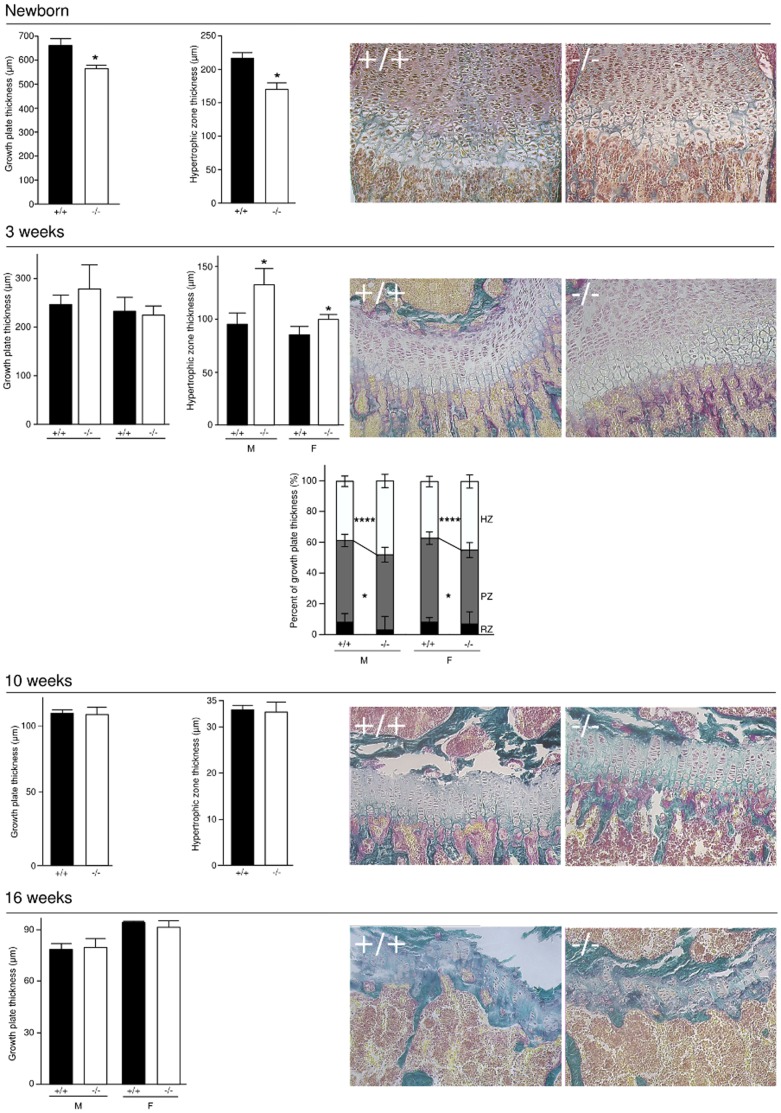
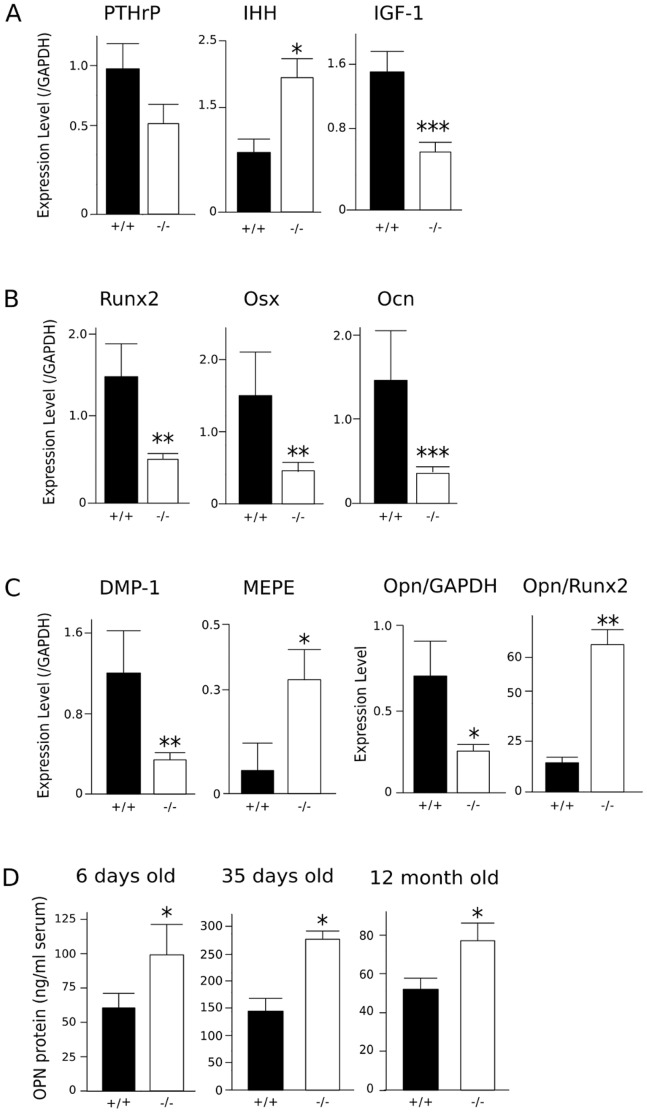
Adult Ibsp-knockout mice (BSP-/-) display shorter stature, lower bone turnover and higher trabecular bone mass than wild type, the latter resulting from impaired bone resorption. Unexpectedly, BSP knockout also affects reproductive behavior, as female mice do not construct a proper "nest" for their offsprings. Multiple crossing experiments nonetheless indicated that the shorter stature and lower weight of BSP-/- mice, since birth and throughout life, as well as their shorter femur and tibia bones are independent of the genotype of the mothers, and thus reflect genetic inheritance. In BSP-/- newborns, µCT analysis revealed a delay in membranous primary ossification, with wider cranial sutures, as well as thinner femoral cortical bone and lower tissue mineral density, reflected in lower expression of bone formation markers. However, trabecular bone volume and osteoclast parameters of long bones do not differ between genotypes. Three weeks after birth, osteoclast number and surface drop in the mutants, concomitant with trabecular bone accumulation. The growth plates present a thinner hypertrophic zone in newborns with lower whole bone expression of IGF-1 and higher IHH in 6 days old BSP-/- mice. At 3 weeks the proliferating zone is thinner and the hypertrophic zone thicker in BSP-/- than in BSP+/+ mice of either sex, maybe reflecting a combination of lower chondrocyte proliferation and impaired cartilage resorption. Six days old BSP-/- mice display lower osteoblast marker expression but higher MEPE and higher osteopontin(Opn)/Runx2 ratio. Serum Opn is higher in mutants at day 6 and in adults. Thus, lack of BSP alters long bone growth and membranous/cortical primary bone formation and mineralization. Endochondral development is however normal in mutant mice and the accumulation of trabecular bone observed in adults develops progressively in the weeks following birth. Compensatory high Opn may allow normal endochondral development in BSP-/- mice, while impairing primary mineralization.
成年Ibsp基因敲除小鼠(BSP-/-)与野生型相比,体型更矮小,骨转换率更低,小梁骨量更高,后者是由于骨吸收受损所致。出乎意料的是,BSP基因敲除还会影响生殖行为,因为雌性小鼠不会为其后代建造合适的“巢穴”。然而,多次杂交实验表明,BSP-/-小鼠从出生到终生的较矮体型和较轻体重,以及它们较短的股骨和胫骨,与母亲的基因型无关,因此反映了遗传继承。在BSP-/-新生小鼠中,µCT分析显示膜性原发性骨化延迟,颅缝更宽,股骨皮质骨更薄,组织矿物质密度更低,这反映在骨形成标志物的表达较低。然而,不同基因型之间长骨的小梁骨体积和破骨细胞参数并无差异。出生三周后,突变体中的破骨细胞数量和表面减少,同时伴有小梁骨的积累。在新生小鼠中,生长板的肥大区较薄,在6日龄的BSP-/-小鼠中,IGF-1的全骨表达较低,IHH较高。在3周龄时,BSP-/-小鼠的增殖区比BSP+/+小鼠更薄,肥大区更厚,这可能反映了软骨细胞增殖较低和软骨吸收受损的综合情况。6日龄的BSP-/-小鼠显示成骨细胞标志物表达较低,但MEPE较高,骨桥蛋白(Opn)/Runx2比值较高。在第6天和成年期,突变体中的血清Opn较高。因此,BSP的缺失会改变长骨生长以及膜性/皮质原发性骨形成和矿化。然而,突变小鼠的软骨内发育正常,成年小鼠中观察到的小梁骨积累在出生后的几周内逐渐发展。代偿性高Opn可能使BSP-/-小鼠的软骨内发育正常,同时损害原发性矿化。