Coley John D, Tanner Kimberly
*Department of Psychology, Northeastern University, Boston, MA 02115-5000
Department of Biology, San Francisco State University, San Francisco, CA 94132.
CBE Life Sci Educ. 2015 Mar 2;14(1):ar8. doi: 10.1187/cbe.14-06-0094.
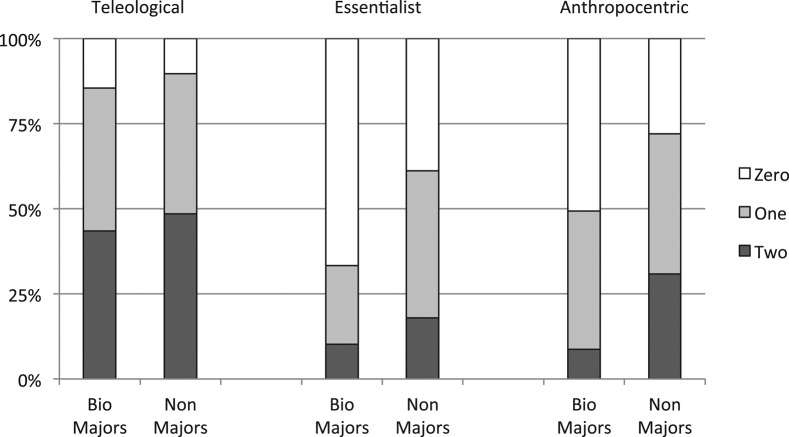
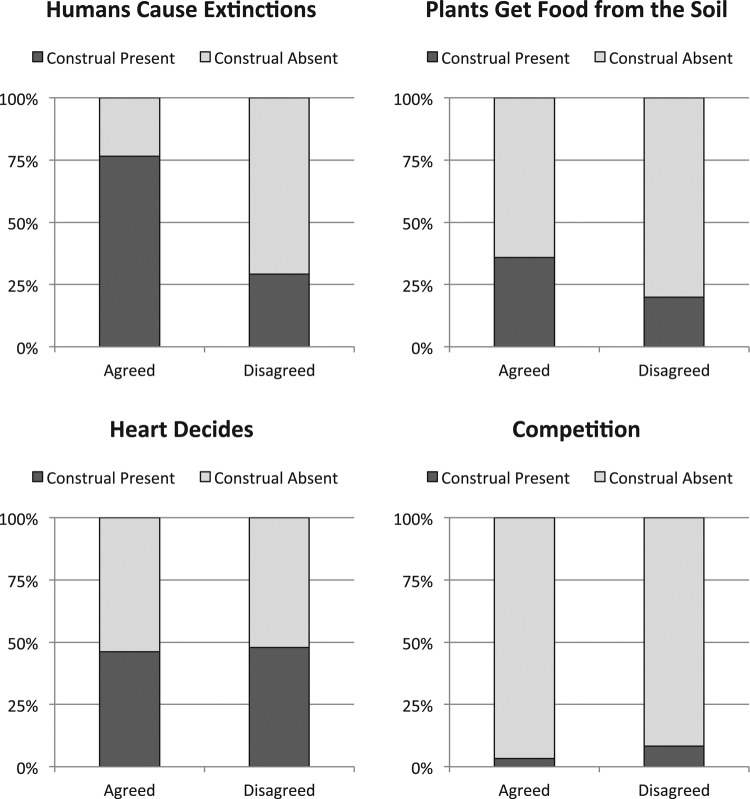
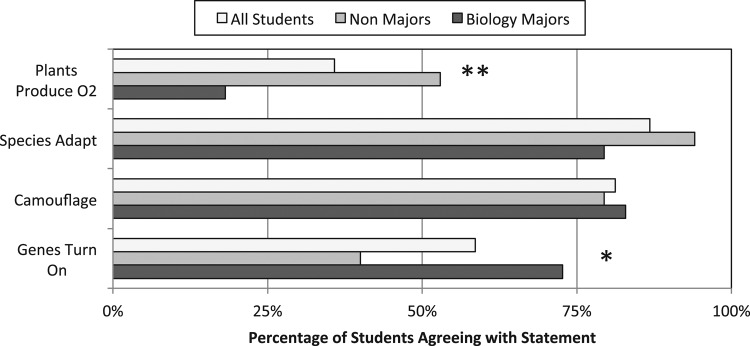
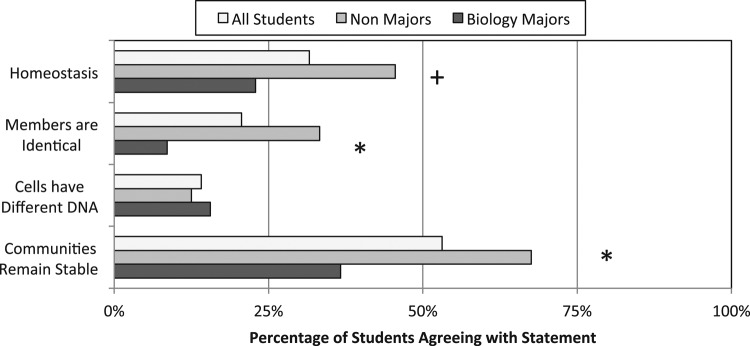
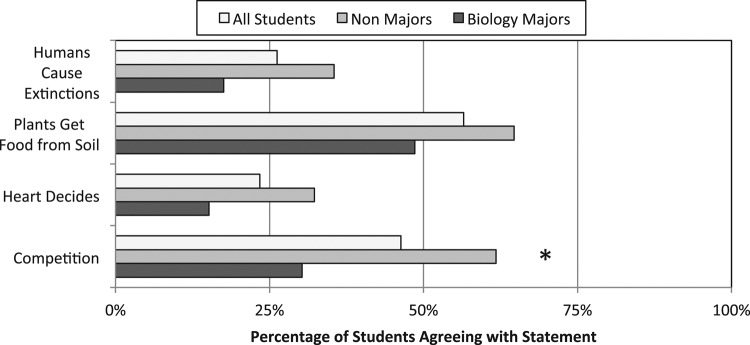
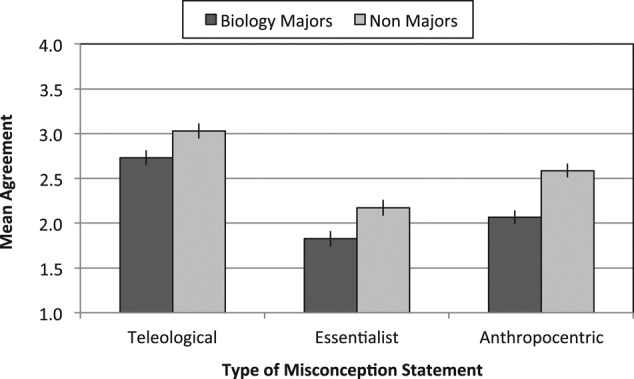
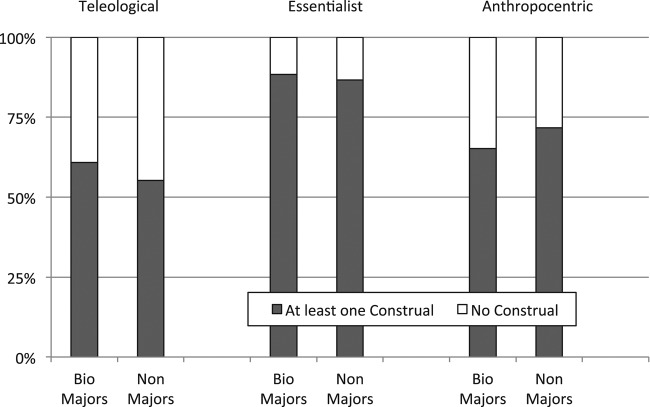
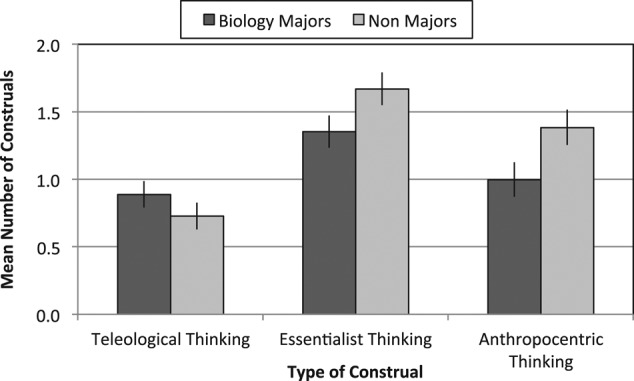
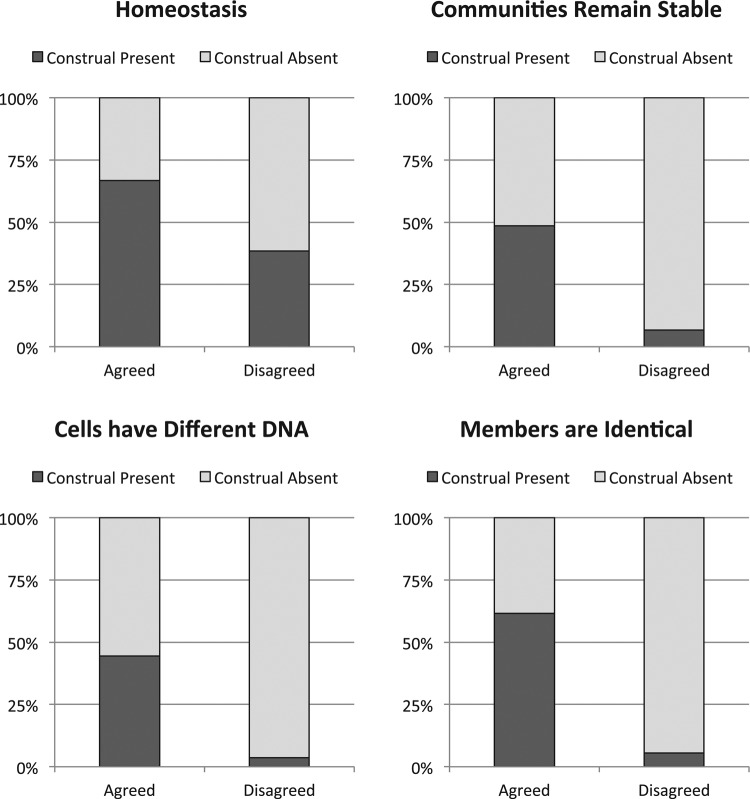
Research and theory development in cognitive psychology and science education research remain largely isolated. Biology education researchers have documented persistent scientifically inaccurate ideas, often termed misconceptions, among biology students across biological domains. In parallel, cognitive and developmental psychologists have described intuitive conceptual systems--teleological, essentialist, and anthropocentric thinking--that humans use to reason about biology. We hypothesize that seemingly unrelated biological misconceptions may have common origins in these intuitive ways of knowing, termed cognitive construals. We presented 137 undergraduate biology majors and nonmajors with six biological misconceptions. They indicated their agreement with each statement, and explained their rationale for their response. Results indicate frequent agreement with misconceptions, and frequent use of construal-based reasoning among both biology majors and nonmajors in their written explanations. Moreover, results also show associations between specific construals and the misconceptions hypothesized to arise from those construals. Strikingly, such associations were stronger among biology majors than nonmajors. These results demonstrate important linkages between intuitive ways of thinking and misconceptions in discipline-based reasoning, and raise questions about the origins, persistence, and generality of relations between intuitive reasoning and biological misconceptions.
认知心理学和科学教育研究中的研究与理论发展在很大程度上仍然相互孤立。生物学教育研究者记录了生物学学生在各个生物领域中持续存在的科学上不准确的观念,通常称之为误解。与此同时,认知和发展心理学家描述了人类用于对生物学进行推理的直观概念系统——目的论、本质主义和以人类为中心的思维方式。我们假设,看似不相关的生物学误解可能在这些直观的认知方式(称为认知解释)中有共同的起源。我们向137名本科生物学专业学生和非生物学专业学生呈现了六个生物学误解。他们表明对每个陈述的认同程度,并解释其回答的理由。结果表明,无论是生物学专业学生还是非生物学专业学生,在书面解释中都频繁认同这些误解,并频繁使用基于解释的推理。此外,结果还显示了特定解释与假设由这些解释产生的误解之间的关联。引人注目的是,这种关联在生物学专业学生中比在非生物学专业学生中更强。这些结果证明了直观思维方式与基于学科的推理中的误解之间的重要联系,并引发了关于直观推理与生物学误解之间关系的起源、持续性和普遍性的问题。