Li Ming-Song, Liu Zhenzhen, Liu Jin-Qing, Zhu Xiaotong, Liu Zhihao, Bai Xue-Feng
Department of Gastroenterology, Nanfang Hospital, Southern Medical University, Guangzhou, China.
Immunotherapy. 2015;7(2):191-200. doi: 10.2217/imt.14.95.
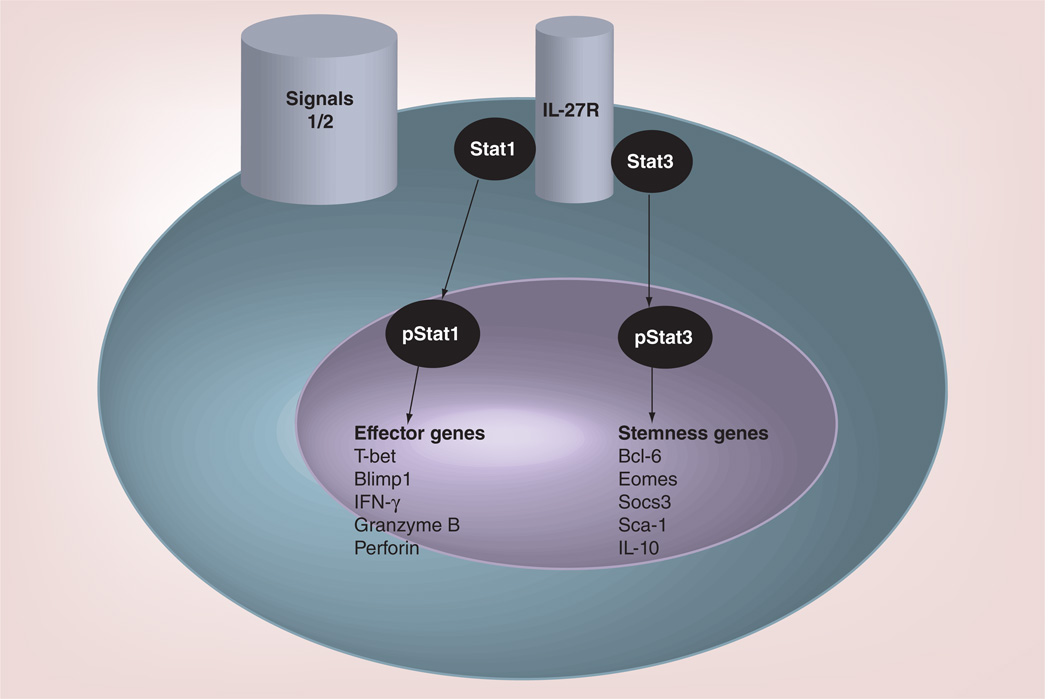
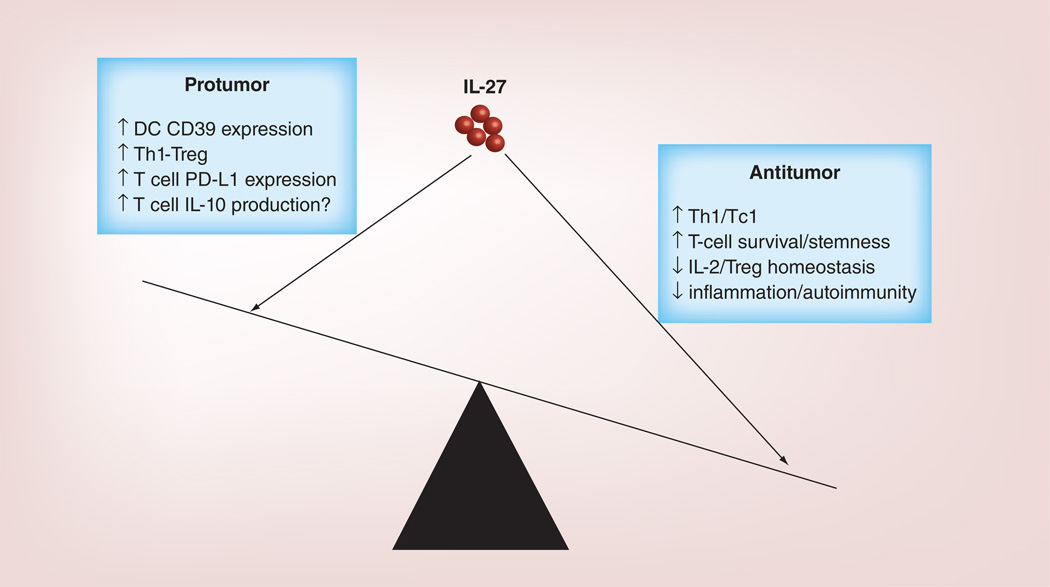
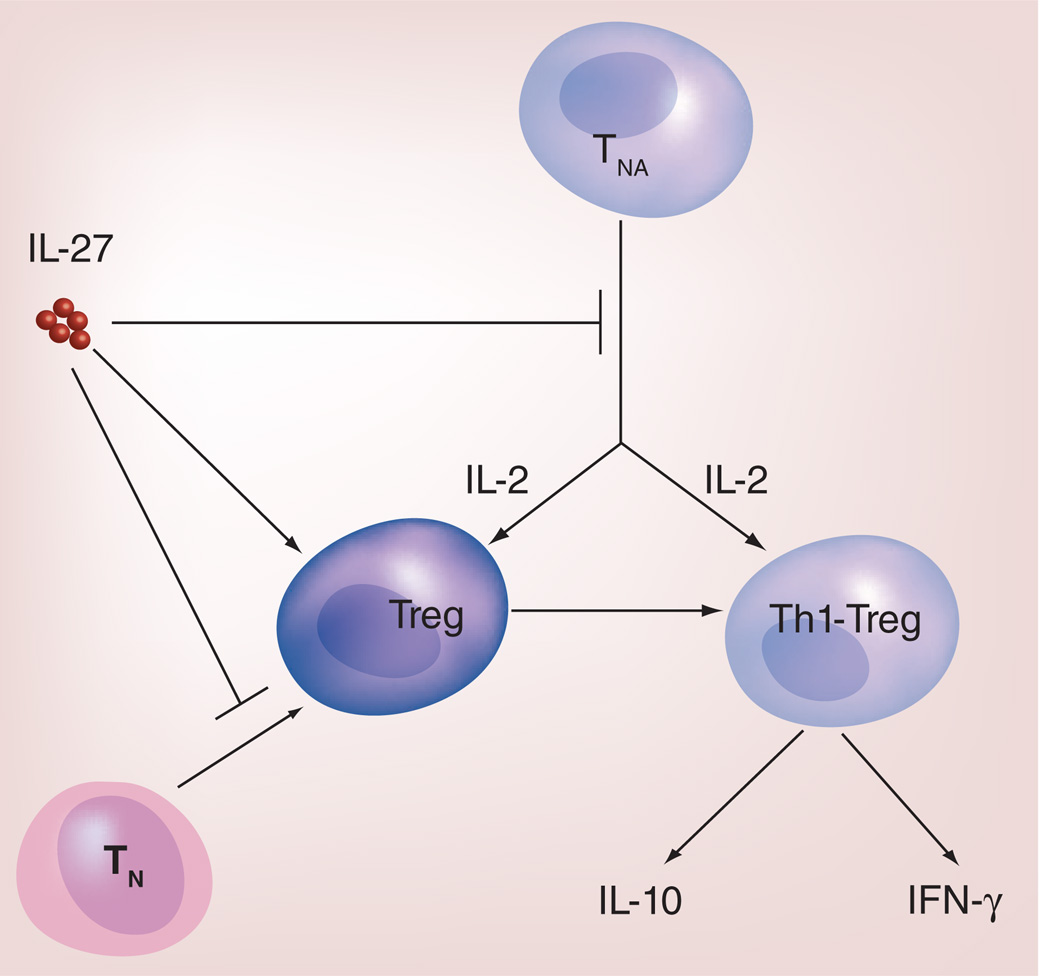
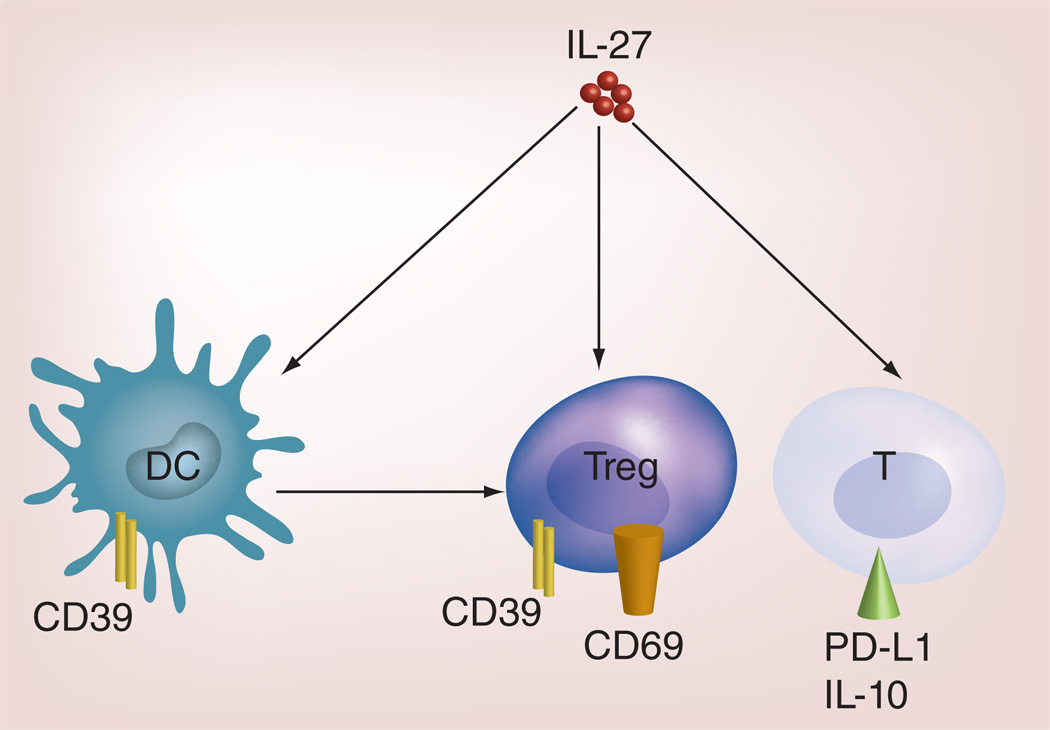
Accumulating evidences from animal studies have indicated that both endogenous and exogenous IL-27, an IL-12 family of cytokine, can increase antitumor T-cell activities and inhibit tumor growth. IL-27 can modulate Treg responses, and program effector T cells into a unique T-effector stem cell (TSEC) phenotype, which enhances T-cell survival in the tumor microenvironment. However, animal studies also suggest that IL-27 induces molecular pathways such as IL-10, PD-L1 and CD39, which may downregulate tumor-specific T-cell responses. In this review paper, we will discuss the Yin and Yang aspects of IL-27 in the induction of tumor-specific T-cell responses, and the potential impacts of these functions of IL-27 in the design of cancer immunotherapy.
来自动物研究的越来越多的证据表明,白细胞介素-27(IL-27)作为白细胞介素-12家族的一种细胞因子,无论是内源性还是外源性的,都可以增强抗肿瘤T细胞活性并抑制肿瘤生长。IL-27可以调节调节性T细胞(Treg)反应,并将效应T细胞编程为独特的T效应干细胞(TSEC)表型,这增强了T细胞在肿瘤微环境中的存活。然而,动物研究也表明,IL-27诱导诸如IL-10、程序性死亡配体-1(PD-L1)和CD39等分子途径,这可能会下调肿瘤特异性T细胞反应。在这篇综述文章中,我们将讨论IL-27在诱导肿瘤特异性T细胞反应中的阴阳两面,以及IL-27的这些功能在癌症免疫治疗设计中的潜在影响。