Department of Molecular Microbiology and Immunology, Saint Louis University School of Medicine, Saint Louis, Missouri.
Nashville Veterans Affairs Medical Center, Department of Surgery, Department of Cell and Developmental Biology, Epithelial Biology Center, Vanderbilt University School of Medicine, Nashville, Tennessee.
Cell Mol Gastroenterol Hepatol. 2020;10(3):561-579. doi: 10.1016/j.jcmgh.2020.04.014. Epub 2020 May 4.
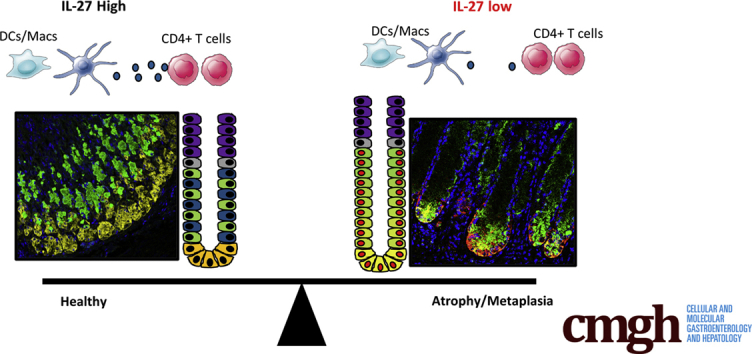
BACKGROUND & AIMS: The association between chronic inflammation and gastric carcinogenesis is well established, but it is not clear how immune cells and cytokines regulate this process. We investigated the role of interleukin 27 (IL27) in the development of gastric atrophy, hyperplasia, and metaplasia (preneoplastic lesions associated with inflammation-induced gastric cancer) in mice with autoimmune gastritis.
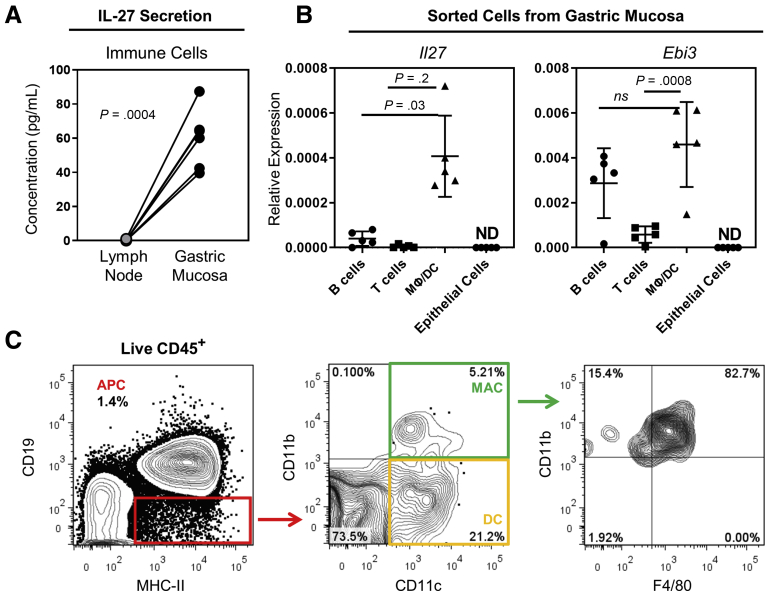
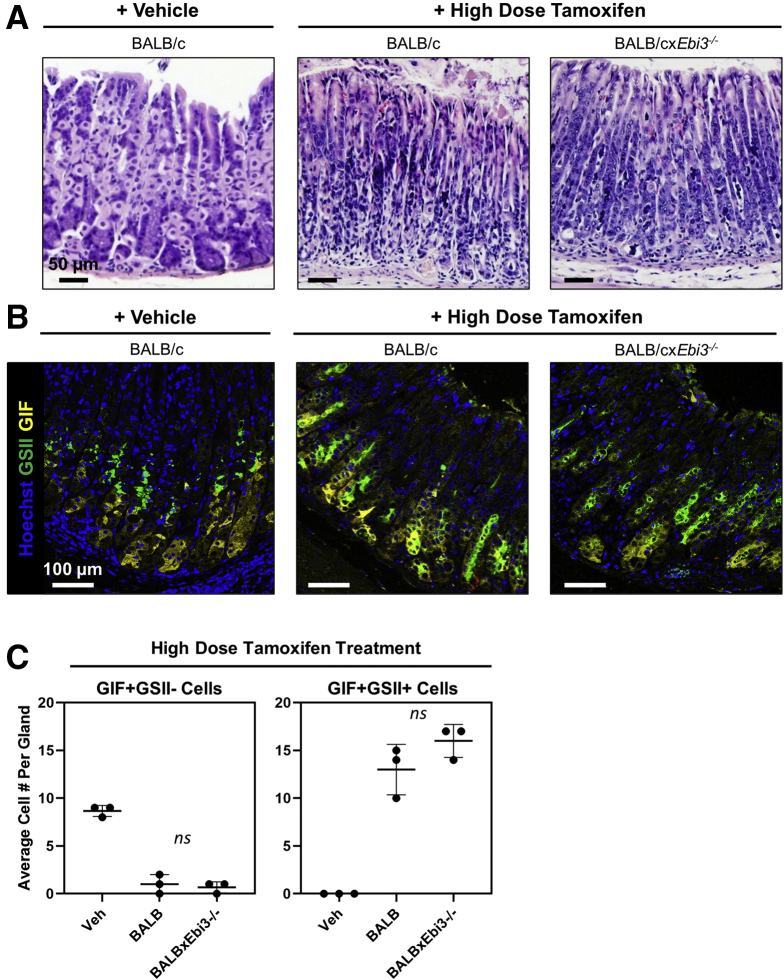
We performed studies with TxA23 mice (control mice), which express a T-cell receptor against the H+/K+ adenosine triphosphatase α chain and develop autoimmune gastritis, and TxA23xEbi3 mice, which develop gastritis but do not express IL27. In some experiments, mice were given high-dose tamoxifen to induce parietal cell atrophy and spasmolytic polypeptide-expressing metaplasia (SPEM). Recombinant IL27 was administered to mice with mini osmotic pumps. Stomachs were collected and analyzed by histopathology and immunofluorescence; we used flow cytometry to measure IL27 and identify immune cells that secrete IL27 in the gastric mucosa. Single-cell RNA sequencing was performed on immune cells that infiltrated stomach tissues.
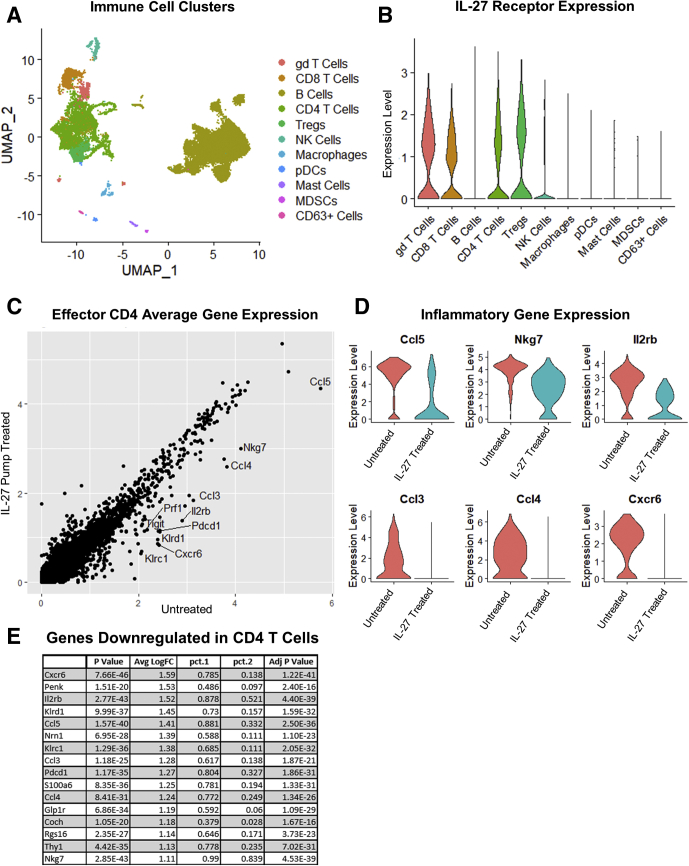
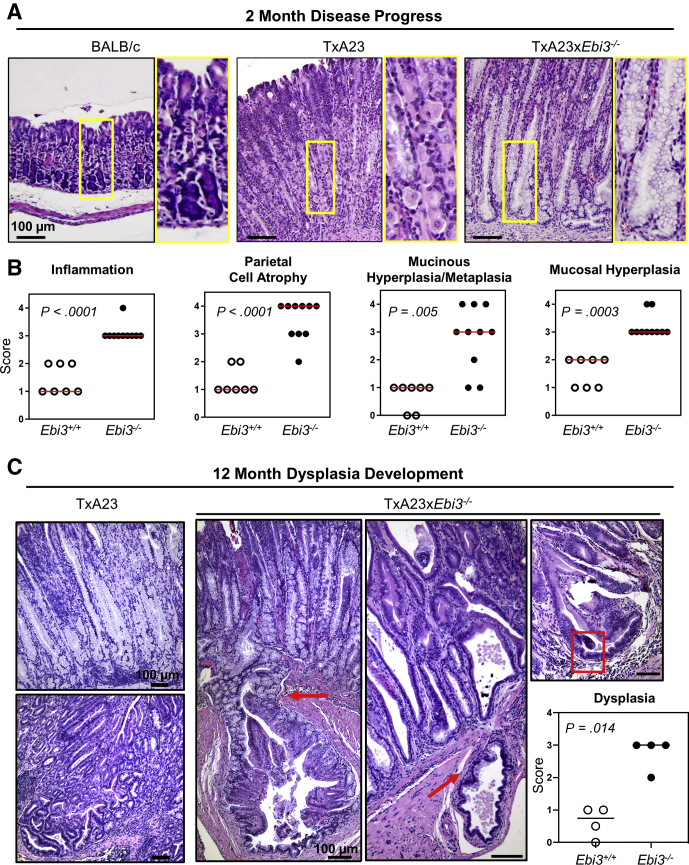
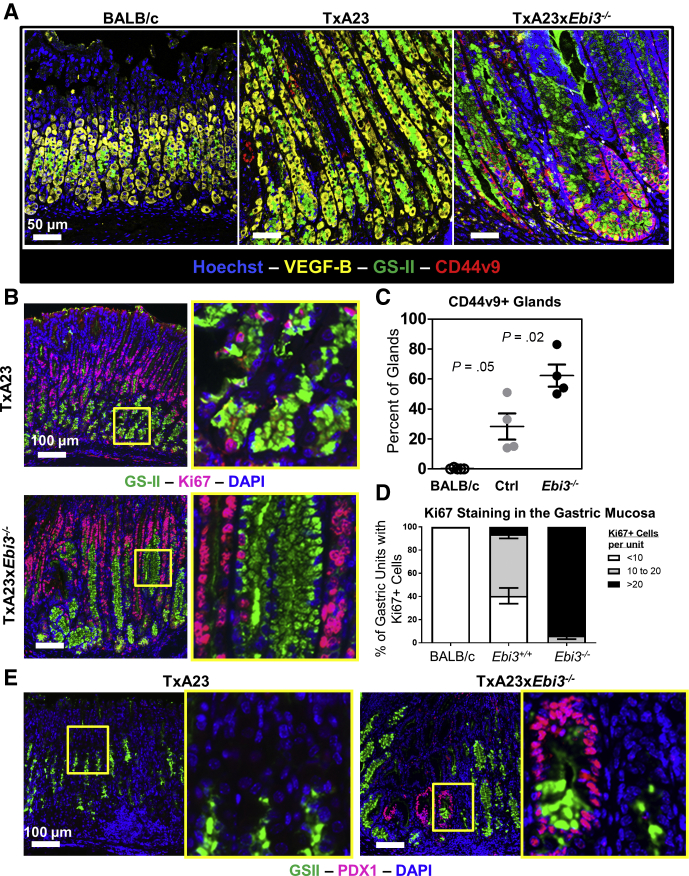
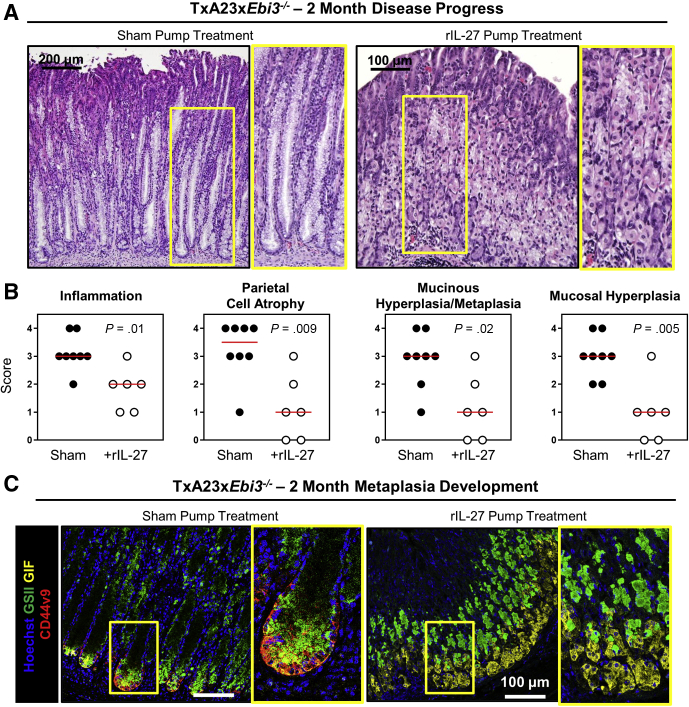
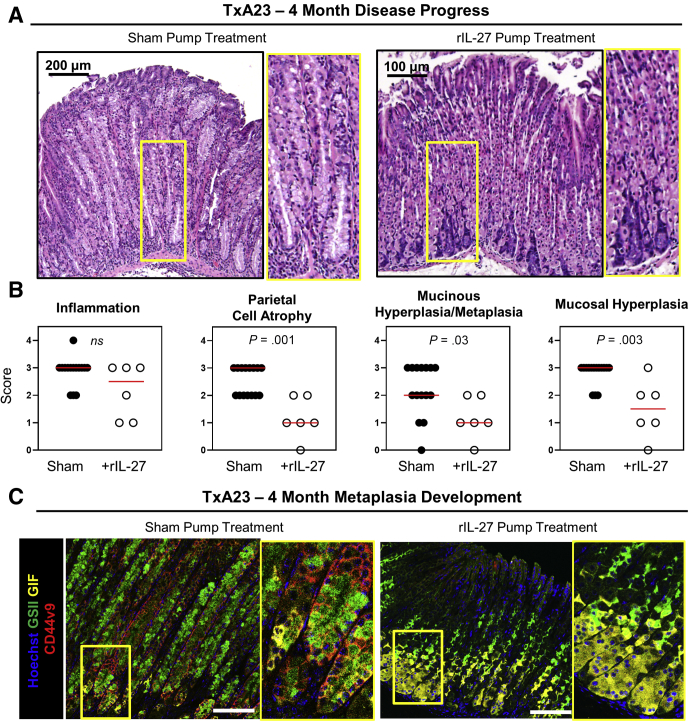
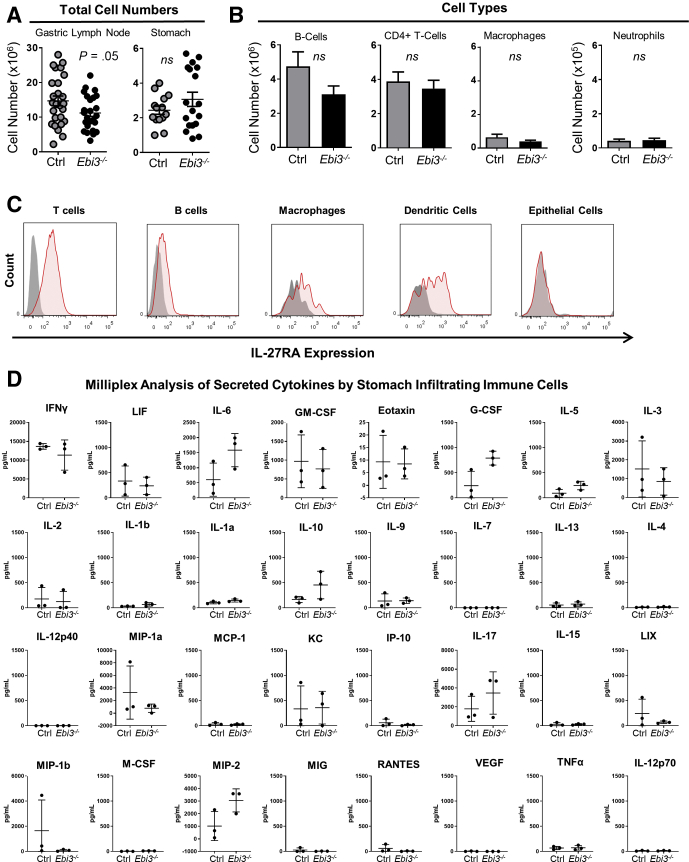
We identified IL27-secreting macrophages and dendritic cell in the corpus of mice with chronic gastritis (TxA23 mice). Mice deficient in IL27 developed more severe gastritis, atrophy, and SPEM than control mice. Administration of recombinant IL27 significantly reduced the severity of inflammation, atrophy, and SPEM in mice with gastritis. Single-cell RNA sequencing showed that IL27 acted almost exclusively on stomach-infiltrating CD4+ T cells to suppress expression of inflammatory genes.
In studies of mice with autoimmune gastritis, we found that IL27 is an inhibitor of gastritis and SPEM, suppressing CD4+ T-cell-mediated inflammation in the gastric mucosa.
慢性炎症与胃癌发生之间的关联已得到充分证实,但尚不清楚免疫细胞和细胞因子如何调节这一过程。我们研究了白细胞介素 27(IL27)在自身免疫性胃炎小鼠胃萎缩、增生和化生(与炎症诱导的胃癌相关的癌前病变)发展中的作用。
我们对 TxA23 小鼠(对照小鼠)和 TxA23xEbi3 小鼠进行了研究。TxA23 小鼠表达针对 H+/K+ 三磷酸腺苷酶α链的 T 细胞受体,会发生自身免疫性胃炎;而 TxA23xEbi3 小鼠则会发生胃炎,但不表达 IL27。在某些实验中,给小鼠给予大剂量他莫昔芬以诱导壁细胞萎缩和松弛多肽表达的化生(SPEM)。通过迷你渗透泵给小鼠给予重组 IL27。通过组织病理学和免疫荧光分析收集和分析胃组织;我们使用流式细胞术测量 IL27 并鉴定胃黏膜中分泌 IL27 的免疫细胞。对浸润胃组织的免疫细胞进行单细胞 RNA 测序。
我们在慢性胃炎(TxA23 小鼠)的胃体中鉴定出了分泌 IL27 的巨噬细胞和树突状细胞。缺乏 IL27 的小鼠比对照小鼠发生更严重的胃炎、萎缩和 SPEM。给予重组 IL27 可显著减轻胃炎小鼠的炎症、萎缩和 SPEM 严重程度。单细胞 RNA 测序表明,IL27 几乎完全作用于浸润胃的 CD4+T 细胞,抑制胃黏膜中 CD4+T 细胞炎症基因的表达。
在自身免疫性胃炎小鼠的研究中,我们发现 IL27 是胃炎和 SPEM 的抑制剂,可抑制胃黏膜中 CD4+T 细胞介导的炎症。