Hosegood Victoria, McGrath Nuala, Moultrie Tom
Department of Epidemiology & Population Health, London School of Hygiene and Tropical Medicine, UK; Africa Centre for Health and Population Studies, University of KwaZulu-Natal, South Africa.
Centre for Actuarial Research, University of Cape Town, South Africa.
Demogr Res. 2009 Jun 30;20:279-312. doi: 10.4054/DemRes.2009.20.13.
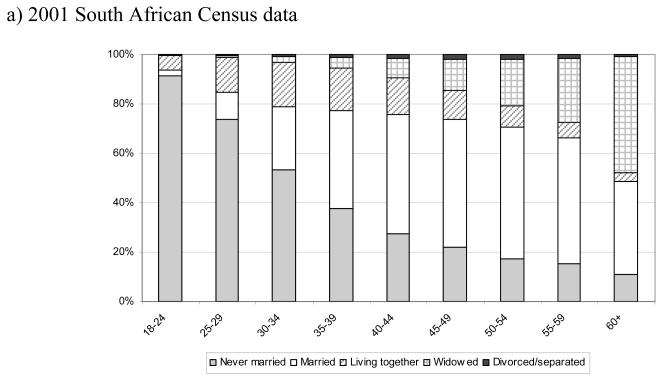
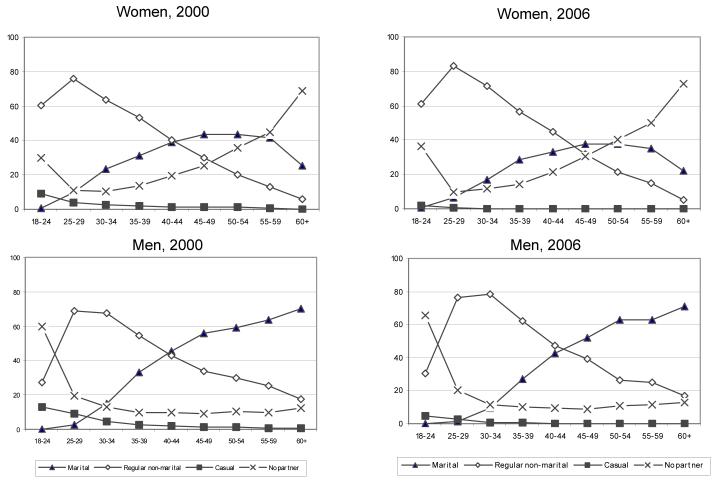
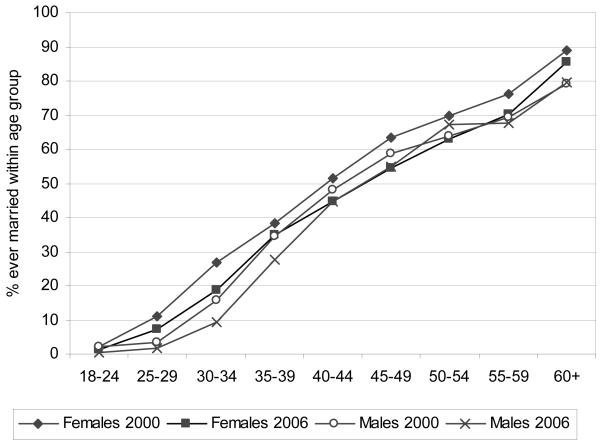
This paper describes marriage and partnership patterns and trends in rural KwaZulu-Natal, South Africa from 2000-2006. The study is based on longitudinal, population-based data collected by the Africa Centre demographic surveillance system. We consider whether the high rates of non-marriage among Africans in South Africa reported in the 1980s were reversed following the political transformation underway by the 1990s. Our findings show that marriage has continued to decline with a small increase in cohabitation among unmarried couples, particularly in more urbanised areas. Comparing surveillance and census data, we highlight problems with the use of the 'living together' marital status category in a highly mobile population.
本文描述了2000年至2006年南非夸祖鲁-纳塔尔省农村地区的婚姻和伴侣关系模式及趋势。该研究基于非洲人口与健康研究中心人口监测系统收集的纵向、基于人群的数据。我们探讨了20世纪80年代报告的南非非洲人非婚率高的情况在90年代政治转型后是否有所扭转。我们的研究结果表明,结婚率持续下降,未婚伴侣的同居现象略有增加,尤其是在城市化程度较高的地区。通过比较监测数据和人口普查数据,我们强调了在人口流动性高的情况下使用“同居”婚姻状况类别存在的问题。