Hooker R A, Chitteti B R, Egan P H, Cheng Y H, Himes E R, Meijome T, Srour E F, Fuchs R K, Kacena M A
Department of Orthopaedic Surgery, Indiana University School of Medicine, Indianapolis, United States.
J Musculoskelet Neuronal Interact. 2015 Mar;15(1):83-94.
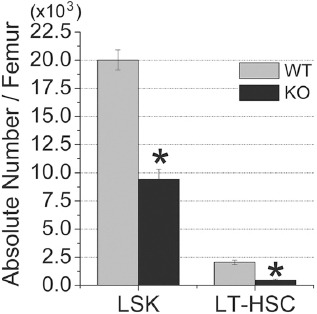
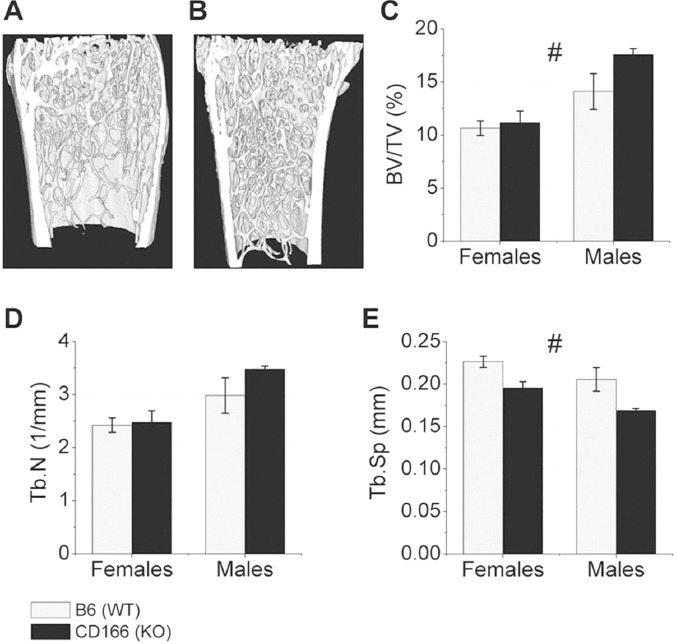
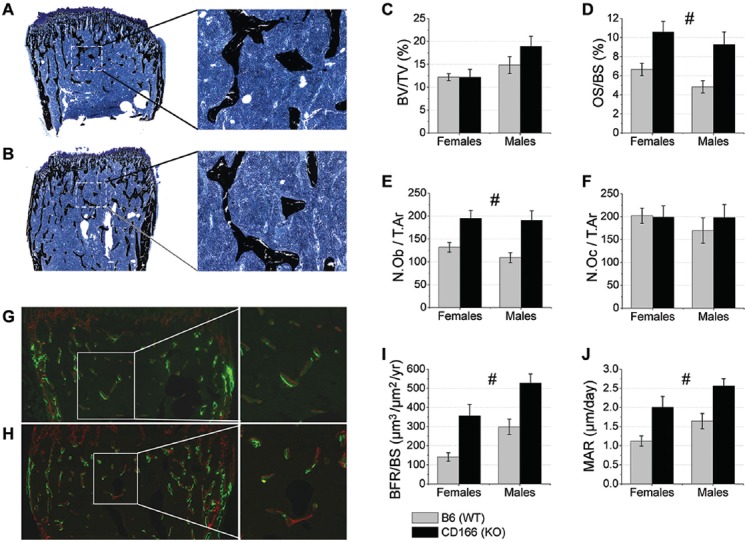
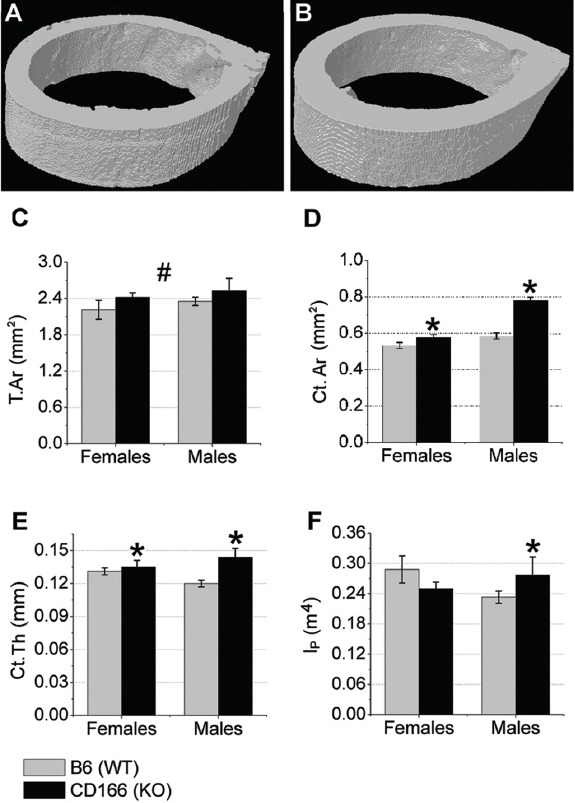
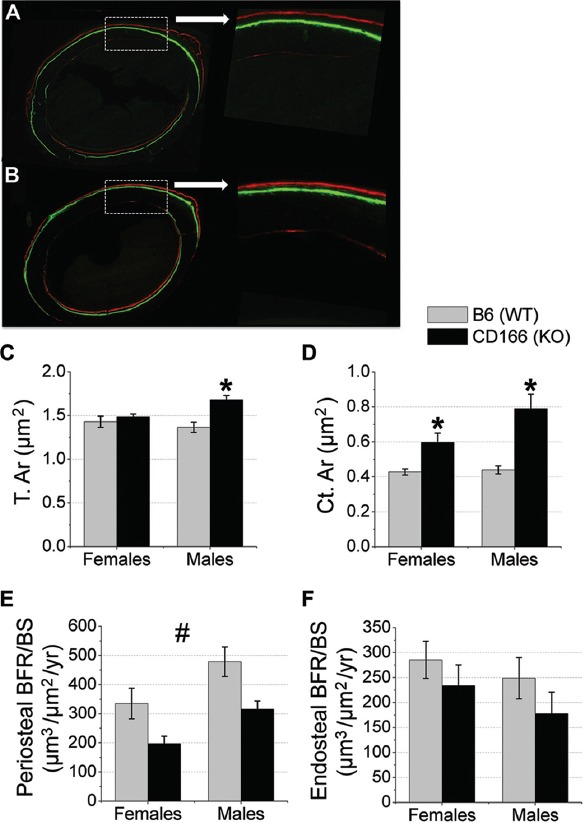
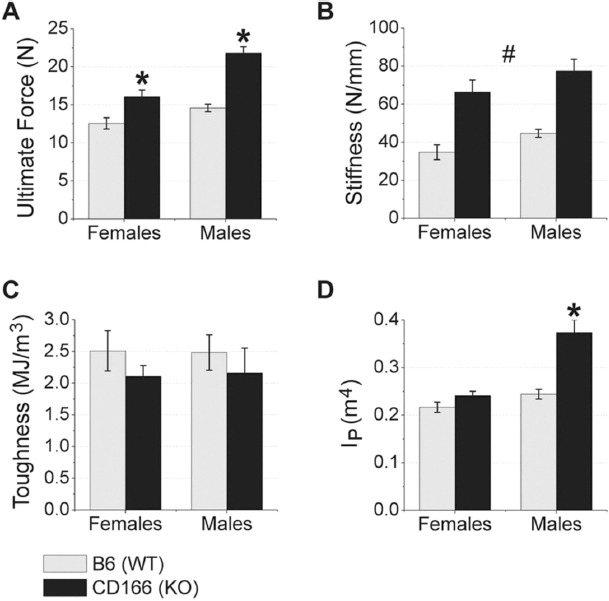
Activated Leukocyte Cell Adhesion Molecule (ALCAM/CD166), is expressed on osteoblasts (OB) and hematopoietic stem cells (HSC) residing in the hematopoietic niche, and may have important regulatory roles in bone formation. Because HSC numbers are reduced 77% in CD166(-/-) mice, we hypothesized that changes in bone phenotype and consequently the endosteal niche may partially be responsible for this alteration. Therefore, we investigated bone phenotype and OB function in CD166(-/-) mice. Although osteoclastic measures were not affected by loss of CD166, CD166(-/-) mice exhibited a modest increase in trabecular bone fraction (42%), and increases in osteoid deposition (72%), OB number (60%), and bone formation rate (152%). Cortical bone geometry was altered in CD166(-/-) mice resulting in up to 81% and 49% increases in stiffness and ultimate force, respectively. CD166(-/-) OB displayed elevated alkaline phosphatase (ALP) activity and mineralization, and increased mRNA expression of Fra 1, ALP, and osteocalcin. Overall, CD166(-/-) mice displayed modestly elevated trabecular bone volume fraction with increased OB numbers and deposition of osteoid, and increased OB differentiation in vitro, possibly suggesting more mature OB are secreting more osteoid. This may explain the decline in HSC number in vivo because immature OB are mainly responsible for hematopoiesis enhancing activity.
活化白细胞细胞黏附分子(ALCAM/CD166)在位于造血微环境中的成骨细胞(OB)和造血干细胞(HSC)上表达,可能在骨形成中发挥重要调节作用。由于CD166基因敲除小鼠的造血干细胞数量减少了77%,我们推测骨表型的改变以及由此导致的骨内膜微环境可能部分导致了这种变化。因此,我们研究了CD166基因敲除小鼠的骨表型和成骨细胞功能。尽管破骨细胞相关指标不受CD166缺失的影响,但CD166基因敲除小鼠的小梁骨分数适度增加(42%),类骨质沉积增加(72%),成骨细胞数量增加(60%),骨形成率增加(152%)。CD166基因敲除小鼠的皮质骨几何结构发生改变,硬度和极限力分别增加了81%和49%。CD166基因敲除的成骨细胞表现出碱性磷酸酶(ALP)活性和矿化增加,以及Fra 1、ALP和骨钙素的mRNA表达增加。总体而言,CD166基因敲除小鼠的小梁骨体积分数适度升高,成骨细胞数量增加,类骨质沉积增加,体外成骨细胞分化增加,这可能表明更成熟的成骨细胞分泌更多的类骨质。这可能解释了体内造血干细胞数量的下降,因为不成熟的成骨细胞主要负责造血增强活性。