Qian Wen-Jian, Burke Terrence R
Chemical Biology Laboratory, National Cancer Institute at Frederick, Center for Cancer Research, National Cancer Institute, National Institutes of Health, P.O. Box B, Boyles St., Frederick, MD 21702, USA.
Org Biomol Chem. 2015 Apr 14;13(14):4221-5. doi: 10.1039/c5ob00171d. Epub 2015 Mar 5.
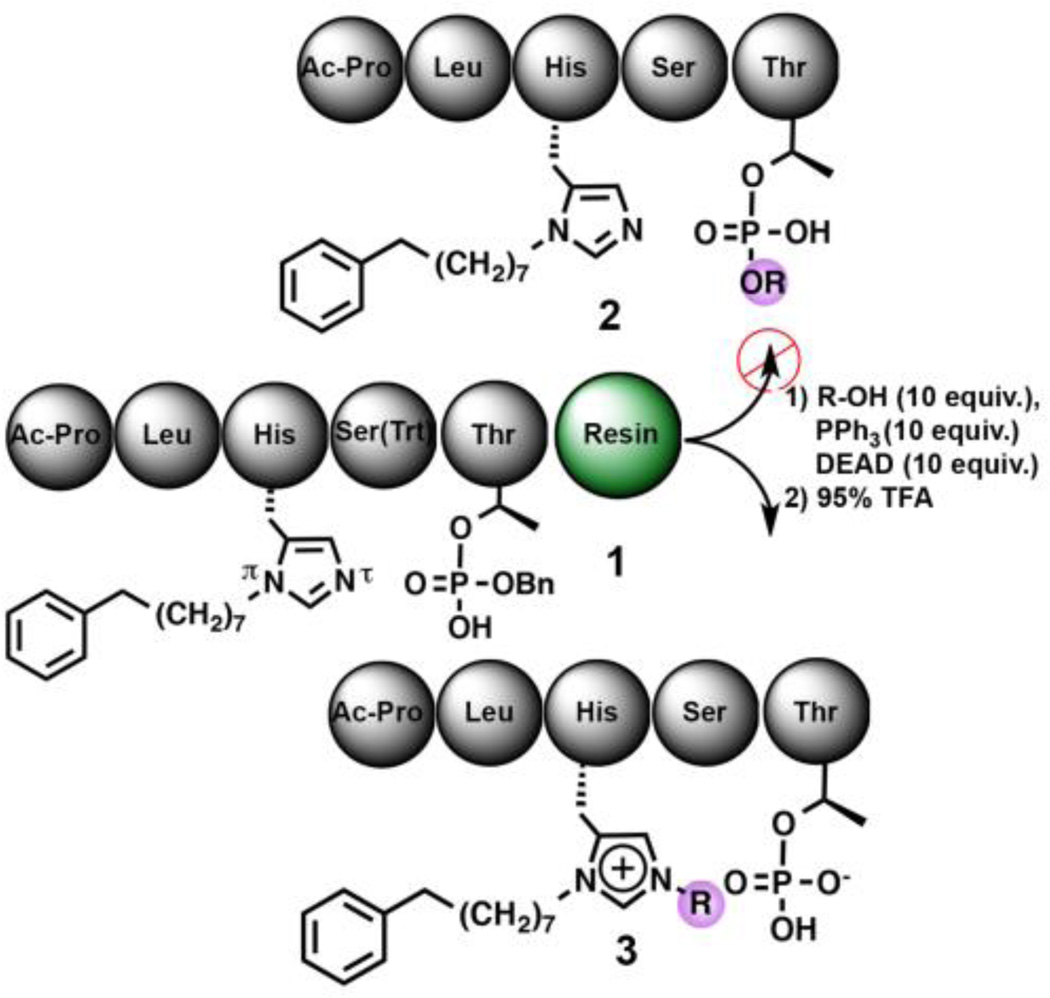
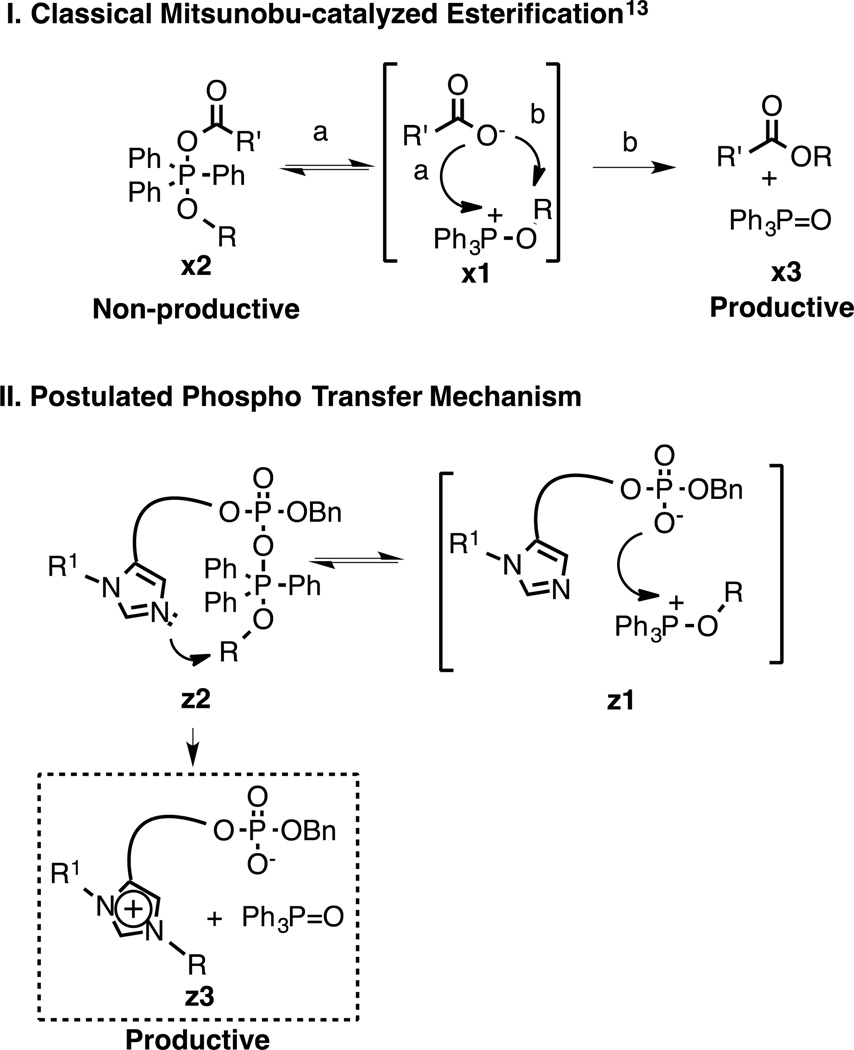
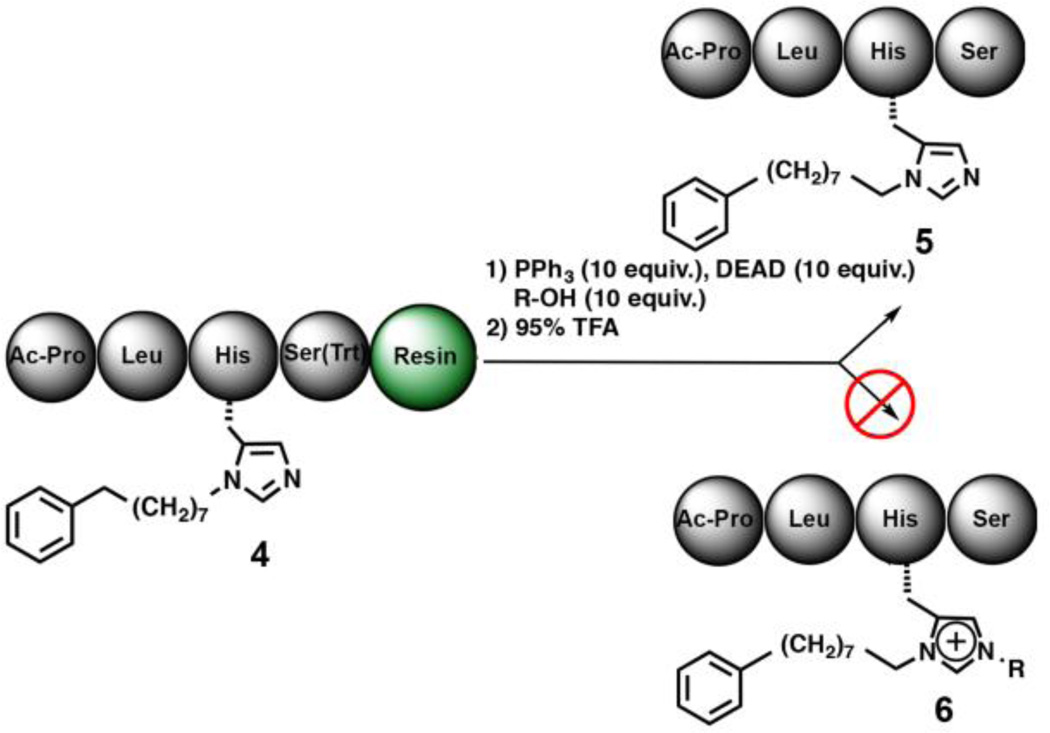
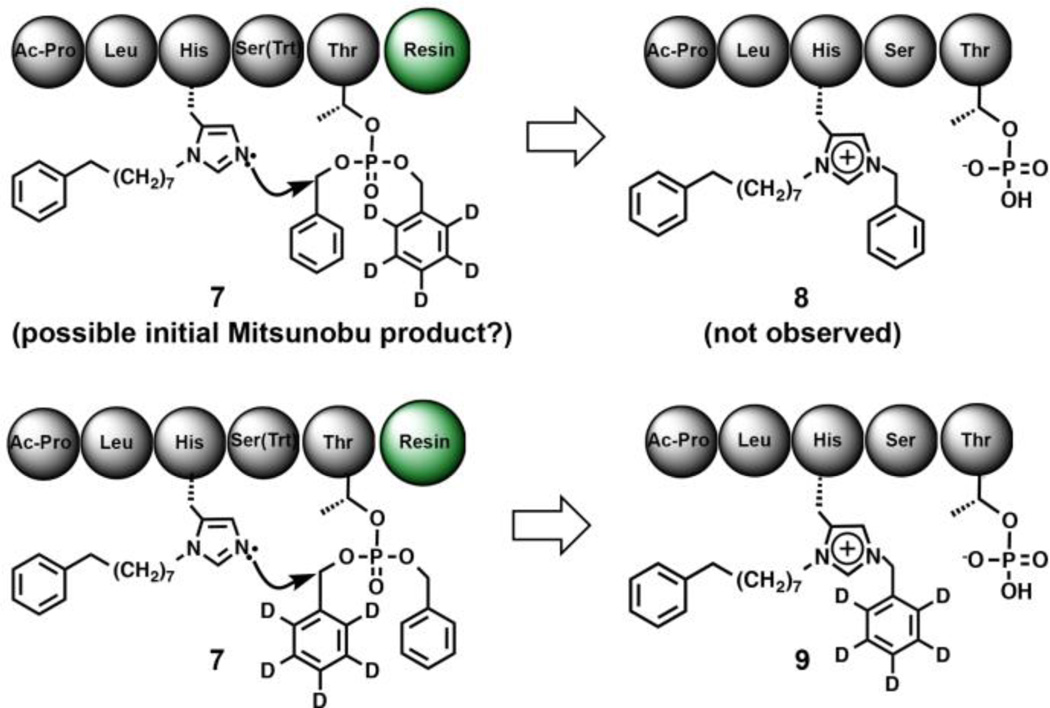
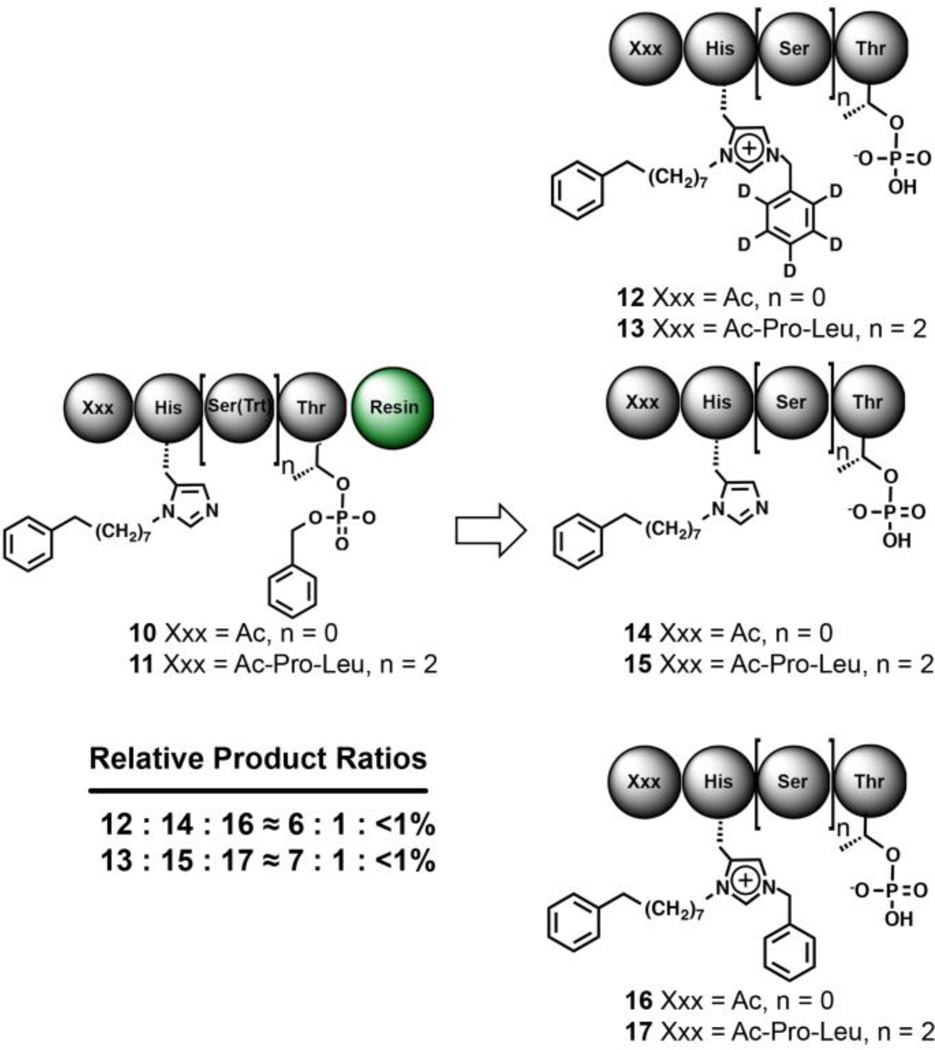
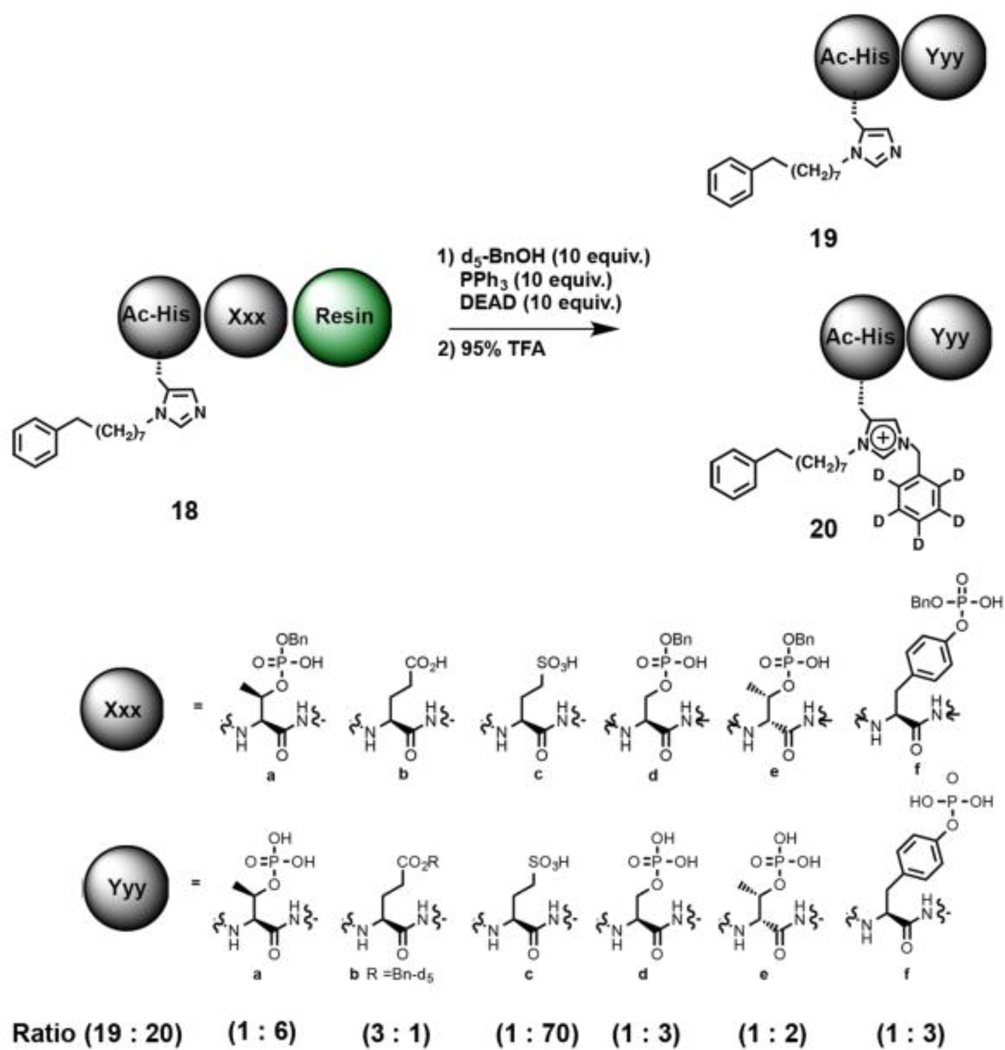
There are few methodologies that yield peptides containing His residues with selective N(τ), N(π)-bis-alkylated imidazole rings. We have found that, under certain conditions, on-resin Mitsunobu coupling of alcohols with peptides having a N(π)-alkylated His residue results in selective and high-yield alkylation of the imidazole N(τ) nitrogen. The reaction requires the presence of a proximal phosphoric, carboxylic or sulfonic acid, and proceeds through an apparent intramolecular mechanism involving Mitsunobu intermediates. These transformations have particular application to phosphopeptides, where "charge masking" of one phosphoryl anionic charge by the cationic histidine imidazolium ion is now possible. This chemistry opens selective access to peptides containing differentially functionalized imidazolium heterocycles, which provide access to new classes of peptides and peptide mimetics.
能够产生含有组氨酸残基且咪唑环具有选择性N(τ)、N(π)-双烷基化的肽的方法很少。我们发现,在某些条件下,醇与具有N(π)-烷基化组氨酸残基的肽在树脂上进行光延反应偶联,会导致咪唑N(τ)氮的选择性和高产率烷基化。该反应需要存在近端磷酸、羧酸或磺酸,并通过涉及光延中间体的明显分子内机制进行。这些转化在磷酸肽中有特殊应用,现在阳离子组氨酸咪唑鎓离子能够对一个磷酰阴离子电荷进行“电荷掩蔽”。这种化学方法为含有不同功能化咪唑鎓杂环的肽提供了选择性合成途径,从而能够获得新型肽和肽模拟物。