Rusek Anna Maria, Abba Mohammed, Eljaszewicz Andrzej, Moniuszko Marcin, Niklinski Jacek, Allgayer Heike
Department of Clinical Molecular Biology, Medical University of Bialystok, Waszyngtona 13, Białystok, 15-269, Poland.
Department of Experimental Surgery, Medical Faculty Mannheim, Heidelberg University, Theodor Kutzer Ufer 1-3, 68135, Mannheim, Germany.
Mol Cancer. 2015 Feb 7;14:34. doi: 10.1186/s12943-015-0302-8.
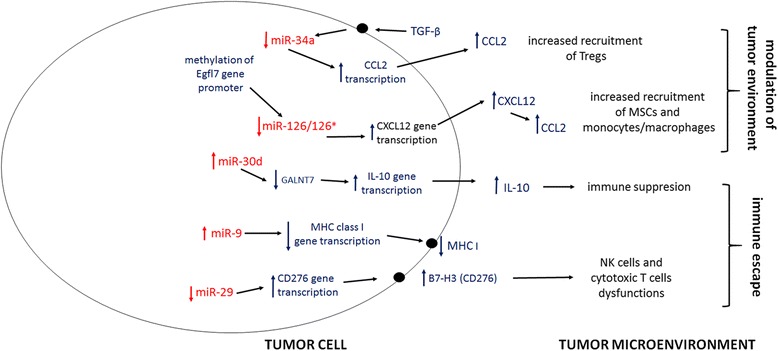
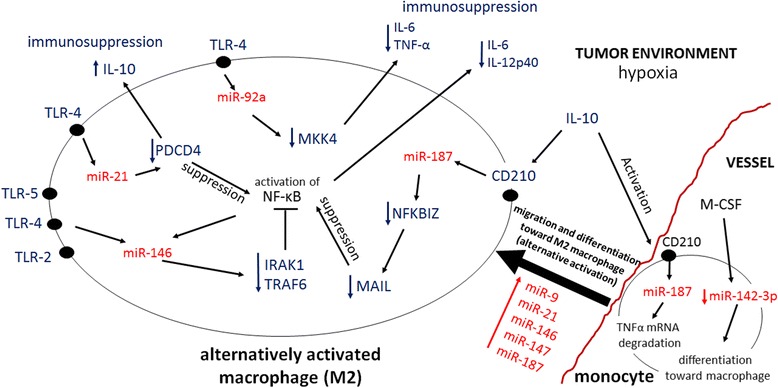
Cancer is an exceedingly complex disease that is orchestrated and driven by a combination of multiple aberrantly regulated processes. The nature and depth of involvement of individual events vary between cancer types, and in lung cancer, the deregulation of the epigenetic machinery, the tumor microenvironment and the immune system appear to be especially relevant. The contribution of microRNAs to carcinogenesis and cancer progression is well established with many reports and investigations describing the involvement of microRNAs in lung cancer, however most of these studies have concentrated on single microRNA-target relations and have not adequately addressed the complexity of their interactions. In this review, we focus, in part, on the role of microRNAs in the epigenetic regulation of lung cancer where they act as active molecules modulating enzymes that take part in methylation-mediated silencing and chromatin remodeling. Additionally, we highlight their contribution in controlling and modulating the tumor microenvironment and finally, we describe their role in the critical alteration of essential molecules that influence the immune system in lung cancer development and progression.
癌症是一种极其复杂的疾病,由多种异常调节过程共同编排和驱动。个体事件参与的性质和程度在不同癌症类型之间有所差异,在肺癌中,表观遗传机制、肿瘤微环境和免疫系统的失调似乎尤为相关。众多报告和研究已充分证实了微小RNA对致癌作用和癌症进展的贡献,其中描述了微小RNA在肺癌中的作用,然而,这些研究大多集中在单个微小RNA-靶标关系上,并未充分解决它们相互作用的复杂性。在本综述中,我们部分聚焦于微小RNA在肺癌表观遗传调控中的作用,它们作为活性分子调节参与甲基化介导的沉默和染色质重塑的酶。此外,我们强调它们在控制和调节肿瘤微环境中的贡献,最后,我们描述它们在影响肺癌发生和进展过程中免疫系统的关键分子改变中的作用。