Knezevic J, Pfefferle A D, Petrovic I, Greene S B, Perou C M, Rosen J M
Department of Molecular and Cellular Biology, Baylor College of Medicine, Houston, TX, USA.
Department of Pathology and Laboratory Medicine, University of North Carolina, Chapel Hill, NC, USA.
Oncogene. 2015 Dec 3;34(49):5997-6006. doi: 10.1038/onc.2015.48. Epub 2015 Mar 9.
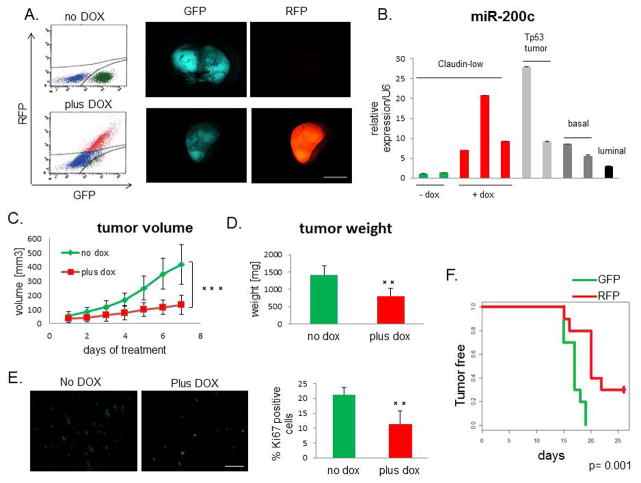
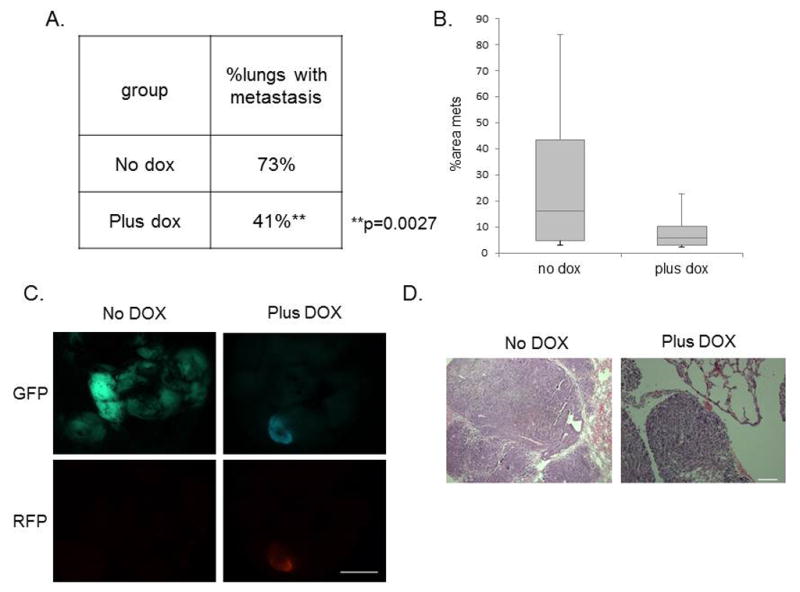
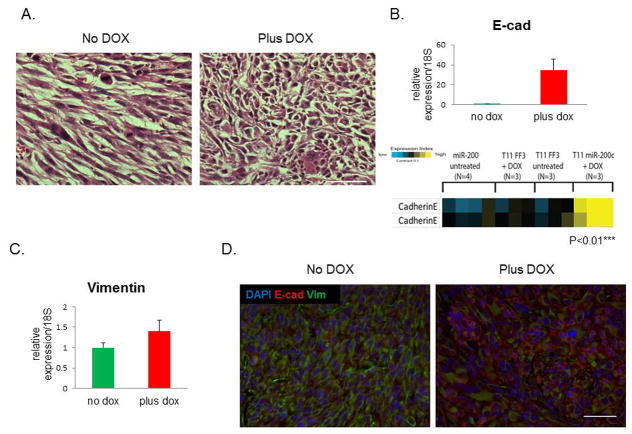
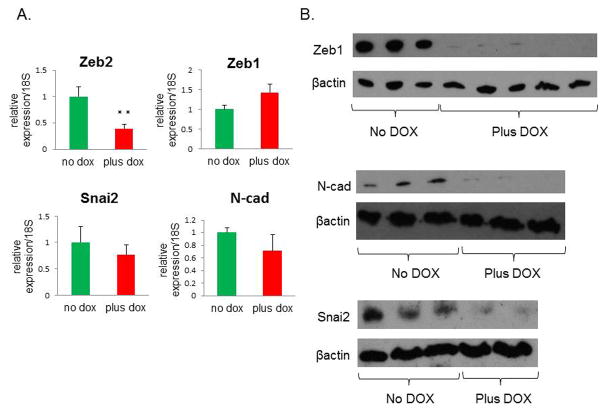
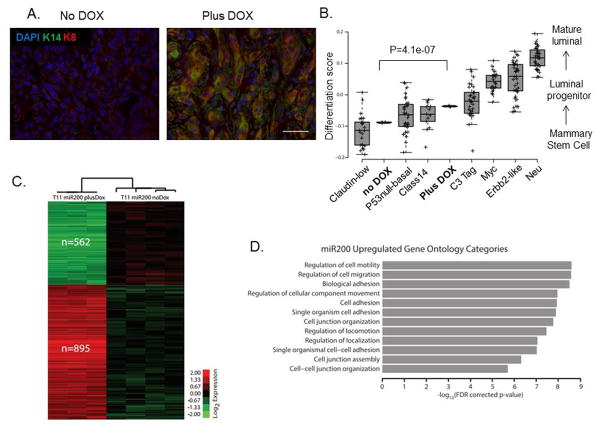
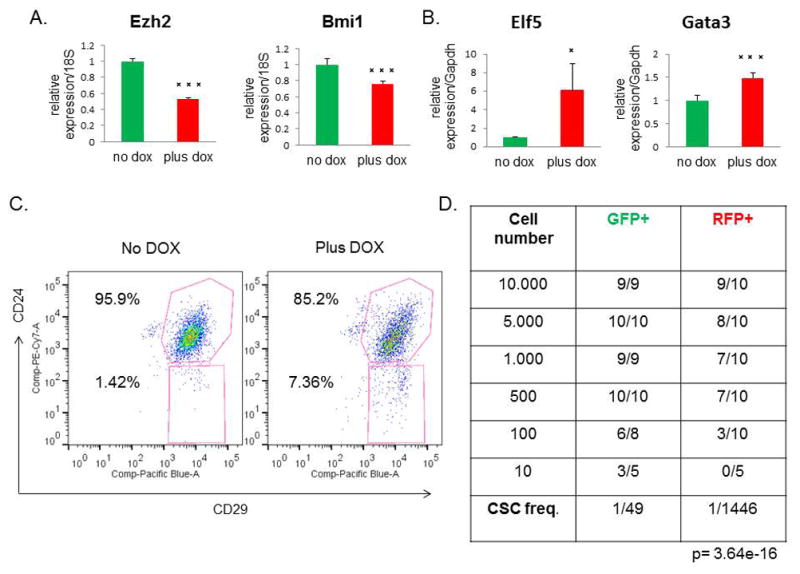
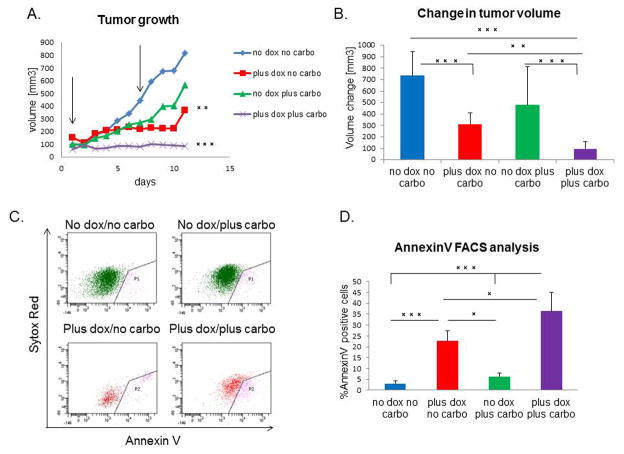
Claudin-low tumors are a highly aggressive breast cancer subtype with no targeted treatments and a clinically documented resistance to chemotherapy. They are significantly enriched in cancer stem cells (CSCs), which makes claudin-low tumor models particularly attractive for studying CSC behavior and developing novel approaches to minimize CSC therapy resistance. One proposed mechanism by which CSCs arise is via an epithelial-mesenchymal transition (EMT), and reversal of this process may provide a potential therapeutic approach for increasing tumor chemosensitivity. Therefore, we investigated the role of known EMT regulators, miR-200 family of microRNAs in controlling the epithelial state, stem-like properties and therapeutic response in an in vivo primary, syngeneic p53(null) claudin-low tumor model that is normally deficient in miR-200 expression. Using an inducible lentiviral approach, we expressed the miR-200c cluster in this model and found that it changed the epithelial state, and consequently, impeded CSC behavior in these mesenchymal tumors. Moreover, these state changes were accompanied by a decrease in proliferation and an increase in the differentiation status. miR-200c expression also forced a significant reorganization of tumor architecture, affecting important cellular processes involved in cell-cell contact, cell adhesion and motility. Accordingly, induced miR200c expression significantly enhanced the chemosensitivity and decreased the metastatic potential of this p53(null) claudin-low tumor model. Collectively, our data suggest that miR-200c expression in claudin-low tumors offers a potential therapeutic application to disrupt the EMT program on multiple fronts in this mesenchymal tumor subtype, by altering tumor growth, chemosensitivity and metastatic potential in vivo.
Claudin低表达肿瘤是一种侵袭性很强的乳腺癌亚型,没有针对性的治疗方法,且临床证明对化疗有耐药性。它们在癌症干细胞(CSC)中显著富集,这使得Claudin低表达肿瘤模型对于研究CSC行为以及开发使CSC治疗耐药性最小化的新方法特别有吸引力。一种提出的CSC产生机制是通过上皮-间质转化(EMT),而逆转这一过程可能为提高肿瘤化疗敏感性提供一种潜在的治疗方法。因此,我们在一个体内原发性、同基因p53缺失的Claudin低表达肿瘤模型中研究了已知的EMT调节因子——微小RNA的miR-200家族在控制上皮状态、干细胞样特性和治疗反应中的作用,该模型通常miR-200表达缺失。使用诱导型慢病毒方法,我们在该模型中表达了miR-200c簇,发现它改变了上皮状态,从而阻碍了这些间充质肿瘤中的CSC行为。此外,这些状态变化伴随着增殖减少和分化状态增加。miR-200c表达还促使肿瘤结构发生显著重组,影响了涉及细胞间接触、细胞黏附和运动的重要细胞过程。相应地,诱导的miR200c表达显著增强了该p53缺失的Claudin低表达肿瘤模型的化疗敏感性并降低了转移潜能。总体而言,我们的数据表明,Claudin低表达肿瘤中miR-200c的表达通过改变体内肿瘤生长、化疗敏感性和转移潜能,为在多个方面破坏这种间充质肿瘤亚型中的EMT程序提供了一种潜在的治疗应用。