Fang Chen, Wang Kui, Stephen Zachary R, Mu Qingxin, Kievit Forrest M, Chiu Daniel T, Press Oliver W, Zhang Miqin
†Clinical Research Division, Fred Hutchinson Cancer Research Center, Seattle, Washington 98109, United States.
‡Department of Materials Science and Engineering, University of Washington, Seattle, Washington 98195, United States.
ACS Appl Mater Interfaces. 2015 Apr 1;7(12):6674-82. doi: 10.1021/am5092165. Epub 2015 Mar 18.
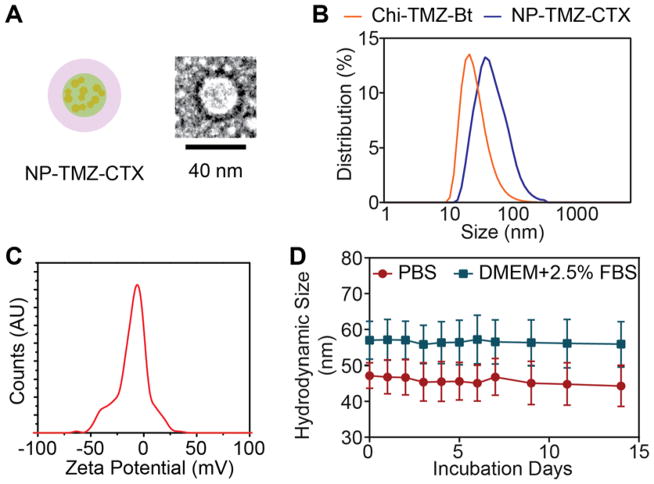
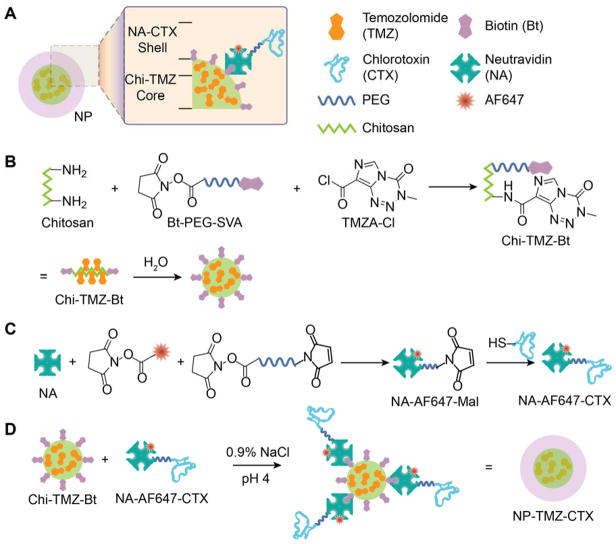
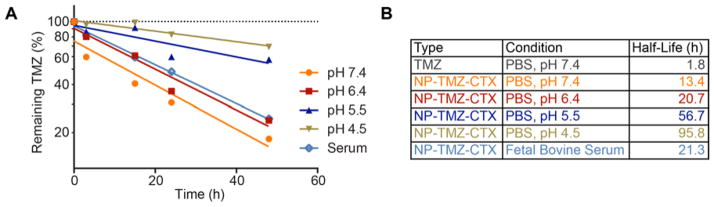
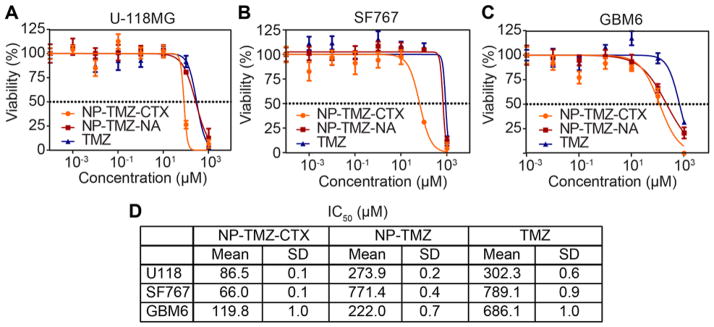
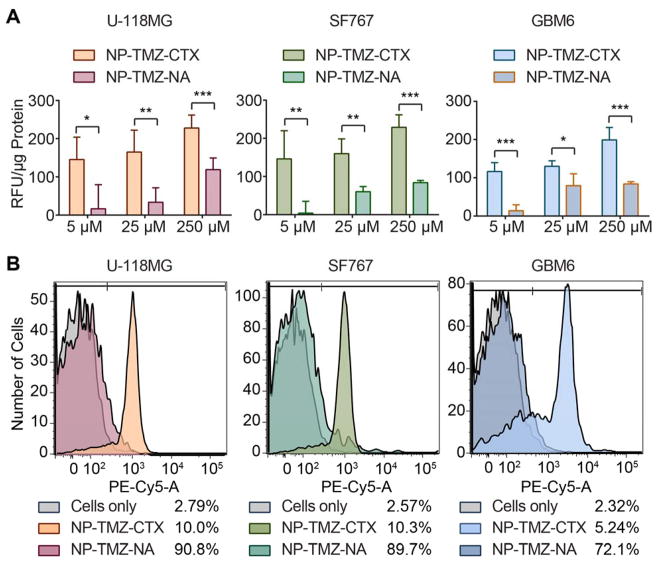
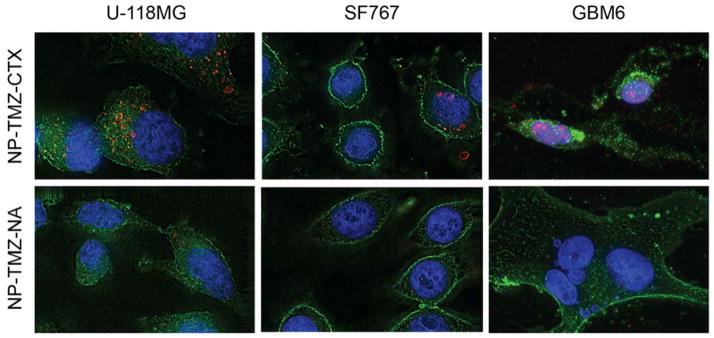
Glioblastoma (GBM) is a deadly and debilitating brain tumor with an abysmal prognosis. The standard therapy for GBM is surgery followed by radiation and chemotherapy with Temozolomide (TMZ). Treatment of GBMs remains a challenge, largely because of the fast degradation of TMZ, the inability to deliver an effective dose of TMZ to tumors, and a lack of target specificity that may cause systemic toxicity. Here, we present a simple method for synthesizing a nanoparticle-based carrier that can protect TMZ from rapid degradation in physiological solutions and can specifically deliver them to GBM cells through the mediation of a tumor-targeting peptide chlorotoxin (CTX). Our nanoparticle, namely NP-TMZ-CTX, had a hydrodynamic size of <100 nm, exhibited sustained stability in cell culture media for up to 2 weeks, and could accommodate stable drug loading. TMZ bound to nanoparticles showed a much higher stability at physiological pH, with a half-life 7-fold greater than that of free TMZ. NP-TMZ-CTX was able to target GBM cells and achieved 2-6-fold higher uptake and a 50-90% reduction of IC50 72 h post-treatment as compared to nontargeted NP-TMZ. NP-TMZ-CTX showed great promise in its ability to deliver a large therapeutic dose of TMZ to GBM cells and could serve as a template for targeted delivery of other therapeutics.
胶质母细胞瘤(GBM)是一种致命且使人衰弱的脑肿瘤,预后极差。GBM的标准治疗方法是手术,随后进行放疗以及使用替莫唑胺(TMZ)进行化疗。GBM的治疗仍然是一项挑战,主要原因在于TMZ快速降解、无法将有效剂量的TMZ递送至肿瘤以及缺乏可能导致全身毒性的靶向特异性。在此,我们提出一种简单的方法来合成基于纳米颗粒的载体,该载体可以保护TMZ在生理溶液中不被快速降解,并且可以通过肿瘤靶向肽氯毒素(CTX)的介导将其特异性递送至GBM细胞。我们的纳米颗粒,即NP-TMZ-CTX,流体动力学尺寸小于100 nm,在细胞培养基中表现出长达2周的持续稳定性,并且能够实现稳定的药物负载。与纳米颗粒结合的TMZ在生理pH值下显示出更高的稳定性,半衰期比游离TMZ长7倍。与非靶向的NP-TMZ相比,NP-TMZ-CTX能够靶向GBM细胞,在治疗后72小时摄取量提高2至6倍,IC50降低50%至90%。NP-TMZ-CTX在向GBM细胞递送大治疗剂量TMZ的能力方面显示出巨大潜力,并且可以作为其他治疗药物靶向递送的模板。