
用于将O6-苄基鸟嘌呤靶向对流增强递送至脑肿瘤的氧化还原响应性磁性纳米颗粒。
Redox-responsive magnetic nanoparticle for targeted convection-enhanced delivery of O6-benzylguanine to brain tumors.
作者信息
Stephen Zachary R, Kievit Forrest M, Veiseh Omid, Chiarelli Peter A, Fang Chen, Wang Kui, Hatzinger Shelby J, Ellenbogen Richard G, Silber John R, Zhang Miqin
机构信息
Department of Materials Science and Engineering, University of Washington , Seattle, Washington 98195, United States.
出版信息
ACS Nano. 2014 Oct 28;8(10):10383-95. doi: 10.1021/nn503735w. Epub 2014 Sep 29.
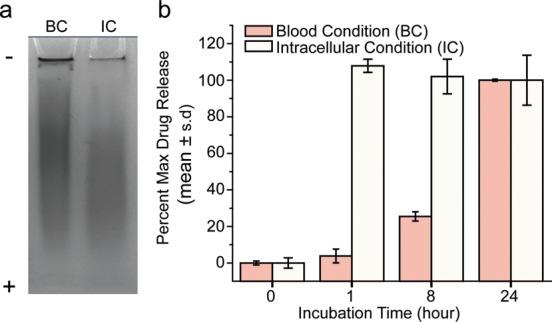
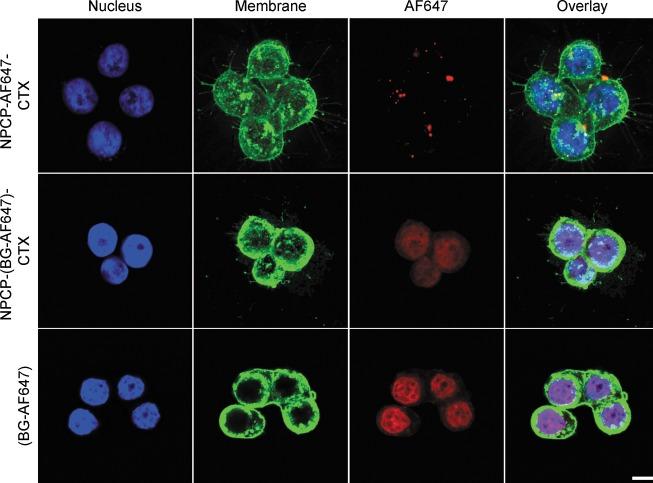
Resistance to temozolomide (TMZ) based chemotherapy in glioblastoma multiforme (GBM) has been attributed to the upregulation of the DNA repair protein O(6)-methylguanine-DNA methyltransferase (MGMT). Inhibition of MGMT using O(6)-benzylguanine (BG) has shown promise in these patients, but its clinical use is hindered by poor pharmacokinetics that leads to unacceptable toxicity. To improve BG biodistribution and efficacy, we developed superparamagnetic iron oxide nanoparticles (NP) for targeted convection-enhanced delivery (CED) of BG to GBM. The nanoparticles (NPCP-BG-CTX) consist of a magnetic core coated with a redox-responsive, cross-linked, biocompatible chitosan-PEG copolymer surface coating (NPCP). NPCP was modified through covalent attachment of BG and tumor targeting peptide chlorotoxin (CTX). Controlled, localized BG release was achieved under reductive intracellular conditions and NPCP-BG-CTX demonstrated proper trafficking of BG in human GBM cells in vitro. NPCP-BG-CTX treated cells showed a significant reduction in MGMT activity and the potentiation of TMZ toxicity. In vivo, CED of NPCP-BG-CTX produced an excellent volume of distribution (Vd) within the brain of mice bearing orthotopic human primary GBM xenografts. Significantly, concurrent treatment with NPCP-BG-CTX and TMZ showed a 3-fold increase in median overall survival in comparison to NPCP-CTX/TMZ treated and untreated animals. Furthermore, NPCP-BG-CTX mitigated the myelosuppression observed with free BG in wild-type mice when administered concurrently with TMZ. The combination of favorable physicochemical properties, tumor cell specific BG delivery, controlled BG release, and improved in vivo efficacy demonstrates the great potential of these NPs as a treatment option that could lead to improved clinical outcomes.
多形性胶质母细胞瘤(GBM)对基于替莫唑胺(TMZ)的化疗产生耐药性,这归因于DNA修复蛋白O(6)-甲基鸟嘌呤-DNA甲基转移酶(MGMT)的上调。使用O(6)-苄基鸟嘌呤(BG)抑制MGMT在这些患者中显示出前景,但其临床应用因药代动力学不佳导致不可接受的毒性而受阻。为了改善BG的生物分布和疗效,我们开发了超顺磁性氧化铁纳米颗粒(NP),用于将BG靶向对流增强递送(CED)至GBM。纳米颗粒(NPCP-BG-CTX)由一个磁性核心组成,该核心涂覆有氧化还原响应性、交联的、生物相容性壳聚糖-聚乙二醇共聚物表面涂层(NPCP)。NPCP通过BG和肿瘤靶向肽氯毒素(CTX)的共价连接进行修饰。在还原性细胞内条件下实现了BG的可控、局部释放,并且NPCP-BG-CTX在体外人GBM细胞中显示出BG的正确转运。经NPCP-BG-CTX处理的细胞显示MGMT活性显著降低以及TMZ毒性增强。在体内,NPCP-BG-CTX的CED在携带原位人原发性GBM异种移植物的小鼠脑内产生了优异的分布容积(Vd)。值得注意地,与NPCP-CTX/TMZ处理和未处理的动物相比,NPCP-BG-CTX与TMZ联合治疗使中位总生存期增加了3倍。此外,当与TMZ同时给药时,NPCP-BG-CTX减轻了野生型小鼠中游离BG观察到的骨髓抑制。良好的物理化学性质、肿瘤细胞特异性BG递送、可控的BG释放以及体内疗效的改善相结合,证明了这些纳米颗粒作为一种可能导致改善临床结果的治疗选择具有巨大潜力。




 Zotero 插件