Liu Jian, Cho Sung-Nam, Akkanti Bindu, Jin Nili, Mao Jianqiang, Long Weiwen, Chen Tenghui, Zhang Yiqun, Tang Ximing, Wistub Ignacio I, Creighton Chad J, Kheradmand Farrah, DeMayo Francesco J
Department of Molecular and Cellular Biology, Baylor College of Medicine, Houston, TX 77030, USA.
Department of Medicine, Pulmonary and Critical Care, Baylor College of Medicine, Houston, TX 77030, USA.
Cell Rep. 2015 Mar 10;10(9):1599-1613. doi: 10.1016/j.celrep.2015.02.014. Epub 2015 Mar 5.
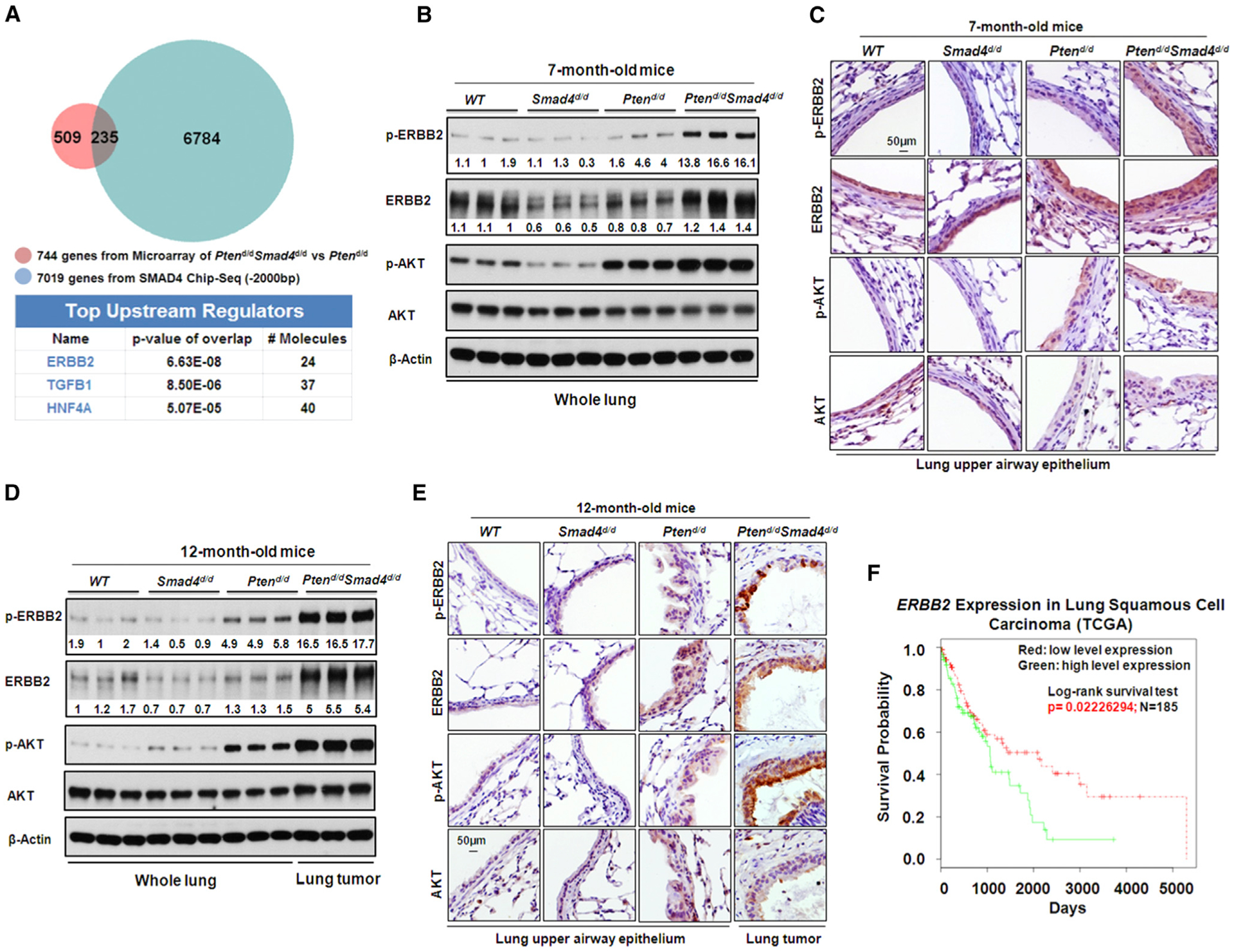
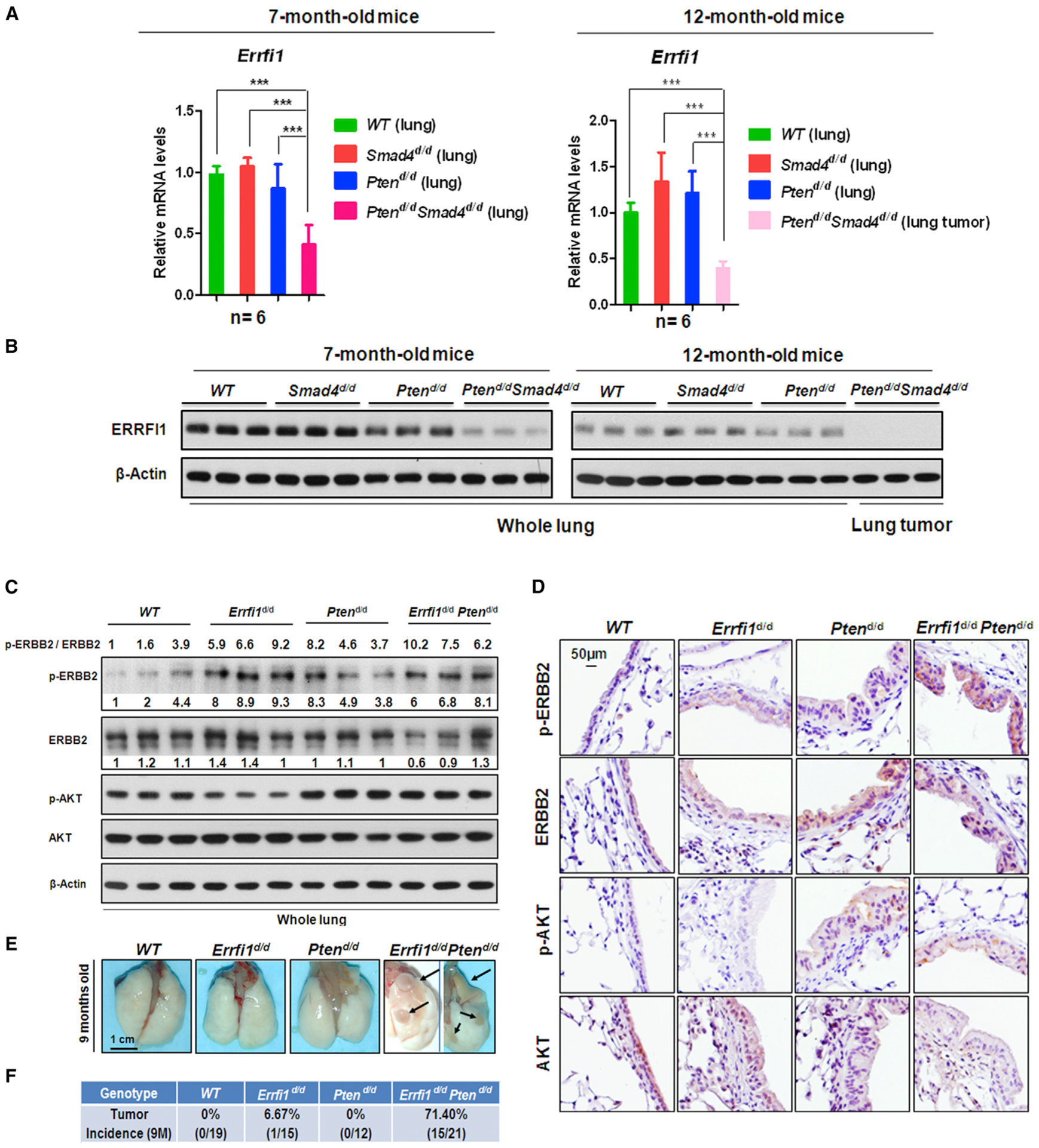
Lung cancer remains the leading cause of cancer death. Genome sequencing of lung tumors from patients with squamous cell carcinoma has identified SMAD4 to be frequently mutated. Here, we use a mouse model to determine the molecular mechanisms by which Smad4 loss leads to lung cancer progression. Mice with ablation of Pten and Smad4 in airway epithelium develop metastatic adenosquamous tumors. Comparative transcriptomic and in vivo cistromic analyses determine that loss of PTEN and SMAD4 results in ELF3 and ErbB2 pathway activation due to decreased expression of ERRFI1, a negative regulator of ERBB2 in mouse and human cells. The combinatorial inhibition of ErbB2 and Akt signaling attenuate tumor progression and cell invasion, respectively. Expression profile analysis of human lung tumors substantiated the importance of the ErbB2/Akt/ELF3 signaling pathway as both a prognostic biomarker and a therapeutic drug target for treating lung cancer.
肺癌仍然是癌症死亡的主要原因。对鳞状细胞癌患者的肺部肿瘤进行基因组测序发现,SMAD4经常发生突变。在此,我们使用小鼠模型来确定Smad4缺失导致肺癌进展的分子机制。气道上皮中Pten和Smad4缺失的小鼠会发生转移性腺鳞癌。比较转录组学和体内顺式作用元件组分析确定,PTEN和SMAD4的缺失由于ERRFI1(一种在小鼠和人类细胞中作为ERBB2负调节因子)表达降低而导致ELF3和ErbB2信号通路激活。对ErbB2和Akt信号的联合抑制分别减弱了肿瘤进展和细胞侵袭。对人类肺部肿瘤的表达谱分析证实了ErbB2/Akt/ELF3信号通路作为肺癌预后生物标志物和治疗药物靶点的重要性。